The future of access control: mobile credentials
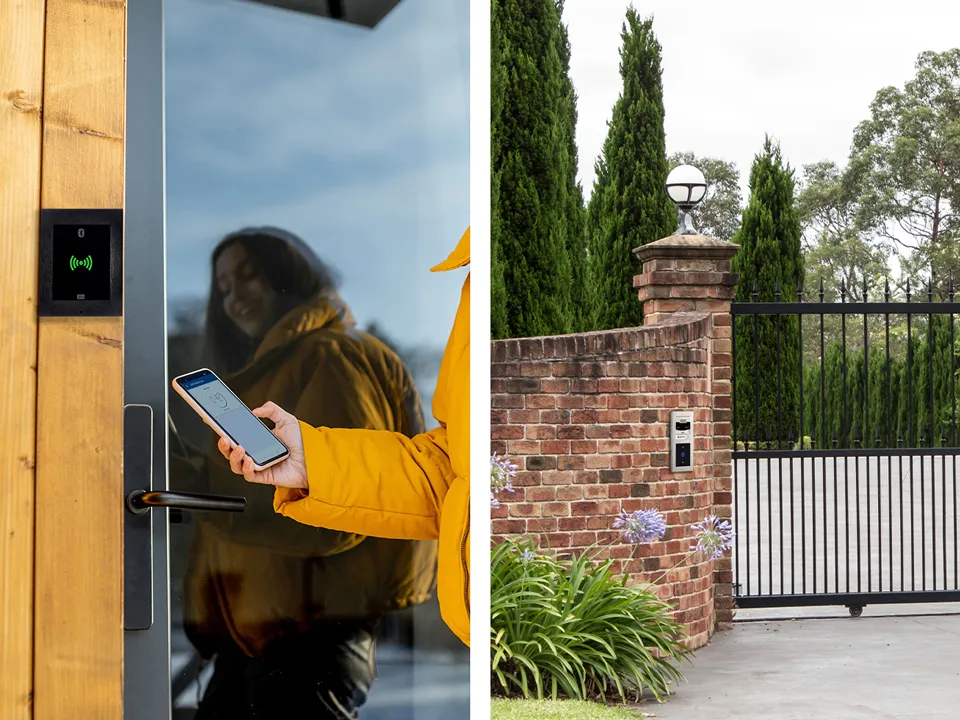
Access to buildings via smartphones using so-called mobile credentials will become an obvious choice in the future. That is the view of 2N, the global leader in IP access control systems.
Concerns about security in general and COVID-19 in particular mean that organisations need to rethink their approach to access control. The ultimate goal is to create a safe and secure living and working environment for building users and residents.
The COVID-19 outbreak presents new challenges for access control in multi-occupancy buildings. In situations where touchscreens are still used, for example, smartphone-based access control offers an effective and convenient contactless solution that limits security risks. Security and privacy concerns around facial recognition technology have also helped establish access control via mobile devices as a credible and secure alternative to touchscreens and key cards.
Tomas Vystavel, Chief Product Officer at 2N, says: “Although intercom systems with touchscreens or key cards are still common access control solutions in multi-occupancy buildings, the world is changing rapidly. Organisations and businesses therefore need to make sure they are using the right access control solutions to meet consumers’ changing needs and concerns. We expect more and more organisations to choose smartphone and app-based access control in the future.”
In 2018, the annual growth in the number of mobile credentials downloaded worldwide exceeded 150%, with the market reaching almost 4.1 million downloads that year. The number of mobile credentials is expected to grow from 1% of all credentials issued annually in 2020 to 14% in 2023, making them an important alternative to other access systems by then. IHS Markit forecasts that more than 120 million mobile credentials will be downloaded in 2023, compared with 20 million at present.
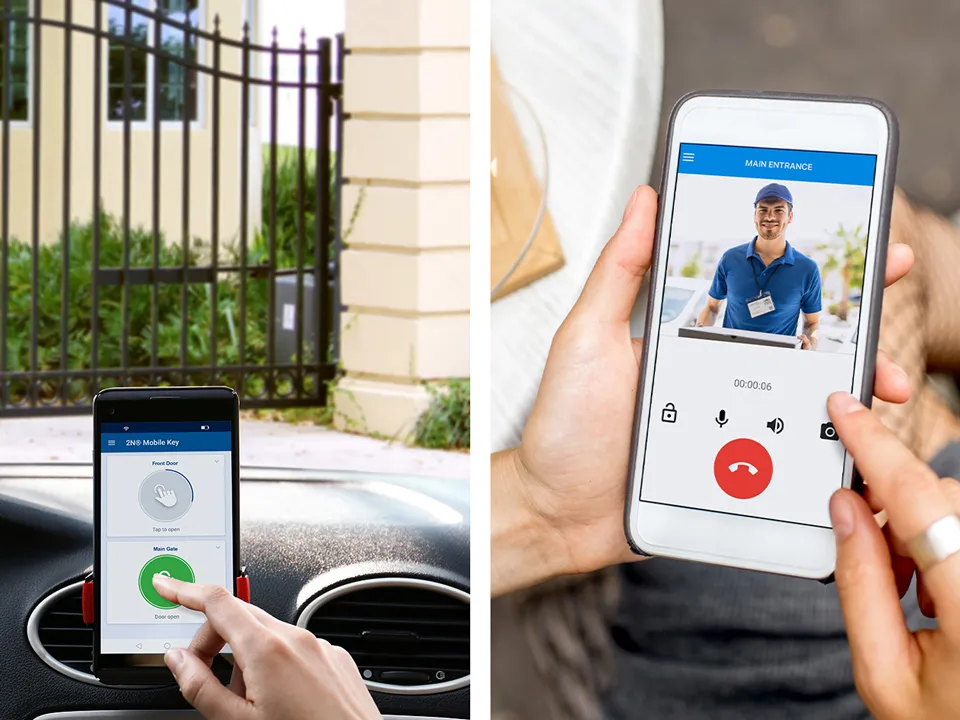
There are several reasons for this growth. First, smartphones are convenient: almost everyone already has one, so there is no need to use other tools such as key cards. There is also no need to touch external buttons or screens. Smartphones also make it easy to open doors remotely, without having to take anything out of your pocket or hold anything. There are, of course, cost savings too, as there is no need to buy RFID cards. In addition, the security offered by Bluetooth credentials is much better than that of traditional technologies such as RFID and PIN. Because BLE (Bluetooth Low Energy) is used for secure, encrypted communication with a reader, smartphone-based access control is also well suited to situations where access is requested from, for example, a car. There is no need to get out and stand in front of a camera. The app can simply be operated from the car seat, allowing gates, garage doors or barriers to be opened remotely.
As well as activating access via an app, mobile access via a smartphone offers other ways to activate access. The contactless ‘proximity mode’ makes it possible to open doors when the mobile device is near a reader. An even more secure ‘contactless’ mode allows the user to connect to the reader through Bluetooth authentication. In some cases, this can even work through thick gloves or clothing.
Because mobile credentials do not rely on visual detection, they are also highly suitable for apartment blocks or other multi-occupancy buildings where there is a lot of movement in poor lighting conditions, such as in the evening or at night. Another advantage is that if a smartphone is lost or stolen, the mobile credentials can easily be replaced with new ones.
Mobile access is also a good option when access control is used in several locations in a building, not just at the main entrance. Bluetooth readers are inexpensive and can also be used to provide access control for individual offices or other rooms and zones. This is a less expensive alternative to installing additional security cameras, for example.
Finally, legislation and regulations are an important factor when selecting the most suitable technology. Recently, we have seen many changes in regulations relating to facial recognition in countries around the world. There are also the complications of GDPR compliance: individuals have the right to have their personally identifiable information deleted or “forgotten”. In addition, data relating to facial recognition are inherently personally identifiable, whereas mobile credentials are not. This means that mobile keys can be stored much more easily alongside anonymous user data.
Question about this story? Ask your question
Keep following this
Get an email when a new story is published. No account needed.
- ThemeSafe building services and buildings
- SubjectProduct information