











Scalda College Vlissingen wins SLIMCirculair ’18-‘19
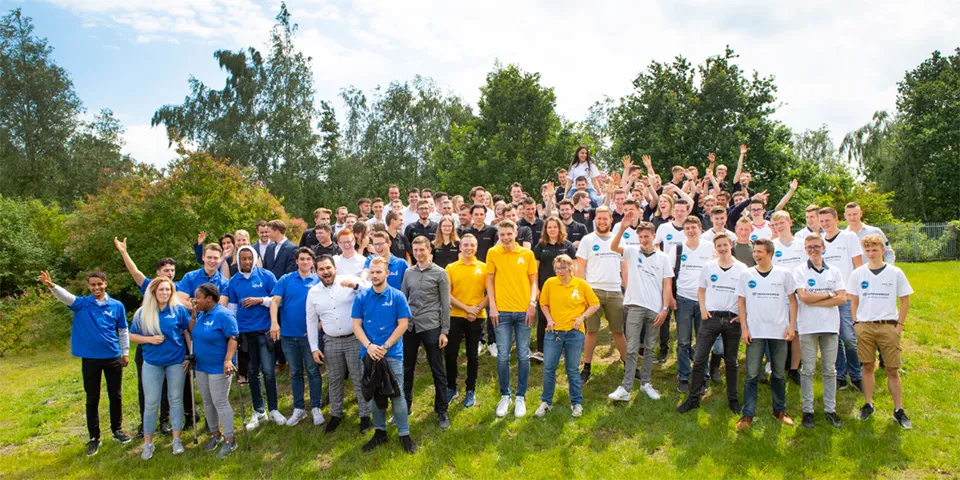
Teamwork, a well-considered, scalable plan and an understanding of how the new circular economy is taking shape. These were the factors that convinced the jury to award the SLIMCirculair prize ’18-’19 to team Ad Fundum from Scalda College in Vlissingen. The team designed a circular, multi-purpose centre for the municipality of Veere and presented its plans so engagingly that it edged out tough competition by a whisker. The public prize goes to Technovium in Nijmegen for its eye-catching bridge, ‘De Glimlach van Nijmegen’.
Last Friday, the teams pitched their designs in Amersfoort once again. They showed once again that the Netherlands can make major strides towards a circular economy through hydrogen production, compost heat (biomeilers), bio-based materials, and demountable, nature-inclusive construction. These are not hypothetical steps: they are going full steam ahead with clients who will actually bring the buildings to life.
The future of the Netherlands
“The standard of the entries is so incredibly high that it was impossible for us to choose a winner,” says jury chair Ruud Koornstra. “People often say of MBO students: they are the hands-on workforce in construction. These teams prove the opposite. This is the future of the Netherlands, and these young men and women are going to make a difference. That gives us great confidence. They dream big and bring their clients along with them in their ambitions. They show that innovation does not come from The Hague or Brussels, but that circular thinking is in our young people’s DNA.”
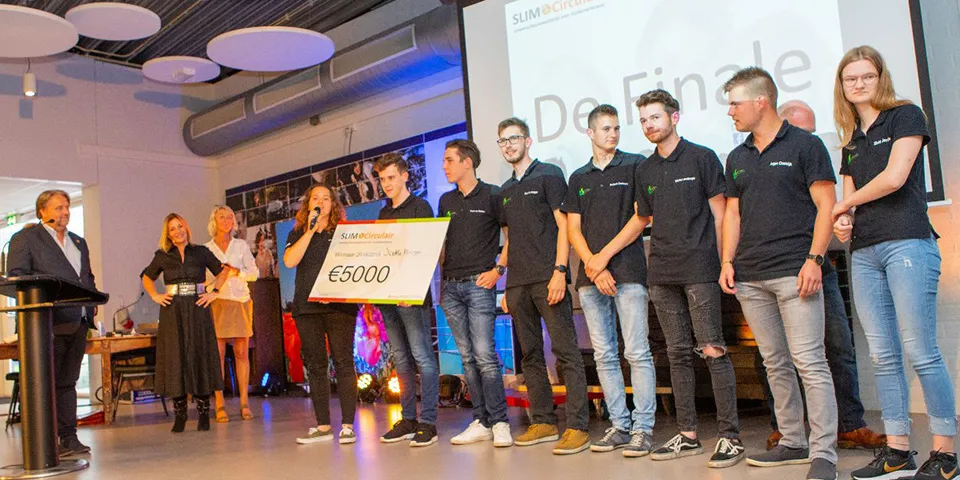
Jury chair Ruud Koornstra faced a difficult decision during the final of the national SLIMCirculair design competition. The jury prize went to the Scalda student team from Vlissingen. The team designed a circular, multi-purpose centre for the municipality of Veere and presented its plans so engagingly that it edged out tough competition by a whisker.
Scalda
During his presentation, Rick de Vlieger from Scalda explained in detail how buildings emit CO2, what circularity means and how smart design and natural materials can make a difference. For example, by using seaweed insulation and designing the building to store CO2. Jury member Raoul Vleugels said: “As an architect, what appeals to me is the scalability and the rationale behind this design. This team really pulled out all the stops and thought carefully about every detail and material. The fact that they also carried out their own research and provided insight into the lifespan of materials was what tipped the balance for us.”
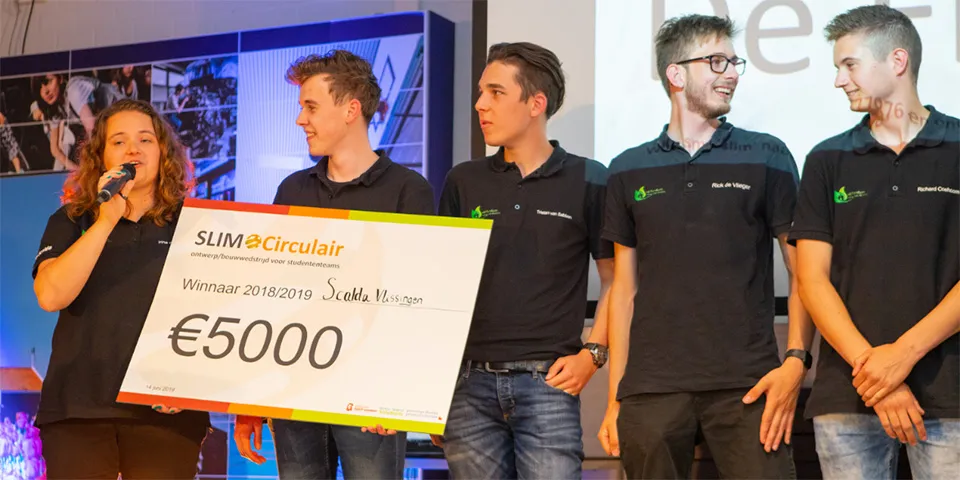
Irina, project manager for the Scalda team, in an initial reaction:
‘We have won the first edition of the SLIMCirculair design competition. We are so incredibly happy and grateful for all the help and support we have received. And certainly for the trust everyone involved has placed in us, it has helped us enormously. We are extremely pleased and over the moon!’
Everyone’s a winner
But they were not the only winners. Koornstra said: “You give us hope and show that we need each other to build circularly.” The jury therefore decided on the spot to present not two but five ‘special awards’. They went to: 1. the water-cooled Deelfabriek by DaVinci College in Hardinxveld Giessendam; 2. the brilliantly developed recycle boulevard by ROC van Amsterdam; 3. the smart Tiny Office by Graafschap College in Doetinchem; 4. the financially attractive transformation of Luifelstede by ROC Midden Nederland in Nieuwegein; 5. the team from Friesland College, which put not only the user but also the surrounding area at the heart of its design for Wegensteunpunt Quatrebras.
Question about this story? Ask your question
Keep following this
Get an email when a new story is published. No account needed.
- ThemeSustainable refurbishment of existing buildings
- SubjectGeneral







