











Some habits in public toilets should not be abandoned
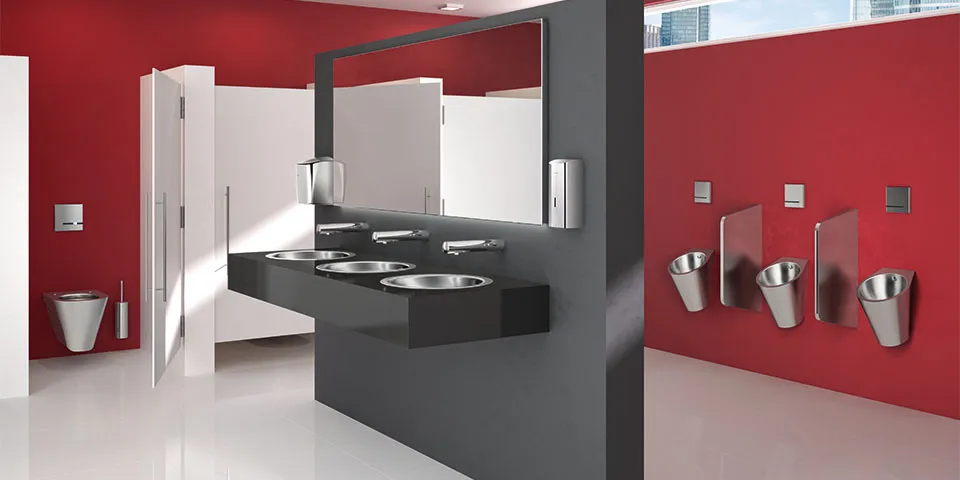
The current advice to work from home on a large scale and close public buildings to help prevent the spread of germs and bacteria has implications for drinking water installations. It is especially important to ensure that maintenance of these installations continues. When they are no longer in use, or are only partly in use, bacteria can easily colonise the biofilm, a community of microorganisms that attach to one another and to a surface in contact with water. Regardless of the current situation, we must make sure that good hygiene habits are reinforced and continued in our public washrooms in the future.
Don’t forget Legionella: keep flushing regularly!
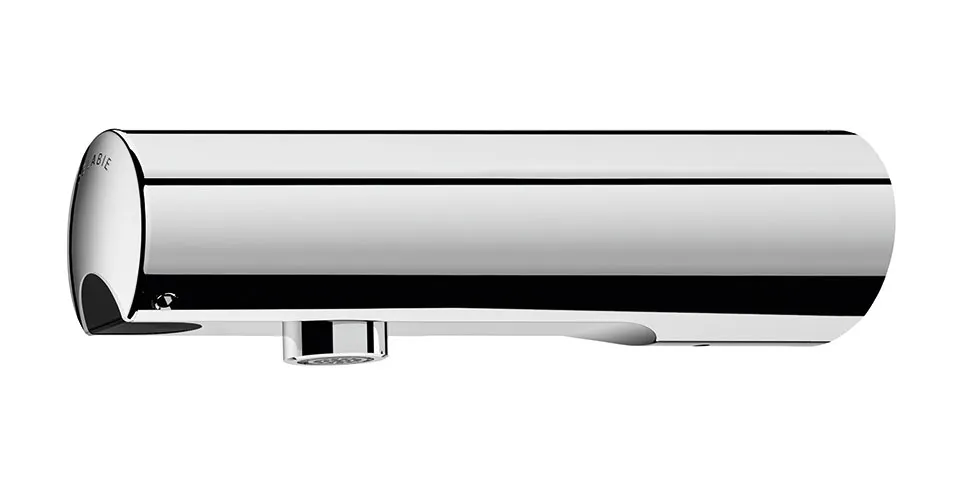
TEMPOMATIC 4 electronic basin tap with automatic periodic flushing prevents water stagnation
Legionella: a public health threat
Legionella bacteria cause Legionnaires’ disease, a respiratory infection that affects people with chronic breathing problems and those with weakened immune systems. The bacteria occur naturally in water and thrive where stagnant water and a source of nutrients are present, for example in biofilm in pipes or in corroded water storage tanks. The bacteria multiply at temperatures of 20-45°C and can be harmful if inhaled in aerosol form.
Schools, swimming pools, offices, airports and hospitality venues are examples of public buildings where sanitary facilities are used intensively. During holiday periods or prolonged closures, drinking water is barely used, which can accelerate biofilm formation in the pipes.
Larger commercial buildings often have facilities teams responsible for drawing up and implementing a Legionella prevention plan, but in smaller buildings the responsibility lies with the owners. They, in turn, rely on local expertise to ensure that their installation complies with regulations. The solutions are straightforward: prevent water from reaching temperatures at which bacteria multiply* and minimise water stagnation in the installation.
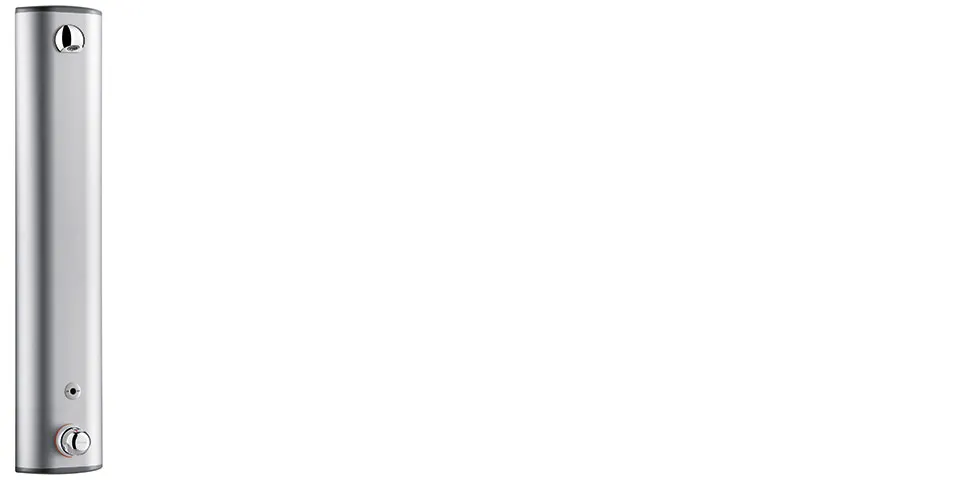
SECURITHERM electronic shower panel with anti-scalding safety
Keep flushing: that’s the message
Every public building is required to check the bacteriological quality of the water in the network by taking regular samples and carrying out analyses. Further tests for Legionella in the water must be carried out when levels of > 1,000 colony-forming units per litre (CFU/L) are measured, and remedial measures must be initiated from 10,000 CFU/L.
Current regulations identify stagnant water in sanitary installations as a factor that promotes bacterial growth. This is why ring mains, or a closed loop, are strongly recommended. European standard NF EN 806-5 also states that sections of an installation that are rarely used should be flushed regularly. The recommended interval is once a week. The German guideline of April 2013, Hygiene in Trinkwasser-Installationen VDI/DVGW 6023, requires measures to flush out water after the sanitary installation has been out of use for more than 72 hours.
Drinking water companies therefore advise building managers to continue implementing their Legionella prevention plans properly. Businesses without a Legionella prevention plan, whether mandatory or not, are also advised to flush pipes thoroughly before putting them back into use. This can be done by briefly opening all taps and letting the water run gently for one minute. However, manual flushing is labour-intensive and costly, especially in larger installations.
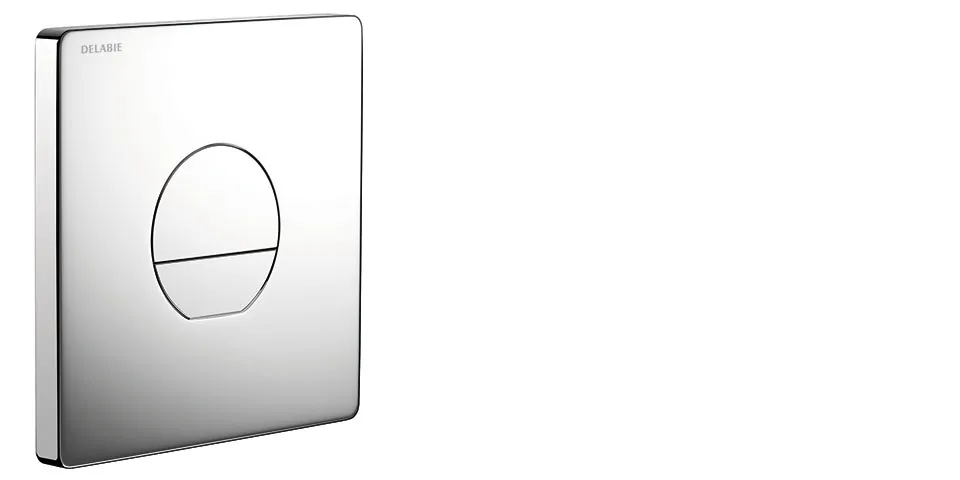
TEMPOFLUX 3 direct-flush toilet system requires no cistern
Hot, hotter, hottest
The General Requirements for Drinking Water Installations (NEN 1006) state that hot water should be produced at a maximum of 70°C, with a circulation water temperature of 60°C. At this temperature, 90% of bacteria die within 2 minutes*. If the temperature falls below this guideline, the risk of bacterial growth increases.
Complex systems and long pipe runs cause temperature drops and increase the risk of contamination. To limit this risk, the length of branch pipes should be kept to a minimum. Insulating the pipes prevents heat loss and, where cold and hot water pipes run alongside one another, insulation will prevent heat transfer. This prevents the cold water temperature from rising above 20°C, at which point Legionella bacteria are no longer inactive*.
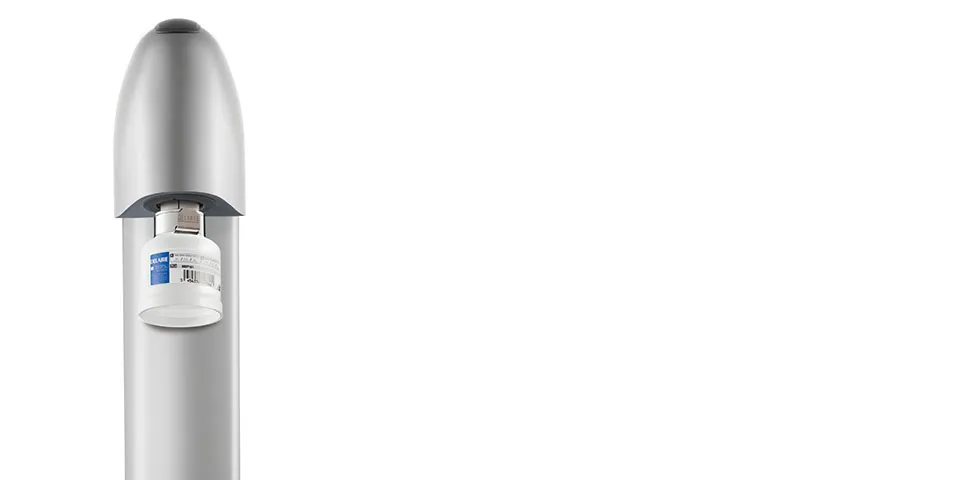
BIOFIL filters provide a temporary solution when bacterial contamination occurs
Technical solutions in the fight against Legionella
DELABIE is strongly committed to combating and preventing bacterial growth and offers a wide range of technical solutions. A central thermostatic mixing valve, for example, enables the building manager to maintain the prescribed temperatures in the network and ensure user safety. The valve should have anti-scalding safety that ensures the hot water is shut off automatically and immediately if the cold water supply fails, and vice versa.
Choosing electronic taps equipped with periodic flushing also prevents water stagnation and, consequently, bacterial growth. Automatic flushing is activated every 24 hours after the last use and flushes for 60 seconds. An anti-stagnation solenoid valve, with no rubber diaphragm behind which a small amount of stagnant water can remain, is an additional advantage in the fight against bacterial growth.
Direct-flush toilet systems are also specifically designed for public washrooms with high visitor numbers. As the flush is connected directly to the water network, there is no cistern containing stagnant water, and therefore no limescale or build-up of impurities. This means there are no elements that promote bacterial growth.
Managing contamination
If water contamination is detected following a prolonged closure of the installation, point-of-use water filters can be used as a temporary control measure until a permanent and safe solution is in place. BIOFIL antibacterial filters, designed for specific applications and with a service life of 2 months, provide peace of mind for both building managers and users. Thanks to innovative hollow-fibre membrane technology for microfiltering water, these filters offer a large filtration surface for higher water volumes and high resistance to clogging, while remaining very compact. These point-of-use water filters are available for both basin and shower taps.
The importance of Legionella prevention has long been firmly on the public health agenda. Reducing the risk of Legionella infection in public buildings presents specific challenges for user safety and system design. By understanding the risks and installing products specifically developed to address these challenges, the risk of infection and scalding can be readily overcome.
*
| Temperature | Legionella growth |
| <20°C | Dormant |
| 24-45°C | Optimum multiplication |
| 50°C | 90% die within 2 hours |
| 60°C | 90% die within 5 minutes |
Source: Scientific and Technical Centre for the Construction Industry (WTCB: 2002)
A business enquiry for Delabie? Get in touch
Companies in this story

Keep following this
Get an email when a new story is published. No account needed.
- ThemeFuture-proof water and sanitary systems
- SubjectGeneral
- CompanyDelabie







