











Step by step towards the smallest possible CO2 footprint
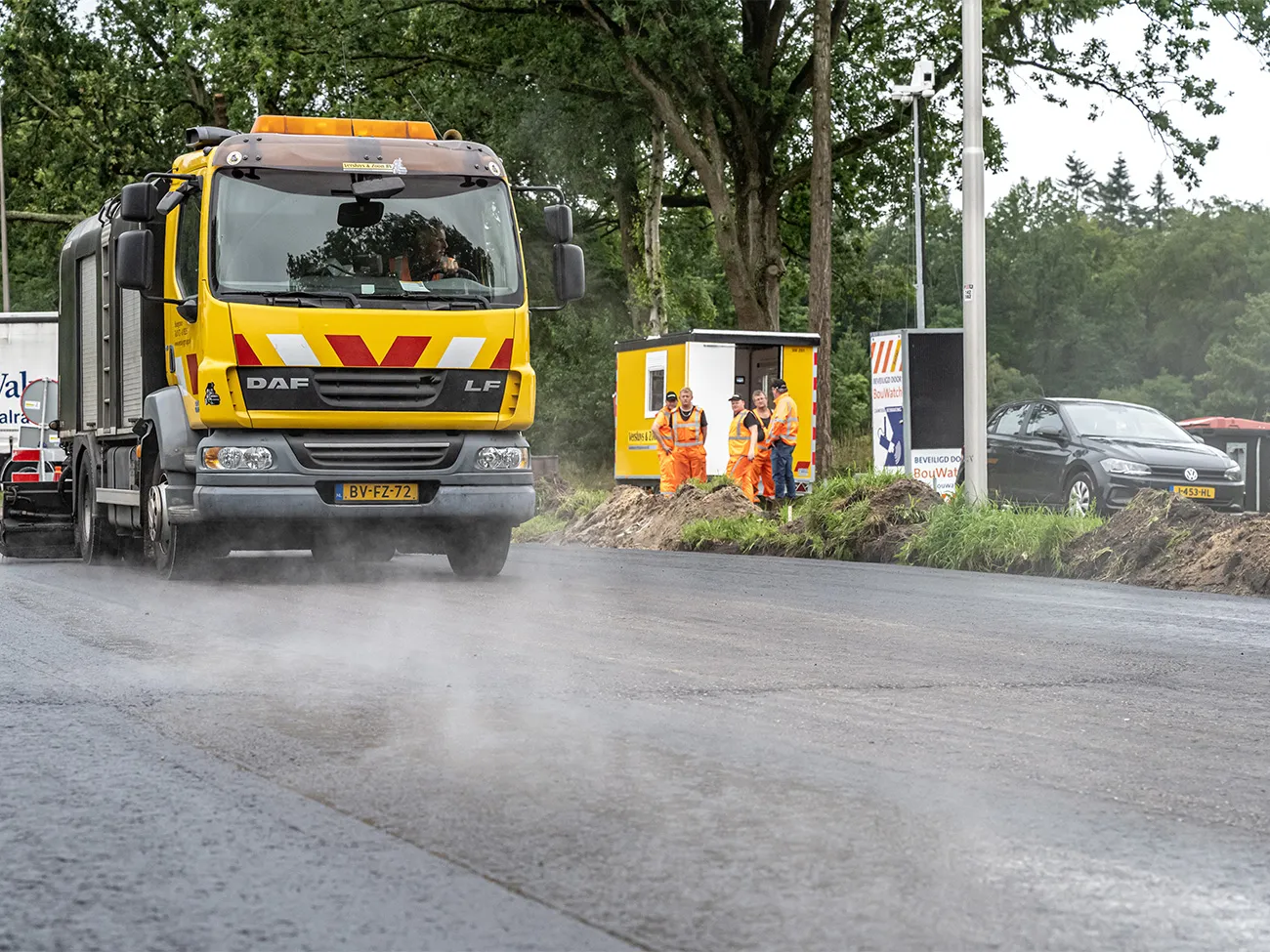
With the 2050 climate targets in sight, an increasing number of construction, installation and infrastructure companies are switching from fuel-powered to hybrid or zero-emission equipment and machinery. Not only because this is their own ambition, but also because municipalities, provinces and other clients are asking them to. Versluys Groep is also stepping up its focus on electrification. Following an electric roller and several electric wheel loaders, this road construction and maintenance specialist has put its first 100% electric welfare unit into service. Top Systems handled the engineering, supply and commissioning of the complete energy system.
Versluys Groep is a family business founded in 1898, primarily involved in developing public spaces in the central part of the Netherlands known as Hollands Midden. This includes road construction and maintenance, as well as road marking and signage projects, traffic engineering and traffic management. “We also play an important role in asphalt production through our stake in an asphalt plant,” says director Patrick van Wijngaarden. “We mainly work at municipal and provincial level, sometimes in collaboration with other SMEs. Sustainability plays an important role in all our projects. As well as being intrinsically motivated to work sustainably and in an environmentally friendly way, we are responding to the wishes and requirements imposed by the government and other clients. By positioning ourselves as a sustainable contractor, we also want to be an attractive employer for both existing and new staff.”
Sustainable initiatives
“We feel responsible for the individual wellbeing of our employees,” Van Wijngaarden emphasises. “This has led to various sustainable initiatives in recent years. In October 2020, for example, we introduced an electric roller, becoming the first infrastructure company in the world to do so. We also have several electric wheel loaders. Our roof is covered with solar panels, which we use to charge our electric small plant and equipment. Last year, we added a sustainable, 100% electric welfare unit. Where possible, we use low-temperature asphalt mixes based on linseed oil, as well as stabilised unbound surfacing (Gravilyn) made exclusively from natural materials for footpaths and cycle paths. We are also exploring the potential of hydrogen-powered vehicles for transporting asphalt and an electric asphalt paver, with the aim of further reducing our CO2 footprint.”
Emission-neutral welfare unit
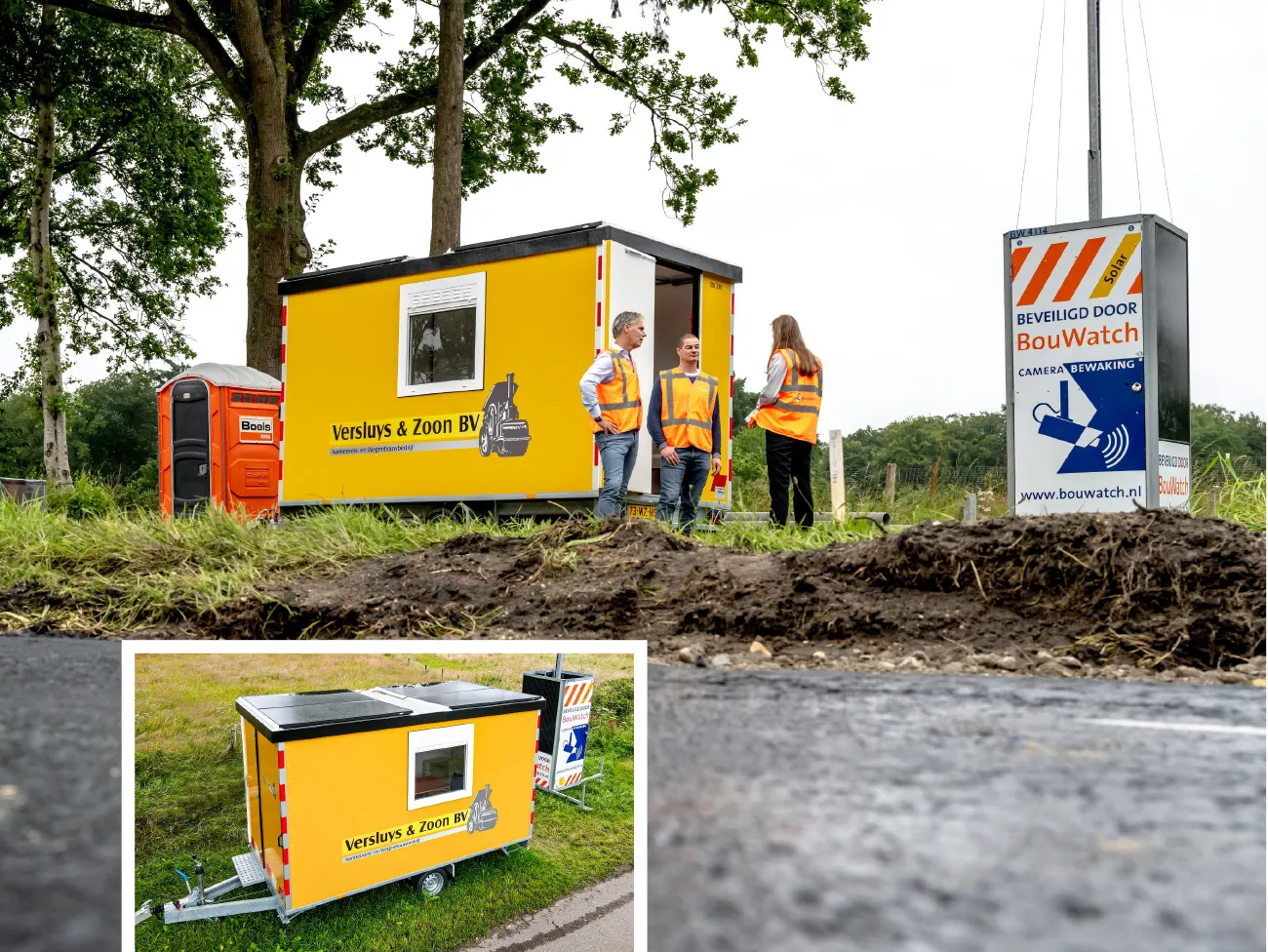
Working with as many local companies as possible fits perfectly with this ambition. “The electric welfare unit is a good example,” says Van Wijngaarden. “Like us, Top Systems is based in Bodegraven. The company also has an excellent reputation in the market for advising on and supplying energy systems. We wanted an emission-neutral welfare unit. We discussed this in detail with other SMEs, and on their recommendation we approached Top Systems. We bought a small welfare unit measuring 4.10 x 2.76 metres. Top Systems then designed the energy system, which we installed in our welfare unit in-house, using clear installation diagrams.”
The energy system
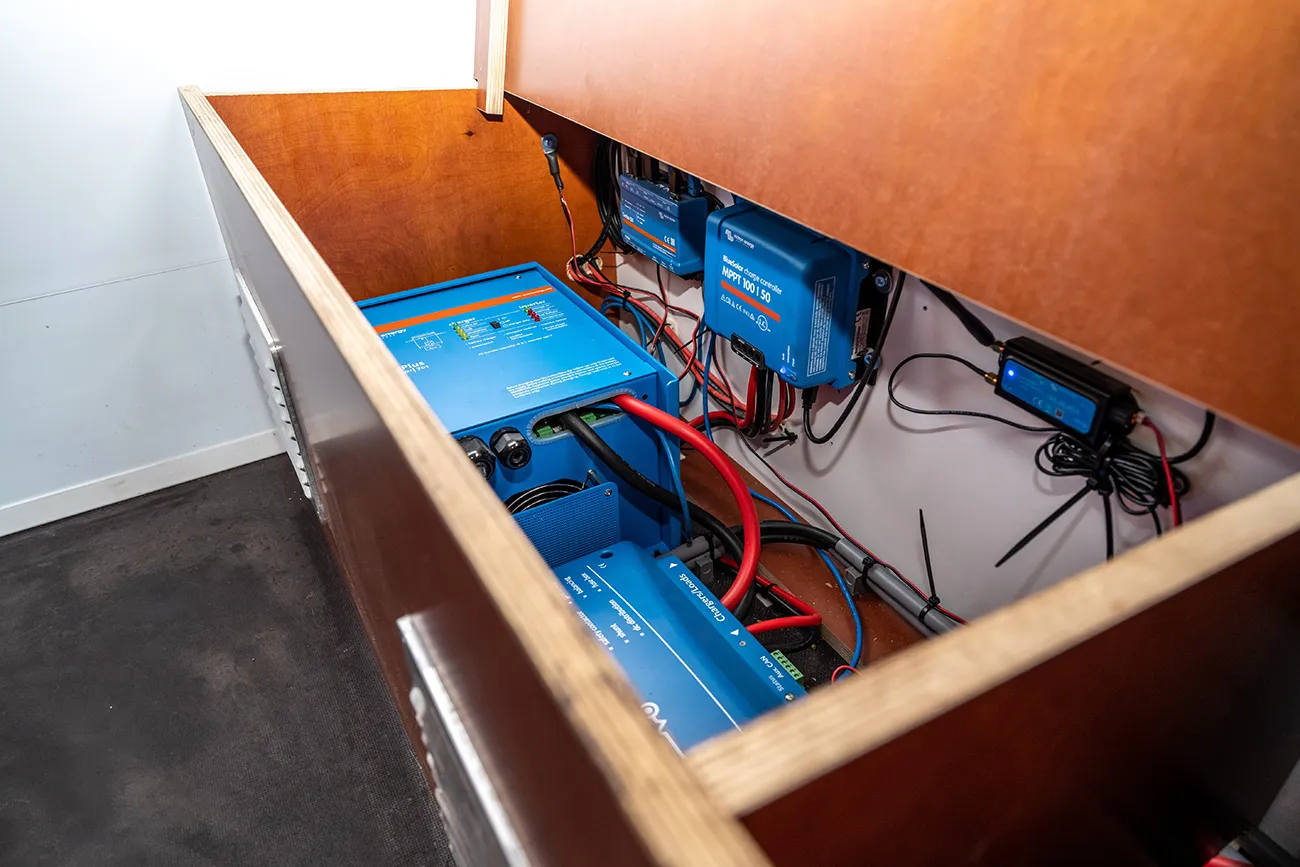
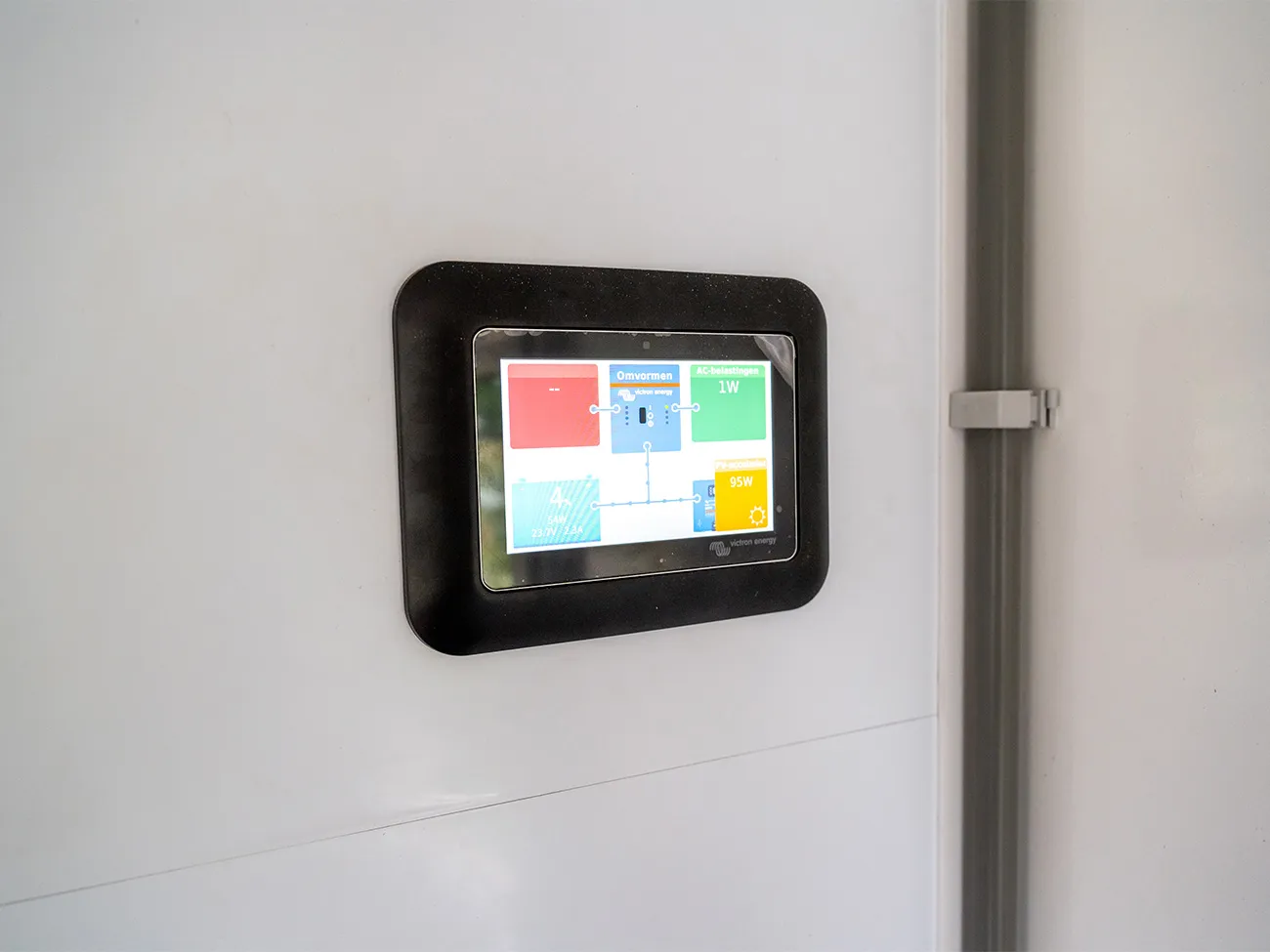
Versluys Groep put the electric welfare unit into service in June 2021. To ensure a sufficient power supply for equipment such as the coffee machine, lighting, laptops and batteries for electric hand tools, Top Systems designed a bespoke energy system. “At its heart is an advanced Victron MultiPlus inverter-charger combination with an input voltage of 230 VAC/24 VDC and an output of 3,000 VA/2,400 W,” says Ronald van den Berg, Construction, Installation and Infrastructure Sector Specialist at Top Systems. “The MultiPlus has a power input for a generator or mains supply and is connected to a 5 kWh lithium-ion battery from MG Energy Systems. The battery system is protected and monitored 24/7 by an MG Master Battery Management Controller to prevent overcharging, excessive discharge and excessively high or low temperatures. The Battery Management Controller also ensures that the battery cells are properly balanced and tracks key parameters such as battery status and energy consumption. A Victron Cerbo GX communications module provides control and monitoring, while a Victron Cerbo GX Touch 50 touchscreen control panel displays all readings in real time. The welfare unit is also equipped with a mobile Victron GX GSM 4G modem, so the readings can easily be accessed and monitored remotely via the Victron Remote Management portal.”
Sustainable energy generation
“Four 330 Wp solar panels have been fitted on top of the welfare unit using plastic spoilers, charging the lithium-ion battery during the day,” says Van den Berg. “A Victron BlueSolar MPPT solar charge controller converts the sustainably generated solar energy into the correct charging current for the battery.” A generator is also connected to the 230-volt input as a backup, says Van Wijngaarden. “However, we did not need this backup during our first project in Doorn, even though the welfare unit was in use day and night! We are very pleased with the system. In future, when our existing welfare units need replacing, we will also switch to 100% electric models.”
Clean Air Agreement
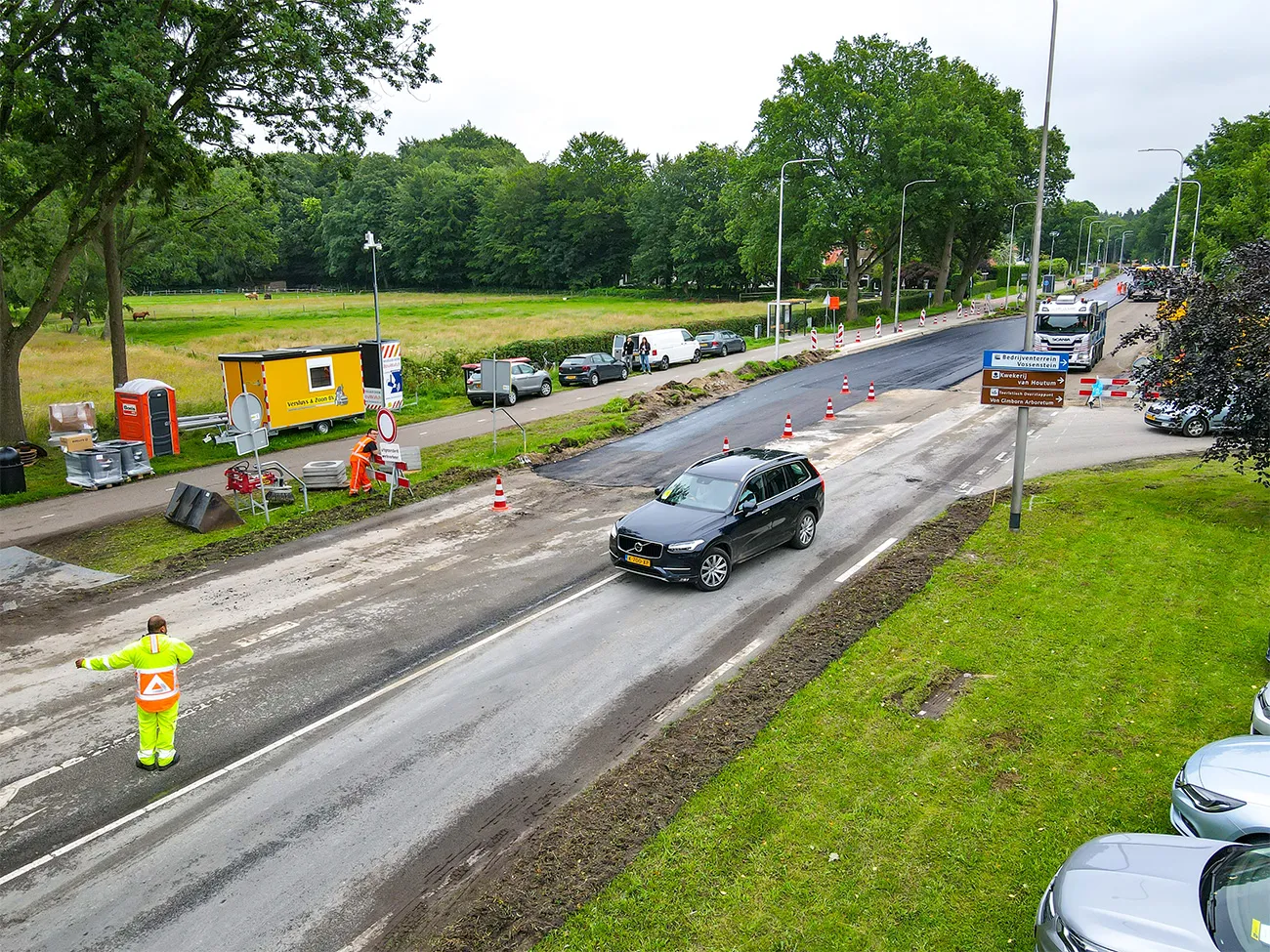
The 100% electric welfare unit is being used on projects for the Province of Utrecht, among others, where Versluys Groep maintains roads in the eastern part of the province. “A sustainable welfare unit had been high on our wish list for some time, but the Province of Utrecht tender accelerated its development,” says Van Wijngaarden.
On 13 January 2020, the Province of Utrecht signed the Clean Air Agreement together with 36 municipalities and 9 other provinces. The agreement aims to reduce emissions of particulate matter and nitrogen dioxide from road traffic, mobile machinery, agriculture, shipping, industry and households. “The Clean Air Agreement builds on existing policies such as the Climate Agreement and the nitrogen reduction programme, and aims to halve the health damage caused by air pollution by 2030 compared with the 2016 baseline,” explains Wim Dekker, Project Leader at the Province of Utrecht. “That is why the use of sustainable, low-emission equipment and machinery is actively encouraged and rewarded on all our projects. This includes electric cars, road construction machinery and small plant, as well as the 100% electric welfare unit.”
A business enquiry for Top Systems B.V.? Get in touch
Companies in this story
Keep following this
Get an email when a new story is published. No account needed.
- SubjectGeneral
- CompanyTop Systems B.V.







