











Swappable batteries make generators redundant
Sustainable, clean and zero-emission construction. This has been a key ambition for Dura Vermeer for several years. “Making materials and equipment more sustainable is essential for a future-proof construction sector,” says Gino van Gemert, project coordinator at Dura Vermeer Materieel BV. “We are keen to pioneer this, working with innovative partners such as Top Systems B.V.”
On the way to a 100% zero-emission construction site
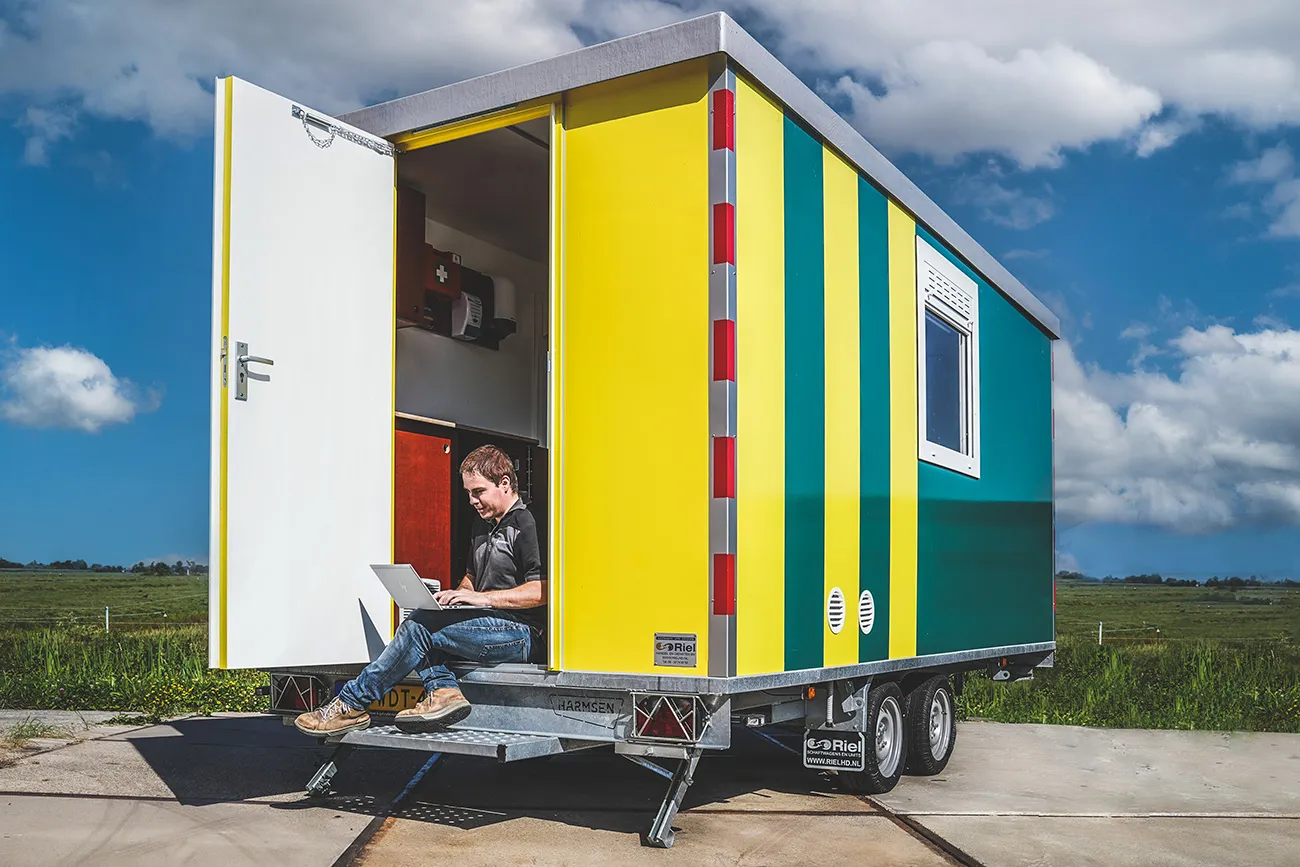
“In recent years, we have electrified a substantial proportion of our small equipment, such as vibrating plates and rammers,” says Van Gemert. “The same applies to our larger equipment, such as lighting masts, mobile site cabins and rollers. We also put our first hybrid site cabins into service in 2017. These cabins enabled us to operate emission-free for around 75% of the year. In the cold, dark months, however, support from a generator was unavoidable. Our zero-emission site cabins now efficiently address this need. In 2021, we put the first ten zero-emission site cabins into service, making smart use of swappable lithium batteries. This technology has been significantly developed over the past few months. At the end of August, our fleet of site cabins was expanded with a further ten zero-emission cabins, incorporating Top Systems’ latest innovation: the Li-Swap battery system. This system takes ease of use, functionality and reliability to an even higher level.”
100% zero-emission, reliable and safe
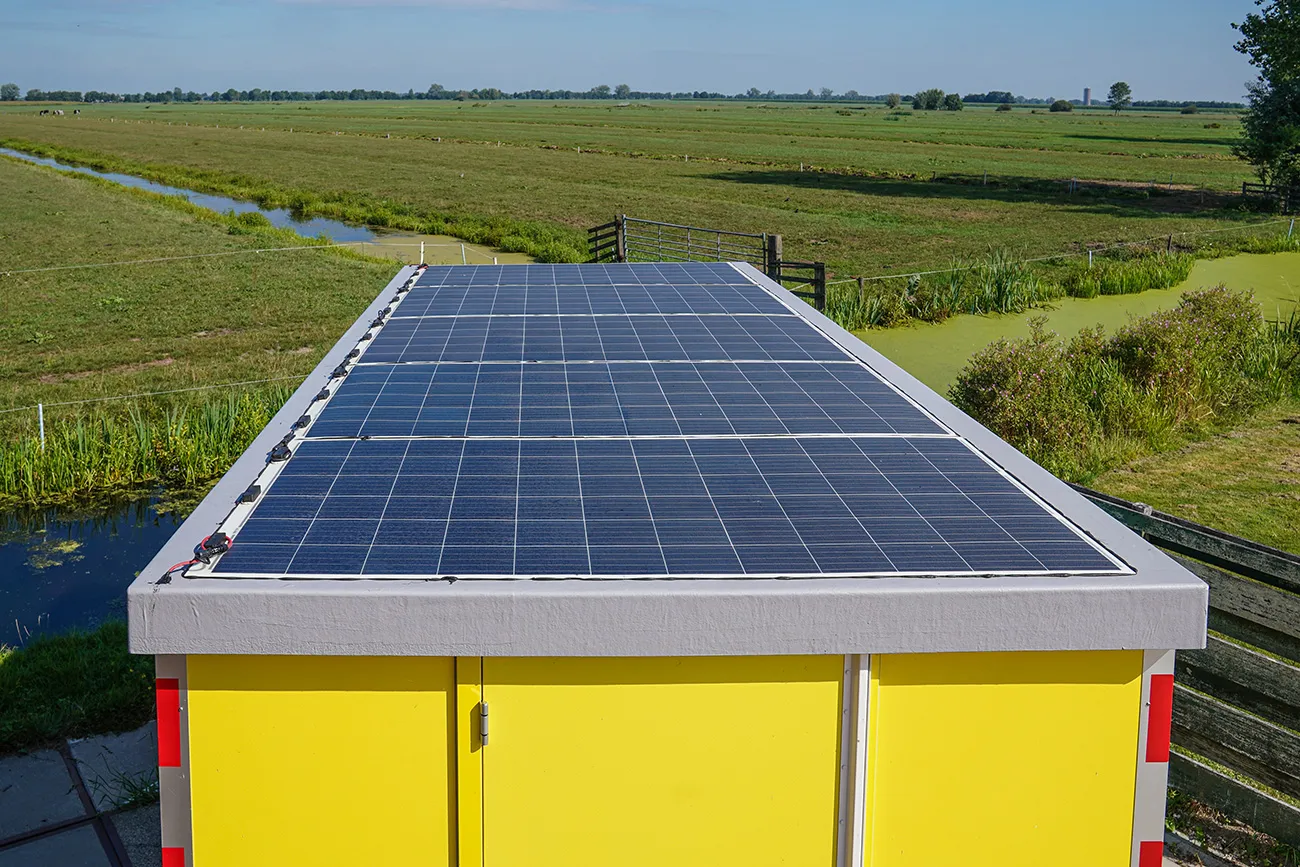
The Li-Swap batteries were developed in response to feedback and questions from the market, says Andre de Kok, Technical Product Specialist (R&D) at Top Systems. “In recent years, we have supplied many battery systems from Victron Energy and MG Energy Systems for use in, among other things, hybrid and 100% electric site cabins and generator solutions. Dura Vermeer is one of our customers. The batteries were installed in the site cabins together with an inverter and an MPPT controller. Solar panels were then fitted across the roof to provide a carbon-neutral power supply. This presented us with several challenges. Roof space is limited, while the site cabin’s energy demand is relatively high. A considerable amount of power is needed to run the coffee machine, lighting, heating and air conditioning, laptops and smartphones. The limited number of solar panels cannot always supply enough power on wintery or cloudy days. As a mains connection is often unavailable, connecting to a generator could solve the problem, but this is no longer permitted on sustainable construction sites. Could we engineer a solution to create a 100% zero-emission, reliable and safe system?”
Compact, swappable batteries
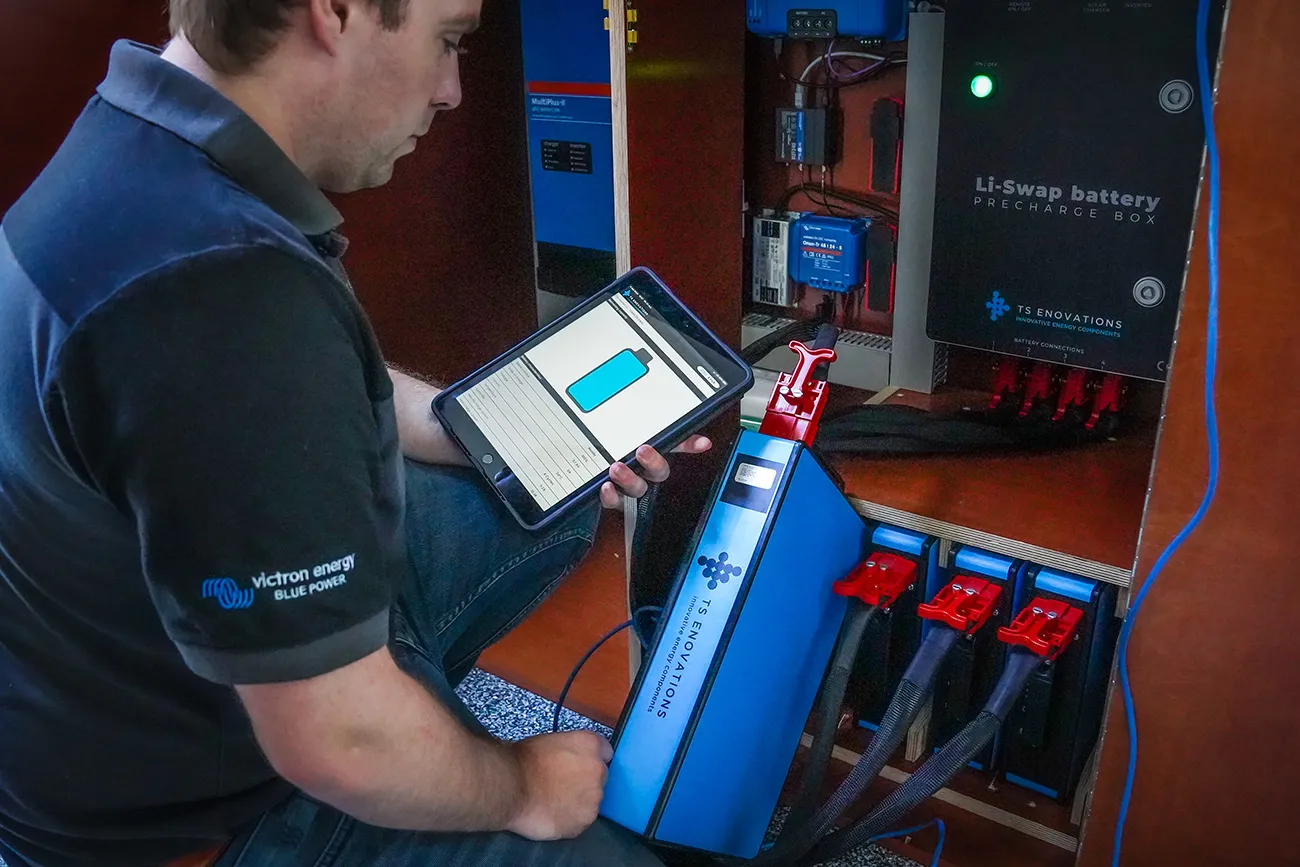
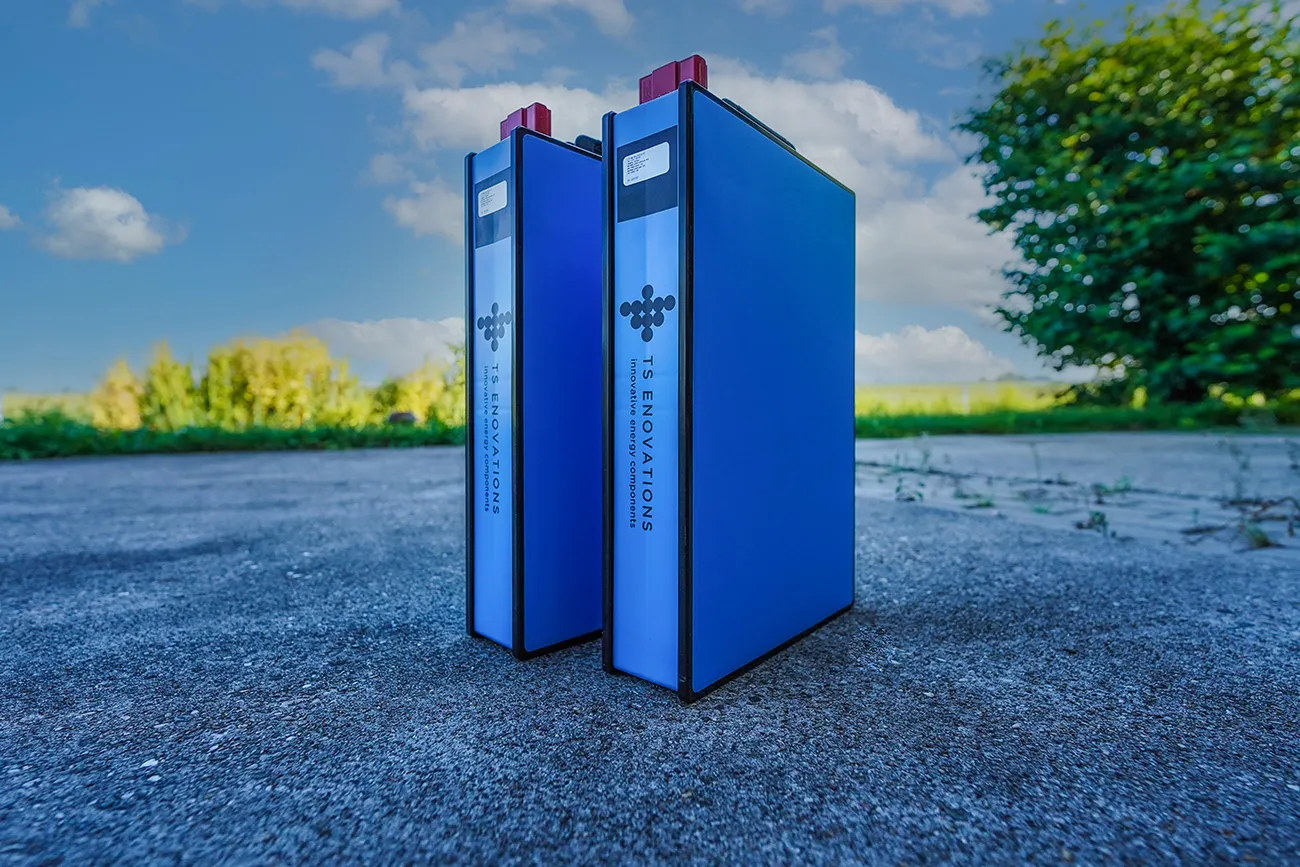
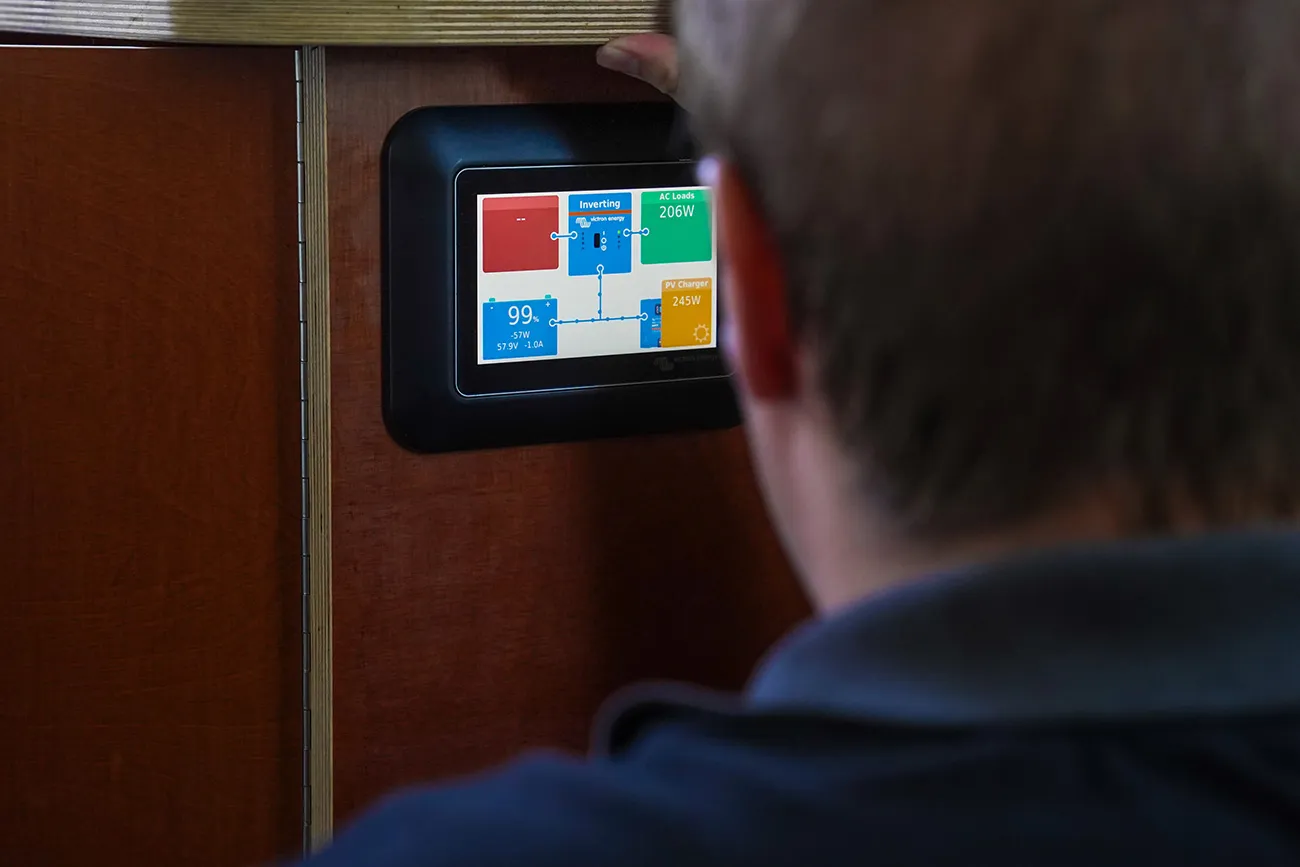
Removing the batteries and charging them elsewhere may seem like a simple solution, but De Kok says it is far from straightforward. There are all kinds of safety systems to consider. “Standard lithium batteries are also much too heavy for these power requirements. Our new, innovative Li-Swap battery system offers a solution. We have developed a system in which the battery capacity is divided between several compact Li-ion batteries (48V/45.5Ah), each with a capacity of around 2.3 kWh and weighing 10 kg, including a handle and Anderson connector. The batteries can easily be placed in a rack, three or four at a time, providing a maximum capacity of 9 kWh. We have also designed an in-house Li-Swap battery precharge cabinet, to which the batteries, a Victron MultiPlus-II 48/5000 inverter/charger, a Victron SmartSolar MPPT 250/60 charge controller and a Victron Cerbo GX with touchscreen are connected.”
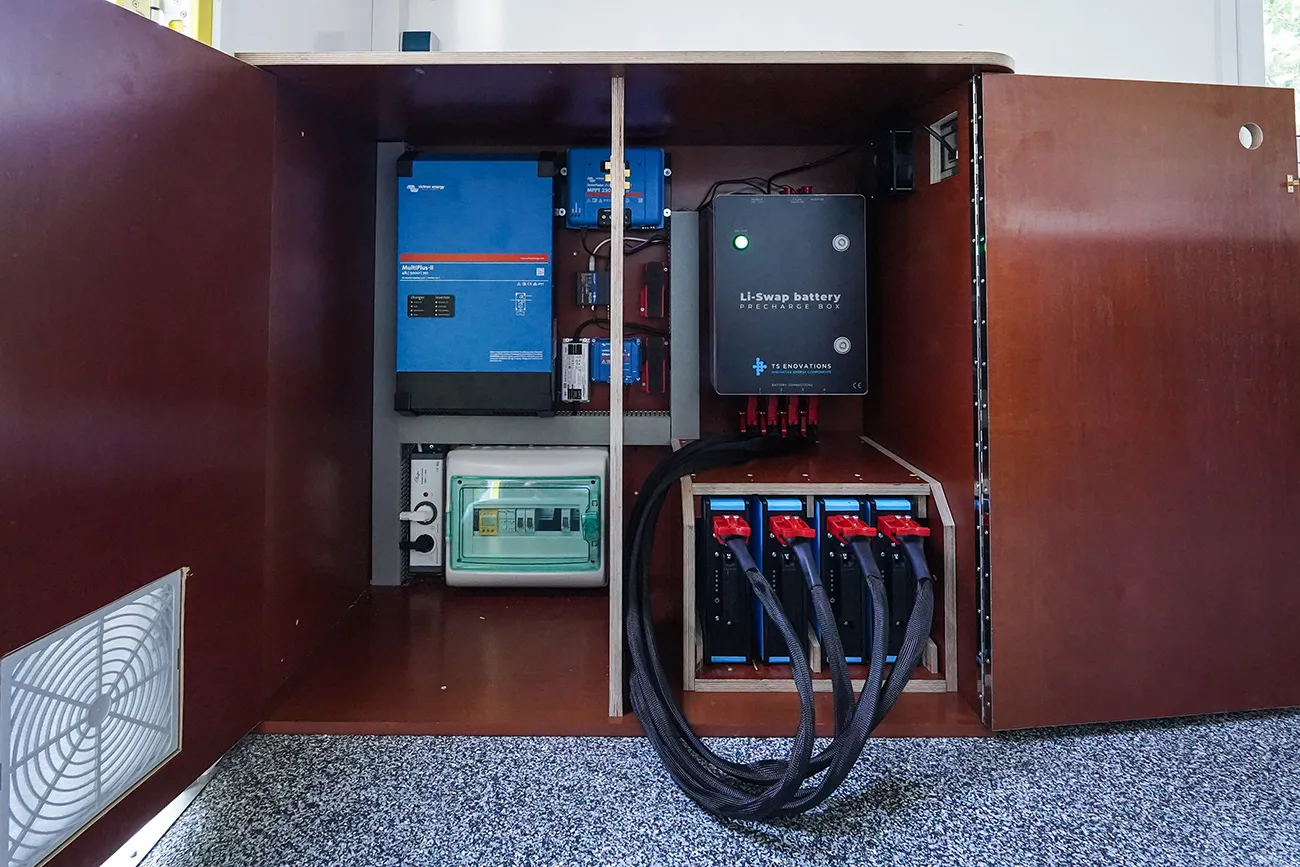
The Li-Swap precharge cabinet prevents sparking when the batteries are swapped, says Ronald van den Berg, Construction, Installation and Infrastructure Sector Specialist at Top Systems. “This is an important safety feature, which also applies to the Anderson connectors.
These connectors are designed so that their terminals (metal pins) can never come into contact with one another, even when the connectors are lying loose on the ground. This prevents short circuits and damage to the connectors.” If the energy system is not used for a set period, it switches itself off. This also helps to prevent energy wastage. De Kok says: “A CAN bus communication protocol and Bluetooth connection ensure optimum connectivity. A Victron Cerbo GX communications module manages control and monitoring, while a display above the cabinet provides real-time information on battery status. This status can also be checked at any time and from any location using our advanced Top Systems app.”
A reliable power supply
When the batteries run out, they can easily be swapped for fully charged ones, says De Kok. “The empty batteries can then be recharged easily using a battery charger in the workshop, at home or anywhere else. This ensures that the site cabin has enough power in all weather conditions. There is no longer any need to charge the batteries on site.” Van den Berg adds: “The Li-Swap batteries’ weight is well within the occupational health and safety limits. They are also very compact, making them easy to pick up and carry.”
The Li-Swap energy systems were delivered to Dura Vermeer at the end of August. “The systems were thoroughly tested before being installed in the site cabins,” says Van den Berg. “Both in-house and as part of a pilot project.” For the pilot, an existing site cabin was converted, says Van Gemert. “The system was then tested for several months, including during construction of the Uithoornlijn. As it was summer and the sun was shining brightly, the batteries were only lightly used. After a few weeks, we therefore decided to bring the cabin back to our yard. There, we charged and discharged the batteries extensively to identify and resolve any teething problems. The tests revealed only a few minor points to address. We put the new battery systems into service at the end of August.” Zero-emission site cabins have now become the standard on construction projects, he says. “Whenever they are available, we always supply the cleanest systems. In this way, we contribute to a cleaner construction sector and a healthy future, both for our employees and for the surrounding area.”
A wide range of applications
The Li-Swap battery system was originally developed for Dura Vermeer, but is now available to everyone. “As well as site cabins, Li-Swap Li-ion batteries are ideal for electric boats, tiny houses, commercial and service vehicles, and other mobile applications,” De Kok emphasises. “In short, the possibilities are endless. We are happy to work with the construction, installation, infrastructure and other sectors to develop a solution tailored to their needs.”
A business enquiry for Top Systems B.V.? Get in touch
Companies in this story

Keep following this
Get an email when a new story is published. No account needed.
- SubjectGeneral
- CompanyTop Systems B.V.
- CompanySolar







