











The advantages of electric ball valves
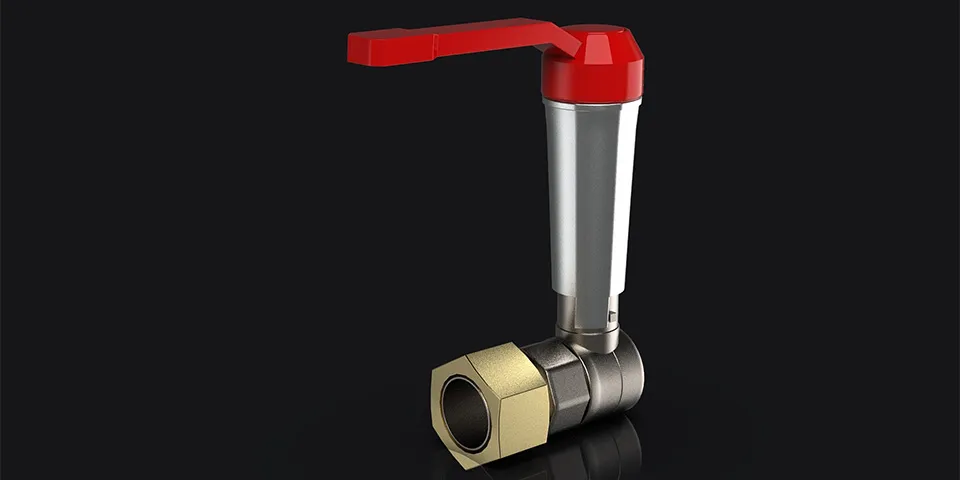
An electric valve is essentially a ball valve operated by an electric motor. It works in the same way as a manual ball valve. These valves are used to control the flow of liquids or gases electrically, using an electric motor. The motor is housed in an enclosure on the valve. This is called the actuator and is connected to the ball valve via a flange. The motor provides high torque and rotates the ball through a reduction gear.
Different types of electric ball valves
As with conventional ball valves, electric ball valves are available in 2-way and 3-way versions. The 2-way ball valve opens when the bore in the ball is aligned with the pipe. When the bore is perpendicular to the pipe, the flow is shut off. The 3-way ball valve is available with an L-port or T-port and can therefore be switched in different ways. 3-way electric ball valves are used in pumping systems with a constant flow rate, for example to mix or divert liquids. Another way to distinguish between ball valves is whether the flange connecting the actuator to the ball valve is standardised to ISO 5211. The ISO standard means that ball valves and actuators from different manufacturers can be combined.
The advantage of an electric ball valve is that it is highly robust and energy-efficient, as it only uses power during switching. Electric ball valves are generally used as zone valves in heating systems.
Connecting an electric ball valve
Various wiring configurations can be used to control the ball valve. For open/close operation, you can use 2-point control, while 3-point control uses 2 control signals, one for opening and one for closing. The best configuration depends on what you intend to use the valve for.
Electric ball valves are also available in special versions for specific applications. For example, modulating ball valves are available with a 4 to 20 mA input or a 0 to 10V analogue input. Ball valves with fail-safe actuators are also available. If the power fails, the valve automatically returns to its resting position. This requires an energy source in the form of a battery, capacitor or mechanical spring.
Question about this story? Ask your question
Keep following this
Get an email when a new story is published. No account needed.
- SubjectGeneral







