











The breakthrough in thermoacoustic heat pumps with Michiel Hartman
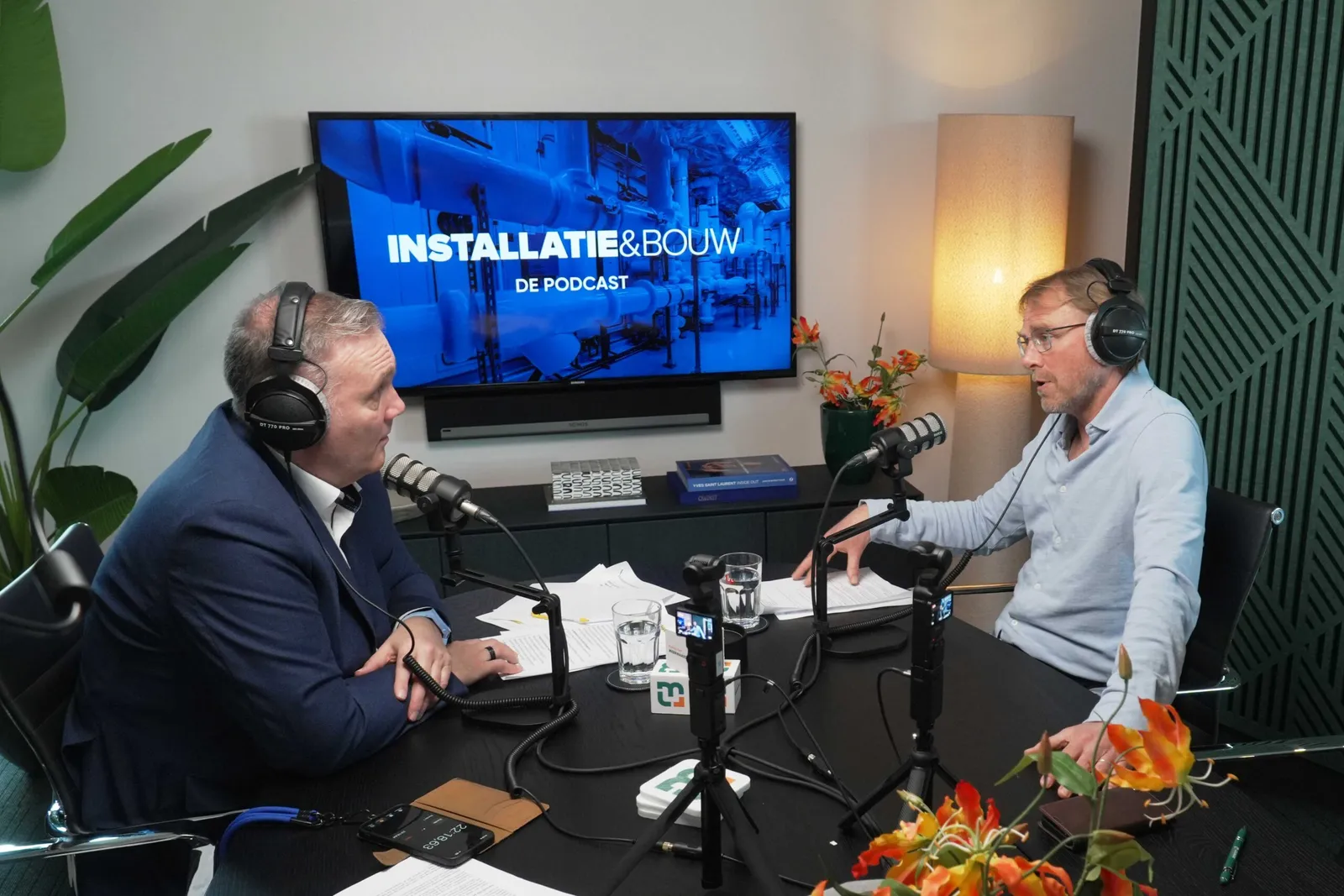
Michiel Hartman, entrepreneur and founder of Blue Heart Energy, explains that the biggest challenge in the energy transition lies in existing homes, not new-build properties. Traditional heat pumps often work less well in these homes because they are poorly insulated, and making improvements is expensive and disruptive.
His company is developing a new technology based on thermoacoustics: sound waves generate heat and cooling, without the use of harmful refrigerants. The system is easier to install (plug-and-play), makes less noise and requires less specialist knowledge from installers.
Pilot projects, including one in Eindhoven, show that homes can be heated without major renovation work. This could save homeowners and housing associations tens of thousands of euros, particularly because costly alterations to the property are not needed.
The expectation is that this technology will come to market from 2027. Hartman urges property owners, VvE’s and installers to prepare and take part in pilot projects. His key message: a new, complementary solution for the heating transition is on the way, one that could make improving the sustainability of existing homes easier and more affordable.
Have a business enquiry for Blue Heart Energy? Get in touch
Full transcript
All chapters (29)
- Welcome and introduction
- Statements on the energy transition and climate
- Michiel Hartman’s background
- How Blue Heart Energy came about
- Who this podcast is for
- An appeal to politicians
- Why it is difficult to make existing homes more sustainable
- The limitations of existing buildings for heat pumps
- Disruption, investment and the role of owners’ associations
- What thermoacoustics is
- How the system works technically
- What installers need to remember
- Noise, simplicity and labour shortages
- Benefits for manufacturers and installers
- Pilot in Eindhoven
- What the pilot showed
- Costs and savings for homeowners
- Demolition, rebuilding and the pace of making homes more sustainable
- Developments abroad
- Climate change and political beliefs
- Lobbying, regulation and Brussels
- Market launch in 2027
- A call to homeowners and VvE’s
- Communicating with consumers
- Climate activism and technology
- 90 seconds of free speech
- Looking back at the pitch
- The key takeaway for listeners
- Closing and credits
Welcome and introduction
Jerry Helmers Welcome to Installatie en Bouw, the podcast for the Dutch installation and construction industries. I’m Jerry Helmers, and today’s guest in the studio is Michiel Hartman. How are you?
Michiel Hartman Very well, thank you.
Jerry Helmers We’re off to a good start if the intro goes well.
Michiel Hartman That’s what I’m counting on.
Jerry Helmers That’s what I’m counting on too. Michiel, welcome. Before we get to know you a little better, who you are, where you come from and what brought you here to the studio in Weert, I’d like to put a few statements to you. That might give listeners an initial idea of what we’ll be talking about. You can agree or disagree, and who knows, we may come back to them later in the podcast. In fact, I suspect we will. So, to start with: are you ready for the statements? I’m ready. Michiel, here’s the first one: the real breakthrough in the energy transition lies not in new-build properties, but in existing homes. Agree or disagree?
Statements on the energy transition and climate
Michiel Hartman Agree.
Jerry Helmers Agree. Here’s another one: in practice, the installation industry is ahead of policy.
Michiel Hartman I agree with that too.
Jerry Helmers You agree with that too. Here’s a third: housing associations are more important than private homeowners when it comes to bringing new heat pump technology into the mainstream.
Michiel Hartman For us, definitely agree.
Jerry Helmers For you, definitely agree. One last statement. I’ll be honest, I only thought of this one at the last minute: my name is Michiel Hartman and I’m simply a climate activist.
Michiel Hartman Agree.
Jerry Helmers Agree, OK. Why did you have to think about that for so long?
Michiel Hartman Because I don’t always see myself as an activist. But perhaps I am, because my real motivation is to improve the climate.
Jerry Helmers Yes, there’s an element of ideology in that, of course, isn’t there?
Michiel Hartman But perhaps the word activist is a bit…
Jerry Helmers But you did say, well, perhaps we should come back to this in 40 or 45 minutes, when we wrap up this recording. Then we can decide whether or not you’re a climate activist after all. That sounds very interesting. You’re an entrepreneur too, at any rate. Tell us briefly who you are, what you do and what brought you here to the studio in Weert for this podcast.
Read the full transcriptCollapse transcript27 more chapters
Michiel Hartman’s background
Michiel Hartman Yes, I’m Michiel Hartman. I’m 54 years old. I live in Haarlem with my wife and 13-year-old daughter. I studied engineering in Delft. I started out in construction. We converted a dredger to a hybrid system, and that got me thinking about how things could be more sustainable. After that, I founded an electric bicycle company. When I left that, I spent some time as chair of the electric transport trade association.
Jerry Helmers So you know all about politics and lobbying too?
Michiel Hartman Yes, I learnt about that then. I learnt how it works, but also that it’s not really my thing. Still, it’s extremely useful in what I do today, and it’s very important too. While I was there, I realised that electric transport matters, but the heating transition is even more important. And certainly in 2015, when I first heard about it, it was the biggest challenge in the entire energy transition at that point. There were no solutions.
How Blue Heart Energy came about
Jerry Helmers And that was also the start of Blue Heart Energy. Tell us a little more about your company in Heemskerk.
Michiel Hartman Yes, that’s right. That was definitely the start. Just before that, I was involved in a… what was it called? A fuel vision for the House of Representatives, which a whole group of us were writing. It became clear that the heating transition was a major challenge. Around the same time, I was director of a foundation, and the CEO of ECN was on its board. He introduced me to ECN, now TNO, where they were working on thermoacoustics. We’ll talk about that in more detail shortly. That was my introduction to it.
Jerry Helmers And Blue Heart Energy had really captured your heart. Can we put it like that?
Michiel Hartman Yes, and it gradually grew from there. Actually, it happened very quickly.
Who this podcast is for
Jerry Helmers Very quickly. Who should listen to this podcast? This is quite an important point in the recording, because it determines whether people switch off or stay tuned. In your view, who should particularly keep listening and spend these 40 minutes captivated, with the volume set to 8?
Michiel Hartman Well, owners of buildings, particularly existing buildings, who want to take on the energy transition and move away from gas. Also the users of those buildings, the installers who will have to apply the technology, architects, advisers working on the energy transition, and politicians.
Jerry Helmers Which politicians?
Michiel Hartman I think national politicians involved in the energy transition. They understand what it’s about, but local politicians should know too, so they’re aware that new technology is coming.
Jerry Helmers Ah, OK. We’re recording this podcast in the last week of March 2026. The Jetten government has been in office for about a month and a half now, if I quickly count back the weeks in my head. Would you like to appeal to Prime Minister Jetten now and explain why he in particular should listen?
An appeal to politicians
Michiel Hartman Absolutely. Can I do that now?
Jerry Helmers Yes, go ahead.
Michiel Hartman Well, Rob Jetten, here goes. What I think is important is that we have several routes for the energy transition and the heating transition in homes. There’s hybrid heating, hybrid heat pumps, as one option. A heat network is another. But there are also homes for which there are no good solutions yet.
Jerry Helmers Understood. Is that also the promise you’re making to listeners? That you’re going to tell us about the solution you’ve developed, the one you came up with? Or the innovation you’ve been driving?
Michiel Hartman I’ll do my best to explain it.
Jerry Helmers If not, I’ll ask you questions about it, Michiel, you know that. Thank you. We’ve agreed to use first names, so let’s make sure we do. Here’s how we’ll structure the podcast. First, I want to talk to you about the problem we’re trying to solve in the market. We need to define that, because if we want to keep listeners with us, I hope they’ll recognise some of what we’re discussing. That will make it more interesting and encourage them to keep listening, as I said. I want to discuss thermoacoustics. What is it? What are we talking about? Then we’ll look at why, as you’ve just said, it matters for existing buildings. If all goes well, you can also tell us about a real-world example. If I remember correctly, there’s a case study in Eindhoven you’d like to talk about. We’ll cover what this means for the installation sector and the market launch of what you’ve developed. We haven’t discussed that launch at all yet, because it won’t happen until later. Then we’ll gradually come to the end of the podcast. You’ll also have 90 seconds of free speaking time. That’s your very own Loekie de Leeuw moment. You can fill it in however you like. The big advantage is that I’ll keep quiet. And then we’ll wrap up. Who knows, we might also return to the statements you’ve just answered somewhere along the way. That’s roughly how this podcast will run, and that’s my promise to our listeners. So let’s start with the first step. There’s a problem in the market, which we can define in terms of the old technology. So here’s the question: why is it still so difficult to make existing homes more sustainable? We all seem to want to make things more sustainable. Why is it still so difficult?
Why it is difficult to make existing homes more sustainable
Michiel Hartman We’ve all said that we want to move away from gas. We want to achieve zero CO2 emissions, including for heating and cooling our homes. And yet we can see that the transition is moving very slowly and that we remain dependent on gas. If you look at it the other way round, you might ask: why is that? It’s because the technologies we have now make it quite complex. I’m mainly thinking of heat pumps, which are among the best solutions for individual homes, but also for blocks of flats.
Jerry Helmers Yes, blocks of flats, right.
Michiel Hartman And of course there are heat networks. Well, heat networks need large, complex infrastructure, with substantial investment and maintenance, which makes them harder to roll out. As for heat pumps, they’re not always suitable for existing buildings. What is a heat pump, after all? It works very well in a well-insulated home that has essentially been designed to be suitable for a heat pump.
Jerry Helmers Because that’s something installers, housing associations and homeowners come up against in practice. They look at a property, or walk through it, and think: this isn’t really suitable.
The limitations of existing buildings for heat pumps
Michiel Hartman Yes, because what do you see? Heat pumps are widely used in new-build properties, where they work well. They start with the heating system, then build a suitable home around it, one that is well insulated and needs low temperatures. In that situation, the heat pump works perfectly. With existing buildings, you have a home that wasn’t built to be suitable for a heat pump. So you have to make changes to the property.
Jerry Helmers And you’re talking about older homes, houses from the 1930s and 1950s?
Michiel Hartman Yes, or 1850.
Jerry Helmers Even older, listed buildings.
Michiel Hartman In fact, homes built from 1990 onwards are starting to become suitable. But people tend to say that homes built before 2010 present challenges. And what you see is, I always think people underestimate what today’s heat pumps can already do. They can actually do much more. But there’s also fear. And that fear is often unwarranted.
Jerry Helmers But hang on, who is afraid?
Michiel Hartman Either the residents or the installer. Because I think today’s heat pumps can already do more than people think. But you do need to know how to install them and what mistakes to avoid. So what are the challenges? You need to make sure your home is properly insulated, but you also need to look at the radiators and pipework already in place… You may need to switch to underfloor heating. So the investment required in these homes is relatively high. It’s not the installation that accounts for the cost, but mainly the modifications to the home, and above all the disruption.
Disruption, investment and the role of owners’ associations
Jerry Helmers Yes, what do you mean by disruption? Because of the modifications?
Michiel Hartman Yes, because people obviously don’t want to have building work done. They live there. And for a housing association, or a landlord, the property is rented out. They’ll only do the work once the tenants move out. That’s when they’ll actually adapt the home.
Jerry Helmers This is really very interesting too. We haven’t got anywhere near the solution yet. But you did say that property owners and building owners need to listen. And owners’ associations too. That’s a very specific group. I think we should mention them specifically: people, keep listening. Is that right, owners’ associations?
Michiel Hartman That’s right, that’s right. They often come to us too, because they’ve heard about us and say: ‘Hey, hang on, you could be a solution for us.’
Jerry Helmers Yes, this is a different story, of course. Owners’ associations, because there’s always a third world war in every one. But you can tell that this target group, as I’ll call it, generally realises something needs to be done. And, yes, the internal discussions about how to sell it often lead to those third world wars within owners’ associations. But it’s very clear that they’re a group that also needs to take the plunge in the end. Do we all want to meet a number of climate targets?
Michiel Hartman It starts with the willingness, and there are lots of groups in the Netherlands that really want to act, but are also facing technical challenges.
Jerry Helmers Yes, exactly. Or a lack of knowledge. They simply don’t know. In the end, it’s also a technical subject for the average man or woman.
Michiel Hartman That’s right, it’s very technical.
What thermoacoustics is
Jerry Helmers Yes, exactly. That brings us to the concept of thermoacoustics. What is thermoacoustics?
Michiel Hartman Thermoacoustics, yes, I’d never heard of it before 2015 either. But what does it actually mean? You can use sound waves to generate heat or cold. Or even convert them into electricity. It’s a technology that was conceived in 1860. In 1970, researchers discovered that sound waves and pressure waves behaved in the same way. Suddenly, two university departments came together. That gave the field a boost. And in 1999, the first thermoacoustic heat pump was built in America. So how does it work? You have a sound wave. In our case, the sound wave compresses helium in a heat pump, which raises its temperature. It’s the same as the valve on your bicycle getting warmer when you pump up the tyre. The pressure increases, and the temperature rises.
Jerry Helmers Hang on, that metaphor makes it a bit easier to understand straight away. Go on, go on.
How the system works technically
Michiel Hartman Thank you. So this happens on the hot side. We have a heat exchanger with water flowing through it. The water carries the heat away, and flows directly into your radiator or underfloor heating. On the cold side, you can absorb heat and also release cold, just like in your fridge. So we can provide cooling on that side too. The helium in our system expands there, and wherever it expands, you can extract cold. That’s the basic principle of our system. Of course, the timing has to be very precise, because we have two linear motors that generate sound waves. They do this at 60 hertz, or 60 vibrations per second. The heat has to be transferred at exactly the right point and at the right moment. So each time, a small amount of helium is picked up and compressed. That happens at that point, and we extract the heat and send it into the home.
Jerry Helmers So what exactly should installers take away from this? I think you’ve explained the technical process behind thermoacoustics well. But what specifically should installers remember? Will it make things easier for them too? Or will they have to study something new, so to speak, if thermoacoustics ever becomes the standard in the heat pump industry? That’s what you’re hoping for, of course. And I can see there are real opportunities, but what should installers remember?
What installers need to remember
Michiel Hartman Well, for installers, it’s like buying a TV. The technology inside doesn’t really matter, as long as the TV is good. The same applies here. What we supply is heating and cooling. The key difference from today’s heat pumps is that we don’t use refrigerants. Current heat pumps use refrigerants, and these will be banned on 1 January 2027, coming up this 1 January. So what you’re seeing is that all these heat pumps are now switching to natural refrigerants, mostly propane. Installers need to get certified to work with this. They don’t need any certifications for our system. In principle, anyone can install it. Our operating principle is also different, which makes the settings and installation much simpler. The installation itself is easier. It’s more of a plug-and-play system. A typical heat pump has around 1,000 settings, usually handled by the manufacturer and pre-programmed, but these are all configured to suit the individual home. Of course, things can go wrong. That’s because a vapour-compression heat pump operates most efficiently at one particular point. Everyone tries to get as close to that point as possible. Our system works very differently. It has a flat performance curve. It operates efficiently all the time. Whether you need more or less output, it makes no difference. It works more like a gas boiler. You turn it up or down, and it’s just as efficient. That also makes it easier to adjust the system to the home as the seasons change and throughout the day.
Jerry Helmers So what I’m hearing is that installation is easier both for the installer and, ultimately, for the user, who gets a simpler appliance, to put it in everyday language. Does it make noise? It must make some, since it generates sound waves. But more or less than a conventional heat pump?
Noise, simplicity and labour shortages
Michiel Hartman Much less than conventional heat pumps. This is where it gets technical again, but we use two pistons, deliberately, and they also cancel out the noise.
Jerry Helmers So they’re wearing a sort of pair of headphones.
Michiel Hartman Yes, literally a sort of pair of headphones. And this may get very technical again, but a vapour-compression compressor operates at different frequencies to adjust its output. We operate at a single frequency. It’s very difficult to dampen compressors that work at different frequencies. With our system, it’s easy because we operate at one fixed frequency. That lets us make it virtually silent.
Jerry Helmers I want to go back to what you said a minute or two ago. You said installation is basically plug and play, and that installers don’t need a certificate. Doesn’t that also make it attractive to installers and installation companies at a time when the labour market is short of skilled workers? They don’t have to look for installers who need all sorts of certificates. Could you say a bit more about that? I’m thinking about everything you’ve told me. Hang on, this has a much wider impact than just achieving sustainability targets. It’s also very helpful when it comes to labour shortages. Or am I wrong?
Michiel Hartman Well, that’s right, because one of the major challenges we see is that you need highly trained staff, highly trained installers.
Jerry Helmers I’ll call it the old method, if you don’t mind. It’s still widely used, but let’s call it that for now.
Michiel Hartman The old method. And you mean the people who used to install gas boilers… Yes, so not thermoacoustics. With current heat pump technology, vapour compression, you need to be trained to work with it. But another thing you see is that, because each heat pump has its own specific settings, installers often choose a particular brand and are keen to stick with it, because they’ve already trained all their staff on it.
Jerry Helmers Yes, familiarity breeds liking.
Benefits for manufacturers and installers
Michiel Hartman Yes, and what we do is supply a motor for heat pumps. We supply it to various manufacturers, and they all work in basically the same way, which is much simpler. So life gets a lot easier for them. They don’t need to be trained. And they can use people with, I don’t know if this is the right way to put it, lower qualifications… In any case, there’s less to learn to install a heat pump with our system properly.
Jerry Helmers This sounds very interesting, perhaps even music to the ears of all those installation companies. Everywhere you go, there’s a staff shortage and consumers are facing longer waiting times, which they don’t want either. I don’t know whether this will solve the labour market problem completely, but it’s very good to hear, I think.
Michiel Hartman Yes, and we talk to a lot of large heat pump manufacturers. They’re essentially our customers. We run pilots with them, often in their labs for now. But when I ask the big players, and there are several large German companies, what their biggest challenge is, they always say, number one: how do I make sure the installers do the job properly? If something goes wrong, it usually comes back to the manufacturer, of course. And everyone wants to prevent that.
Jerry Helmers So it’s not just installers who are happy, the whole supply chain is happy.
Michiel Hartman Yes, because nobody wants things to go wrong. Everyone tries to prevent it, but it still happens. Less and less often, because we’re getting better at it. So that’s going very well, but it remains a challenge.
Pilot in Eindhoven
Jerry Helmers You mentioned briefly earlier that there are pilots under way. If I’ve been correctly informed, there is, or was, a pilot in Eindhoven. Was that with a housing association?
Michiel Hartman Yes, we’re running a pilot with a housing association in Eindhoven. With the current version, which we call the beta version, we installed it in a home, a 1950s house. We deliberately chose not to do anything to the house at all. So we left everything as it was.
Jerry Helmers Old junk.
Michiel Hartman Yes, yes, yes. Those are my words. It’s old junk. You really can’t live there now. And we installed a heat pump with our system in it. From day one, the house was heated and it could produce domestic hot water. So no modifications were needed at all.
Jerry Helmers So the housing association was pretty happy with that?
Michiel Hartman Well, what you have to bear in mind is that this wasn’t the most efficient system yet. It was a beta version. So what you saw was that the electricity bill was still a little high, but they didn’t have to make any of those upfront investments.
Jerry Helmers What upfront investments are you referring to? Just to make that clear.
What the pilot showed
Michiel Hartman Double glazing, new insulation, the radiators, but especially replacing the pipes in the house. None of that had to be done, and it worked from day one. One important thing, perhaps, is that we supply water at 80 degrees, basically just like your boiler did. We could supply it at a higher temperature, but we capped it at 80 degrees because that’s sufficient.
Jerry Helmers So what uncertainties remain at the moment? You use the term beta version, and you’re also a researcher, an entrepreneur, an innovation entrepreneur, so naturally I can ask you: what uncertainties are there still? You say it’s a beta version, what would you like to see improved in the current version? Because I assume you’re collecting an incredible amount of data.
Michiel Hartman Yes, there are 65 of us in Heemskerk, and they’re mainly the actual researchers. I’m the entrepreneur.
Jerry Helmers Yes, but you do give them a bit of direction.
Michiel Hartman I do give them a bit of direction.
Jerry Helmers You’re the boss.
Michiel Hartman I think we do that together. But we’re constantly testing and making improvements. We’ve just completed the new design of what we call the end product. We also know from our computer models how efficient our system will be. We’ve already tested that extensively in our lab. We run three tests every day so we can keep improving it. We’ve reduced the component costs, so between the beta version that ran this winter and the one that will come off the production line later this year, the first one to roll off the line here in Heemskerk…
Jerry Helmers I’ll come and see when that happens.
Michiel Hartman That would be great, you’re very welcome. And we’ve reduced the cost price by a factor of 15. We’ve increased efficiency by another 40%. And of course, we’ve checked its robustness. It needs to keep running, after all. When it goes into a home, it has to put in the hours. We’re already doing that with individual components, but ultimately it has to be tested in real-world conditions. That’s also what we’re doing in the tests currently under way in those homes. Not just in Eindhoven, but also in the homes of some of our own people.
Jerry Helmers Some of your people, what do you mean, employees?
Michiel Hartman Employees, yes.
Jerry Helmers Who are making their homes available to your innovation ambitions.
Michiel Hartman Yes, I asked three years ago who might be interested. Three hands shot straight up. There was enough interest to go ahead with it. Great. I couldn’t get it past my wife at home.
Jerry Helmers Oh, is there a Mrs Hartman? Should we have a word with her?
Michiel Hartman That might be a good idea.
Costs and savings for homeowners
Jerry Helmers That might be a good idea. But a quick digression. Do you know ABBA’s song Money, money, money?
Michiel Hartman Yes, I know it.
Jerry Helmers Because you just said the cost price will go down by a factor of 15. Can you put that into concrete terms for listeners, and perhaps even for the few consumers listening to this podcast? How many euros could this save on an average 1950s or 1960s house? Because 15 times is 15 times, but that doesn’t really tell you anything.
Michiel Hartman Of course, there are several buckets, or pots, that the money goes into. One is the cost of the installation itself, the heat pump. Our costs are about the same as for vapour compression.
Jerry Helmers Okay, so that’s a draw.
Michiel Hartman So once we’re in full production, the manufacturer will be able to bring our system to market at the same price as vapour compression. That’s the aim, so to speak. But where are the real savings? The real savings are for the homeowner. Based on our calculations with housing associations, the average saving is between 17,000 and 35,000 euros per property.
Jerry Helmers That’s serious money. Between 17,000 and 35,000 euros. Of course, it depends on the size of the house. But that’s a saving of between 17,000 and 35,000 euros.
Michiel Hartman Yes, that’s what we see on average. Of course, better insulation means lower energy consumption. Which is a good thing. Good for the planet, and good for your wallet.
Jerry Helmers But not everyone has the money, and it’s not always possible with every home. So at a time when, well, as I said, we’re recording this podcast in March 2026, the world is behaving a bit strangely at the moment and you have no idea how things will turn out. Consumer confidence is falling. I’d say this is quite an additional unique selling point if you want to sell this idea. Because consumers still have to make some investment in the end.
Demolition, rebuilding and the pace of making homes more sustainable
Michiel Hartman Yes, ultimately they will. But take this example again. This housing association estimates that it would have to invest 100,000 euros to bring this 1950s house up to standard. So the question is: do you even do that, or do you demolish it? That inevitably raises the question of sustainability, because of the impact of rebuilding and everything that involves. A very good architect came to see me on Friday and said: these days, I have to show how much CO2 a project will generate. The materials used are also becoming increasingly important. It all means CO2 emissions, it all means nitrogen emissions, and it’s all being calculated these days. So material savings and cost savings are also being scrutinised. If you can avoid all that, you can also get off gas with what you already have. And that’s really about the speed of it, the euros invested per unit of CO2 saved. That’s what we claim, and next year we also want to demonstrate publicly that we can make a major contribution in that area.
Jerry Helmers So a win-win, as a not very creative presenter would put it. But win-win is ultimately the idea, of course.
Michiel Hartman That’s how I see it.
Developments abroad
Jerry Helmers Yes, exactly. What’s happening in this field abroad? This also feels very much like an innovation that you’ve developed at Blue Heart Energy, or that you’re trying to promote. I can hear that in the passion with which you speak, but can you also learn from how people are doing this abroad, or are there examples? Can you tell us a bit about that?
Michiel Hartman Yes, as I said earlier, the first one was built in the United States in ’99. The timing was a bit unfortunate, because then came 2008 and the financial crisis. Before that, people were working on the energy transition, but there wasn’t really any interest in it. It only started to pick up again a bit after 2010. And now, of course, we’re right in the middle of it, because we can all see it happening around us. There used to be a lot of climate change deniers. Now I think there’s only one left in the world, and he’s in America. But at the moment, everyone knows it’s possible. So what’s happening abroad? In ’99, thermoacoustics spread around the world. It went to Japan, France and Canada, and the United States was already involved. It also came to the Netherlands. It landed here with one company in the east of the country, Sound Energy. They’re still working on a completely different application. It also ended up at TNO in Petten. They all got to work on it. As far as I know, there’s a company in Norway working on an industrial application. And in France, there’s a company that was initially working on a different application, focusing on cooling, and in 2019… they started copying us.
Jerry Helmers That’s a very good application. So are we really… You say they’re copying you. Are we leading the way in this field in the Netherlands?
Michiel Hartman Worldwide, yes. We’re definitely leading the way. We’re the only ones in the world to have managed to do it so far. And the French, from what I’ve just seen, are now running their first pilot in a home too. They’ve made different choices, but they’re still a long way behind.
Climate change and political beliefs
Jerry Helmers Yes, earlier you said there’s one person in America who doesn’t see it that way. I assume you were referring to President Trump.
Michiel Hartman Yes, that’s right.
Jerry Helmers Yes, what specifically would you want to say to him? Because one way or another, I also want to make the link to politics here. There has to be political will somewhere, of course. And Mr Trump simply sees things differently. So what would your message to him be? And to all his fans and supporters, and the many people who voted for him.
Michiel Hartman I think we have just one major problem on this planet. Wars are breaking out now, and that’s a danger. We’re all investing in defence, defending ourselves, which of course we have to do. But I think the real danger facing us is climate change. When I read in the papers again this week about everything that’s happening, how temperatures in California are now 16 degrees higher than ever before, and there are already heatwaves in California in March…
Jerry Helmers Yes, okay, but we have to deal with the political reality that an awful lot of people still play it down. So that’s why I’m asking: how would you convince President Trump, and all the people who think like him, because there are plenty of them in the Netherlands too, that ultimately demand will also come from the market, from the bottom up?
Michiel Hartman What I hope, I don’t think I… I’m not so arrogant as to think I can convince all those people, because of course there are people who aren’t convinced. And I think President Trump is one of them. But I do hope, and I think the majority in the Netherlands have come round to this by now, and in Europe too, that we can all see that things have to change.
Lobbying, regulation and Brussels
Jerry Helmers So Prime Minister Jetten, to take it down a notch in the world order, is probably someone you could convince. At any rate, the party he comes from already stands for green policies and sustainability, of course. And we need to handle our natural resources carefully. He could be persuaded, because my immediate follow-up question is: are we going to lobby for this?
Michiel Hartman We’re coming back to what we talked about at the start. Yes, well, I think so. I think that… Look, the difficulty for a politician, of course, is getting behind a technology that hasn’t yet proved itself. So the most important thing is for us to prove ourselves and bring them along as we build that body of evidence. Then they can develop policies around it too. We’ll need support with the rollout as well. We need to be included in all the guidance documents and regulations. And of course there are grants for practical systems like this.
Jerry Helmers Are you good at lobbying? Or would you say you’ll leave that to other professionals? You have had some experience of lobbying in other roles. But can you do it for this sector?
Michiel Hartman I think I understand how it works, how the game is played. There are others who are much better at it, and fortunately I have a good colleague who really understands it. I can easily go to Brussels with him. New rules for heat pumps are also on the way, including rules for new technologies. They’re even expected to be published this coming Friday.
Jerry Helmers And by this coming Friday, we mean the end of March 2026.
Michiel Hartman That’s right, the end of March 2026.
Jerry Helmers It could also be that someone doesn’t listen to this podcast until June, or in the summer, or whenever.
Michiel Hartman Yes, that’s true. That’s a very good point. No, so even the fact that… Until now, everything has been vapour compression, of course, and all the rules and validation processes for heat pumps have been based on a different technology. We ran into that too. But in the Netherlands, that’s no longer necessary. It’s all handled at European level, which is actually a good thing. And these days, we can find our way through that process too.
Market launch in 2027
Jerry Helmers Understood. You’re hoping for a commercial market launch in 2027. That’s the plan for now, at least. Are you on track to meet it?
Michiel Hartman Yes, so far.
Jerry Helmers You were at VSK recently, of course… As I recall, that was the first time you presented it. Is that right?
Michiel Hartman Yes, we were in Germany last year too. Then we said: we’re coming. But last February at VSK in Jaarbeurs in Utrecht, we announced for the first time, together with a customer, Eplucon, a Dutch company, and Ecoforest from Spain, that they would be bringing a system containing our technology to market next year. Blue Heart inside, or powered by Blue Heart.
Jerry Helmers So yes, at the end of the day, you have to make some money too, of course.
Michiel Hartman We live in a capitalist world, after all, and you have to play the game.
Jerry Helmers Because otherwise, you can forget about it.
Michiel Hartman No, exactly.
Jerry Helmers But will the time come, perhaps from next year, when the commercial launch happens, that the grants will need to be in place to encourage consumers to choose it, or at least give property owners and housing associations more options? Because sometimes, if you want to do something good for the world, you need to give it a bit of a push.
Michiel Hartman Yes, well, look, we’re very grateful to the Dutch and European governments for the grants we’ve received, and there have been quite a few, both from Europe and the Netherlands. But they were mainly for development. Next year, you’ll see us running a kind of pilot and rollout demonstration programme, with larger demonstrations. We’re naturally looking for grants for that, and we’re working on it. The difference is that from late 2027, so the winter of 2027, we’ll need to be included on the lists that also make consumers eligible for grants.
A call to homeowners and VvE’s
Jerry Helmers There’s still a lot to do. We still have a lot to do. Right, we’ll see whether we can manage it in 2027. Perhaps you should come back on the podcast around then to see whether all the promises, or the hopes you’ve expressed today, have come true. I think that would be very…
Michiel Hartman Yes, we’ll see.
Jerry Helmers I want to go back to a few of the statements we discussed at the start. You said the real breakthrough in the energy transition won’t come from new builds, but from existing homes. I understand even better now why you agreed with that. You could call it a call to action. What’s your ultimate message to owners of existing homes who also need to make their properties more sustainable? What should they do first thing tomorrow morning?
Michiel Hartman Well, the first thing they should do is look at what they can do now to make their home more sustainable. Start taking stock of what needs to be done. And start planning financially, as well as in terms of timing, residents and so on, so that they’re ready for work to take place. And finally, go to our website, where we explain how it works.
Jerry Helmers Ah, OK. You’ll probably mention that website later in your 90 seconds of commercial airtime, your Loekie de Leeuw moment. I think we can also conclude that the installation sector is ahead of policy in practice. You agreed with that, but I’m thinking now, it’s actually logical. You always agree with statements like that, because policy can only be made once something has been developed. We can see it now in AI, to take an example outside the installation sector. AI has been developed, everyone is using ChatGPT, and now we’re all thinking: perhaps we should introduce some laws and regulations for it. So that makes things difficult for installers too. They can already see something promising emerging on the market, but perhaps can’t do much with it yet because existing laws and regulations are still in place. Is that a fair assessment?
Michiel Hartman Yes, I think that’s right. I think laws and regulations always lag behind the market. But regulations designed for old systems can sometimes hold things back too. So the most important thing is to keep innovating and to be able to try things out.
Jerry Helmers And I think homeowners should also start thinking about what they can do. But specifically, VvE’s, both large and small. Suppose someone on a VvE board is listening now. What can ordinary people do?
Michiel Hartman Yes, what’s really important is what we do… Look, we provide the engine for a system, of course. So what we need is an installer and an adviser. That’s not something we can do. We’re too small. We need to focus on development. But we can support people and help with the system. I think if they get in touch with us, several have already looked into what’s available. And where they get stuck, well, we know where that is. I think we can make a difference by helping them bridge that final gap.
Communicating with consumers
Jerry Helmers I understand how your supply chain works and what role you play in it. But is Blue Heart Energy also working on consumer communications?
Michiel Hartman We’ve only just started, and we’re taking it very cautiously. Yes, it’s a learning process. What exactly should we tell people? But we’re not equipped to deal with every consumer either. So we need to focus on development and on manufacturers. We mainly want to run pilot projects with customers who want to roll the technology out and see its potential. We’ll publish the results of those pilots and show people: look, it can be done.
Jerry Helmers Yes, I understand. But it would be good if, at some point, there were some interest coming up from the grassroots too.
Michiel Hartman Yes, we’ve just started a newsletter, which we’re putting out for the first time this year… And we’ve… This year marks our tenth anniversary.
Jerry Helmers Oh, cake? Why didn’t you bring any?
Michiel Hartman Good question. Why didn’t I?
Jerry Helmers Why didn’t you bring any? Yes, exactly, perhaps you should have. Then I could have congratulated you, but it’s true, you’ve been going for ten years. Well, that’s a promise for next time: we’ll have cake. Thank you.
Climate activism and technology
Jerry Helmers You also said at the start, or rather, you agreed with the statement: I’m simply a climate activist. From what I’ve heard here, well, I mean, I know climate activists who make themselves heard in the media. This sounds like a rather nuanced position. I don’t know if you’re the sort of person who chains themselves to the tarmac on the A12?
Michiel Hartman I have friends who do that, and I understand their reasons. But I’m not one of them. Because I’m someone who… I think we’re all part of society, and above all, we need to make sure everything keeps running and is supported. My way of being an activist is… I believe technology has brought us a lot. It has brought us a lot of prosperity, luxury and comfort. But at the moment, it’s also exhausting the world’s resources.
Jerry Helmers So really, the statement should have been: I’m a bit of a climate activist. Then you might have agreed with it even more wholeheartedly.
Michiel Hartman Yes, or perhaps a technological climate activist.
Jerry Helmers Oh, I like that. We’ve got breaking news: a new phrase. Technological climate activist.
Michiel Hartman Technology has made things difficult for us, it has brought us a lot, but it can also make things better again. That’s what I think. Because I don’t think we ever want to go back to living in a little hut on the heath wearing a lambswool jumper. A very small group of people can do that. I respect them, enormously. But I think most people…
Jerry Helmers Yes, the world is a bit more complicated than that.
90 seconds of free speech
Jerry Helmers Are you ready for your 90 seconds of fame? In this podcast series, I always call it the Loekie de Leeuw moment. For our younger listeners, Loekie de Leeuw used to appear in adverts on Dutch television. That was how you knew the adverts were about to start. Older listeners…
Michiel Hartman I remember him.
Jerry Helmers Yes, we’re getting on a bit, you might say. No, you get a minute and a half of free speech. I’ll keep quiet for once, which will be nice. You can say whatever you want. You can promote your company, or go back to something we discussed on the podcast if you think you now have a better answer to a question you were asked. It’s up to you. Are you ready for your 90 seconds of fame?
Michiel Hartman I’m all set. Yes, we at Blue Heart Energy make engines for heat pumps, and we’re now looking for project partners in the Netherlands, or indeed across Europe, who are working with existing homes and see a challenge there. Ideally, we’re looking for larger organisations that are also willing to run pilot projects next year, in 2027. I’m thinking specifically of property owners, homeowners and housing associations. It could be commercial or social housing. Installers, architects, energy consultants, everyone involved in the supply chain. We’re already scaling up and rolling out these kinds of projects. But in this market, of course, we see that there are so many different applications. We want to demonstrate as many different applications as possible next year, to show that they really can work in practice. So next year will also be about validation, not necessarily for us, because we’re already doing that in our lab, and in our own homes, as well as in the laboratories and research institutes of the larger heat pump manufacturers. But we want to do it with you too, so that you can see for yourselves the difference between vapour compression and our technology.
Looking back at the pitch
Jerry Helmers Michiel, of course I was watching the clock. I don’t know whether you had your eye on it too. I told you: 90 seconds, or a minute and a half. By how much did you go over?
Michiel Hartman I’d say about 37 hundredths.
Jerry Helmers No, it was three hundredths.
Michiel Hartman Oh, three hundredths. I glanced at the clock.
Jerry Helmers We’ve never got that close here in the studio in Weert. So, three hundredths of a second. Well, you absolutely nailed that final pitch. So, congratulations.
Michiel Hartman At least that part went well.
Jerry Helmers Yes, it went really well. And I think the rest of the podcast went pretty well too. I hope, and I think, that the listener has gained some insight, or at least an idea of what you’re saying and how it works. And fortunately, you’ve avoided a lot of technical jargon. I think the audience for this podcast will have understood it.
Michiel Hartman I hope so. I hope they’ve learned a little, and if not, they can always send us an email.
The key takeaway for listeners
Jerry Helmers One more thing. Can you sum it up in one sentence? And I really do mean one sentence. I want to see whether you’re as good at that as you were at sticking to your 90 seconds. In one sentence, what absolutely should the listener remember from this podcast? If we asked them in a week, “You listened to that podcast with Michiel Hartman from Blue Heart Energy, what should you remember?”
Michiel Hartman That a new technology is coming for the transition to low-carbon heating in homes, and that it complements existing technologies, which are already very good.
Jerry Helmers Michiel, I couldn’t have put it better myself, which is why I asked you. Well done. Did you enjoy the podcast?
Michiel Hartman I really enjoyed it, especially with you.
Jerry Helmers Well, that’s made my day. I’ve learned a lot from you too, so thank you for the inspiration. Yes, let’s agree that when you’ve made a little more progress with the market launch in 2027, you might come back to the studio sometime. Then we can continue the conversation. We can also see where things stand with those subsidy applications, and whether the lobbying has ultimately been successful. Mr Jetten, can you hear us? That sounds like a good plan.
Closing and credits
Jerry Helmers Hey Michiel, thanks for coming to the studio.
Michiel Hartman And of course, thanks to all the listeners for tuning in.
Jerry Helmers This was Installatie en Bouw, the podcast. A production by Louwers Mediagroep. Project managers Elio de Hond and Jacob Jansin. Daan Halters was in charge of the technical side today. Thanks, Daan. My name is Jerry Helmers. And I’d like to… the presenter, moderator, debate chair, discussion leader, you name it. But I’ve enjoyed doing this again. Thank you, and until next time.
Companies in this story


Keep following this
Get an email when a new story is published. No account needed.
- ThemeGas-free heating and cooling
- SubjectGeneral
- CompanyBlue Heart Energy
- CompanyVSK







