











The breakthrough in thermoacoustic heat pumps with Michiel Hartman
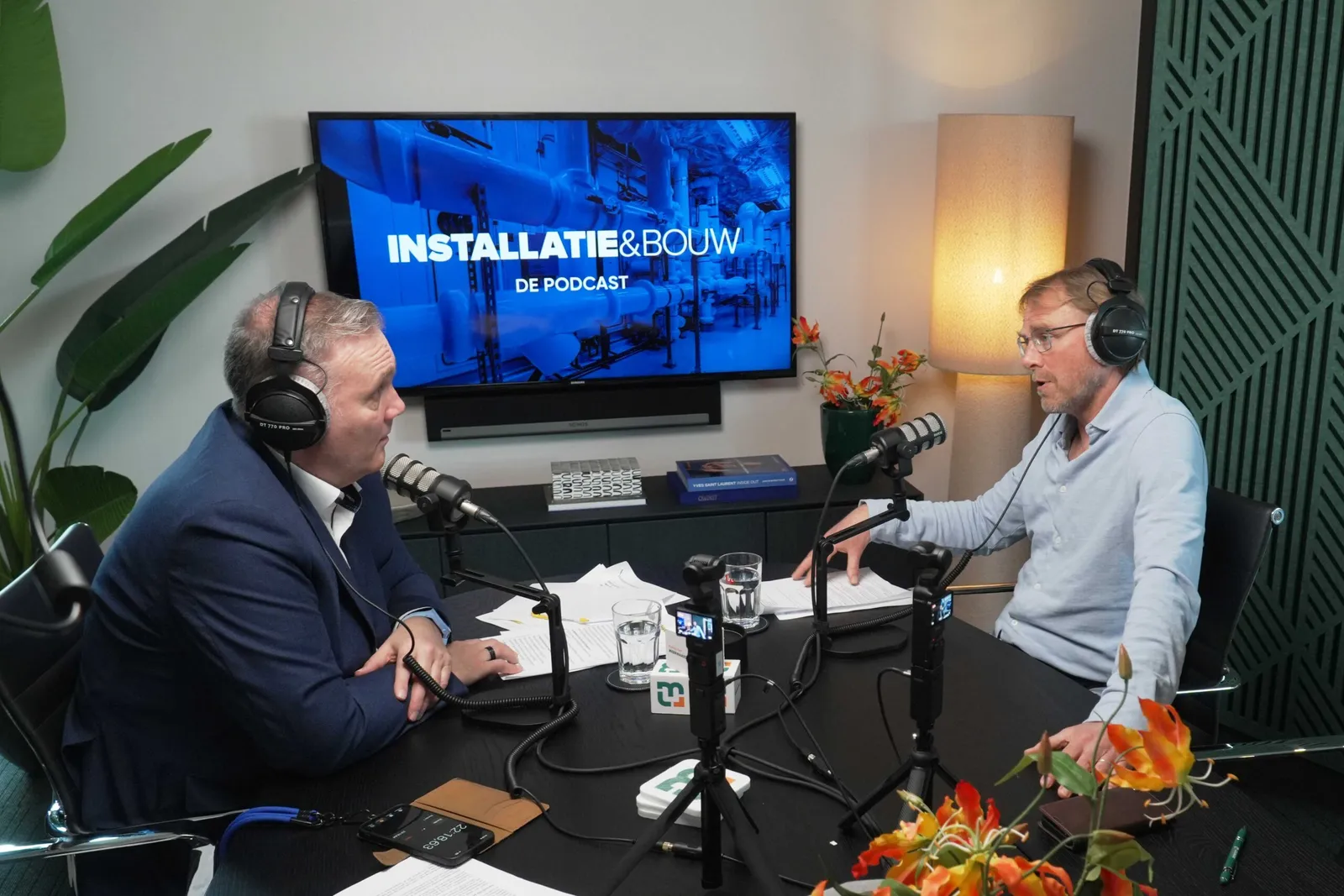
Michiel Hartman, entrepreneur and founder of Blue Heart Energy, explains that the biggest challenge in the energy transition lies in existing homes, not new-builds. Traditional heat pumps often work less well in these homes because they are poorly insulated, and making upgrades is expensive and disruptive.
His company is developing a new technology based on thermoacoustics: sound waves generate heat and cooling, without the use of harmful refrigerants. The system is easier to install (plug-and-play), is quieter and requires less specialist knowledge from installers.
Pilots, including one in Eindhoven, show that homes can be heated without major renovation work. This could save homeowners and housing associations tens of thousands of euros, particularly because costly upgrades to the property are not needed.
The technology is expected to come to market from 2027. Hartman urges property owners, VvE’s and installers to prepare and take part in pilot projects. His key message: a new, complementary solution for the heat transition is on the way, one that could make decarbonising existing homes easier and more affordable.
Have a business enquiry for Blue Heart Energy? Get in touch
Full transcript
All chapters (29)
- Welcome and introduction
- Statements on the energy transition and climate
- Michiel Hartman’s background
- How Blue Heart Energy came about
- Who should listen to this podcast?
- An appeal to politicians
- Why it is difficult to make existing homes more sustainable
- Limitations of existing buildings for heat pumps
- Disruption, investment and the role of owners’ associations
- What thermoacoustics is
- How the system works technically
- What installers need to know
- Noise, simplicity and labour shortages
- Benefits for manufacturers and installers
- Pilot in Eindhoven
- What the pilot showed
- Costs and savings for homeowners
- Demolition, rebuilding and the pace of making homes more sustainable
- Developments abroad
- Climate change and political views
- Lobbying, regulation and Brussels
- Market launch in 2027
- A call to action for homeowners and VvEs
- Communicating with consumers
- Climate activism and technology
- 90 seconds of uninterrupted speaking time
- Looking back at the pitch
- The key message for listeners
- Closing and credits
Welcome and introduction
Jerry Helmers Welcome to Installatie en Bouw, the podcast for the Dutch installation and construction sectors. I’m Jerry Helmers, and our guest in the studio today is Michiel Hartman. How are you?
Michiel Hartman Very well, thank you.
Jerry Helmers We’re off to a good start if the introduction goes well.
Michiel Hartman That’s what I’m hoping.
Jerry Helmers Me too. Michiel, welcome. Before we get to know you a little better, who you are, where you’re from and what brought you here to the studio in Weert, I’d like to put a few statements to you. That might give listeners an initial idea of what we’ll be talking about. You can agree or disagree, and who knows, we may come back to them later in the podcast. I suspect we will. So, to start with: are you ready for the statements? I’m ready. Michiel, here’s the first one: the real breakthrough in the energy transition lies not in new-builds, but in existing homes. Agree or disagree?
Statements on the energy transition and climate
Michiel Hartman Agree.
Jerry Helmers Agree. Here’s another one: in practice, the installation sector is ahead of policy.
Michiel Hartman I agree with that too.
Jerry Helmers Another one: housing associations are more important than private homeowners when it comes to bringing new heat pump technology to the mainstream.
Michiel Hartman For us, definitely agree.
Jerry Helmers Definitely for you. One last statement. To be honest, I came up with this one at the last minute: my name is Michiel Hartman and I’m simply a climate activist.
Michiel Hartman Agree.
Jerry Helmers Agree, OK. Why did you hesitate for so long?
Michiel Hartman Because I don’t always see myself as an activist. But perhaps I am, because my real motivation is to improve the climate.
Jerry Helmers Yes, there’s an element of ideology in that too, isn’t there?
Michiel Hartman But perhaps the word ‘activist’ is a bit…
Jerry Helmers But you said, well, perhaps we should come back to this in 40 or 45 minutes, when we wrap up this recording. Then we can decide whether or not you’re a climate activist after all. That sounds very interesting. You’re also an entrepreneur, of course. Tell us briefly who you are, what you do and what brought you here to the studio in Weert for this podcast.
Read the full transcriptCollapse transcript27 more chapters
Michiel Hartman’s background
Michiel Hartman Yes, I’m Michiel Hartman. I’m 54 years old. I live in Haarlem with my wife and 13-year-old daughter. I studied engineering in Delft. I started out in construction. We converted a dredger to a hybrid system, and that got me thinking about how things could be more sustainable. After that, I founded an electric bike company. When I left, I spent some time as chair of the electric transport trade association.
Jerry Helmers So you know all about politics and lobbying too?
Michiel Hartman Yes, I learnt about that then. I learnt how it works, but also that it’s not quite my thing. It’s extremely useful in what I do today, though, and it’s very important too. While I was there, I realised that electric transport matters, but the heat transition is even more important. And in 2015, when I first heard about it, it was the biggest challenge in the entire energy transition. There were no solutions.
How Blue Heart Energy came about
Jerry Helmers And that was also when Blue Heart Energy started. Tell us a bit more about your company in Heemskerk.
Michiel Hartman Yes, that’s right. That was certainly the beginning too. Just before that, I was working on a, what was it called, fuel vision for the House of Representatives, which we were writing with a large group of people. That brought the heat transition to the fore as a major challenge. Around the same time, I was director of a foundation, and the CEO of ECN was on its board. He introduced me to ECN, now TNO, where they were working on thermoacoustics. We’ll talk about that in more detail later. That was my introduction to it.
Jerry Helmers And Blue Heart Energy had captured your heart completely. Can we put it like that?
Michiel Hartman Yes, and it gradually grew from there. In fact, it happened very quickly.
Who should listen to this podcast?
Jerry Helmers Very quickly. Who should listen to this podcast? This is quite an important moment in the recording, because it determines whether people click away or stay. Who do you think should keep listening, then, and spend these 40 minutes glued to the podcast with the volume set to 8?
Michiel Hartman Well, owners of buildings, particularly existing buildings, who want to take on the energy transition and move away from gas. Also the people who use those buildings, the installers who will need to implement the technology, architects, energy transition consultants and politicians.
Jerry Helmers Which politicians?
Michiel Hartman I think national politicians involved in the energy transition. They understand what it’s about, but local politicians should know too, so they’re aware that new technology is coming.
Jerry Helmers Ah, OK. We’re recording this podcast now, in the last week of March 2026. The Jetten cabinet has been in office for about a month and a half, if I quickly count the weeks in my head. Would you like to make an appeal to Prime Minister Jetten now, explaining why he in particular should listen?
An appeal to politicians
Michiel Hartman Absolutely. Can I do that now?
Jerry Helmers Yes, go ahead.
Michiel Hartman Well, Rob Jetten, here goes. I think it’s important to have several routes for the energy transition and the heat transition in homes. There’s the hybrid route, with hybrid heat pumps. That’s one option. A heat network is another. But there are also homes for which we don’t yet have good solutions.
Jerry Helmers Clear. Is that also the promise you’re making to listeners? That you’ll tell us about the solution you’ve developed or come up with, or the innovation you’re driving?
Michiel Hartman I’ll try to explain it.
Jerry Helmers If not, I’ll ask you questions about it, Michiel, you understand. Thank you. We’ve agreed to use first names, so let’s do that. Here’s how we’ll structure the podcast. First, I want to talk about the problem we’re trying to solve in the market. We need to get to the bottom of that, because if we want listeners to stay with us, I hope they’ll recognise some of what we’re talking about. That will make it interesting enough for them to keep listening, as I said. I want to talk about thermoacoustics. What is it? What are we talking about? Then, as you’ve just said, we’ll look at why this matters for existing buildings. If all goes well, you can also tell us about a real-world example. If I remember rightly, there’s an example in Eindhoven you’d like to talk about. We’ll discuss what this means for the installation sector and the market launch of what you’ve developed, though we haven’t talked about that market launch at all yet. That won’t happen until later. Then we’ll gradually come to the end of the podcast. You’ll also have 90 seconds of free speaking time. That’s your Loekie de Leeuw moment. You can use it however you like. The great thing is, I’ll keep quiet. And then we’ll wrap up. Perhaps we’ll also return to the statements you’ve just answered at some point along the way. So that’s roughly how this podcast will go. At least, that’s my promise to listeners. Let’s start with the first step. There’s a problem in the market, which we can define in terms of the old technology. So the question is: why is it still so difficult to make existing homes more sustainable? We all seem to want to make things more sustainable. Why is it still so difficult?
Why it is difficult to make existing homes more sustainable
Michiel Hartman As a society, we’ve said that we want to move away from gas. We want zero CO2 emissions, including for heating and cooling our homes. And yet the transition is moving very slowly, and we remain hooked on gas. Turn the question around and ask why that is. It’s because the technologies we have now are quite complex. I’m talking about heat pumps, which are one of the best solutions for individual homes, as well as blocks of flats.
Jerry Helmers Yes, blocks of flats, right.
Michiel Hartman And, of course, there are heat networks. They require large, complex infrastructure, with major investment and maintenance, which makes them harder to roll out. As for heat pumps, they aren’t always suitable for existing buildings. What is it, exactly? A heat pump works very well in a well-insulated home that has essentially been designed to be suitable for one.
Jerry Helmers Because that’s something installers, housing associations and homeowners come up against in practice. They look at a property, or walk around it, and think: this one isn’t really suitable.
Limitations of existing buildings for heat pumps
Michiel Hartman Yes, what you see is that heat pumps, which are widely used in new-builds, work well there. They start with the heating system, then build a suitable house around it, one that is well insulated and needs low temperatures. In those conditions, the heat pump works perfectly. With existing buildings, you have a house that wasn’t built to be suitable for a heat pump. So you have to make changes to the house.
Jerry Helmers And you mean older homes, from the 1930s or 1950s?
Michiel Hartman Yes, or 1850.
Jerry Helmers Even older, listed buildings.
Michiel Hartman Almost all homes built from 1990 onwards start to be suitable. But people have been saying since 2010 that anything built before then presents challenges. And what you see is, I always think that people underestimate what today’s heat pumps can already do. They can actually do much more. But there’s also fear. Often, that fear is unwarranted.
Jerry Helmers But hold on, who is afraid?
Michiel Hartman Either the residents or the installer. I think today’s heat pumps can already do more than people realise. But you do need to know how to install them and which mistakes to avoid. So what are the challenges? You need to make sure your home is properly insulated, but you also need to look at the radiators and pipes already in place… You may need to install underfloor heating. So the investment in these homes is relatively high. The costs aren’t so much in the installation itself, but mainly in adapting the home, and especially in the disruption.
Disruption, investment and the role of owners’ associations
Jerry Helmers Yes, what do you mean by disruption? Because of the alterations?
Michiel Hartman Yes, because people obviously don’t want to have building work done. They live there. For a housing association, or a landlord, it’s a matter of renting the property out. They tend to make changes to the home only once the tenants move out.
Jerry Helmers This is really interesting too. We haven’t even got to the solution yet. But you did say that property owners and building owners need to listen. And so do owners’ associations. That’s a very specific group. I think we should mention them specifically: people, keep listening. Is that right, owners’ associations?
Michiel Hartman That’s right, that’s right. They often come to us too, because they’ve heard about us and say, “Hang on, you could be a solution for us.”
Jerry Helmers Yes, that’s a different story, of course. Owners’ associations, because there’s always a third world war going on in every one. But you do get the sense that this group, if I may call them that, generally feels that something needs to be done. And yes, the way they make the case internally is often what sparks those third world wars within owners’ associations. But it’s clear that they’re a group that will ultimately need to take action too, if we all want to meet a number of climate targets.
Michiel Hartman It starts with the willingness to act. There are many groups in the Netherlands that genuinely want to, but run into technical challenges as well.
Jerry Helmers Yes, exactly. Or they simply don’t know enough. They just don’t know. In the end, it’s a technical subject for the average person.
Michiel Hartman That’s right, it’s highly technical.
What thermoacoustics is
Jerry Helmers Yes, exactly. That brings us to thermoacoustics. What is thermoacoustics?
Michiel Hartman Thermoacoustics, yes. I’d never heard of it before 2015 either. But what does it mean? That you can use sound waves to produce heat or cold. Or even convert them into electricity. It’s a technology that was conceived in 1860. In 1970, people discovered that sound waves and pressure waves behaved in the same way. So all of a sudden, two university departments came together. That gave the field a boost. And in 1999, the first thermoacoustic heat pump was built in the United States. How does it work? You have a sound wave. In our case, the sound wave compresses helium inside a heat pump, which raises its temperature. It’s the same as a bicycle valve getting warmer when you pump up a tyre. The pressure increases and the temperature rises.
Jerry Helmers Hold on, that metaphor makes it a lot easier to understand. Go on, go on.
How the system works technically
Michiel Hartman Thanks. So this happens on the hot side. We have a heat exchanger with water flowing through it. The water carries the heat away, and goes straight into your radiators or underfloor heating. On the cold side, you can draw in heat and also release cold, just like in your fridge. So we can provide cooling on that side too. The helium in our system expands there, and wherever it expands, you can extract cold. That’s the basic principle of our system. It’s all very precise, of course, because we have two linear motors that generate sound waves. They operate at 60 hertz, so 60 vibrations per second. The heat has to be released at exactly the right place and time. Each time, a small amount of helium is picked up and compressed. That happens at that point, and we extract the heat and send it into the home.
Jerry Helmers So what exactly does the installer need to remember about this? I think you’ve explained the technical process behind thermoacoustics well. But what specifically should the installer take away from it? Will it make things easier for them? Or will they have to take a new course, so to speak, if thermoacoustics ever becomes the standard in the heat pump industry? That’s what you’re hoping for, of course. And I can see there are real opportunities, but what should the installer remember?
What installers need to know
Michiel Hartman Well, for the installer, it’s like buying a TV. It doesn’t really matter what technology is inside, as long as the TV is good. The same applies here. What we provide is heating and cooling. The key difference from today’s heat pumps is that we don’t use refrigerants. Current heat pumps do use refrigerants, and these will be banned on 1 January 2027, this coming 1 January. What you’re seeing now is heat pumps switching to natural refrigerants, mostly propane. Installers need to obtain a certificate to work with these. They don’t need one for our system. In principle, anyone can install it. Our operating principle is also different, which makes the settings and installation much simpler. The installation itself is easier, more of a plug-and-play system. A typical heat pump has around 1,000 settings. The manufacturer usually sets these in advance, tailoring them to the home. Of course, mistakes can be made. That’s because a vapour-compression heat pump performs optimally mainly at one operating point. Everyone tries to get as close as possible to that point. Our system works very differently. We have a flat performance curve, so it runs efficiently all the time. Whether you need more or less output, it works just as well. It’s more like a gas boiler: you turn it up or down, and it runs just as efficiently. That also makes it easier to adjust the installation to the home over the course of the seasons and throughout the day.
Jerry Helmers So installation is easier both for the installer and, ultimately, for the user, who gets a simpler appliance, to put it in everyday terms. Does it make noise? It generates sound waves, after all. But is it louder or quieter than a conventional heat pump?
Noise, simplicity and labour shortages
Michiel Hartman Much quieter than conventional heat pumps. This gets technical again, but we deliberately use two pistons, and they also cancel out the noise.
Jerry Helmers So they’re wearing a sort of pair of headphones?
Michiel Hartman Yes, literally a sort of pair of headphones. And this may get very technical, but a vapour-compression compressor runs at different frequencies to adjust its output. We run at just one frequency. It’s very difficult to dampen the noise from compressors that operate at different frequencies. With our system, it’s easy because we operate at one fixed frequency. That means we can make it virtually silent.
Jerry Helmers I want to go back to what you said a minute or two ago. You said installation is basically plug-and-play, and that installers don’t need a certificate. Doesn’t that also make it appealing to installers and installation companies at a time when labour is in short supply? They don’t have to look for installers with all sorts of certificates. Could you say a bit more about that? I’m thinking about everything you’ve told me. Hold on, this has much broader implications than just achieving those sustainability targets. It could also help with labour-market problems. Or am I wrong?
Michiel Hartman No, that’s right. One of the big challenges we see is the need for highly trained staff, highly trained installers.
Jerry Helmers Let’s call it the old approach, if I may. It’s still very much in use, but let’s call it that for now.
Michiel Hartman The old approach. You mean the people who used to install gas boilers… Yes, so not thermoacoustics. With current heat pump technology, vapour compression, you need to be trained to work with it. And because each heat pump has its own specific settings, installers often choose a particular brand and prefer to stick with it, because they’ve trained all their staff on that brand.
Jerry Helmers Yes, familiarity breeds preference.
Benefits for manufacturers and installers
Michiel Hartman Yes. What we do is supply a motor for heat pumps to various manufacturers. They all work in essentially the same way, and it’s much simpler. That makes life a lot easier for them. They don’t need to be trained. And they can use staff who are, I’m not sure if that’s the right way to put it, less highly trained… In any case, there’s less to learn to install a heat pump with our system correctly.
Jerry Helmers This sounds very appealing, perhaps even music to the ears of installation companies. Wherever you go, everyone is short of staff, and consumers are facing longer waiting times, which they don’t want either. I don’t know whether this will solve the labour-market problem entirely, but it certainly sounds like a welcome development.
Michiel Hartman Yes, we talk to many large heat pump manufacturers. They’re essentially our customers. We run pilot projects with them, often still in their labs for now. When I ask the big players, including a number of large German companies, what their biggest challenge is, they always say, number one is how to ensure installers get it right. If something goes wrong, it usually comes back to the manufacturer. And everyone wants to avoid that.
Jerry Helmers So it’s not just the installers who are happy, the whole supply chain is.
Michiel Hartman Yes, because nobody wants those mistakes. Everyone tries to prevent them. But they still happen. Less often as we get better at it, so things are going very well, but it remains a challenge.
Pilot in Eindhoven
Jerry Helmers You briefly mentioned the pilots that are under way. If I’ve been correctly informed, there is, or was, a pilot in Eindhoven. Was that with a housing association?
Michiel Hartman Yes, we’re running a pilot with a housing association in Eindhoven. We installed our current system, which we call the beta version, in a home, a 1950s house. We deliberately chose to make no changes to the property at all. So we left everything as it was.
Jerry Helmers A right old dump.
Michiel Hartman Yes, yes, yes. Those are my words. It’s a right old dump. It’s really not somewhere you could live now. And we installed a heat pump with our system in it. From day one, the house was heated and it could provide hot water. So no modifications were needed at all.
Jerry Helmers So the housing association was pretty pleased with that too?
Michiel Hartman Well, what you have to bear in mind is that this wasn’t the most efficient system yet. It was a beta version. So what you saw was that the electricity bill was still a little high, but they also didn’t have to make any of those upfront investments.
Jerry Helmers What kind of upfront investments are you talking about? Just to make that clear.
What the pilot showed
Michiel Hartman Double glazing, new insulation, the radiators, but above all replacing the pipework in the house. None of that had to be done, and it worked from day one. Perhaps one of the important things is that we supply water at 80 degrees, just like your boiler did. We could supply it at a higher temperature, but we capped it at 80 degrees because that’s enough.
Jerry Helmers What uncertainties are there still at this point? You use the term beta version, and of course there’s a researcher, entrepreneur, innovative entrepreneur in you, so I can ask you: what uncertainties are you still facing? You say it’s a beta version, what would you still like to improve in the current version? I assume you’re collecting an enormous amount of data.
Michiel Hartman Yes, there are 65 of us in Heemskerk, and most of them are the actual researchers. I’m the entrepreneur.
Jerry Helmers Yes, but you do steer them a bit.
Michiel Hartman I do steer them a bit.
Jerry Helmers You’re the boss.
Michiel Hartman I think we do that together. But we’re constantly testing and improving. We’ve just completed the new design of what we call the end product. Our computer models also now show us what the efficiency of our system will be. We’ve been testing that in our lab for a long time. We run three tests every day so we can keep improving. We’ve reduced the component costs, so between the beta version that ran this winter and the one that will come off the production line in Heemskerk at the end of this year, the first one coming off the line…
Jerry Helmers I’ll come and see when that happens.
Michiel Hartman That would be great, you’re very welcome. And we’ve reduced the production cost by a factor of 15. We’ve increased efficiency by another 40%. And of course, we’ve checked its robustness. The thing has to keep running, after all. When it goes into a house, it needs to clock up the hours. We’re already doing that with individual components, but ultimately it has to be tested in real-world conditions. That’s what we’re doing now in those homes. Not just in Eindhoven, but also in the homes of our own people.
Jerry Helmers Your own people, what do you mean, employees?
Michiel Hartman Employees, yes.
Jerry Helmers Who are making their homes available for your innovation ambitions.
Michiel Hartman Yes, I asked about that three years ago. Who’d be interested? Three hands shot up. There was enough interest to go ahead. Great. I couldn’t get it past my wife at home.
Jerry Helmers Oh, is there a Mrs Hartman? Should we have a word with her?
Michiel Hartman That might be a good idea.
Costs and savings for homeowners
Jerry Helmers That might be a good idea. But let’s take a little detour. Do you know ABBA’s song ‘Money, Money, Money’?
Michiel Hartman Yes, I know it.
Jerry Helmers You just said the production cost will go down by a factor of 15. Can you put that into concrete terms for listeners, and perhaps even for the few consumers listening to this podcast? How many euros could this save on an average 1950s or 1960s house? A factor of 15 is a factor of 15, but that doesn’t really tell you anything.
Michiel Hartman Of course, there are several buckets, or pots, where the money goes. One is the cost of the installation itself, the heat pump. Our costs are roughly the same as for vapour compression.
Jerry Helmers Okay, so that’s a draw.
Michiel Hartman So once we’re in full production, manufacturers will be able to bring our system to market at the same price as vapour compression. That’s the aim, so to speak. But where are the real savings? The real savings are for the homeowner. Based on our calculations with housing associations, the average saving is between 17,000 and 35,000 euros per property.
Jerry Helmers That’s serious money. Between 17,000 and 35,000 euros. It depends, of course, on the size of the home. But that’s a saving of between 17,000 and 35,000 euros.
Michiel Hartman Yes, that’s what we see on average. Better insulation always means lower energy consumption, which is a good thing. Good for the planet, and good for your wallet.
Jerry Helmers But not everyone has the money, and it’s not always possible with every home. So in times like these, well, as I said, we’re recording this podcast in March 2026, and the world is acting a bit strangely at the moment. You have no idea how things will turn out. Consumer confidence is falling. I’d say this is quite an extra unique selling point if you want to make the case for it. Consumers still have to invest something in the end, though.
Demolition, rebuilding and the pace of making homes more sustainable
Michiel Hartman Yes, ultimately they will have to. But let’s go back to that example home. This housing association estimates that it would have to invest 100,000 euros to bring this 1950s house up to standard. The question is: are you going to do that at all, or are you going to demolish it? Then, of course, you have the sustainability question, because of the impact of rebuilding. A very good architect came to see me on Friday and said: these days I have to show how much CO2 a project will generate. The materials used are becoming increasingly important too. It’s all CO2 emissions, it’s all nitrogen emissions, and it’s all being calculated these days. Material savings and cost savings are being scrutinised too. If you can avoid all that, you can also get off gas with what you’ve already got. And that’s really about the pace of it, the euros invested per tonne of CO2 saved. That’s what we claim to offer, and next year we want to demonstrate publicly that we can make a very big difference in this respect.
Jerry Helmers A win-win, as a not very creative presenter might say. But win-win is ultimately the motto, of course.
Michiel Hartman That’s how I see it.
Developments abroad
Jerry Helmers Yes, exactly. What’s happening in this field abroad? This also feels very much like an innovation that you’ve brought to life at Blue Heart Energy, or that you’re trying to drive forward. I can hear it in the passion with which you speak, but can you learn anything from how they do things abroad? Are there any examples? Can you tell us about that?
Michiel Hartman Yes, as I said earlier, the first one was built in the United States in ’99. Things were a bit against it at the time, because then came the financial crisis in 2008. Before that, people were working on the energy transition, but there wasn’t really any genuine interest. It only started to pick up again after 2010. And now, of course, we’re right in the middle of it, because we can all see it around us. There used to be a lot of climate change deniers. Now, I think, there’s only one left in the world, and he’s in America too. But these days everyone knows it’s possible. So what happened abroad? In ’99, thermoacoustics spread around the world. It went to Japan, France and Canada, and the United States was already involved. It also reached the Netherlands. It landed here at one company in the east of the country, Sound Energy. They’re still working on a completely different application. It also reached TNO in Petten. They all got to work on it. As far as I know, there’s a company in Norway working on an industrial application. And in France, there’s a company that was initially working on another application, specifically cooling. In 2019, they started copying us…
Jerry Helmers That sounds like a very good application. So are we actually… You say they’re copying you. Are we leading the way in this field in the Netherlands?
Michiel Hartman Globally. We’re certainly leading the way. We’re the only ones in the world who’ve managed to do it so far. And the French, from what I’ve seen, are now running their first pilot in a home too. They’ve made different choices, but they’re still a long way behind.
Climate change and political views
Jerry Helmers Yes, you said earlier that there’s one person in America who doesn’t see it that way. I assume you had President Trump in mind.
Michiel Hartman Yes, that’s right.
Jerry Helmers So what specifically would you want to say to him? Either way, I’d like to use this as a bridge to politics. There has to be political will somewhere too, of course. And Mr Trump sees things differently. What would your message to him be, and to all his fans and supporters, and the many people who voted for him?
Michiel Hartman I think we have only one major problem on this planet. Wars are starting now, and that’s a danger. We’re all going to spend on defence and protecting ourselves, which of course we have to do. But I think the real danger facing us is climate change. When I read in the papers this week about everything that’s happening, about temperatures in California being 16 degrees higher than ever before, and heatwaves already hitting California in March…
Jerry Helmers Yes, okay, but you have to deal with the political reality that a great many people still play this down. So that’s why I’m asking: how would you convince President Trump, and all those who think like him, because there are plenty of them in the Netherlands too, that ultimately demand will also come from the market, from the bottom up?
Michiel Hartman I hope… I don’t think I… I’m not so arrogant as to think I can convince all those people, because there are people who aren’t convinced. And I think President Trump is one of them. But I do hope, and I think the majority of people in the Netherlands have come round to this by now, and in Europe too, that we all see that things have to change.
Lobbying, regulation and Brussels
Jerry Helmers So Prime Minister Jetten, to take it down a notch on the world stage, is probably someone we can persuade. At any rate, the party he comes from is already committed to green issues and sustainability. And we need to treat our natural resources with care. He should be persuadable, because my immediate follow-up question is: are we going to lobby for this?
Michiel Hartman That brings us back a little to what we discussed at the beginning. Yes, well, I think so. I think that… Look, what’s very difficult for a politician is getting behind a technology that hasn’t yet proved itself. So the most important thing is for us to prove ourselves and bring them along as we build that body of evidence. Then they can develop policy around it too. Because we’ll need support with the rollout as well. We need to be included in all the guidance and regulations. And of course, there are subsidies for these kinds of practical systems.
Jerry Helmers Are you good at lobbying? Or would you say you’ll leave that to other professionals? You’ve done a bit of lobbying in other roles, too. But can you do it for this sector?
Michiel Hartman I think I understand how it works, how the game is played. There are others who are much better at it, and fortunately I have a great colleague who really understands it. I can easily go to Brussels with him. There are also new rules on heat pumps coming in, including rules for new technologies. They’re even expected to publish new rules this coming Friday.
Jerry Helmers And by this coming Friday, we mean the end of March 2026.
Michiel Hartman Exactly, the end of March 2026.
Jerry Helmers Of course, someone might not listen to this podcast until June, or in the summer, or whenever.
Michiel Hartman Yes, that’s true. That’s a very good point. No, so there’s even… Until now, everything was based on vapour compression, and all the rules and validations for heat pumps were designed around a different technology. We came up against that too. Nowadays, that’s no longer necessary in the Netherlands. It’s all done at European level, which is actually a good thing. And we’re able to find our way through the process now.
Market launch in 2027
Jerry Helmers Right. You’re hoping to launch commercially in 2027. That’s the plan for now, at least. Are you on track to meet it?
Michiel Hartman Yes, so far we are.
Jerry Helmers You were at VSK quite recently, of course… As I remember it, that was the first time you presented it. Is that right?
Michiel Hartman Yes, we were in Germany last year. We said then: we’re coming. But last February, at VSK at the Jaarbeurs in Utrecht, we announced for the first time, together with a customer, Eplucon, a Dutch company, and Ecoforest from Spain, they announced that they’ll be launching a system using our technology next year. Blue Heart inside, or powered by Blue Heart.
Jerry Helmers So yes, ultimately you have to make some money too, of course.
Michiel Hartman We live in a capitalist world, after all, and you have to play the game.
Jerry Helmers Because otherwise you can forget it.
Michiel Hartman No, exactly.
Jerry Helmers But will the time come, perhaps from next year, when the commercial launch happens, that the subsidies will need to be in place to encourage consumers to adopt it, or at least give property owners and housing associations more options? Sometimes, if you want to do something good for the world, it needs a bit of encouragement too.
Michiel Hartman Yes, well, look, so far we’ve been very grateful to the governments in the Netherlands and Europe, because we’ve received quite a lot of subsidies, from both Europe and the Netherlands. But most of that was for development. Next year, you’ll see us run a kind of pilot and rollout demo, with larger-scale demonstrations. We’re naturally looking for subsidies for that, and working on it. That’s where the difference lies. Then, from late 2027, so the winter of 2027, we’ll need to be on the lists that qualify consumers for subsidies.
A call to action for homeowners and VvEs
Jerry Helmers There’s still a lot to do. We still have a lot to do. Right, we’ll see whether we can achieve that in 2027. Perhaps you should come back on the podcast then to see whether all the promises, or the hopes you’ve expressed today, have actually come true. That would be very…
Michiel Hartman Yes, we’ll see.
Jerry Helmers I want to return to a few of the statements we discussed at the beginning. You said the real breakthrough in the energy transition isn’t in new builds, but in existing homes. I understand even better now why you agreed with that. You could call it a call to action. What’s your ultimate message to owners of existing homes who also have a sustainability challenge ahead of them? What should they do first thing tomorrow morning?
Michiel Hartman Well, the first thing they should do is look at what they can do now to make their home more sustainable. Take stock of the situation in advance. And start planning financially, as well as in terms of timing, residents and so on, so that they’re ready for work to be done. And finally, visit our website, where we explain how it works.
Jerry Helmers Ah, OK. You’ll no doubt mention that website during your 90 seconds of commercial airtime later, your Loekie de Leeuw moment. I think we can also conclude that the installation sector is ahead of policy in practice. You agreed with that, but I’m thinking now that it’s actually logical. You always agree with statements like that, because policy can only be made once something has been developed. We can see that now in AI, to use an example outside the installation sector. AI has been developed, everyone’s using ChatGPT, and now we’re all wondering whether we should perhaps bring in some laws and regulations. So that makes things difficult for installers too: they can see something promising emerging in the market, but may not be able to do much with it because existing laws and regulations are still in force. Is that a fair observation?
Michiel Hartman Yes, I think that’s right, and I think legislation and regulation always lag behind the market. But regulations for older systems can sometimes hold things back too. So the most important thing is to keep innovating and to be able to try things out.
Jerry Helmers And I think homeowners should start considering what they can do too. But specifically, homeowners’ associations, large and small. If a board member of a homeowners’ association is listening now, what can ordinary people do?
Michiel Hartman Yes, what’s very important is what we do… Look, we supply the engine for a system, of course. So what we need is an installer and an adviser. We can’t do that part. We’re too small. We need to focus on development. But we can support them and help with the system. And I think if they get in touch with us, several have already looked into what’s available. And where they run into problems, well, we know where those are. And I think we can make a difference by helping them bridge that final gap.
Communicating with consumers
Jerry Helmers I understand how your supply chain works and what role you play in it. But is Blue Heart Energy also working on consumer communications?
Michiel Hartman We’ve only just started doing a little of that, very cautiously. Yes, it’s a learning process too. What exactly should we tell people? But we’re not equipped to deal with all consumers either. So we need to focus on development and on manufacturers. We mainly want to run pilot projects with customers who want to roll this out and can see the potential. Through those pilots, which we’ll publish all the results from, we want to show people that it can be done.
Jerry Helmers Yes, I understand. But it would be good if, at some point, there were also some bottom-up momentum.
Michiel Hartman Yes, so we’ve just started a newsletter, which we’re doing for the first time this year… And we did it in… This year marks our tenth anniversary.
Jerry Helmers Oh, cake? Why didn’t you bring any?
Michiel Hartman Good question. Why didn’t I, actually?
Jerry Helmers Why didn’t you bring any? Yes, exactly, perhaps. Then I’d have had to congratulate you, but it’s true, you’ve been going for ten years. Well, that’s a promise for next time, we’ll have cake. Thank you.
Climate activism and technology
Jerry Helmers You also said at the beginning, or rather, you agreed with the statement: I’m simply a climate activist. I’m hearing a rather nuanced argument here. I mean, I know climate activists who make headlines in the media. I’m not sure you’re the kind of person who chains himself to the tarmac on the A12?
Michiel Hartman I have friends who do that, and I understand their reasons. I’m not the one who does it. Because I’m someone who… I think we’re all part of society, and above all we need to make sure everything keeps running and everything continues to be supported. My form of activism is… I believe technology has brought us a lot. It has brought us a lot of prosperity, a lot of luxury and comfort. But right now, it’s also exhausting the planet.
Jerry Helmers So perhaps the statement should have been: I’m a bit of a climate activist. Then you could have agreed with it even more emphatically.
Michiel Hartman Yes, and perhaps a technology-minded climate activist.
Jerry Helmers Oh, I like that. We’ve got breaking news: a new phrase. Technology-minded climate activist.
Michiel Hartman Technology has made things difficult for us, it has brought us hope, but it will also make things better again. That’s what I think. Because I don’t think we ever want to go back to living in a little hut on the moors in a lambswool jumper. There’s a very small group of people who can do that. Respect to them, a huge amount of respect. But I think most people…
Jerry Helmers Yes, the world works a little differently.
90 seconds of uninterrupted speaking time
Jerry Helmers Are you ready for your 90 seconds of fame? In this podcast series, I always call it the Loekie de Leeuw moment. For our younger listeners, Loekie de Leeuw used to be something to do with advertising on Dutch television. You knew the adverts were about to start. Older listeners…
Michiel Hartman I remember him.
Jerry Helmers Yes, we’re more or less of boomer age, I’d say. No, you have a minute and a half to say whatever you like. I’ll keep quiet, which is a nice change. You can say whatever you want. You can promote your company, or return to something we discussed in this podcast if you think you now have a better answer to a question you were asked. It’s up to you. Are you ready for your 90 seconds of fame?
Michiel Hartman I’m all set. Yes, we at Blue Heart Energy make engines for heat pumps, and we’re now looking for project partners in the Netherlands, and indeed across Europe, who are working with existing homes and see a challenge there. Ideally, we’re looking for larger organisations that also want to run pilot projects next year, in 2027. In particular, I’m thinking of property owners, homeowners and housing associations. That could be commercial or social housing. Installers, architects, energy consultants, everyone involved in the supply chain. We’re already scaling up and rolling out projects of this kind. But of course, we can see that there are so many different applications in this market. We want to demonstrate as many different applications as possible next year, to show that they really can work in practice. So next year will be about validation. Not necessarily for us, because we’re already doing that in our lab, in our own homes, and in the laboratories and research institutes of the larger heat pump manufacturers. But we want to do it with you too, so you can see for yourselves the difference between vapour compression and our technology.
Looking back at the pitch
Jerry Helmers Michiel, I was watching the timer, of course. I don’t know if you had your eye on it too. I told you: 90 seconds, or a minute and a half. By how much did you go over?
Michiel Hartman I’d say about 37 hundredths of a second.
Jerry Helmers No, it was three hundredths.
Michiel Hartman Oh, three hundredths. I glanced at the clock once.
Jerry Helmers We’ve never got that close here in the studio in Weert. So, three hundredths of a second. Well, you absolutely nailed that closing pitch. Congratulations.
Michiel Hartman At least that bit went well.
Jerry Helmers Yes, it went really well. And I think the rest of the podcast went well too. I hope, and I think, that listeners have gained some insight, or at least an idea, of what your message is and how it works. And fortunately, you avoided a lot of technical jargon. I get the impression that the audiences for this podcast understood it.
Michiel Hartman I hope so. I hope they’ve learned a little, and if not, they can always send an email.
The key message for listeners
Jerry Helmers Of course. One last thing: can you sum it up in one sentence? And I really do mean one sentence. I want to see if you’re as good at that as you were at sticking to your 90 seconds. In one sentence, tell us what listeners absolutely need to remember from this podcast. So, if we were to ask them in a week’s time, “You listened to that podcast with Michiel Hartman from Blue Heart Energy. What should you remember?”
Michiel Hartman That a new technology is coming for the transition to low-carbon heating in homes, and that it complements existing technologies, which are already very good.
Jerry Helmers Michiel, I couldn’t have put it better myself, which is why I asked you to say it. Well done. Did you enjoy the podcast?
Michiel Hartman I really enjoyed it, especially with you.
Jerry Helmers Well, that’s made my day too. I’ve learned a lot from you as well, so thank you for the inspiration. Let’s agree that when you’ve made a little more progress with the market launch in 2027, you might come back to the studio one day. Then we can talk some more and see how things stand with those subsidy applications, and whether the lobbying has ultimately been successful. Mr Jetten, can you hear us? That sounds like a good plan.
Closing and credits
Jerry Helmers Hey Michiel, thanks for coming to the studio.
Michiel Hartman And of course, I’d also like to thank all the listeners for tuning in.
Jerry Helmers This was Installatie en Bouw, the podcast. A production by Louwers Mediagroep. Project managers Elio de Hond and Jacob Jansin. Technical support today was provided by Daan Halters. Daan, thank you. My name is Jerry Helmers. And for this episode, I’ve been the presenter, moderator, debate chair, discussion leader, you name it. I’ve really enjoyed doing it again. Thank you, and see you next time.
Companies in this story


Keep following this
Get an email when a new story is published. No account needed.
- ThemeGas-free heating and cooling
- SubjectGeneral
- CompanyBlue Heart Energy
- CompanyVSK







