











The future of electric vehicle charging
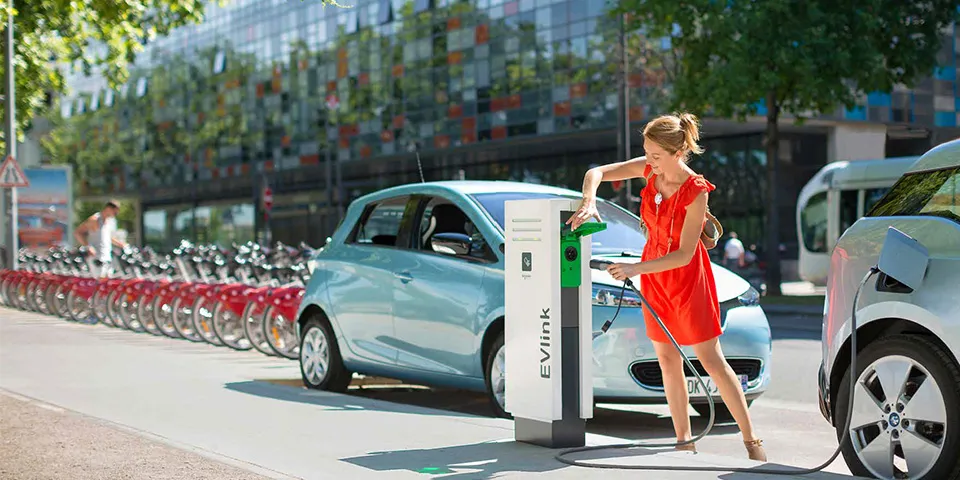
Over the next few years, more and more electric cars will be on the road in the Netherlands. As a result, the number of charging points will also rise sharply. Businesses will need to invest in this infrastructure. How can you design it as intelligently as possible, so that charging is safe, fast, efficient and cost-effective? Account Manager Arnie Bal and System Architecture Designer Dennis Rutten of Schneider Electric explain.
Smart buildings, smart grids, solar panels and electric vehicles are solutions for the future. Electric driving is part of a bigger story: the energy transition. “Fossil fuels are running out, CO2 emissions are too high, and at the same time energy consumption is doubling. We therefore need to switch to other forms of energy and become much more efficient, specifically four times more efficient,” says Arnie Bal. “Schneider Electric, a multinational and expert in energy management & automation, sees it as a moral obligation to do its bit for the world of the future. That is why we are very active in addressing common challenges related to the energy transition.”
The risk of overloading
Electric driving is an important measure for reducing CO2 emissions. But is the Dutch electricity grid ready for ‘all-electric’? Dennis Rutten thinks not. “If everyone charged the current number of electric cars at the same time, local power shortages would soon arise. This could be a problem, but it is not insurmountable.”
Schneider Electric’s solution is called ‘load balancing’. Rutten explains: “When everyone arrives at the office in the morning, turns on the lights and puts the kettle on, electricity consumption peaks. The system ensures that the cars receive more power only after this peak. This minimises the risk of overloading the grid.”
Reliability first
What if the manager of a car park or distribution centre wants the flexibility to expand the number of charging points? “We offer an integrated solution with robust local control. This means the system does not shut down when consumption suddenly increases, but adapts within seconds, ensuring an uninterrupted power supply for all users. The solution also offers a cost-effective way to increase charging capacity without requiring additional installation space, by using busbar trunking,” says Bal.
Schneider Electric is no newcomer, and has been guaranteeing reliability for 130 years. A total of 90,000 Schneider Electric charging points have already been installed around the world. Bal says: “We are also present in critical environments such as hospitals and data centres. We apply the reliability we guarantee there to the ongoing development of electric driving, with accessible, sustainable, smart and future-proof charging systems.”
Een zakelijke vraag aan Schneider? Get in touch
Companies in this story

Keep following this
Get an email when a new story is published. No account needed.
- SubjectGeneral
- CompanySchneider
- CompanySmart Buildings







