











The importance of good air quality in offices and other spaces
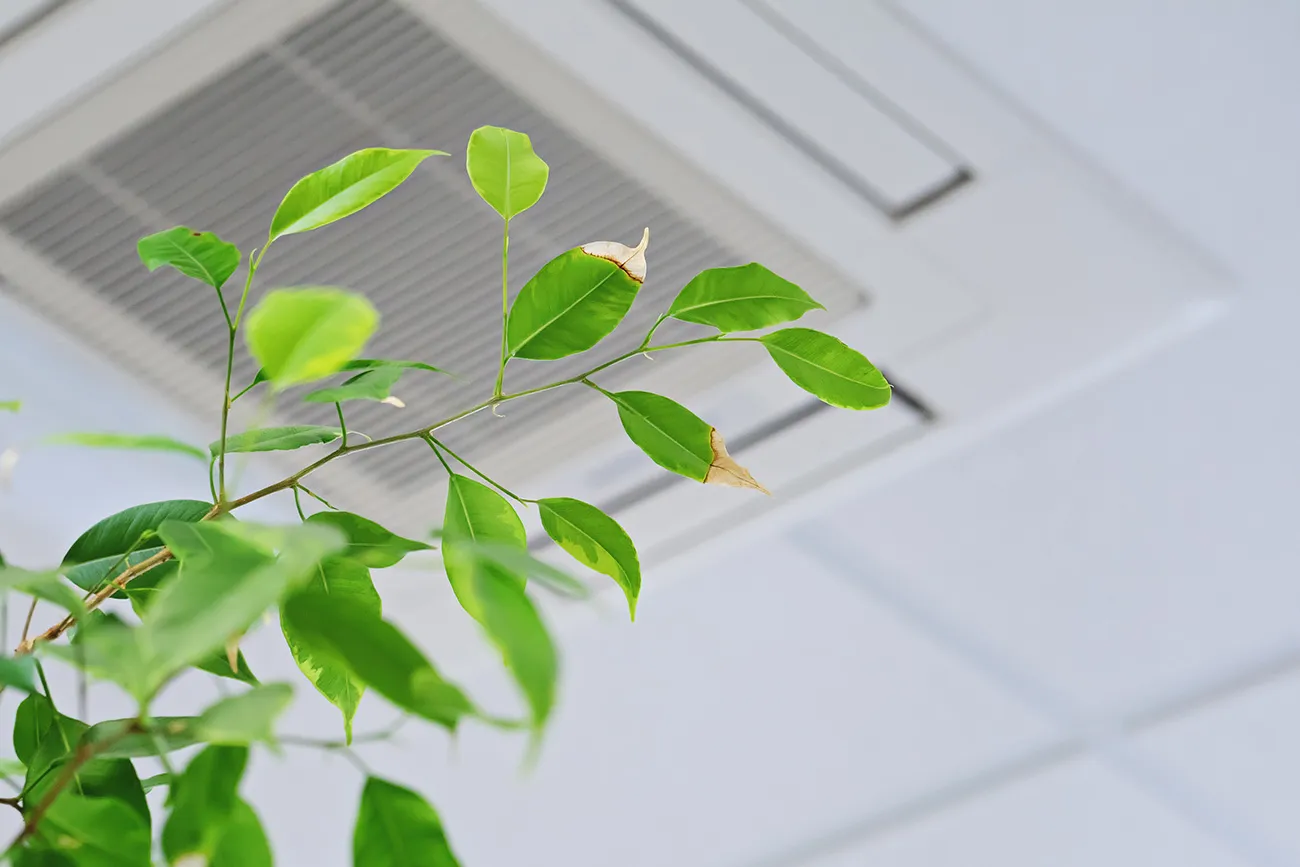
Healthy, fresh and pleasant air is essential for a comfortable working environment. However, air quality in offices is often far from satisfactory, with all the unpleasant consequences that entails. Health problems such as headaches, breathlessness, drowsiness or dry eyes can occur, for example. What is good air quality? How can you measure the current air quality? And what can you do to improve it? Read all about it in this blog.
Why is good air quality so important?
The air we breathe, which we need in order to function properly, consists of around 78% nitrogen and 21% oxygen. It also contains some water vapour and other gases, such as argon. The composition of the air is generally fairly constant, but air quality can change in certain situations. One example is an enclosed space occupied by people who are breathing. This causes the amount of CO2 (carbon dioxide) to increase. In an office or another occupied space, poor air quality can cause a range of health problems, including burning eyes, headaches, respiratory irritation and difficulty concentrating.
What factors affect air quality in offices and other spaces?
Air quality in a space is determined by, among other things:
- The amount of (ultra)fine particulate matter in the air
- The CO2 concentration
- Ventilation and air renewal
- Humidity
- Temperature
- Filtration
- Other factors, such as chemical air pollution, gases from outside, decomposition, or mould and mould spores
We explain all these factors in more detail below.
The amount of (ultra)fine particulate matter in the air
Fine particulate matter is the collective term for all particles suspended in the air that are less than 10 micrometres in diameter (0.01 mm). Traffic, industry, agriculture and households are the main sources of fine particulate matter.
Ultrafine particulate matter is a subset of fine particulate matter and consists of particles less than 0.1 micrometres in diameter (0.0001 mm). Ultrafine particulate matter is currently under close scrutiny. Research shows that, given the right combination of temperature, humidity and particle size in a space, a layer of moisture can form on ultrafine particles. This can make it easy for a virus, such as the coronavirus in recent years, to spread.
Reducing fine and ultrafine particulate matter is therefore very important. One way to do this is with ionisation technology. By means of an electrical charge, ionisation technology removes harmful particles from the air. Ionisation technology is a feature of high-end professional air-conditioning systems. This means an air-conditioning system not only provides a comfortable temperature, but also helps improve air quality in offices and other spaces. People in the space simply breathe cleaner air.
The CO2 concentration
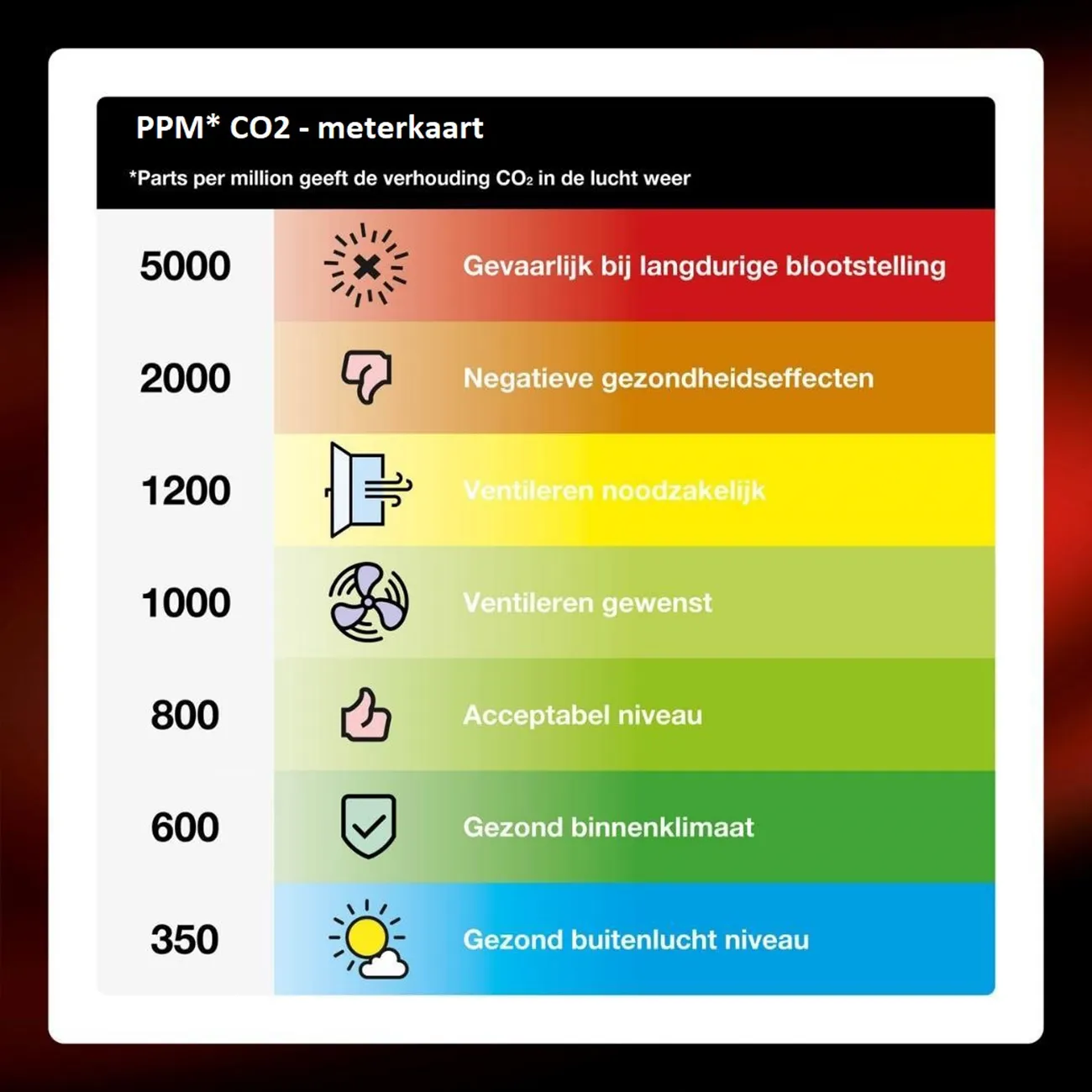
The CO2 concentration is a good indicator of air quality in a space. When people occupy an unventilated space, the CO2 concentration rises because they exhale CO2. The ARBO and GGD provide clear, colour-coded guidelines for CO2 concentrations in a space. At 350 ppm (parts per million), the CO2 concentration is ideal and is normally comparable to the level in fresh outdoor air. Please note: the air in an indoor space can be renewed, but it can never be better than fresh outdoor air. The air quality of ‘fresh’ outdoor air is certainly lower in a city centre than in a rural area or a wooded environment. Up to 800 ppm is considered an acceptable level for the indoor climate. A ppm value between 800 and 1,200 is the absolute limit for air quality indoors. At a ppm value above 1,200, ventilation is essential to improve air quality. More than 2,000 ppm is dangerous and can lead to health problems.
Ventilation and air renewal
As mentioned, ventilation is necessary to improve air quality when the CO2 concentration exceeds 1,200 ppm. It is also a standard requirement under the Building Decree when constructing a building. However, good ventilation is essential for good air quality in any case. Removing polluted air and bringing clean, fresh outdoor air into the space improves air purity: air renewal through ventilation. Read all about ventilation in offices and other spaces here.
Humidity, temperature, filtration and other factors
Pollutants such as pollen, dust and other airborne contaminants can be removed from the air through effective filtration. This helps improve air purity. Temperature and humidity also play an important role. We have discussed these two factors in detail in our series exploring the question, ‘What determines a comfortable indoor climate?’ In this series, we take an in-depth look at the indoor climate as a whole.
Other factors, such as chemical air pollution, gases from outside, decomposition, or mould and mould spores, can also affect air quality. The causes may come from inside or outside. In most cases, internal causes such as poor ventilation can be addressed with help from the Schilt companies.
Measuring CO2 concentration and fine particulate matter
The CO2 concentration can be measured using a weather station or a CO2 meter. A weather station typically makes humidity, temperature and CO2 levels easy to read at a glance. To measure fine particulate matter in a space, use a professional particulate matter meter. This quickly and accurately counts the number of fine particles in the air.
What can you do to improve air quality in a space?
- Ventilate
- Resolve moisture problems
- Remove sources of pollution, such as dead plants and overflowing bins, from the space.
- Place printers in a separate room
Conclusion: how does air quality contribute to a comfortable or uncomfortable indoor climate?
If air quality in offices and other spaces is poor, for example because of high CO2 levels, too many airborne pollutants or poor ventilation, the air can feel very unpleasant. This makes for a less comfortable working environment and can lead to health problems for you and your employees. Good air quality is therefore essential for a comfortable indoor climate and, in turn, for your employees’ productivity.
Would you like to know how to create an optimal indoor climate, or do you have any questions after reading this blog? Contact our specialists.
A business enquiry for Schilt bedrijven? Get in touch
Companies in this story

Keep following this
Get an email when a new story is published. No account needed.
- ThemeHealthy indoor air
- SubjectGeneral
- CompanySchilt bedrijven







