











The Pen | Towards an energy-producing built environment
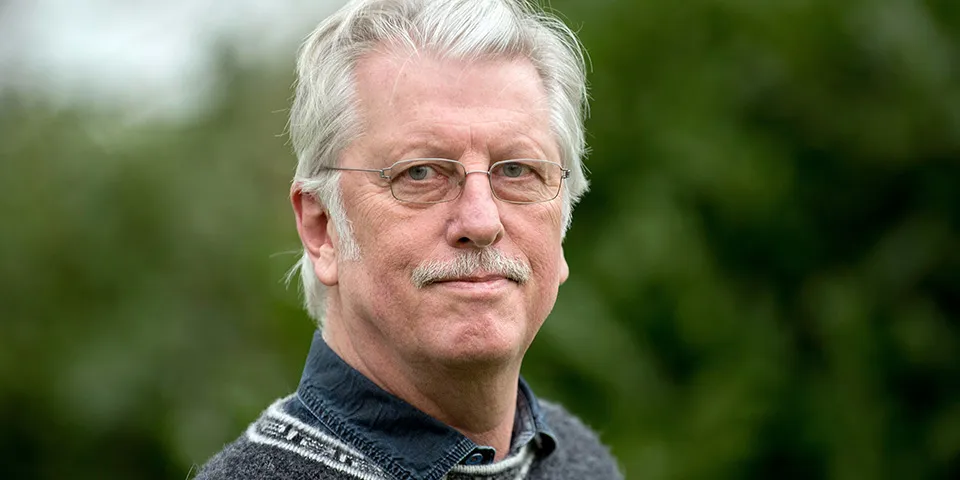
For 97% of peer-reviewed scientists, the fact that the climate is changing as a result of human activity is no longer even a question…
For 97% of scientists whose work has been peer-reviewed, the fact that the climate is changing as a result of human activity is no longer even a question, but a certainty established to the ‘golden 5-ơ standard’. Denying this is, scientifically speaking, a gamble with odds of 1 in 3,500,000. It is a gamble we certainly do not want to take with our planet, given the potential for a ‘runaway’ effect if temperatures rise by more than 2°C. Human-induced climate change is therefore as scientifically proven as gravity. Climate deniers are in good company, alongside proponents of a ‘flat’ or ‘hollow earth’, alchemy, perpetual motion and several other ‘alternative’ scientific views.
The main driver of rising atmospheric (and ocean) temperatures is the increase in CO2 in our atmosphere. Despite strenuous efforts to reduce these emissions, global emissions, particularly those resulting from fossil fuels, continue to rise. We will certainly need to develop and apply technologies that reduce the concentration of CO2 in the atmosphere, but unless we do something about emissions, it will be like mopping the floor with the tap left running. And this is where the built environment can play an important role. The built environment accounts for around 1/3 of total energy use and the associated CO2 emissions.
For too long, the built environment has been guided by a savings scenario, which ultimately led to ‘Nearly Zero Energy’ buildings. This quite wrongly suggests that the 0 threshold cannot be crossed. It is a limitation we have imposed on ourselves. Nothing prevents us from achieving a positive (energy) footprint and creating buildings that generate more renewable energy than they consume, including the energy embodied in the building itself: its ‘embodied’ energy. This approach is set out in the concept of ‘Beyond Sustainability’, which applies to all resources. Not just energy or materials, but also water, air, fertile land and space. In this way, a building can contribute to our health, unlike the outdated concept of ‘sick building syndrome’.
The task therefore seems clear: bring about a transition from fossil fuels to renewable energy. The main renewable energy sources are solar, wind, water, geothermal, tidal, wave and ocean temperature-difference energy. The sun is by far the most important source (at least 1,200 times the world’s energy needs can be harvested from it), followed by wind (around 6 times the world’s energy needs), while the rest have far less potential. Unfortunately, solar and wind power are intermittent, so energy will have to be stored in some way, whether electrically, thermally, mechanically or chemically.
Each of these storage methods has its advantages and disadvantages, both in terms of efficiency and resource requirements. The concept of circularity plays an important role here. In the book ‘Circulariteit, op weg naar 2050?’, circularity is equated with ‘renewability’. And once again, this applies to all the resources used: energy (renewable sources), water, air, fertile land (restorable to its original condition) and materials (reusable indefinitely). A key issue here is the future availability of technical materials in particular.
This is an abridged version of a new Narrative for TVVL.
Question about this story? Ask your question
Keep following this
Get an email when a new story is published. No account needed.
- SubjectGeneral







