











Van der Valk Hotel Gorinchem proves it can be done!
Plug-and-play electrical installation is gaining ground. It is now firmly established in non-residential construction, where suspended ceilings, cavity walls, raised floors and cable trays are commonplace. In short, anywhere there is enough space to fit plug-in junction boxes, switching and distribution components, and cables. “Following its uptake in non-residential construction, plug-and-play installation is also becoming increasingly common in housing,” says Casper Bontenbal, Marketing Manager at Isolectra. “This includes timber frame homes and homes with suspended ceilings, where electrical installations can be fitted intelligently, quickly and flexibly. Thanks to Isolectra, these benefits are now also available for construction methods without ‘voids’, such as precast concrete, cast-in-situ and tunnel construction.”
Plug-and-play installation in precast concrete, cast-in-situ and tunnel construction
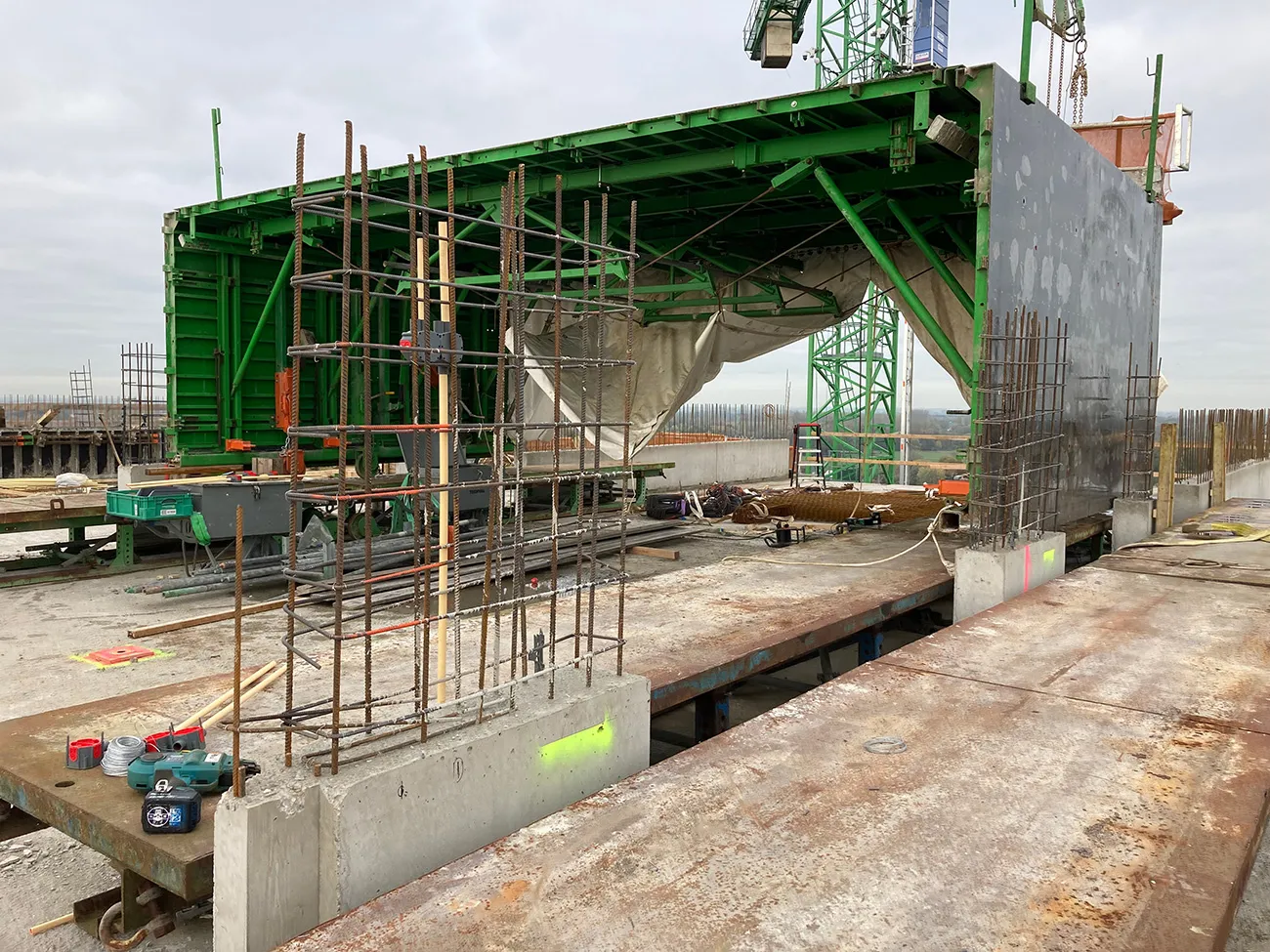
The idea of developing plug-and-play installation in wet concrete took off following a request from Techval. “Skilled workers on site are becoming scarcer and more expensive,” says Robbert van de Laar, Project Manager at Techval. “So it adds considerable value for us to install systems more simply and quickly, tunnel construction included. Normally, we install a conduit first and pull the wires through later. With plug-and-play installation in concrete, we can complete the job in one go. We also avoid fire compartments altogether.” His colleague, Chief Electrician Marcel Eijkemans, adds: “A higher fire rating is prescribed in circulation areas, which means using different, more expensive cables. But when everything is cast into the concrete, this is dealt with efficiently. The fire rating issue is resolved straight away.”
Comprehensive testing and certification process
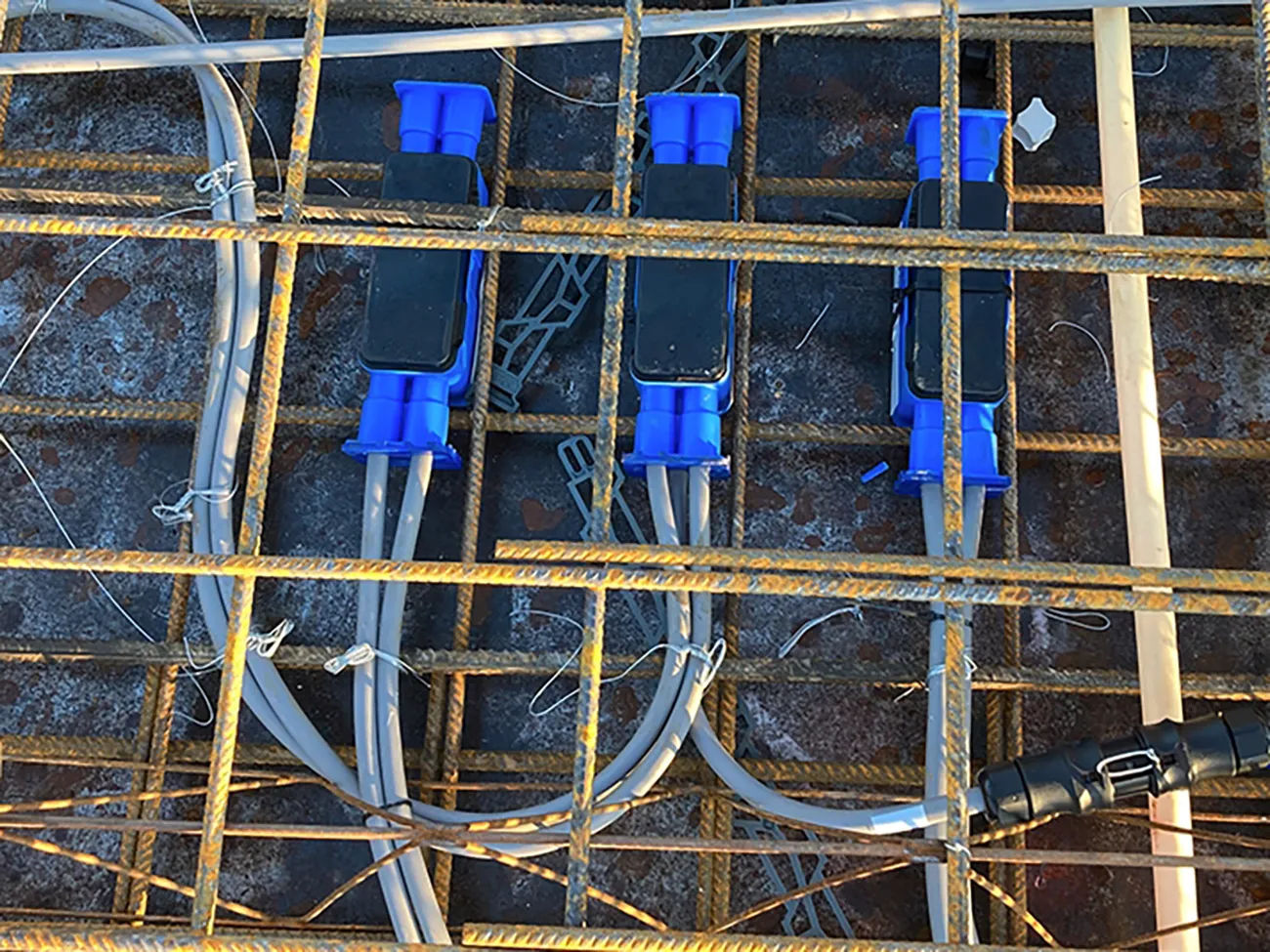
Extreme conditions are part and parcel of tunnel construction, Bontenbal explains. “The electrical installations are fitted to the reinforcing steel, which people walk over, concrete is poured onto, and air bubbles are removed from using a vibrator. Would the Wieland RST20® system be suitable for this?” Wieland RST20® is IP69 certified, he says. This means the system can be cleaned with a water jet at pressures of up to 100 Bar. It can also be temporarily submerged. “Together with Wieland, we investigated what this system could do. We then began an extensive testing and certification process for the connectors. We cast them into concrete and carried out a comprehensive endurance test under very demanding conditions. We also developed a cable for concrete construction together with our sister company TKF. This, too, was quite a process, but it resulted in a certified system for plug-and-play installation in concrete.”
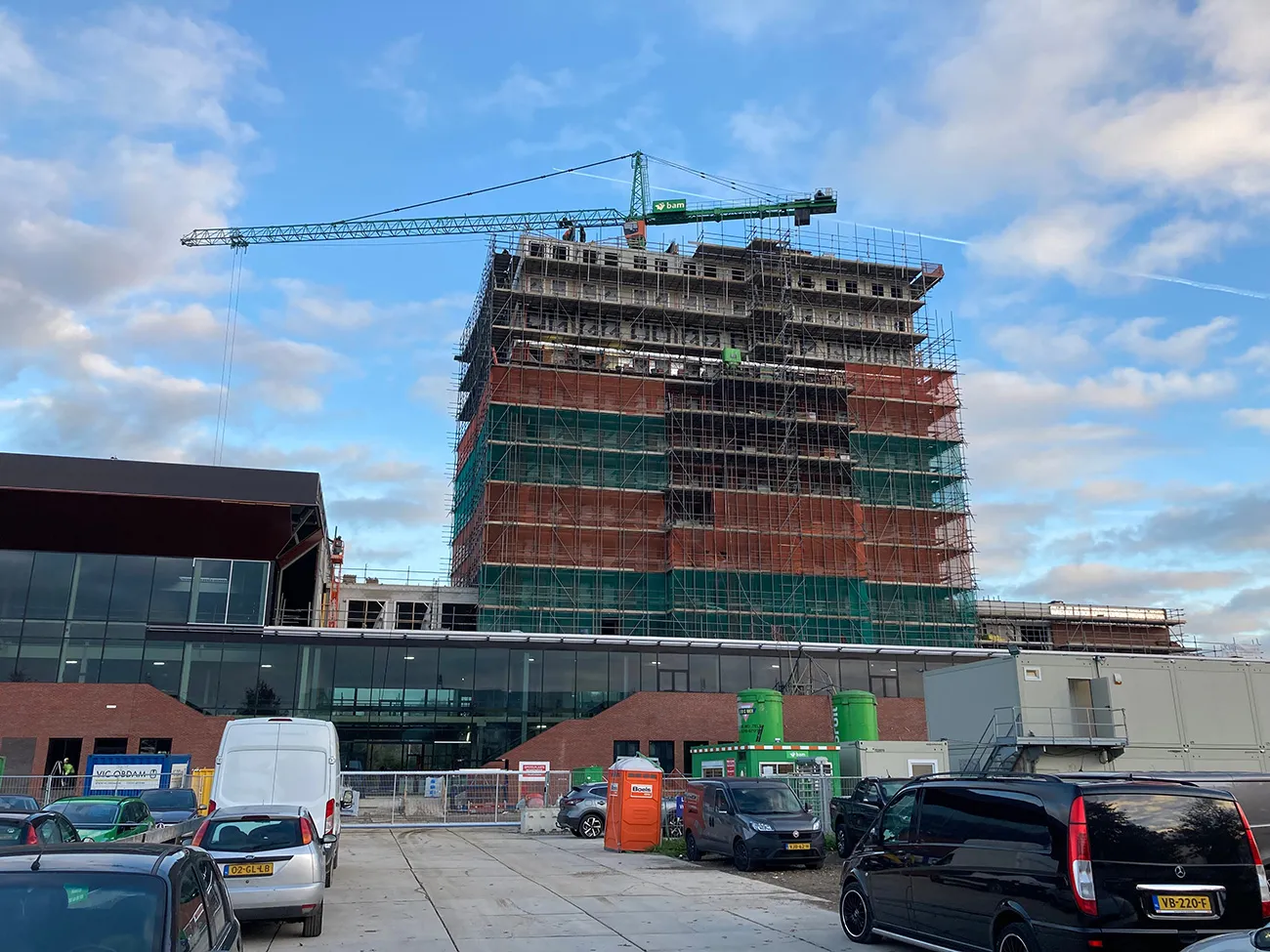
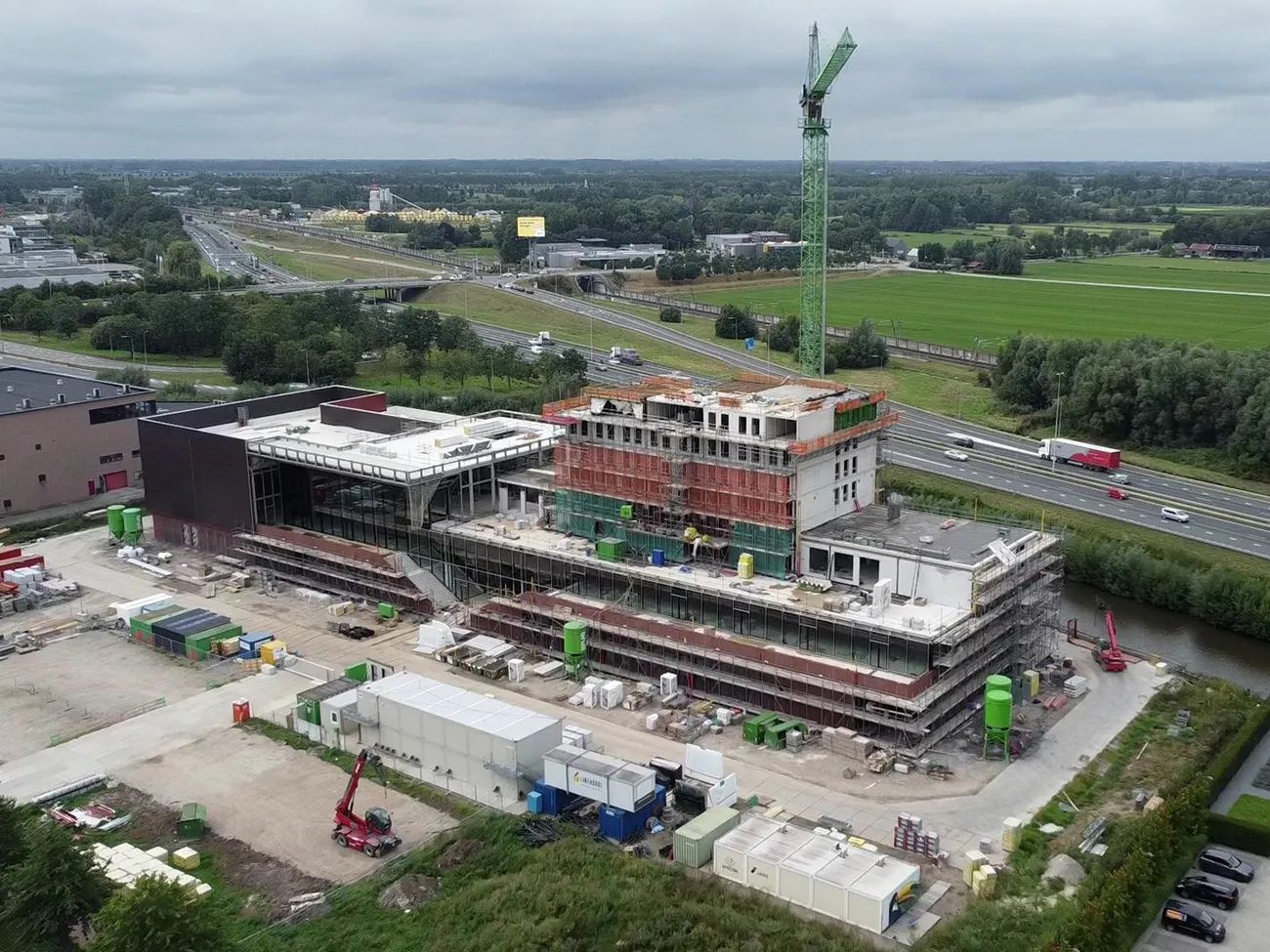
Van der Valk Hotel Gorinchem
“In the summer of 2020, we invited Techval project managers Bert Damen, Remco Nederkoorn and Robbert van de Laar to our head office to present all the developments,” says Bontenbal. “As the conversation progressed, they became increasingly enthusiastic. They even came up with a project where the system could be used: the new Van der Valk Hotel Gorinchem.” Eijkemans says: “This tunnel construction project has one type of room and many repeated electrical installations. It is an ideal setting for plug-and-play installation in concrete.” Van de Laar adds: “The Van der Valk family is also very open to innovation and gave us permission to test various methods for building and connecting the electrical installations, in close consultation with the concrete contractor, steel fixers and other site teams.”
Four methods
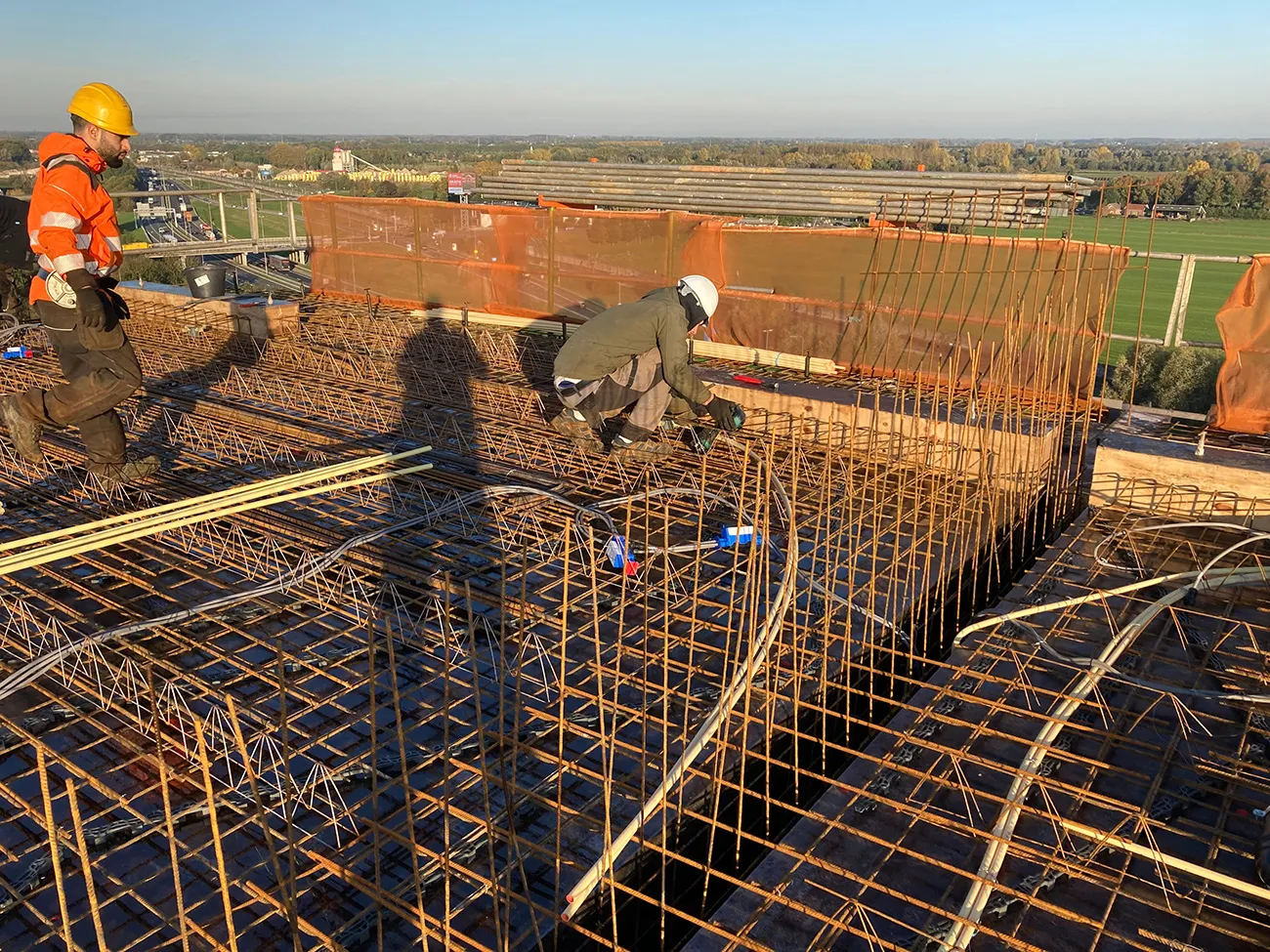
Construction of the Van der Valk hotel was due to start in September 2020. Because of the tight schedule, it was decided to use plug-and-play installation only on floors 9 to 12, says Cor- Hein Slobbe, Senior Product Manager at Isolectra, who regularly visited the site to explain the different methods and answer installers’ questions. “Cable boxes were installed in the walls on every floor, each with a connection point (switch, socket or lighting point) and a coiled wire or connector. A single cable runs up from each of these cable boxes. A small bundle of cables was also hung in the side walls, and this could be connected in various ways. On one floor, we had already fitted the junction boxes, while on another we tested a different type of ceiling rose with more connection points and cables. On a third floor, the cables were already fitted with connectors, both at the ceiling rose and at the wall boxes, making it possible to install the system easily using link cables. On the final floor, standard plug-in RST20® distribution blocks were also used, reducing the number of ceiling roses required.”
Seamless integration
To ensure seamless integration of the different methods, Slobbe visited the site at an early stage. This included seeing how the Techval team coordinated the construction work and installations. What would be the best way to support this electrically? Where would be the best place to hang the cable bundles? And what storage options were available on each floor? “Together with the installers on site and the Isolectra team, I discussed all the possible solutions. The cables were then made and coded with the assembly company, in consultation with the installers.” Bontenbal says: “As well as the connector system and associated cables, this project involves cable boxes to which the sockets or lighting points need to be connected. To ensure a proper, watertight connection for all the cables, we developed special adapters for this project.”
Combining with ‘dry’ systems
A central distribution board has been installed on each floor of the Van der Valk Hotel. “A power cable runs from here to every room,” says Bontenbal. “The connections are plug-in. In the rooms, some of the installations run from the suspended ceiling to the bedhead panel, and from the ceiling to the bathroom. The cables terminate in a connector in a cable box, from which the rest of the hotel room is wired using a Wieland GST18® system.” Techval is now busy installing these ‘dry’ systems.
Evaluation
At a recent follow-up meeting, all the methods and findings were discussed. “The evaluation showed, for example, that using the right type of cable box is very important,” says Slobbe. “It also showed that ideally, the wiring in the walls should extend just above the tunnels and already have connectors fitted. This prevents conflicts and risks when the floor slab is laid on top of the walls. It also means site workers are not hampered by large tangles of cable. Once the ceiling network is ready, the cables can easily be connected to the junction boxes in the ceiling using standard link leads.” The final lesson the team wants to share is that the preparation phase is essential, even more so than with dry construction methods. After all, no changes can be made once the concrete has been poured.
Van der Valk Hotel Gorinchem is due for completion in week 30. Techval is now rolling out plug-and-play installation in concrete on two other major projects: the Inleisure hotel in Bloemendaal and the Van der Valk hotel in Den Haag-Wassenaar.
Have a business enquiry for Isolectra BV? Get in touch
Companies in this story

Keep following this
Get an email when a new story is published. No account needed.
- ProjectVan der Valk Hotel Gorinchem
- ThemeBuilding electrical systems
- SubjectGeneral
- CompanyIsolectra BV







