Clay- and loam-based radiant ceilings provide the perfect foundation for decentralised ventilation
Text Lieke BousemaImage ArgillaTherm and SIEGENIA
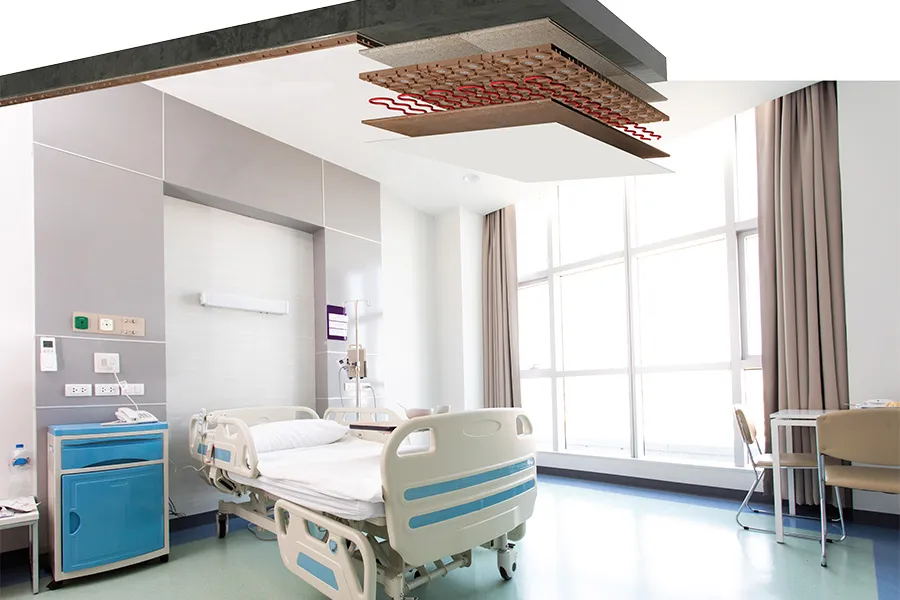
Healthy, happy building users and residents. But also future-proof systems based on ecological, circular building materials, with average savings of €10/m2/year on maintenance and energy consumption compared with fan coil units or other radiant ceilings combined with central ventilation. ArgillaTherm and SIEGENIA joined forces around two years ago, aiming to combine a pleasant indoor temperature, the right humidity, plenty of fresh air and highly energy-efficient operation. At the heart of their solution are ArgillaTherm’s natural radiant ceilings, made from high-quality loam enriched with clay minerals, which provide ideal radiant heating and cooling. They also regulate humidity naturally, creating the perfect conditions for SIEGENIA’s decentralised AEROMAT VT ventilation units with heat recovery.
ArgillaTherm’s radiant ceilings consist of modular ceiling panels measuring approximately 40 x 40 cm. They are pressed to create a grid into which the heating pipes can be easily clipped, explains Marc Smets of ArgillaTherm. “A heat pump then provides the required heating and cooling.” Because the pipes sit just 8 mm below the surface, the system responds very quickly, he says. “Much faster than, for example, underfloor heating. The prefabricated tiles can easily be screwed onto an ESB backing board and finished with loam or lime plaster.”
Almost CO2-neutral and 100% circular
ArgillaTherm ceiling panels are pressed in an earth-moist state. “This means that producing our high-quality panels is almost CO2-neutral, at 0.37 kg CO2 per m2,” says Smets. “That is 120 times better than metal radiant ceilings! What’s more, the CO2 released during raw material extraction and transport is offset by the CO2 absorbed by loam in nature. When renewable energy is used, our panels are also CO2-neutral during use. As no reinforcement or chemical additives are added to the panels, and loam can be reused indefinitely, an ArgillaTherm radiant ceiling is 100% circular.”
A pleasant feeling
Because radiant ceilings work through radiant heat, the perceived temperature is 2-3 degrees higher than the actual air temperature. “Our water-based radiant ceiling also requires a much lower flow temperature than convection heating. The added clay minerals naturally keep relative humidity in balance, without technology or sensors.”
No need for dehumidification
By 2050, our summers are expected to be an average of 6°C warmer than they are now, says Smets. “Long periods with average temperatures above 30°C will become the rule rather than the exception, causing many buildings to overheat. Cooling will therefore become more important than heating in the future. Radiant ceilings offer the perfect solution.” In the past, radiant ceilings in larger buildings were often combined with a central ventilation system, he says. “When the dew point rises above 17°C and the radiant ceiling cools, relative humidity increases, creating a risk of condensation at the coldest point, the ceiling. In that case, a central ventilation system can help by pre-drying the fresh outdoor air supplied to the building. With our system, however, this is no longer necessary. Because we use loam and clay minerals, all excess moisture is absorbed into the radiant ceiling.” This makes it possible to control ventilation locally rather than centrally, with hardly any building alterations required, explains Jeroen Wolters of SIEGENIA. “A decentralised ventilation system is also cheaper, more energy-efficient and easier to maintain.”
Healthy, happy users and residents
Thanks to the clay minerals in the loam, relative humidity in a room stays between 40 and 60%, says Smets. “When humidity is (too) low, the moisture that has been absorbed is naturally released back into the room. Our radiant ceilings therefore regulate humidity and have a positive impact on the health of everyone in the building.” The regenerative base material also promotes user wellbeing, he says. “For example, by removing harmful substances from the air, preventing mucous membranes and eyes from drying out, helping to prevent colds and headaches, and supporting better-quality sleep. They also reduce airborne dust particles and electrosmog, absorb odours, and loam has anti-allergenic properties. This makes our radiant ceilings particularly suitable for healthcare facilities, hotels, offices, homes and public buildings.”
Ventilation based on CO2 levels alone
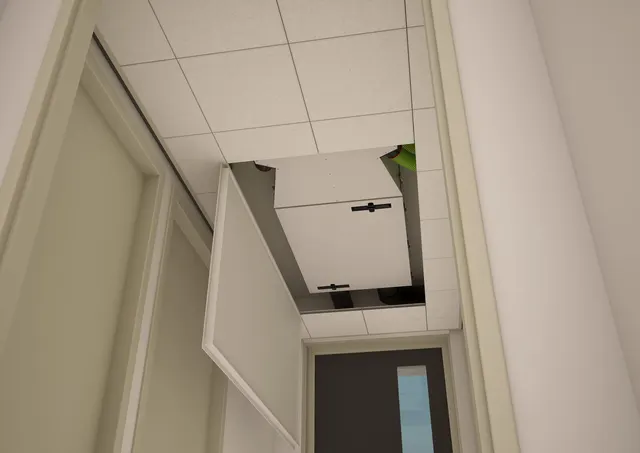
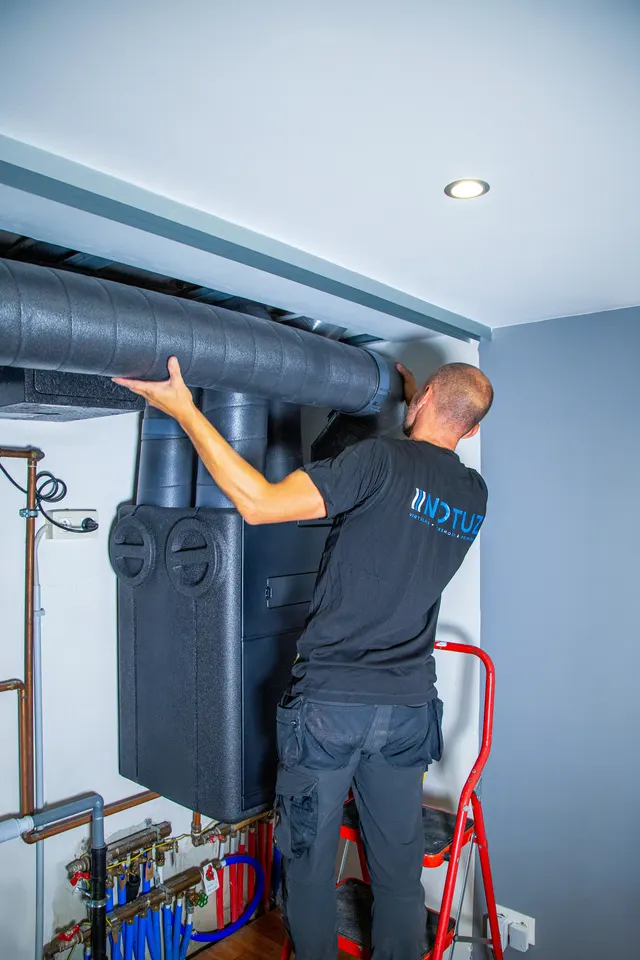
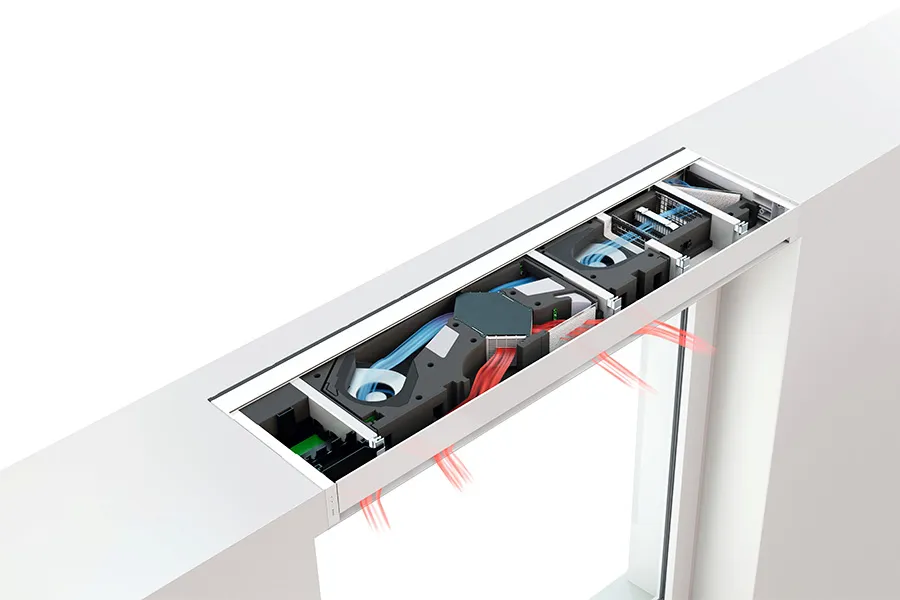
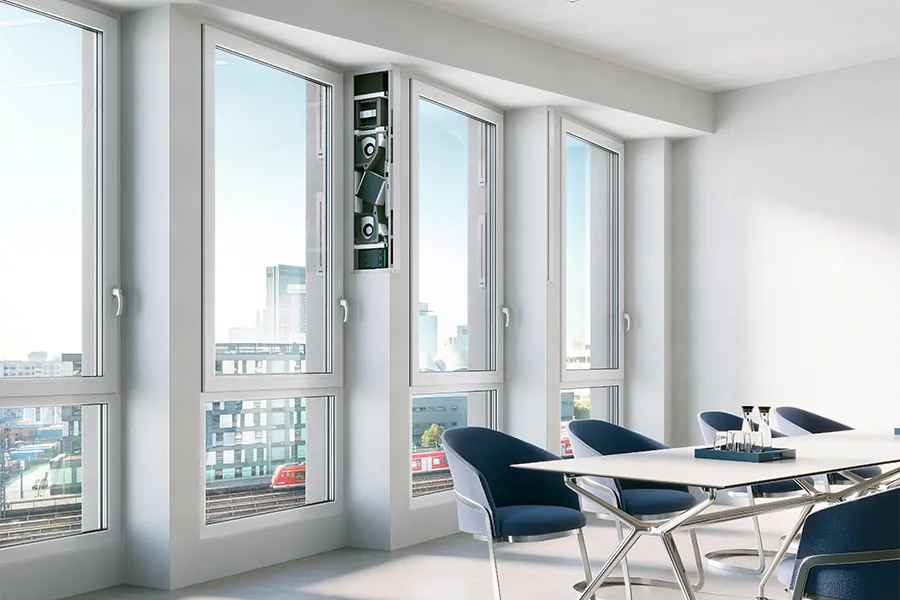
“Because ArgillaTherm radiant ceilings regulate humidity, ventilation is only needed to control CO2 levels,” says Wolters. “This keeps ventilation energy consumption extremely low. Our AEROMAT VT ventilation units can be discreetly and almost invisibly installed above, below or beside the window frame, providing ventilation only where and when it is needed. Heat recovery of up to 93% is possible.” Smets adds: “Maintenance and running costs for our radiant ceilings combined with decentralised units are highly economical, bringing savings of up to €10/m²/year compared with conventional systems across the entire HVAC concept. The combination of Argillatherm and SIEGENIA is therefore healthier, simpler and cheaper!”
A business enquiry for SIEGENIA-GROEP? Get in touch
Companies in this story
Keep following this
Get an email when a new story is published. No account needed.
- ThemeGas-free heating and cooling
- SubjectVentilation
- CompanySIEGENIA-GROEP