











Virtual rather than physical room controllers for Nestlé’s new-build project in Nunspeet
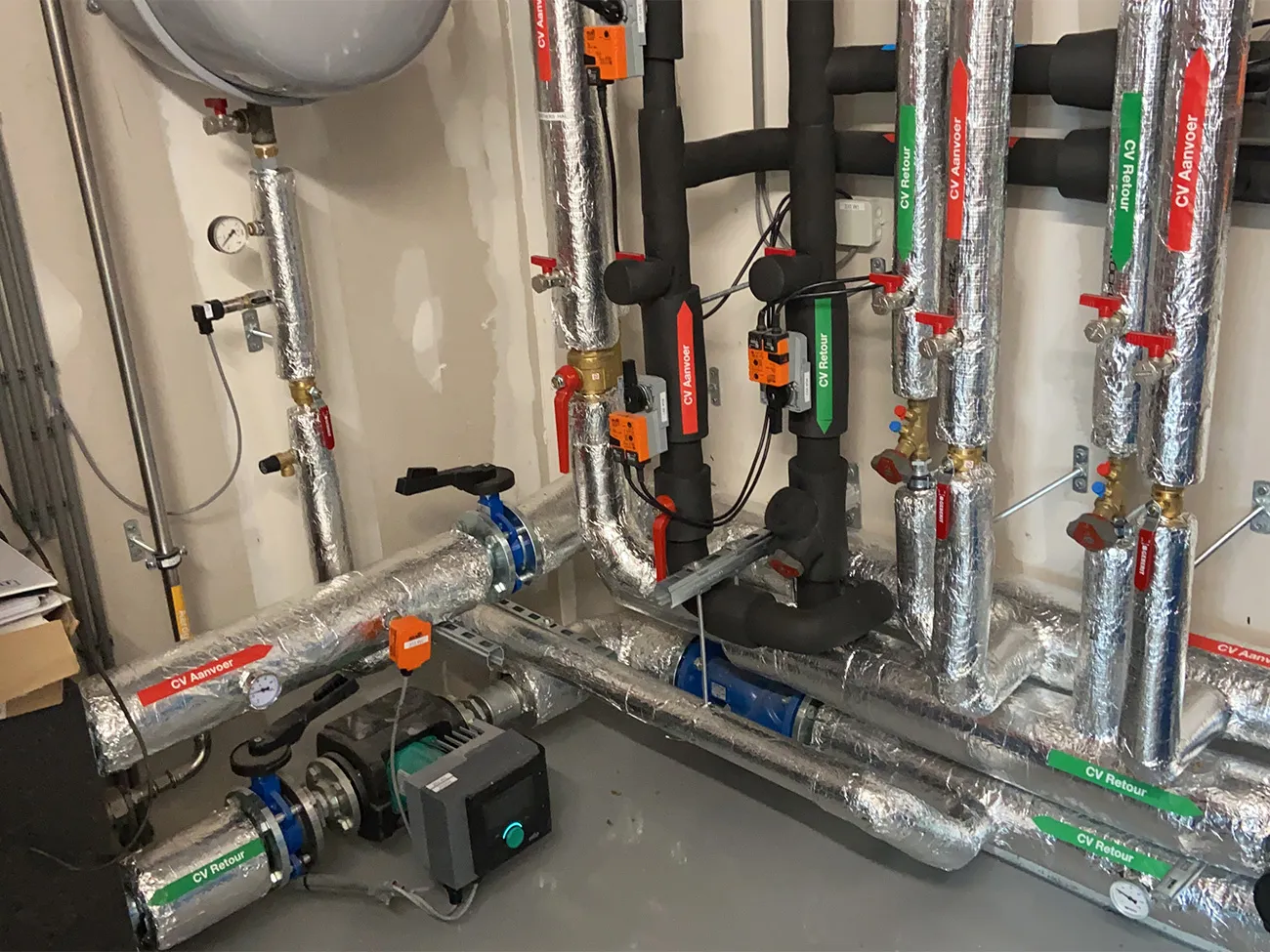
Nestlé, the world leader in Nutrition, Health & Wellness, continues to expand its production capacity. From mid-November, the factory in Nunspeet, which produces baby food and semi-finished products for the Dutch and European markets, will have a larger warehouse and a new office. Commissioned by Nestlé, vanPanhuis (part of TOP Installatiegroep) delivered the complete building services installation for this expansion. To ensure optimum climate control in the office spaces, the Hoogeveen-based installer worked with Smartics and Belimo.
“In line with our OBO (design, build, maintain) principle, we delivered the electrical and mechanical building services installations for the extension,” says Peter Moddejongen, project manager at vanPanhuis Hoogeveen. “Two central-heating boilers were installed in the plant room of the new office to control the climate in the warehouse. The heat is delivered by central-heating heaters. The office is heated by underfloor heating combined with fan coil units. We installed a chiller on the roof to provide cooling to the underfloor heating system and fan coil units during the summer months. For climate control in the offices, we were looking for a solution that was easy to operate and cost-effective, and could also be installed quickly and easily. We found this solution at Smartics, which delivered the control technology for the building management system, primary installations and room controls just two weeks later.”
Virtual room controls
“The climate system in the new office comprises a primary system for heat and air distribution, for which we supplied the control panel, including the automation,” says Wietse Hut, director of Smartics. “We came up with a clever solution for the room controls. Normally, a physical room controller is installed above the ceiling, connected to a room operating unit and wired to the local climate control installations. However, this is a time-consuming process prone to error, so we developed a smart alternative for this project. It uses virtual rather than physical room controls. The virtual room controls were implemented using Belimo equipment, which can manage processes entirely independently. The equipment also communicates via Modbus. The room operating units are also equipped with Modbus, allowing us to connect all communication lines and control local processes using a floor manager (floor controller/substation).” Since Modbus was used, no additional cabling was needed. This made installation quick and straightforward, says Hut. “vanPanhuis only had to connect a communication cable between the controllers and the room operating units, through to the floor manager. The system could then be automated.”
Maximum flexibility
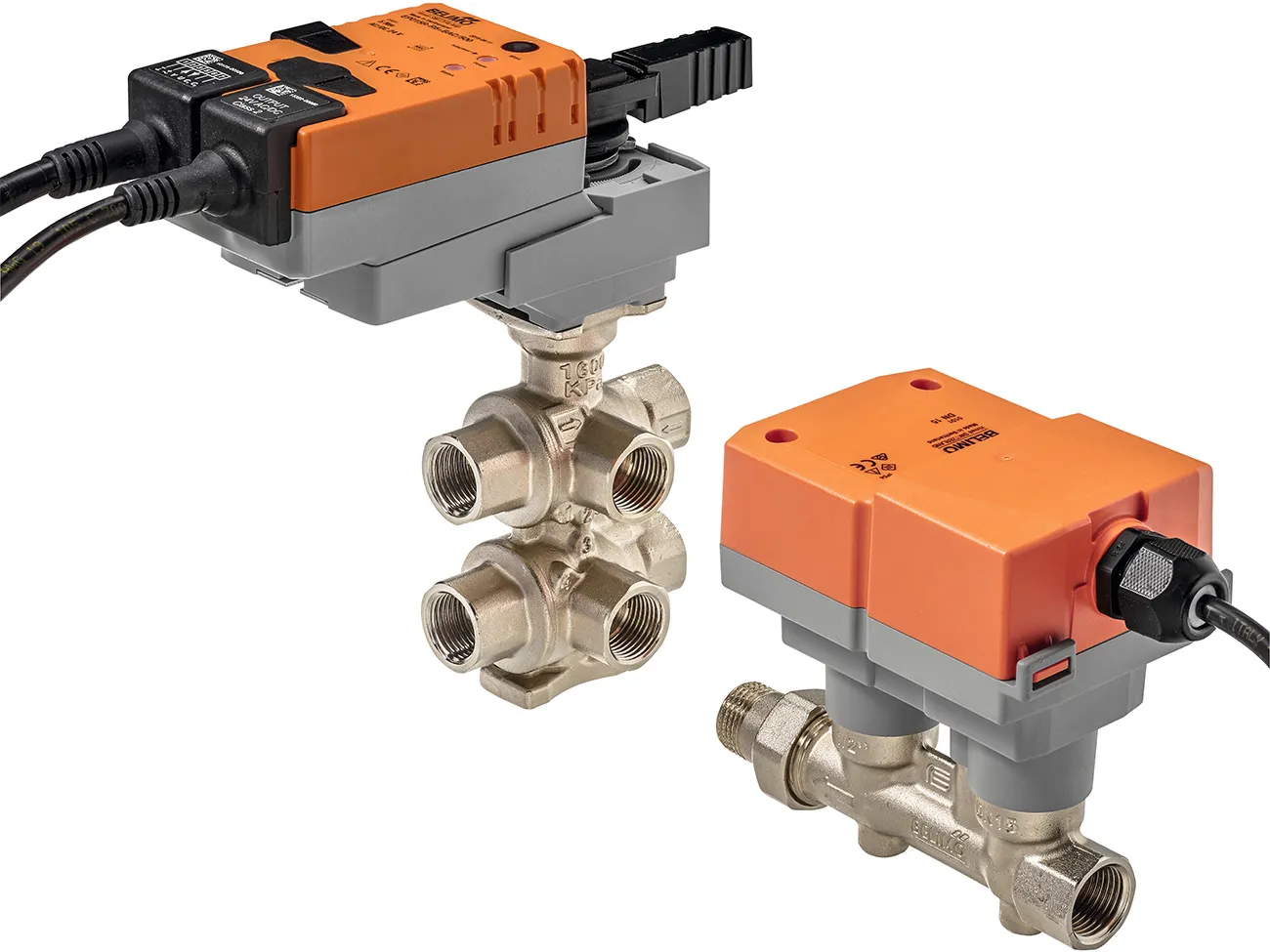
Belimo 6-Way EPIV electric pressure-independent control ball valves have been installed above the ceilings in the new office spaces, supplied with hot and chilled water from the primary system. Room operating units have also been provided in every room, says Hut. “From the users’ perspective, nothing changes at all. The trick is that the room operating units are no longer connected to the 6-Way EPIVs via a room controller, but to the floor manager. All the control intelligence is therefore housed in the floor manager. If the rooms are reconfigured in future, the entire installation can remain in place. We can simply adjust the master/slave controls in the software, ensuring that the office floors can be laid out flexibly.”
The importance of data
“This project shows that our 6-Way control ball valve, first introduced in 2009, is also perfectly suited to today’s virtual world,” says Danny de Laater, technical support manager at Belimo. “Over the past few years, we have continued to develop this control ball valve, moving from standard 0-10V control to an intelligent version with sensor-controlled flow regulation and bus communication. Data is crucial for today’s system integrators, and this 6-Way EPIV delivers just that, via both BACnet and the Modbus used in this project.” The integrated ultrasonic flow sensor provides real-time visibility of the flow, among other things, he says. “This makes it possible not only to set maximum flow rates (V-Max) for hot and chilled water, but also to carry out hydraulic balancing, without the installer having to work on site from a mobile elevating work platform or scaffolding. Simple remote balancing is enough, saving considerable time and travel. It also means that action can be taken much more quickly, which fits perfectly with today’s focus on sustainability.”
In addition to real-time flow control and monitoring, system data can be used to remotely monitor mechanical and/or electronic overload. It can also detect air bubbles (oxygen) in hot and chilled water pipes, enabling service and maintenance to be tailored accordingly.
Smart applications
Hut is also convinced that we will increasingly move towards a virtual world. “Now that there is a data connection to all the components, much more data can be collected and analysed,” he says. “Previously, you could only send a control signal from the room controller. Now you also receive information about the number of litres per room, the corresponding valve positions, and so on. This enables installers to respond quickly and remotely to climate complaints or problems, for example by changing the flow rate. This project proves that control technology can deliver very smart applications if you (1) know what is available on the market and (2) are prepared to innovate. Working together, vanPanhuis and Belimo have enabled us to achieve this very successfully, within the tight timescale and budget. This would not have been possible using conventional methods.”
A business enquiry for BELIMO? Get in touch
Companies in this story

Keep following this
Get an email when a new story is published. No account needed.
- SubjectGeneral
- CompanyBELIMO







