‘The humidity in our workplace is often far too low’
Text Lieke BousemaImage Condair
Dry throats, burning eyes and irritated mucous membranes?
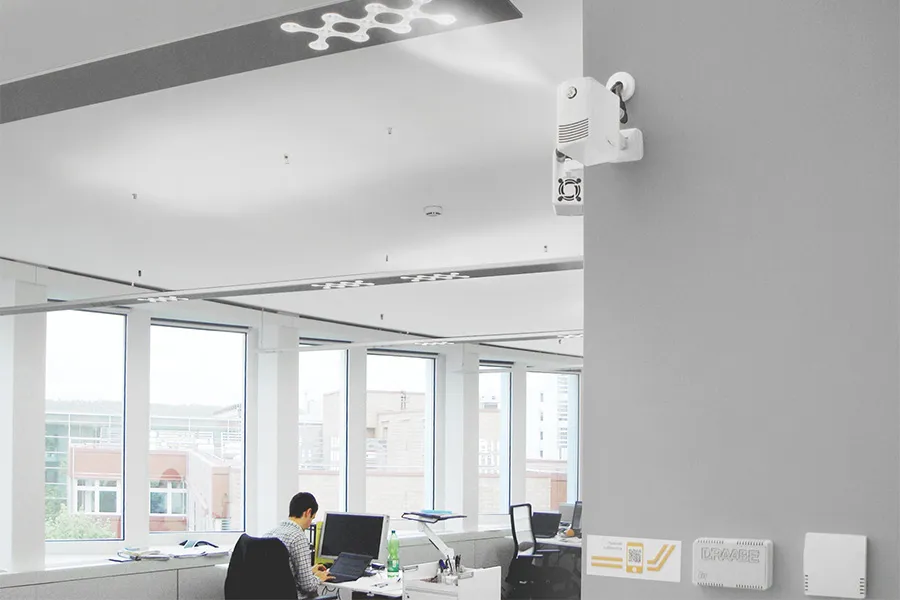
During the winter months, humidity in our buildings is often far too low (<40%). As a result, bacteria and viruses can remain airborne for longer and infect us, particularly because low humidity also weakens our immune system. So as winter sets in, the number of sick days also rises. This is the case, for example, in office buildings, where employees are more likely to suffer from dry throats, burning eyes, irritated mucous membranes, hoarseness and dry skin, and where (flu) infections are a constant risk.
“Cold air can hold or absorb less moisture than warm air,” explains Stefan Rijsmus, Marketing Manager at Condair. “That is why washing dries on the line indoors in just one to two hours during the summer months, whereas in winter you can wait a very long time. Applied to our buildings, this means that indoor relative humidity drops as soon as cold air is brought in from outside.”
Causes of (excessively) dry air
“The cold outside air drawn in by the ventilation system is relatively humid,” says Ton Burgers, Account Manager at Condair. “However, when that air is heated or pre-treated in the air handling unit, it expands. This means that less moisture remains in the warm air as a percentage, resulting in air that is too dry. Relative humidity can even fall below 20%, whereas humidity in buildings should be between 40-60%! The excessively dry air then supplied to the space will draw moisture from all the materials, objects and people in it, causing them to dry out further.”
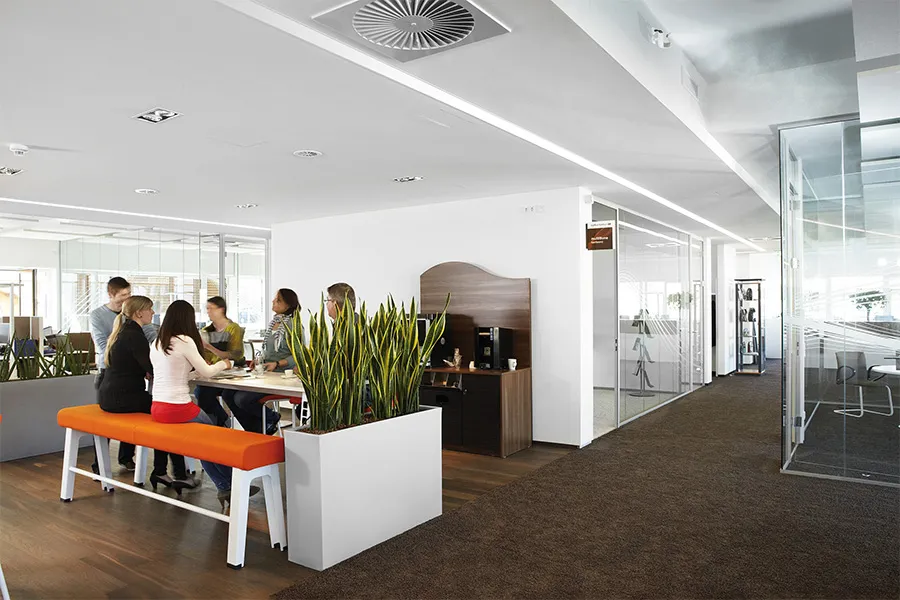
Negative effects
Independent studies, including research by Yale University, have shown that the transmission of airborne viruses such as influenza is significantly higher in environments where the air is too dry (<40%). “Other negative effects include dry, itchy skin, contact lenses drying out, sore and tired eyes, a feeling of discomfort, respiratory complaints and a painful, dry throat,” says Rijsmus. “Electrostatic effects are also a risk, causing jumpers to crackle and door handles to give an unpleasant shock. These problems can easily be prevented by improving humidity (40-60%).”
The role of humidification
Raising humidity from <20% to 40-60% can only be achieved with a humidification system, Rijsmus stresses. “Contrary to popular belief, heat recovery wheels with moisture recovery do not have sufficient capacity to guarantee the desired level. Moreover, ‘you cannot recover what is not in the air’. Investing in good humidification is therefore essential. Not only to promote employees’ health and wellbeing, but also to keep the building and the materials inside it in good condition, from walls and floors to furniture.” Condair meets this need with an extensive range of (hybrid) adiabatic humidifiers, electric steam humidifiers and direct room humidification systems, all of which operate entirely without gas. Condair’s account managers will be happy to advise you on the right humidification solution for your buildings, tailored to your requirements for energy consumption, hygiene, and investment and maintenance costs. For example, you can speak to them at VSK+E. You will find Condair in hall 10, stand A040.
Een zakelijke vraag aan Condair BV? Get in touch
Companies in this story

Keep following this
Get an email when a new story is published. No account needed.
- ThemeHealthy indoor air
- SubjectVSK
- CompanyCondair BV
- CompanyVSK