











Why fire protection is so important for businesses
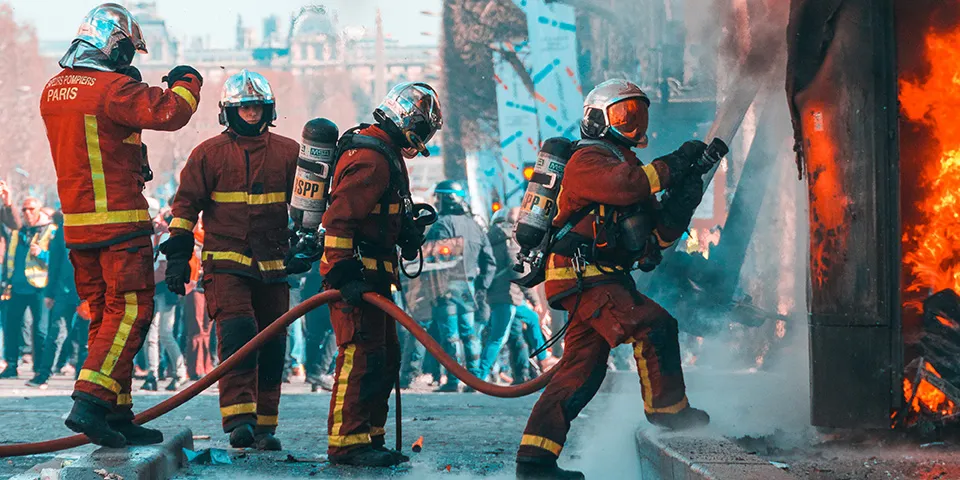
The danger lurks everywhere: fire risk is a major concern both in our private lives and in the workplace. Business owners and employers are responsible for operational safety in their business and at the workplace. Every business must comply with fire safety measures and is required to prevent serious fires and personal injury.
The consequences of fire damage
Every year, several billion euros go up in flames in the Netherlands. The resulting damage is both substantial and economic. According to the insurance sector, one in three fires causes property damage worth more than 500,000 euros. Despite these alarming figures, many businesses invest only the bare minimum in fire protection. This is especially true of small and medium-sized enterprises. Fires often have many causes: it only takes a small mistake to have serious consequences.
In addition to the fire damage itself, there may also be underestimated consequential losses, such as financial losses resulting from a shift in the market. In the worst case, this may also mean the loss of qualified staff, as well as the loss of trust among key customers or a decline in the company’s standing with its customers. Civil and criminal proceedings may follow, potentially leading to the company’s economic collapse. Insolvency is more likely to result from the loss of customers and employees than from inadequate insurance payouts. These often cover damage to buildings and property, or operating costs and lost profits. Meanwhile, until everything can return to normal, many customers leave for the competition. Permanent employees who may have been temporarily out of work might already have found a new job.
Benefits of fire protection
When a business owner adopts a consistent, preventive approach to fire protection management, they protect themselves from unpleasant surprises. This includes:
- Identifying potential hazards and fire risks
- Assessing the level of risk
- Taking appropriate protective measures
Preventing the risks of fire and its consequences requires comprehensive knowledge of fires and the damage they can cause. It is therefore essential to pay close attention to statutory fire insurance policies and the prescribed fire safety requirements . The ultimate aim is, of course, to prevent fires from starting and spreading.
Fire protection measures
Fire safety measures are pursued in line with fire safety objectives. These objectives determine what needs to be protected. The following aspects are of vital importance:
- Prevent the outbreak or spread of fire and smoke
- If a fire does break out despite all precautions, it must be extinguished immediately and the damage kept to a minimum.
- Potential hazards must be promptly contained and eliminated. These include risks to the environment, human wellbeing or property.
- Fire safety measures should ensure that operations can continue without major disruption.
These objectives include measures such as:
- Separating the different sections of a business with a fire-resistant wall to prevent the fire from spreading.
- All building materials must have a high level of fire resistance.
- Information about fire behaviour and safety instructions must be available to everyone.
- Smoke and fire detectors must be installed throughout the premises.
- Sprinkler systems must also be installed.
- Safety systems such as lightning conductors and surge protection devices must be installed.
- Protection against arson
Business owners can already prevent the risk of fire and its spread by using fire-resistant building materials. It is therefore worth ordering from a specialist online supplier of fire protection materials, for products such as façade cabinets, ventilators or fire hydrants.
Fire protection & construction supervision
Building regulations require preventive fire protection to be considered during the construction of a building. Every building owner is legally required to take structural measures to prevent fires from starting or spreading. This is also important to protect visitors and employees. For special-purpose buildings, such as industrial buildings, retail outlets or hospitals, a fire protection plan is required for the building permit. This must be drawn up and submitted not only for new buildings, but also for renovations.
Fire protection & occupational safety
Far worse than damage to property alone is the potential for personal injury resulting from a fire. It is therefore vital to protect employees from fire hazards. Under occupational health and safety legislation, every employer has the following duties in relation to preventive fire protection:
“The employer must take the necessary measures for first aid, firefighting and the evacuation of employees, regardless of the type of workplace and activities or the number of employees. They must also ensure that, in an emergency, the necessary links are established with external services, particularly those responsible for first aid, emergency medical assistance, rescue and firefighting.”
Conclusion
Fire protection and its requirements present major challenges for business owners. They are responsible for ensuring the safety of their employees and the continuity of their business. Legislation stipulates that business owners must address and guarantee health and safety in their workplace. Measures to ensure safety and protect health are a top priority. Fire protection is an important part of this, which makes it especially important to meet the requirements in this area.
Question about this story? Ask your question
Keep following this
Get an email when a new story is published. No account needed.
- SubjectGeneral







