











Why fire protection is so important for businesses
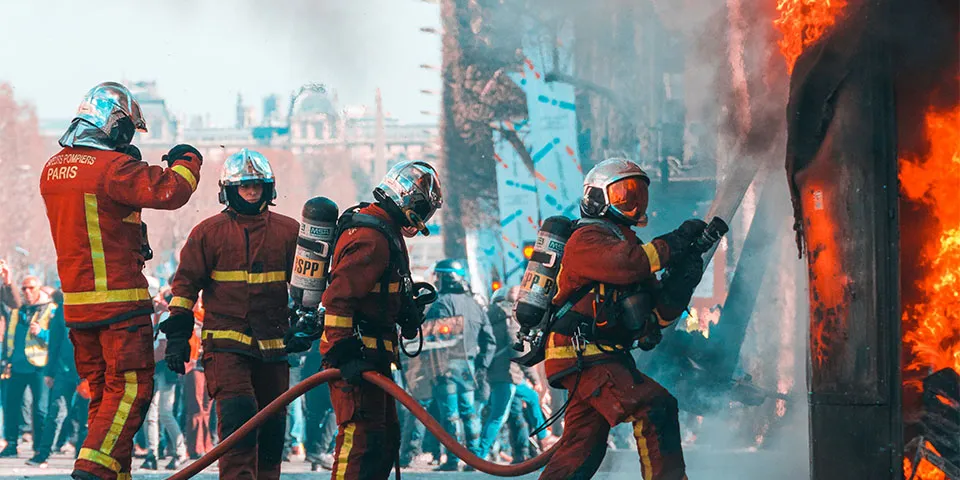
The danger is ever-present: fire safety is an important issue both in our private lives and in the workplace. Business owners and employers are responsible for operational safety in the business and at the workplace. Every business must comply with fire safety measures and is required to prevent serious fires and personal injury.
The consequences of fire damage
Every year, several billion euros go up in smoke in the Netherlands. The resulting damage is both considerable and economically significant. According to the insurance sector, one in three fires causes property damage worth more than €500,000. Despite these alarming figures, many businesses invest only the bare minimum in fire protection. This is particularly true of small and medium-sized businesses. Fires often have numerous causes: a small mistake can have major consequences.
In addition to the fire damage itself, there may also be underestimated consequential losses, such as financial losses resulting from shifts in the market. In the worst cases, this can also mean losing skilled staff, losing the trust of key customers or losing standing with clients. Civil and criminal proceedings may follow, potentially leading to the business’s collapse. Insolvency is more often the result of losing customers and employees than of inadequate insurance payouts. These often cover damage to buildings and property, or cover operating costs and lost profits. In the meantime, while the business gets back to normal, many customers leave for competitors. Permanent employees who may have been temporarily out of work may already have found a new job in the meantime….
Benefits of fire protection
By managing fire protection consistently and proactively, business owners can protect themselves against unpleasant surprises. This includes:
Identifying potential hazards and fire risks.
Assessing the level of risk.
Taking appropriate protective measures.
Preventing the risks of a fire and its consequences requires comprehensive knowledge of fires and the damage they can cause. This means paying close attention to statutory fire insurance policies and prescribed fire safety requirements. The ultimate goal, of course, is to prevent fires from starting and spreading.
Fire protection measures
Fire safety measures are implemented in line with fire safety objectives. These objectives determine what needs to be protected. The following aspects are particularly important:
1. Prevent the outbreak or spread of fire and smoke.
2. If a fire breaks out despite all precautions, it must be extinguished immediately and the damage kept to a minimum.
3. Potential hazards must be contained and eliminated immediately. These include risks to the environment, human wellbeing or property.
4. Fire safety measures must enable operations to continue without major disruption.
These objectives include measures such as:
Separating the different sections of a business with a fire-resistant wall. This prevents the fire from spreading.
All building materials must have a high level of fire resistance.
Information about fire behaviour and safety instructions must be available to everyone.
Smoke and fire detectors must be installed throughout the premises.
Sprinkler systems must also be installed.
Safety systems such as lightning conductors and surge protection devices must be in place.
Measures must be taken to protect against arson.
Fire-resistant building materials can help businesses prevent fires and stop them spreading. It is therefore worth ordering from a specialist online supplier of fire protection materials, for example, when purchasing façade cabinets, ventilators or fire hydrants.
Fire protection and construction supervision
Building regulations require preventive fire protection to be considered during construction. Every building owner is legally required to take structural measures to prevent fires or stop them spreading. This is also important to protect visitors and staff. A fire safety plan is required for building permits for special-purpose buildings, such as industrial buildings, retail premises or hospitals. It must be prepared and submitted not only for new buildings, but also for renovations.
Fire protection and workplace safety
The risk of personal injury in a fire is far more serious than property damage alone. It is therefore crucial to protect employees from fire hazards. Under occupational health and safety legislation, every employer has the following obligations regarding preventive fire protection: ‘The employer must take the necessary measures for first aid, firefighting and the evacuation of employees, regardless of the type of workplace, the activities and the number of employees. The employer must also ensure that, in an emergency, the necessary links are established with external agencies, particularly in the areas of first aid, emergency medical care, rescue and firefighting.’
Conclusion
Fire protection and its requirements present major challenges for business owners. They are responsible for ensuring the safety of employees and the continued operation of the business. Legislation requires businesses to address and ensure health and safety in the workplace. These measures to protect safety and health are a top priority, and fire protection is a major part of that. It is therefore especially important to meet the requirements in this area.
Question about this story? Ask your question
Keep following this
Get an email when a new story is published. No account needed.
- SubjectGeneral







