











Wireless emergency lighting and building management: how installers and building owners optimise safety, efficiency and costs
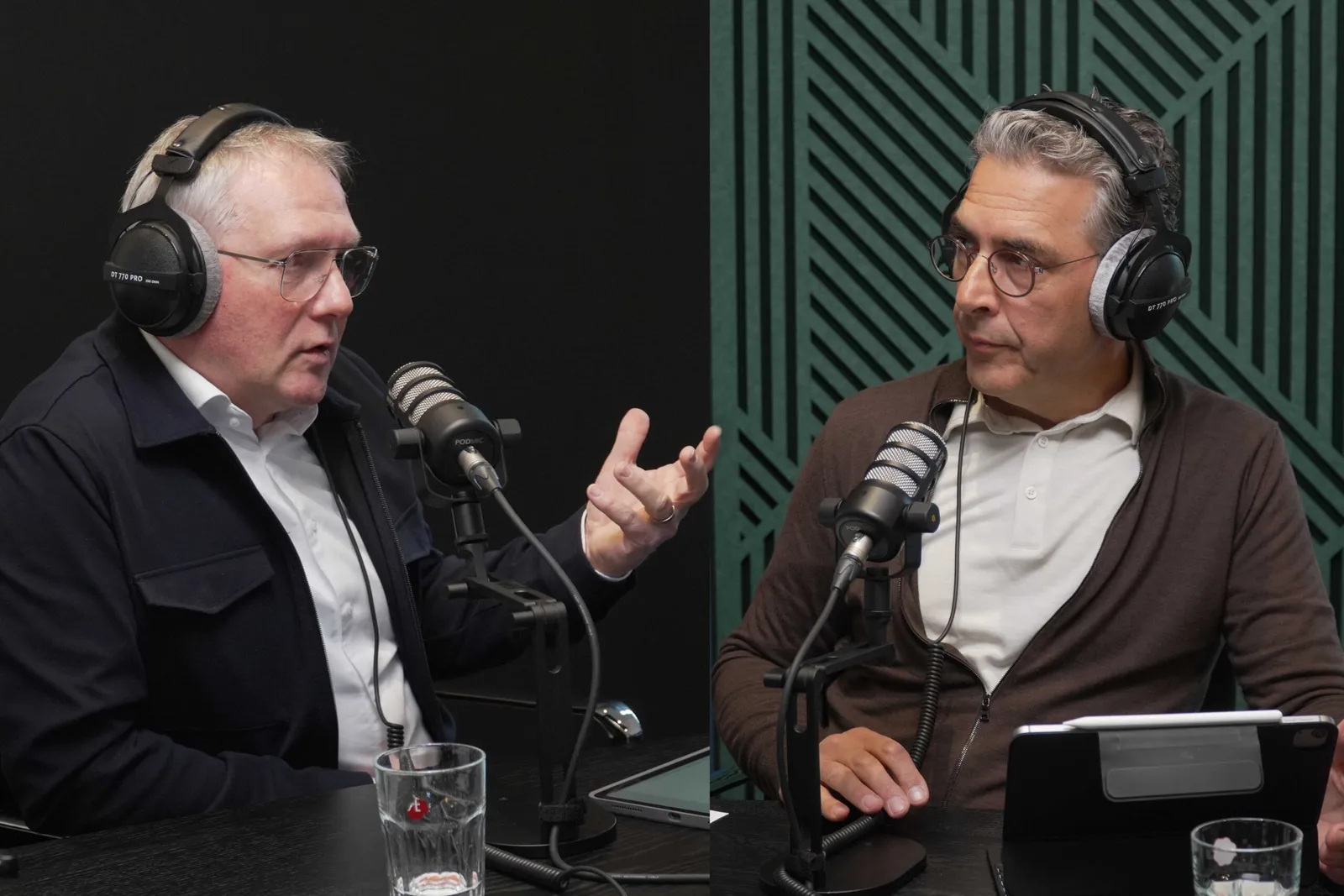
How can emergency lighting be made smarter, safer and more efficient at a time of staff shortages and digitalisation? In this episode of Installatie & Bouw, host Jerry Helmers talks to Patrick Mestriner and Antoon Rijpkema (HBI) about wireless emergency lighting management, LoRa technology, AI and the future of smart buildings. Discover how real-time monitoring, data and automation contribute to improved safety, lower costs and more sustainable building management.
A business enquiry for HBI Bisscheroux? Get in touch
Full transcript
All chapters (28)
- Introducing the episode and guests
- Statements on emergency lighting and innovation
- Introducing Patrick and the podcast’s target audience
- Introducing Antoon and the focus on efficiency
- Staff shortages and safety as key challenges
- Building owners often lack visibility
- Records and obligations are not always in order
- Measuring safety through emergency lighting performance
- Grid congestion and the growing need for monitoring
- Wireless management provides transparency and visibility
- Automated alerts instead of manual inspections
- A conservative market and fear of the unknown
- LoRa technology as a solution for reliable wireless communication
- Wireless versus wired management
- AI and predictive maintenance
- Learning from data and improving products
- Building expertise and market insight
- International developments and the LoRa ecosystem
- International standing and smart cities
- Adoption by building owners
- Debate about willingness to invest
- The role of government
- Sustainability and CO2 reduction
- The future of wireless management
- The sector’s view of the role of government
- Key messages for listeners
- HBI’s sales pitch
- Closing the episode
Introducing the episode and guests
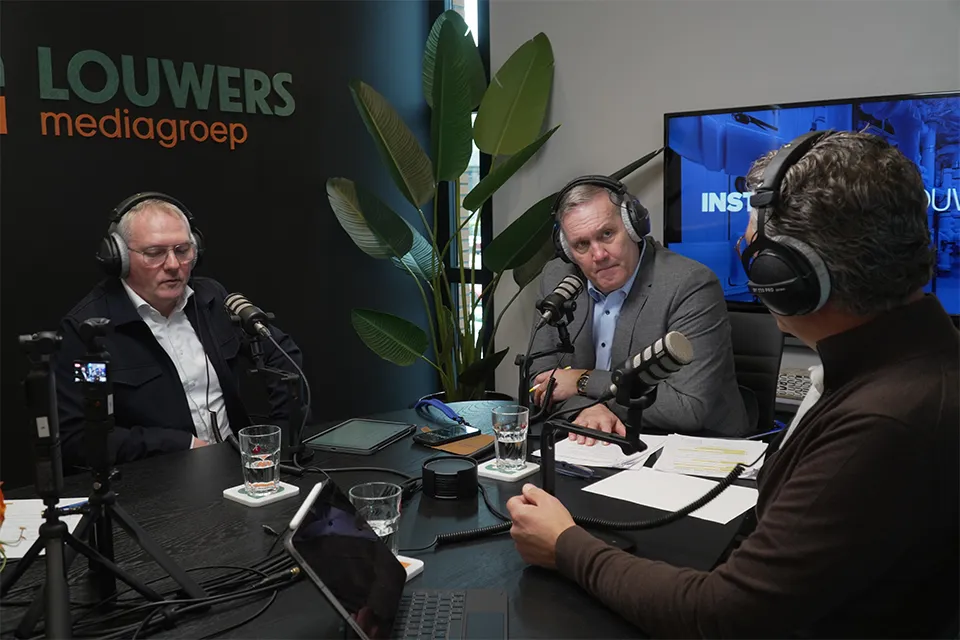
Jerry Helmers Welcome to Installatie & Bouw, the podcast for the installation and construction industries in the Netherlands. We’re back with a new episode today. We’re in the studio at Louwers Media Groep in Weert. My name is Jerry Helmers and I’m your podcast host. Today, I’m joined in the studio by Patrick Mestriner and Antoon Rijpkema from HBI. Gentlemen, welcome.
Antoon Rijpkema: Good morning.
Jerry Helmers I understand this is your worldwide podcast debut. Yes, absolutely. I also heard, just before you came into the studio, that you’re not always fans of podcasts, because presenters sometimes think they’re more important than their guests. Can you give me a tip to make this podcast worth listening to?
Antoon Rijpkema: Well, you’re already doing a good job. It’s a good start. It’s a good start.
Patrick Mestriner: So far so good.
Jerry Helmers Oh, so far so good. Well, let’s see how things go over the next 40 or 45 minutes.
Antoon Rijpkema: I’m confident.
Jerry Helmers You’re confident. We’ll get to know you a little better shortly. You’re both with HBI, of course. But first, I’d like to put a few statements to you. I’d like each of you to say whether you agree or disagree. And it’ll be interesting if you disagree with each other. Are you up for the challenge?
Patrick Mestriner: We have to be.
Statements on emergency lighting and innovation
Jerry Helmers Here’s the first statement. Patrick, would you like to answer first? Wireless emergency lighting management will become the norm within ten years. Agree or disagree?
Patrick Mestriner: Agree.
Jerry Helmers And what do you say, Antoon?
Antoon Rijpkema: Agree.
Jerry Helmers Very good. So far, so good. Here’s the second statement: the installation sector is still too conservative when it comes to innovation. Patrick?
Patrick Mestriner: Agree.
Jerry Helmers Agree. Antoon?
Antoon Rijpkema: Yes, I agree too.
Jerry Helmers Agree, absolutely fine. I have another statement. Safety, and I’ll start with Antoon this time. Safety is still too often an afterthought in building management. And our guests, dear listeners, are still thinking it over, nodding and frowning as they do so.
Antoon Rijpkema: Yes, I agree with that too.
Jerry Helmers You do agree. There was a little hesitation there.
Patrick Mestriner: If it’s black and white, yes.
Jerry Helmers If it’s black and white, yes. Building owners wait too long to invest in smarter management. Antoon?
Antoon Rijpkema: I disagree with that.
Jerry Helmers Disagree. Look, we may have something here, because Patrick is frowning?
Patrick Mestriner: Agree.
Jerry Helmers Interesting. Well, just one more to finish. The government should do more to encourage wireless emergency lighting management. Patrick?
Patrick Mestriner: Disagree.
Jerry Helmers Disagree.
Antoon Rijpkema: Yes, I disagree too.
Jerry Helmers Well, looking at those five statements overall, you agree with each other 80 per cent of the time. Listeners, I hope you can still follow the arithmetic. I’m sure we’ll come back to these. Gentlemen, once again, welcome to the studio here in Weert. It’s great that you’ve come along for, well, 40 or 45 minutes, perhaps even 50, although you’ll have to keep the conversation interesting for that long. We’re here to exchange views on the world of emergency lighting. But before we get into the detail, Patrick, tell us a bit about yourself and who in particular should keep listening to this podcast.
Read the full transcriptCollapse transcript26 more chapters
Introducing Patrick and the podcast’s target audience
Patrick Mestriner: I’m Patrick Mestriner, and among other things I’m responsible for Sales & Marketing at HBI. But in practice, what it comes down to is that we guide customers through the transition to wireless emergency lighting management. That’s our advisory role.
Jerry Helmers An advisory role, yes. And who should listen to this podcast?
Patrick Mestriner: Well, it’s mainly building owners, installation companies, consultants and facility managers. Those are really the main target groups.
Jerry Helmers When you say building owners, do you also mean, for example, residents’ associations?
Patrick Mestriner: Not really. We’re talking more about commercial and public-sector buildings.
Jerry Helmers Commercial buildings, OK, clear. Antoon, who are you? What should we remember about you? And who do you think should listen to this podcast?
Introducing Antoon and the focus on efficiency
Antoon Rijpkema: Well, my name is Antoon Rijpkema. I also work in sales and consultancy at HBI. I help customers with the transition to wireless emergency lighting management, with a particular focus on improving efficiency.
Jerry Helmers Improving efficiency, absolutely. Of course, you’ll say the same as Patrick about who should listen, but you also specifically mentioned people looking for greater efficiency. Could I also say, a little more sustainability?
Antoon Rijpkema: Certainly.
Jerry Helmers And greater safety.
Antoon Rijpkema: Yes, that too.
Jerry Helmers Exactly. What are we going to cover in this podcast? I’d like to discuss the challenges facing the market with you. I’d also like to look at the solutions available. I’m very curious, too, and I’d like to touch on this, about where your expertise comes from. We can also revisit those statements along the way if they’re relevant at the time, and perhaps hear a little more about your views. I’d also like to look ahead with you and consider what the market might look like in 10 to 15 years. And perhaps the most enjoyable part is that, at the end of the podcast, you’ll each get your 90 seconds of fame. Let’s just call it some good commercial airtime. You can use it however you like to deliver a message to listeners. I’m very curious to hear what you come up with. Are we agreed on that plan?
Patrick Mestriner: Absolutely.
Jerry Helmers Good. Listeners, stay with us. I’m talking to Patrick Mestriner and Antoon Rijpkema. Gentlemen, which specific market challenges are you looking to solve? In other words, what do you think is the biggest problem facing the emergency lighting market right now? I’m looking at the two of you. Who wants to go first?
Staff shortages and safety as key challenges
Patrick Mestriner: Well, I think there are two, as far as I’m concerned. On the one hand, staff shortages.
Jerry Helmers Yes.
Patrick Mestriner: And on the other hand, safety.
Jerry Helmers How do you ensure that, yes. And what specifically do you mean by safety?
Patrick Mestriner: Well, emergency lighting needs to be properly maintained. How do you do that? At the moment, it’s done the traditional way. Having a technician visit the site to carry out an inspection is very labour-intensive and costs a lot. Especially nowadays, using qualified staff for this kind of work may not be the best use of their time. That’s one of the challenges we face.
Jerry Helmers So are you saying that staff shortages, which obviously can’t be solved overnight, and not by you either, will ultimately affect the safety of buildings?
Patrick Mestriner: Certainly. The systems need to be inspected, and a lack of time often makes that a challenge.
Jerry Helmers But what do installers and building owners most often struggle with in practice? The labour shortage really is a structural problem, and we probably won’t have solved it in the next few years. But what does it look like in day-to-day practice, Antoon?
Building owners often lack visibility
Antoon Rijpkema: Well, looking at it from the building owner’s perspective, we hear that, and it’s also what led us to start developing this solution, building owners have a legal duty of care. They hire companies to take care of it, but they don’t know what’s happening, and in the meantime it turns out that a lot of things are still unsafe.
Jerry Helmers Yes, exactly. The inspection is often just a snapshot: an inspection is carried out once a year, but does that mean my building is safe for the rest of the year? These are stories we’ve been hearing from the market for years. We started developing this solution ten years ago, and we’re seeing that it’s now really gaining acceptance. Installers also have the issue that highly qualified technicians, who are actually far too expensive to walk around checking emergency lighting, are doing that work. Those are the challenges we’re trying to solve. You just mentioned building owners, property owners, who have to comply with laws and regulations. Are people sufficiently aware of that? Probably, yes, but do they know what they need to comply with? You undoubtedly have that knowledge, but does the average building owner know?
Records and obligations are not always in order
Antoon Rijpkema: Well, I think there’s room for improvement there too. The paperwork isn’t always in order, or people simply don’t know. Who does it? Where does it happen? When does it happen? Those are often just…
Jerry Helmers When you say the paperwork isn’t in order, what do you mean?
Antoon Rijpkema: Well, for example, every company has to draw up a RI&E, a risk inventory and evaluation. Go to any company and ask to see it.
Jerry Helmers And you’re saying they often don’t have one.
Antoon Rijpkema: No, they don’t.
Jerry Helmers So what you’re really saying is that this needs to be in order. Perhaps that’s already the first important message we need to get across to listeners, and we’re not even ten minutes into this first podcast.
Antoon Rijpkema: Well, we often guide customers through that process and try to provide advice on emergency lighting. I’m not responsible for their administration, let’s put it that way.
Jerry Helmers No, let’s put it that way. But you do think, or rather, you don’t think, that we all have to comply with laws and regulations. You’re seeing that this doesn’t happen everywhere, and that this also applies to emergency lighting.
Antoon Rijpkema: Certainly.
Patrick Mestriner: Well, it does happen, of course. But to make sure everything is covered, genuinely raise the level of safety and be able to guarantee it, with visibility at any time of day, so to speak, I want to know. Yes, that’s what you’re missing.
Measuring safety through emergency lighting performance
Jerry Helmers Can you literally measure safety? And if so, what are the criteria? What do you measure?
Patrick Mestriner: Well, it mainly comes down to how the emergency lighting performs. It simply has to work. It’s there, often in the background. It has to work. In the event of an emergency, in the event of a mains power failure, it has to switch on.
Jerry Helmers Give us a specific example. I think I understand what you mean. Emergency lighting has to work in an emergency. Describe an example involving an average building, a property owner, a three-storey building with emergency lighting. When does it need to function? Under what circumstances? Let’s make it really concrete for the listener.
Patrick Mestriner: Well, the fact is that when there’s a mains power failure, that’s happening more and more.
Jerry Helmers Yes, unfortunately.
Patrick Mestriner: You have to make sure that the people in the building can find a safe way out.
Jerry Helmers Right, so you’re not specifically talking about fires or anything like that, but simply a mains power failure, when all the lights go out.
Patrick Mestriner: That’s the primary issue. Sometimes a link is made with fire safety. It’s not a direct link, but there is an indirect one, because a fire somewhere could cause the mains power to fail. But the primary point is that, if there’s a mains power failure, the emergency lighting has to switch on.
Jerry Helmers Yes, are you worried this will happen more often?
Grid congestion and the growing need for monitoring
Antoon Rijpkema: Yes.
Jerry Helmers Yes, of course, everyone in the Netherlands is talking about grid congestion at the moment. But do you think the risks will increase? In other words, will buildings generally become less safe if no measures are taken?
Antoon Rijpkema: Yes, if the emergency lighting works, there’s basically no problem. But many building owners simply want to know that it does. Building management is becoming increasingly digitalised. Every new-build project already has a digital twin, really, so that all the installations in a building can be monitored. And the same requirement applies to emergency lighting. It’s simply required for new-build projects.
Jerry Helmers Exactly. Why is this a problem for building owners to address? Can they check for themselves whether the emergency lighting works? Or can you only find out when there’s an emergency? I’m also thinking aloud here. People, for example, always say you need to make a backup, but they never check whether the backup is actually being made, or whether it includes everything. So sometimes it seems like a paper-based measure that nobody really checks to see if it works. Is it the same with emergency lighting? People say, ‘Yes, we have emergency lighting’, but they don’t actually know whether it works.
Wireless management provides transparency and visibility
Patrick Mestriner: Yes, that’s definitely what’s happening. And that’s true in general. We’ve found over the past 10, 12 years that building owners have very little insight into what’s happening in their premises. Wireless management inevitably gives you that transparency and visibility. Say you have a manager, an external company or an installation company managing things for you. With the systems available today, you can, for example, have viewing access, so I can check in whenever I want.
Jerry Helmers Because I think that gets to the heart of the solution: remote management.
Antoon Rijpkema: Yes.
Jerry Helmers Explain.
Patrick Mestriner: Remote management, yes. There’s a legal obligation to manage emergency lighting. At the moment, it’s still done the traditional, manual way. To break it down, the installer gets in their car, drives to the building and carries out the inspection. It takes about 15 minutes per luminaire to do it properly.
Jerry Helmers Is that how most of the market still operates?
Patrick Mestriner: Yes, still.
Antoon Rijpkema: Very old-fashioned and traditional, but it works.
Jerry Helmers Yes.
Antoon Rijpkema: It complies with the law because an inspection is carried out periodically, once a year. With wireless management, or remote management, we can do that 24/7. Some property owners don’t know what’s happening in their buildings, but there are also property owners who really do want to know everything is working properly. That’s why they’re starting to use wireless management.
Automated alerts instead of manual inspections
Jerry Helmers But what does that look like? I’ve never been to your premises, but do you have a department with lots of big screens displaying all kinds of graphs and tables and red alerts, so you can step in straight away if something goes wrong somewhere?
Antoon Rijpkema: Well, we’re not meant to manage all of that ourselves. The idea is to give the building owner and installer a tool to manage it themselves. And the great thing about our solution is that, if it’s configured properly, you don’t actually have to check it yourself. If something isn’t right, an alert email is automatically sent to the person responsible.
Jerry Helmers Or a text message.
Antoon Rijpkema: A text message, to whoever needs to take action. And then that person can do something about it.
Jerry Helmers OK, so that’s clear. You’re not the ones monitoring it. You implement the system around it, but ultimately, you’re saying the building owner is responsible for continuing to monitor it themselves.
Antoon Rijpkema: In fact, we’d also like the installer to install and implement it themselves. We don’t have unlimited time for that either. Of course, we provide support, but we train the installer and building owner so that they can ultimately manage it themselves in the system.
Jerry Helmers Can any installer do this?
Antoon Rijpkema: Yes, definitely. I think you could do it yourself.
Jerry Helmers Why do you think that? I can present a reasonably good podcast, but I’m not sure I’m technically skilled enough to do this.
Patrick Mestriner: We can teach you too. Yes, it’s really very easy. It’s incredibly accessible. And that’s a bit of a perception in the market. In our experience, a huge barrier is being put up because things are going to change, and the technology is probably very complicated. But all the projects we’ve been able to deliver so far show that it’s actually…
Jerry Helmers Is it a bit like that phrase you hear, ‘plug-and-play’?
Patrick Mestriner: Yes.
Jerry Helmers Yes, I… You’re looking at me as if to say, ‘You can do it too, Jerry’, but sometimes I wonder. Plug-and-play: if I buy something at Mediamarkt, is it plug-and-play? I always have to go back and ask how it works.
Antoon Rijpkema: Yes, but we’ll help you with that.
Jerry Helmers Yes, it’s easy to say ‘plug-and-play’, but you’re saying it really is that straightforward. So an installer doesn’t need to take a separate training course.
Antoon Rijpkema: We help them with training, and there’s a manual too, of course. Yes, well, that support is there for us. But it’s not rocket science.
A conservative market and fear of the unknown
Jerry Helmers Not rocket science. But where does the market’s reluctance come from, then? If you’re saying it’s all so easy to implement, plug-and-play, there’s still plenty of potential in the Netherlands when it comes to… So what’s behind it? Fear of the unknown, lack of awareness?
Antoon Rijpkema: Yes, the construction sector is very conservative. That’s the first point. A lot of wireless solutions haven’t worked well in the past. Buildings have all kinds of structures, steel frames, concrete floors and what have you, which meant that communication between an IoT device and a gateway wasn’t good enough. Yes, that has contributed to people’s reluctance.
LoRa technology as a solution for reliable wireless communication
Antoon Rijpkema: The solution we have, though, is that we’ve embraced LoRa technology and incorporated it into our luminaires. Briefly, what is LoRa technology? Well, it’s probably short for long range. It’s a global standard IoT protocol with double encryption, so it’s extremely secure.
Jerry Helmers I’m already picking up on that, but is it secure against cyberterrorism?
Antoon Rijpkema: Yes, definitely. Messages are sent using double encryption, and LoRa’s characteristic is that it can send intelligible messages over very long distances using low transmission power. I can give you an example from a project.
Jerry Helmers Yes, I’d be interested to hear about that.
Antoon Rijpkema: We’re involved in various projects. I can give you an example of a food-processing plant in the Groningen region. It’s almost like a chemical plant. The whole site is 1.3 kilometres long. There’s an antenna on a roof somewhere, and I have a connection to my luminaires from one end of the site to the other, despite all the equipment there. At a logistics hall in Utrecht, where we started four years ago, luminaires had already been installed before we put up a gateway, and they were already starting to communicate. That also shows why LoRa is a global standard and widely used. LoRa gateways work a bit like a mobile phone mast beside a motorway. If there’s a LoRa gateway nearby and you install devices, in this case emergency lighting luminaires, they’ll start communicating as soon as there’s a gateway in range. We always recommend rolling out a private network, because if the neighbour unplugs that gateway, the connection is lost. What happened in Utrecht was that the luminaires started communicating and connected to a gateway on the roof of Rabobank Utrecht, three kilometres away. So the signal strength is extremely good, which is what allows us to roll it out successfully everywhere. That’s also where other manufacturers or wireless solutions on the market often fall short: they don’t have such good signal strength.
Wireless versus wired management
Jerry Helmers But if an installer says in a conversation with you, or wherever they might meet you, ‘Let’s stick with the wired system’, that’s still possible, isn’t it?
Patrick Mestriner: Definitely. We’re living in an era of digitalisation and automation, so you might as well move with the times. Fortunately, that’s happening more and more. A few years ago, when we started, it was quite a challenge to bring people along in that transition. These days, it’s becoming more mainstream, so to speak. People are much more open to this kind of solution, and there’s always a very clear sense of urgency. Urgency is what makes people change.
Antoon Rijpkema: Yes, absolutely. But there’s something else I’d like to interrupt you about. A lot of things in building management have traditionally always had a wire attached. I also talk to customers whose systems have been running very well for 15 years, with a solution where every emergency light fitting is connected by a wire.
Jerry Helmers Somehow, that feels very visible and tangible.
Antoon Rijpkema: No, but the communication is actually over a bus cable. They can also read the emergency lighting status centrally. They were always enthusiastic about that, until changes were made to the building or it was refurbished. Suddenly, new wires had to be run everywhere again, which costs a huge amount of money. With a stable wireless solution, you can put in place infrastructure that is much easier to install and costs a lot less.
Jerry Helmers So it doesn’t matter if you refurbish the building?
Antoon Rijpkema: No, it doesn’t. You can simply move a light fitting somewhere else and it still stays connected wirelessly.
Jerry Helmers You’ve convinced me. Well done. Are you in sales or something?
Antoon Rijpkema: I think I am.
AI and predictive maintenance
Jerry Helmers Well, let’s see if you know anything about AI in sales as well. I’m very curious. We’re recording this podcast in 2026. It’s 31 March, I think, as we sit here at the microphone. We all use AI to a greater or lesser extent. How do you see things developing in the near future? I was going to say the coming years, but I’d almost say the coming weeks and months. What will AI’s development mean for your plans? Will it make things much easier for all of us? What developments do you see?
Patrick Mestriner: As for the developments we’re seeing now, wireless management and the data it generates already give us data, of course. Data is the fuel for AI. And because of the amount of data, the projects we’ve completed and the amount of emergency lighting we now manage wirelessly, we’re getting more and more data. We can use that data for AI.
Jerry Helmers What kind of data are we talking about?
Patrick Mestriner: I think it’s also a bit about the relationships between things. We’re talking about emergency light fittings, and we collect around 20 values from each one. At some point, you can feed those values into AI. Ultimately, what we want to work towards is being able to make predictions, so you can know well in advance that something is going to happen. That means you can prepare for it.
Jerry Helmers Can you give an example of what might happen, and what you could find out from that data?
Patrick Mestriner: There’s a battery in the emergency lighting. It has a certain service life, which for our products is more than ten years. But after ten years, you want to know when it’s time to replace it. You can actually see that coming.
Jerry Helmers So you’re saying you welcome AI because it gives you good predictive capabilities. And that means you can also take your advice to the market, to your customers, to a higher level.
Antoon Rijpkema: That’s certainly part of the development. Intelligence starts with gathering data. And if you apply an AI model to it, you can draw on all the data we’ve collected so far. We offer a ten-year warranty on the light fitting and the battery, but perhaps the battery will last 15 years. Once we’ve collected enough data over the years, those are things we’ll be able to predict.
Jerry Helmers But if a battery, for example, breaks down after three years for whatever reason, would you see that straight away through your monitoring?
Antoon Rijpkema: We’d see it straight away.
Jerry Helmers Or the customer would see it in the end. So in that sense, everything is taken care of, I’d almost say.
Patrick Mestriner: It’s interesting to ask why the battery failed after three years. The data behind that could be investigated. What was the reason for the battery failing? So it gives you a lot of insight. The trick, of course, as I once discussed with someone, is that data is a broad term, and you need to find the right data. The answers are hidden in all that data. The big challenge is coming up with the right question.
Learning from data and improving products
Antoon Rijpkema: Well, we also use it to improve our own products. By collecting that data, because you… In the past, we sold light fittings over the counter and then rarely heard anything about them again.
Jerry Helmers Yes, exactly.
Antoon Rijpkema: Now light fittings are installed in the field, and once they’re commissioned, they start communicating and collecting data. That gives us all kinds of information. We receive data from all the light fittings that go out the door and are managed remotely. So, as Patrick said, if a battery fails within three years, we want to know why. That way, we can identify issues earlier in production and work out what we need to measure, or ultimately stop faulty products from reaching the market. There’s always a certain percentage of electronic components that are of lower quality. If you can keep reducing that percentage through testing at the production stage, using specific measurements and tolerances, you end up with better and better products on the market.
Building expertise and market insight
Jerry Helmers How do you know all this? I’m listening with great interest, of course. But how do you keep up with your knowledge? How do you acquire it? Technological developments are moving faster than ever. It’s almost impossible to keep up, whatever industry you’re in. Explain how you keep up. How do you maintain your expertise and stay ahead? How do you do it?
Patrick Mestriner: It’s mainly about the market. As you said, listening to the market is very important for us. Seeing what’s happening and drawing on the experience we’ve gained. It gives us so much. We keep a close eye on this market. We’re on top of it every day. It’s our day-to-day work. We learn an enormous amount from it. It gives us a lot of input.
Jerry Helmers How do you stay so close to the day-to-day work of installers and clients? Do you speak to them every day? How does that communication happen?
Patrick Mestriner: Yes, often we do. As Antoon just described, we used to sell light fittings, and that was it. After that, we had no idea what happened to them. Now we’re in direct contact. And we have to be. There’s the client, a maintenance company, an installation company and us as the manufacturer. The strength lies in working together and learning from each other, which is how HBI described it, as a network organisation. We learn from the market, on the one hand, and there are also organisations we’re involved with. We’re members of the NVFN, and we’re involved in other organisations too.
International developments and the LoRa ecosystem
Jerry Helmers Do you go to trade fairs? I’m always interested in this, and I speak to a lot of people in this field. I’m also very curious whether you gain knowledge abroad. We’re recording this podcast here in Weert, in the Netherlands. You supply a great many Dutch clients and customers, and you’ve established a strong profile. But what about other countries around us? Is this happening there too, or are they facing the same challenge? How do you gain knowledge from abroad? Or are you perhaps reinventing the wheel?
Patrick Mestriner: Well, perhaps LoRa. We were just talking about that. LoRa is the protocol, of course, but it’s a global standard.
Jerry Helmers There’s a global LoRa Alliance, which is one big knowledge base of experience, of course.
Antoon Rijpkema: Technical experience, but practical experience too. We gain a lot of knowledge from it. LoRa is widely used across IoT. Various sensors in buildings already communicate using LoRa. We’re a bit of an odd one out by choosing it for emergency lighting. But because we have IoT-enabled emergency lighting, and emergency lighting on LoRa, our international growth and international trade have also increased. There’s interest from Australia, the UK and even the Far East. In Europe, we already have customers in Scandinavia.
International standing and smart cities
Jerry Helmers Are you saying that the Netherlands, and perhaps your company too, is leading internationally? Is our industry at the forefront?
Patrick Mestriner: If I look at the Scandinavian countries, and Germany, I know that LoRa is even… We’re talking about smart buildings now, but that quickly leads to smart cities. I haven’t seen that in the Netherlands yet, at least.
Antoon Rijpkema: Take Antwerp, for example. I hear things about managing street lighting, saving energy and rubbish bins. There are places in the Netherlands where smart cities are also being developed using LoRa. But it’s growing enormously. I think the LoRa initiative started back in 2013. We embraced the technology in 2016, and in 2019 we had our first 150 devices in the cloud. We celebrated with champagne, which was fantastic. But now we’re past 10,000. It’s being used in more than 200 buildings at the moment. And there are a billion LoRa devices already connected worldwide.
Adoption by building owners
Jerry Helmers Building owners need to invest. You think they should be doing more. But are you seeing that happen in the market? Are building owners changing their approach and moving away from traditional thinking? I was trying to work out how to phrase my question, but that’s what I want to know.
Patrick Mestriner: Yes, definitely. We’ve seen more of that in recent years. And there are huge challenges. In our previous discussion, we talked about GACS and how it gives you insight into where you’re using energy in your building and what’s happening there. That transparency I mentioned earlier is becoming increasingly important to building owners.
Jerry Helmers Yes, go on.
Patrick Mestriner: Well, technologies like these can help you with that. So, with the same LoRa, to take a slight detour, you can monitor your emergency lighting, but you can also gain insight into energy use in kilowatt-hours, the climate in a room and things like that.
Debate about willingness to invest
Jerry Helmers But earlier, Patrick, you agreed with the statement that building owners wait too long to invest in smarter management. Your colleague Antoon disagreed. I’d like to find out where the difference between you lies, or what the nuance might be.
Antoon Rijpkema I may be talking about different buildings. No, you really do see that larger buildings have had building management systems for a long time. Everything is wired. That’s basically it. And those building owners understand the value of monitoring. They know the value of collecting data. But extending wired systems is very expensive. If you can add LoRa solutions alongside them and expand your sensor network, that’s actually an easy step. That’s why we’ve also chosen to make an API available as part of our solution.
Jerry Helmers That may be a term we haven’t mentioned yet. Go on, explain it to our listeners.
Antoon Rijpkema Well, we store all the data somewhere in what they call a data lake. But you may want another system to look at the data in my data lake. We then need to make an API available so that you can ask our data lake questions such as: what’s the status of that battery, or what’s the temperature? You can then put an intelligent layer over the wired and wireless systems, use the data to do all sorts of clever things, and ultimately make your building more efficient and sustainable.
Jerry Helmers But if I go back to the statement we were discussing: you say building owners wait too long to invest in smarter management. You disagreed with that.
Antoon Rijpkema I can see that they are taking real steps. In fact, I see them making progress on precisely that.
Jerry Helmers So you’re actually a bit closer in your views. You’re saying those steps are already being taken.
Patrick Mestriner Those steps are definitely being taken. They have to be, because there’s an urgent need. Building owners feel an enormous sense of urgency, so action is needed. Of course, budgets are also a factor. Traditionally, budgets are set and things have to be replaced within those limits. If you initially choose different solutions, they cost a little more upfront. But over time, you’ll recoup that many times over. We’ve seen organisations put projects out to tender with the aim of keeping them within budget. Then the project moves from the new-build department to service and maintenance, and the latter is left with a huge problem.
The role of government
Jerry Helmers Perhaps we can take stock for a moment. How is the government doing itself? I don’t know whether you have any work in the public sector, because they also have legislation and regulations that someone has drawn up. Is emergency lighting in reasonably good shape there?
Patrick Mestriner No, there’s still a long way to go. Awareness is there, though. But look at central government and the number of buildings it has. They all need to be covered, and there are a huge number of complications around how to implement it within the framework of legislation and regulations. The details matter a great deal, and it’s quite a complicated step to take. So yes, they’re aware of it. But implementation is still very much an open question.
Jerry Helmers They should definitely keep listening to this podcast to maintain and build on that awareness.
Antoon Rijpkema Well, you do see that government bodies, semi-public organisations, educational institutions, universities and hospitals are making the move to LoRa quite easily. That makes the conversation easier for us too.
Sustainability and CO2 reduction
Jerry Helmers In any case, let me put it this way: as a company, you naturally try to promote and sell your products from the top down. But you can clearly see a bottom-up movement too, to use a bit of marketing jargon. Demand is coming directly from the market. Is this growing demand from the market, or the demand that is continuing to grow, also driven by sustainability and circularity? We haven’t really talked about that on this podcast yet. I think we should. Do sustainability and circularity play a role?
Patrick Mestriner Absolutely.
Jerry Helmers Can you explain how?
Antoon Rijpkema You’ll already see a reduction in your carbon footprint through maintenance. Traditionally, someone has to drive around to every building in a van with a ladder. If you can do away with that, or arrange things differently so that maintenance intervals can be extended and less maintenance is needed, that already helps make things more sustainable and reduces the carbon footprint.
Jerry Helmers When you talk about maintenance intervals, can you say by how much they change, in percentage terms, or literally how many months or years later the next maintenance visit should be scheduled? Or does that vary from project to project?
Antoon Rijpkema We provide a 10-year warranty on the luminaire and battery. So if you manage it online, you can see how the luminaire is performing each time, and you’ll receive fault alerts if something is wrong. In principle, you don’t need to physically maintain the luminaire or unscrew it to check that it’s working properly, as was necessary in the past. So all you need to do is carry out a periodic visual inspection. That doesn’t necessarily have to be done by someone with electrical training, because all you need to check is that the escape route is clear.
Patrick Mestriner The picture we’ve just painted of the data we receive means our products are becoming more sustainable. When you can see issues coming, you can take them into account in the next round of development. So it’s not so much about replacing things quickly, but about making them more sustainable and keeping them in use for longer.
The future of wireless management
Jerry Helmers If we were to meet again in ten years, perhaps on this podcast, who knows what technological developments there’ll have been. But suppose we meet again in ten years. What do you hope will by then have become completely normal in the world of emergency lighting?
Patrick Mestriner Wireless management. I mean, it’s a no-brainer. We already see it that way, and we’re increasingly finding that others do too. But by then it will simply be mainstream, the standard, the new standard in fact.
Jerry Helmers So if you’re not wireless in ten years, will you no longer exist? Or will there simply be no safety?
Patrick Mestriner As an organisation, especially if you’re a maintenance company, you simply won’t count in this industry any more.
Jerry Helmers So wirelessly managed emergency lighting will be the norm within ten years. You both agreed with that statement, the first one I read out. Definitely. Will the installation sector still be too conservative when it comes to innovation in ten years?
Patrick Mestriner Look, you have to realise that we’re in the middle of the transition to wireless management. Transitions are never quick. They simply take time.
Jerry Helmers It takes time.
Patrick Mestriner And adoption. We’ve also learnt from experience that you can’t do this kind of thing with every organisation. There are always early adopters, among installation companies and building owners alike. We’ve learnt to focus on them. And now you can see the mainstream starting to follow.
The sector’s view of the role of government
Jerry Helmers Do you think the government should do more to encourage wireless management of emergency lighting?
Antoon Rijpkema No, I don’t think so. The market will actually do that on its own.
Jerry Helmers Is the market wiser than the government?
Antoon Rijpkema Well, I think the government should focus on legislation and regulations, and say what needs to be done, but not how it should be done. We can work out how to do it together.
Jerry Helmers Yes, but there are always organisations in the market that fall behind or don’t want to invest.
Antoon Rijpkema They’re not putting energy efficiency first. In that case, it’s a missed opportunity. But you can take the motorway or the country road. Either way, you’ll get there. So we leave people free to choose. I think that’s important.
Key messages for listeners
Jerry Helmers Let’s see if we can come up with three bullet points, or three lessons learnt. What should listeners absolutely remember?
Patrick Mestriner I think you need to think big, but take small steps. So get started. Embrace it, get started and learn what it means. Learn about its impact. And learn about the added value it brings. People often reduce everything to the cost in euros, but it adds a great deal of value.
Antoon Rijpkema Well, a customer at a large hospital says above all that ensuring 24/7 safety is very important to them.
Patrick Mestriner Well, don’t enable the illusion of safety. Enable real safety.
HBI’s sales pitch
Patrick Mestriner Hi, I’m Patrick, and I’ll start things off. Emergency lighting is not a product. It is a safety system that enables people to leave a building safely in an emergency. Emergency lighting must be demonstrably in good working order, properly maintained and managed, as set out in the Environment and Planning Act. The traditional approach, with manual checks and on-site testing, is no longer suited to the digital and automated age. As an independent Dutch company, HBI has made a deliberate choice to develop sustainable solutions that extend the physical maintenance interval to 10 years. Our innovations in battery technology and wireless management make this possible. To provide a stable wireless connection, we have embraced LoRa technology and incorporated it into all our luminaires. LoRa, a secure global standard, provides a highly stable connection over very long distances. LoRa is widely praised for its security. It is even used and embraced by the Ministry of Defence.
Antoon Rijpkema Yes, I’m Antoon, and I’ll carry on. More and more organisations want to make the transition to wireless management and choose the best solution available. Together, we’re building a solution that not only complies with the law, but also works in practice. Perhaps even more importantly, we’re very approachable. At HBI, there are people at the end of the phone, and we have a doorbell. We’re not a cumbersome organisation, but a knowledgeable partner that understands legislation and regulations, thinks things through with you and acts quickly. With wireless management, HBI Lighting provides a 10-year warranty on the luminaire and battery. Our message is simple: for HBI, safety is not an assumption, it is proven. How can we help you? Visit hbi-lighting.com.
Closing the episode
Jerry Helmers Well, gentlemen, that was a little longer than 90 seconds. Do we need to send you an invoice for that? Anyway, thank you. Let’s wrap things up. Looking back on this podcast, are you happy with how it went?
Patrick Mestriner Definitely.
Antoon Rijpkema Yes, we’ll see how it goes.
Jerry Helmers Thank you both very much for coming to the studio here in Weert. I hope we meet again. I’ve learnt a lot from you again. Thank you for that.
Antoon Rijpkema Thank you too.
Jerry Helmers Dear listeners, that’s another episode of Installatie & Bouw, the podcast for the installation and construction industries in the Netherlands. The project manager is Yakup Yalcin. Mark Schouten was in charge of the technical side today. This is a Louwers Mediagroep production. My name is Jerry Helmers. Thank you for listening, and see you next time.
Companies in this story

Keep following this
Get an email when a new story is published. No account needed.
- ThemeSmart buildings and controls
- SubjectGeneral
- CompanyHBI Bisscheroux







