‘We’re missing the point’
Text Vortvent en Lieke BousemaImage Vortvent
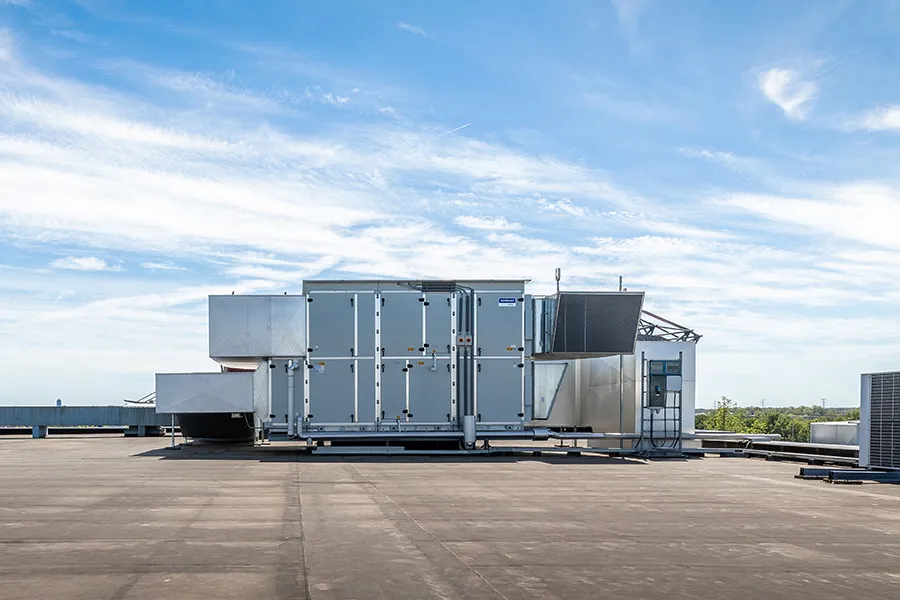
Air handling with DX and VAV, or airflow control based on air quality
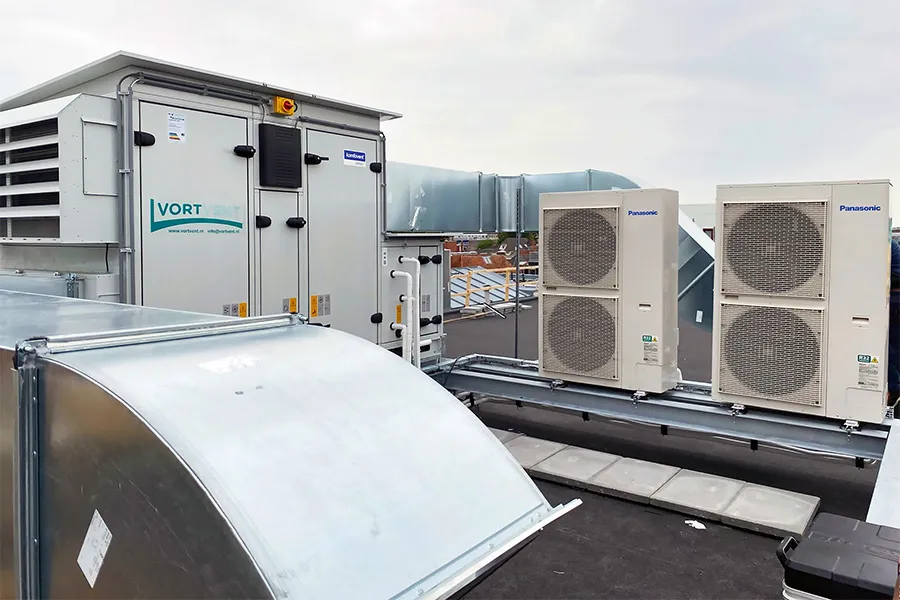
The number of air handling units with a DX outdoor unit for cooling and heating is growing in the Netherlands. “In the context of the energy transition, this is understandable and perhaps even desirable, but air handling with DX cooling or heating combined with VAV dampers or airflow control based on air quality is actually a very bad idea,” says Ton Kistemaker, director of Vortvent. “The drive to make our air handling units as energy-efficient as possible has gone too far.” In this article, he explains why.
“In most cases, DX cooling and heating are used to move away from gas,” says Kistemaker. “However, when the load is low, the VAV dampers close, and when airflow is controlled based on air quality, the airflow rate is reduced. The combination of a (too) low airflow rate and the start-up capacity of the DX units causes temperature fluctuations. A start-up capacity of around 30-40%, for example, results in the supply air temperature overshooting or undershooting the desired/calculated temperature. This causes the DX unit to start and stop (too) frequently. This is certainly detrimental to the unit’s service life and undermines the energy-efficiency targets.”
Cycling
As a rough calculation, an airflow rate of 9,000 m3/h / 3,000 = 3 kg/s combined with a nominal DX capacity of 25 kW gives a dT of around 8K. “With a DX unit start-up capacity of 30% and a minimum airflow rate of 20% of the nominal rate, the calculation is (0.2 x 9,000)/3,000 = 0.6 kg/s. With a start-up capacity of 30% of 25 kW, this means a dT of 12.5K is reached quite quickly,” says Kistemaker. “It is clear that, in this case, the air handling unit’s controls will compensate. A slow-responding system helps to some extent, but will not be enough to prevent cycling.” In this situation, users experience lower comfort because the supply air temperature fluctuates. This is particularly noticeable when swirl diffusers are used. “Air socks are a better option in this case.”
Give DX room to operate
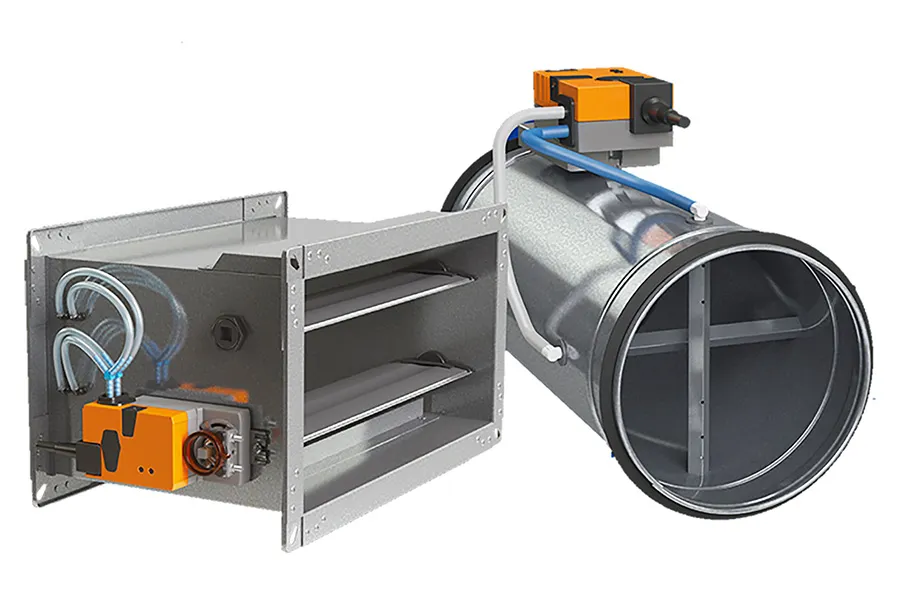
Air handling units set to a fixed supply air temperature are subject to the same phenomenon described above. Kistemaker’s recommendation is therefore a logical one: “Give DX room to deliver its capacity.” If VAV dampers or air quality control are nevertheless preferred, it is advisable to set the lower limit as high as possible. “For VAV dampers, this means setting V-min as high as possible,” he says. “When measuring air quality, the maximum PPM level should be kept as low as possible. And if the airflow rate can be set to a minimum value, that value should also be as low as possible.”
Possible solutions
According to Kistemaker, it is worth considering air quality measurement with its own PI control loop. He gives an example in which the desired maximum CO2 level is set at 800 PPM (Class B). “A sensor measuring, for example, 0-2,000 PPM CO2, with a 0-10V output, will therefore send 5V to a VAV damper at 1,000 ppm. If 0(2)V is taken as the capacity for Vmin and 10V as Vmax, the damper will in this case deliver only half the airflow, even though the Vmax setting can be assumed to be based on the maximum expected load. As a result, the CO2 level is likely to remain too high and never reach the desired 800 ppm.” This problem can be avoided by choosing a CO2 sensor with PI control and a separate setpoint for the desired CO2 level. “If the sensor continues to measure a value that is too high, it will open the VAV damper further. The downside, however, is the cost of these sensors. They are also more difficult to set up.”
Possible alternatives, according to Kistemaker, include slowing the system’s response, setting minimum airflow rates for VAV and using the highest possible air quality control setting. Installers can also split the DX capacity across multiple units and circuits, provided that cascade control is used. “Some DX suppliers include cascade control in their systems when multiple outdoor units are used. Ideally, the system also keeps track of how long each unit has run, so that wear is distributed evenly across the units,” concludes Kistemaker, who ultimately recommends choosing a water-based system instead of a DX system. “A water-based system is easier and more precise to control…”
A business enquiry for Vortvent? Get in touch
Companies in this story
Keep following this
Get an email when a new story is published. No account needed.
- ThemeHealthy indoor air
- SubjectYearbook
- CompanyVortvent