Dry air causes illness and physical complaints
‘Sick building syndrome’ is a notorious phenomenon: people literally become ill because of the buildings in which they live or work. Many of the symptoms, such as dry skin and mucous membranes, are caused by air that is too dry.
Low relative humidity (RH) can cause irritation to the skin, eyes and respiratory tract. Viruses such as influenza can thrive when RH is too low: they remain airborne for longer, making them easy to spread via ventilation systems, for example, as well as through natural air movement. Because their dried-out mucous membranes provide less protection, people in the building are at greater risk of infection by viruses and bacteria.
Condair B.V. of Amsterdam specialises in humidification and evaporative cooling systems. Since 1948, Condair has been at the forefront of creating healthier living and working environments inside buildings. At a seminar held in collaboration with NEN on Tuesday 21 November, speakers explained how air that is too dry can damage health and how these problems can be prevented. Three speakers shared their experience.
Humidity and the spread of infection
The first speaker was Dr Walter Hugentobler, an internist and GP in Switzerland. Drawing on thirty years of medical experience in the interaction between people, humidity and buildings, Hugentobler spoke about the link between dry air and the spread of viruses. “Air that is too dry allows viruses and bacteria to survive for longer, increasing the risk of infection. A humidity level of between 40 and 60 per cent, however, is ideal for slowing or stopping the spread of infection.” Hugentobler ended with a pertinent question: “Our modern airtight construction methods, adopted to meet the Energy Performance Standard, inevitably mean that more ventilation and cooling are needed. This way of building has a detrimental effect on humidity, yet humidification is still not something we take into account. How can we raise awareness of this issue at an early stage, for example among architects?”
From left to right: Walter Hugentobler, Edwin van der Zijden and Peder Wolkoff.
A good humidification system pays for itself
The second speaker was Edwin van der Zijden, head of facilities and facilities manager at NEN. A few years ago, he opted to have a Condair humidification system installed. The results have been remarkably good. Van der Zijden said: “The humidity level in the NEN building is now between 45 and 55 per cent. It used to be 20 per cent, with all the associated complaints. Since the humidification system was commissioned, employees have stopped complaining about irritated eyes and dry skin. They have more energy for their work and perform significantly better and more efficiently. We can therefore safely say that the Condair system pays for itself.”
Humidity in offices and its effect on health
The final speaker was Dr Peder Wolkoff, a senior researcher and former research professor in indoor environmental science from Denmark. In addition to conducting extensive research of his own, he worked with TNO on ‘The OFFICAIR Study’, which involved eight countries. Wolkoff said: “In an office with low humidity, the short-term effects include damage to the skin, eyes and respiratory tract. Prolonged exposure to low humidity can cause inflammatory reactions in the eyes and respiratory tract. Employees exposed to low humidity for long periods are more susceptible to viruses and bacteria, which also thrive in low RH, resulting in high rates of sickness absence.”
Wolkoff also outlined the importance of maintaining good humidity to combat air pollution. “When a room has carpet, particles of dirt are released as we walk over it. Proper humidity control ensures these particles are bound together and do not become airborne again when they settle.”
It can and must be better
The performance of employees who spend every working day in an environment with low humidity falls considerably. Investing in good humidification can increase productivity by 3 to 7 per cent. Combined with reduced sickness absence, this means that investing in good humidification does not cost companies money, but generates a return.
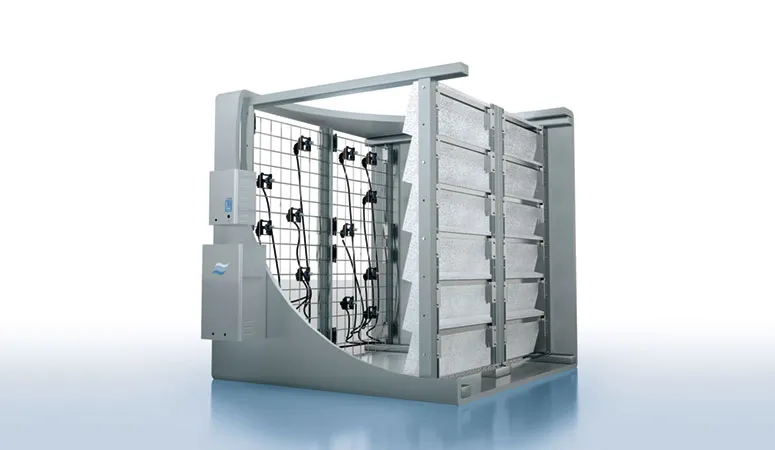
Condair supplies the right humidifier for every situation. Its adiabatic range includes the Condair DL, which is particularly suitable for hospitals and nursing homes. Silver ionisation as part of the water treatment process rules out contamination with Legionella and other bacteria. The Condair RS is a steam humidification system with improved scale management, reducing maintenance requirements. The Condair RS can operate with all standard water qualities.
Companies with questions about this subject can contact Condair to assess their humidity levels and discuss what can be done to achieve an optimal indoor climate. A free hygrometer can be requested at www.condair.nl/gratis-hygrometer to measure humidity.
Condair RS, the electric steam humidifier equipped with the latest communication standards and control options. Its improved scale management system means the RS requires less maintenance.
A business enquiry for Condair BV? Get in touch
Companies in this story
Keep following this
Get an email when a new story is published. No account needed.
- ThemeHealthy indoor air
- SubjectHVAC
- CompanyCondair BV