











Energy efficiency? Yes, … but without compromising healthy, comfortable living!

New-build in 2020 is all about climate awareness, circularity, NZEB, BENG, … terms that have become impossible to ignore in construction. And this is clearly reflected in the requirements for ventilation and solar shading. Read on to find out how Renson, as a pioneer in these fields, anticipates and responds to these developments, and even goes one step further.
Make sure ventilation has a ‘+’
The good news is that as long as you, as an architect, consultant or project developer, opt for a ‘+’ in ventilation, both systems with natural fresh air supply (system C+) and heat recovery ventilation systems (system D+) fully meet the prescribed requirements. Their demand-controlled operation also takes the pressure off residents and, with ventilation tailored to their needs, delivers the best possible comfort and indoor climate. Two birds with one stone!
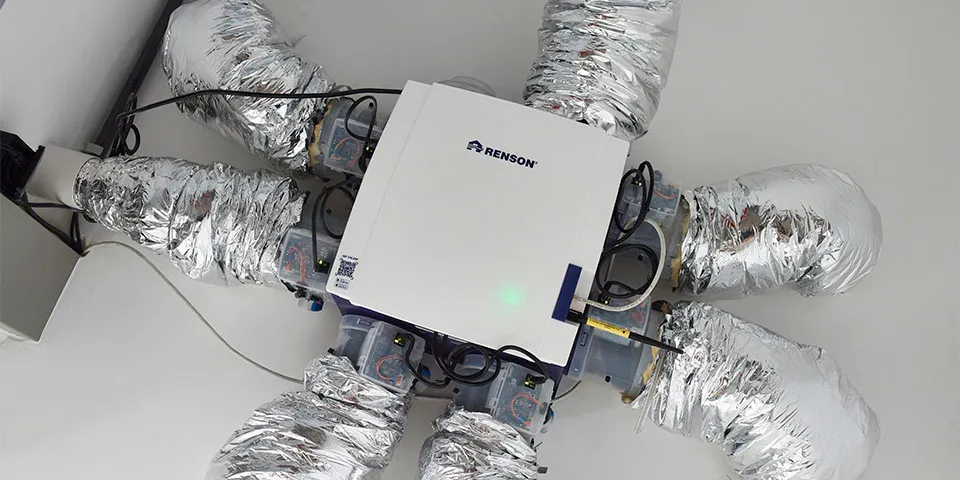
Ventilation tailored to each room in the home
The ‘+’ in Renson’s ventilation solutions stands for smart ventilation: in other words, providing extra ventilation only where and when it is needed. Humidity, odour and CO2 sensors measure indoor air quality 24/7 and adjust the ventilation level accordingly. With a system C+, this is even done room by room. The major advantage is that rooms with good air quality are not unnecessarily flushed with fresh air. Think of the kitchen at night, or the bedrooms during the day, when nobody is there.
The result is that you ventilate much less overall, based solely on what the sensors monitor, but do so far more efficiently, sustainably and energy-efficiently. The guarantee: the best possible indoor air quality in every room. This has already been proven in practice: analysis of data from connected Healthbox 3.0 ventilation units in Belgian homes showed that the highest possible indoor air quality was achieved thanks to the C+ system’s advanced demand control. And this was with a ventilation level of less than 30% of the nominal flow rate (see also the full white paper ‘Ventilating to suit your needs’).
This type of demand-controlled ventilation, with airflow tailored to each room, prevents unnecessary ventilation and stops the ventilation unit from using electricity needlessly. The low airflow rates in each room also reduce heat loss, because fresh air enters only those rooms where continuous measurements show that the polluted indoor air needs replacing.
A C+ system operates fully autonomously, of course, and always maintains optimal indoor air quality in every room, without residents having to give it a second thought.
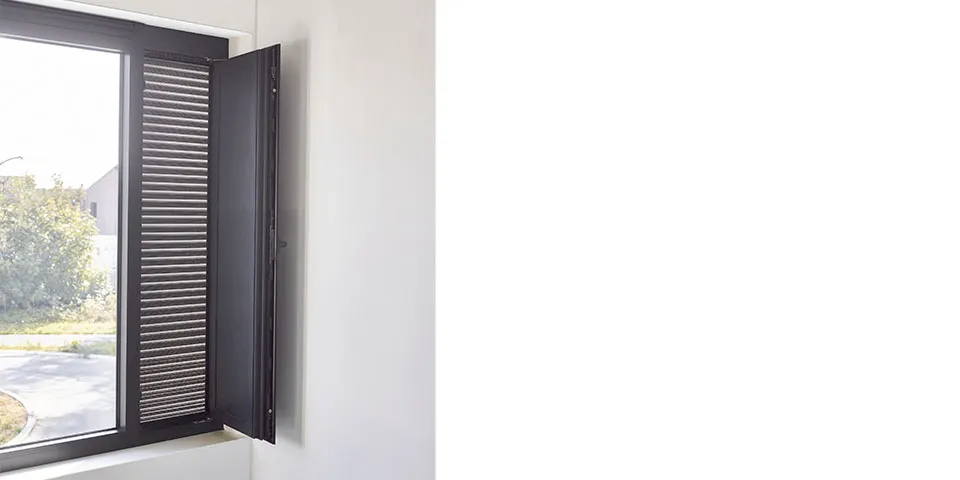
C+ ideal for BENG and NZEB homes
Thanks to the very low heat loss associated with ventilation, the C+ system has been awarded a favourable equivalence rating, making it ideally suited to BENG and NZEB homes, whatever you may have heard. What is more, when you look at the total energy consumption of a C+ system, including both heat loss caused by ventilation and the ventilation unit’s own electricity use, it is even lower than that of a conventional heat recovery system.
And that is only the energy consumption. When you also take into account that filters do not need replacing and the ducts need cleaning less often, because there are no supply ducts, it quickly becomes clear that the system’s total cost of ownership compares very favourably with heat recovery systems.
A further benefit of a C+ ventilation system is that fresh outdoor air is brought directly inside through ventilation grilles. Renson has, in a sense, reinvented ventilation to meet the latest BENG standards, always with the same aim: the highest possible indoor air quality in every room, without residents having to give it a second thought.
The ultimate in ventilation comfort
After all, shouldn’t ventilation above all take the pressure off residents, providing them automatically with the best possible indoor air quality and, above all, comfort? A C+ ventilation system delivers all this. By supplying fresh outdoor air directly and extracting polluted indoor air only from the rooms that need it, much lower airflow rates can be used. This also addresses the commonly heard complaints about conventional C ventilation systems, which lack this advanced demand control: the risk of draughts and cold downdraughts.
C+ ventilation with Healthbox 3.0 and Invisivent frame vents prevents this by means of:
- A lower required ventilation volume, achieved by targeting ventilation precisely at the rooms in the home that need it,
- The backdraught flap in the Invisivent frame vent, which prevents draughts or uncontrolled ventilation,
- The option to close an Invisivent in extremely cold conditions. Demand-controlled extraction of polluted indoor air from each room ensures that enough fresh air continues to enter through other rooms.
All this prevents comfort complaints, even when combined with low-temperature heating. It is also a bonus that the Healthbox 3.0 ventilation unit, the heart of the system, is barely audible. Other benefits include no dry air being blown into bedrooms and living rooms, and users being able to track the activity and history of their connected ventilation system through the app.
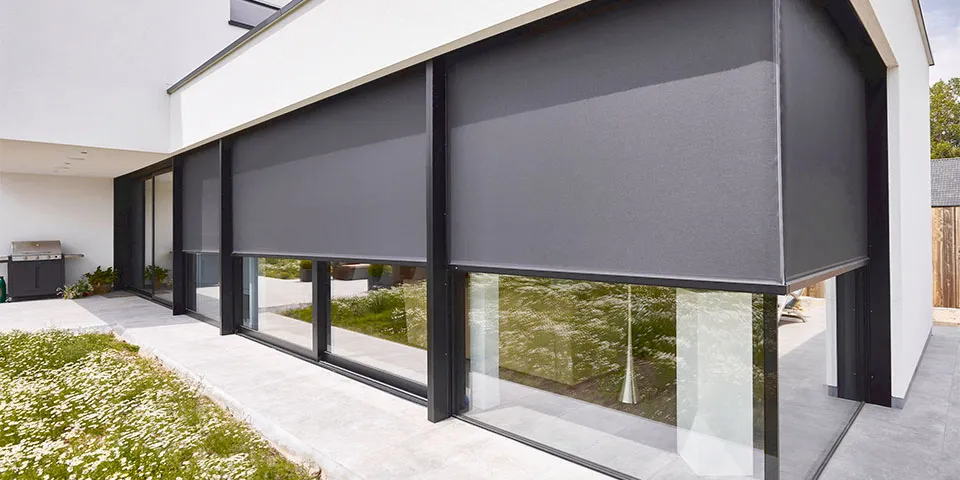
Keep the sun out before it reaches the glass.
With its ventilation solutions, Renson meets the strictest EPC requirements and guarantees indoor air quality, but it goes one step further. For us, healthy living means more than high indoor air quality. It also means a pleasant indoor temperature. With the last few hot summers and heatwaves in mind, cooling our well-insulated, airtight homes in an energy-efficient way is becoming a greater challenge than heating them.
TO July … achievable with external solar shading and night cooling
In line with this, BENG 4 requires architects, consultants and project developers to take account at the design stage of the number of days when temperatures rise too high for indoor conditions to remain comfortable. An overhang, external solar shading and/or passive night cooling are interesting and sustainable alternatives to resorting to energy-guzzling, climate-unfriendly active cooling such as air conditioning.
Here, too, Renson is firmly committed to natural solutions: external solar shading blocks the sun as efficiently as possible before it reaches the glass, while burglar-resistant window vents let cooler night air in to help cool the interior. Used together, these can reduce indoor temperatures by up to 15°. Another bonus is that dynamic solar shading such as screens still lets you benefit from free solar heat in winter. This type of fabric solar shading can also be perfectly integrated into the façade without compromising your design.
Find out here how Renson responds to the latest energy performance requirements:
Brochure ‘+ in ventilation’
White paper ‘Ventilating to suit your needs’
www.renson.eu
Question about this story? Ask your question
Keep following this
Get an email when a new story is published. No account needed.
- ThemeHealthy indoor air
- SubjectHVAC







