Everything professionals in the non-residential sector need to know about a healthy indoor climate is at www.binnenklimaattechniek.nl

The shift towards energy-efficient and net-zero energy buildings is well under way. This welcome and much-needed development also brings an additional concern: how do we maintain a healthy indoor climate?
Remi Hompe, sector manager at Vereniging Leveranciers van Luchttechnische Apparaten (VLA), says: “We now spend more than 70% of our time indoors, at home and at work. The non-residential sector must ensure a healthy indoor climate, helping to reduce absenteeism and safeguard productivity. We are happy to help. Professionals involved in indoor climate systems can find answers to all their questions on the Binnenklimaattechniek.nl platform, which is packed with publications, information on legislation and practical tools.” In this article, we take a look at some of the many resources the platform has to offer.
Compare the energy consumption and emissions of air handling units
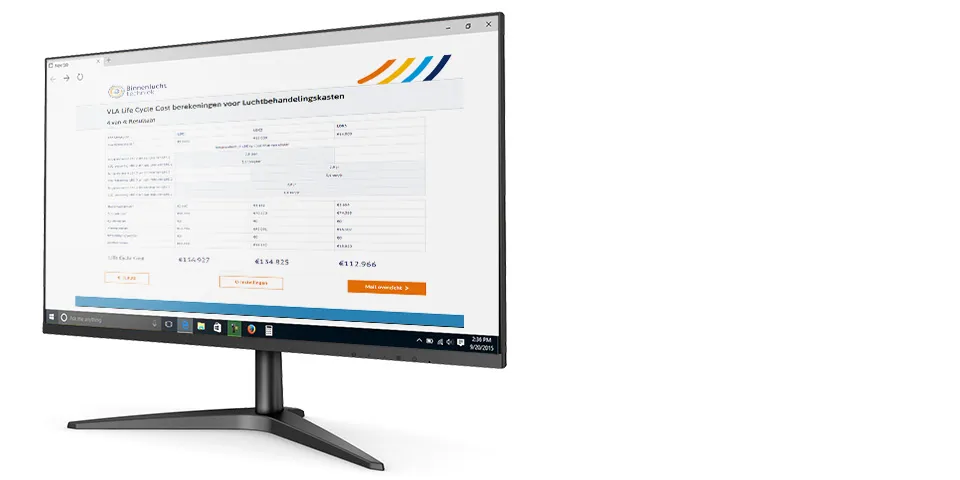
LCC tool.
The ‘Life Cycle Cost’ (LLC) tool can be used to compare air handling units in terms of energy consumption and CO2 emissions. Calculations are carried out in accordance with DIN V 18599-3 and VDI 2067-1, and are a requirement in the VLA specification ‘Ontwerp luchtbehandelingssystemen 20160101-03’. The RVB uses this specification when tendering office buildings. The calculation takes Dutch energy and gas prices into account and can also be used for energy from other sources. Try it for yourself at vlallc.nl.
Save energy with air curtains
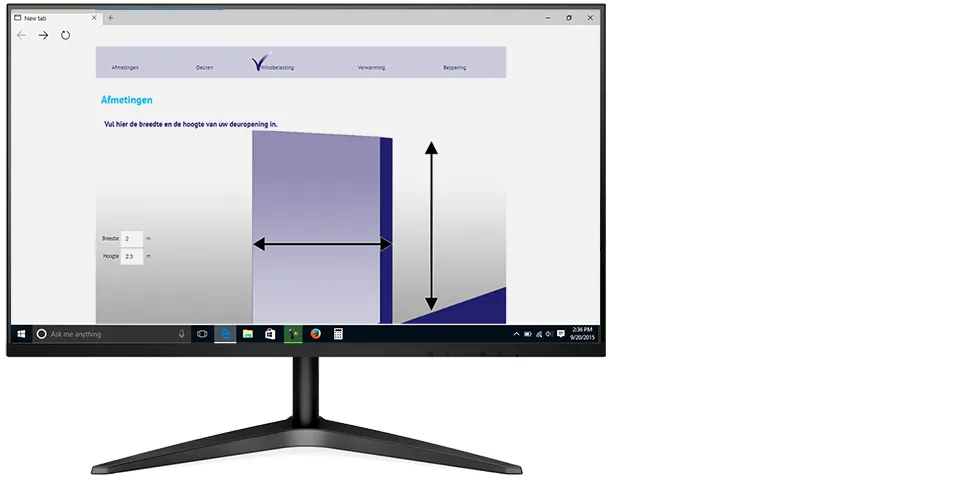
Air curtain savings calculator.
An air curtain not only improves comfort, it can also save up to 80% energy compared with an open door. That can mean savings of thousands of euros a year. Find out how much a properly installed air curtain could save at binnenklimaattechniek.nl/besparingsmeter. To assess an existing air curtain, visit entreecheck.nl.
Why air handling systems must be cleaned correctly
A clean air handling or ventilation system can prevent health risks caused by contamination. That makes proper system cleaning crucial. A clean system also retains its capacity and can therefore perform optimally. As a guide, Nederlands Verbond Reinigingsspecialisten Luchtbehandelingssystemen (NVRL), in collaboration with TNO Bouw en Ondergrond, has established hygiene limit values for cleaning air handling and ventilation systems in non-residential buildings. Companies affiliated with NVRL can issue an NVRL certificate based on the NVRL quality mark. The association is part of VLA. For more information, visit nvrl.nl.
More sustainable air handling in buildings
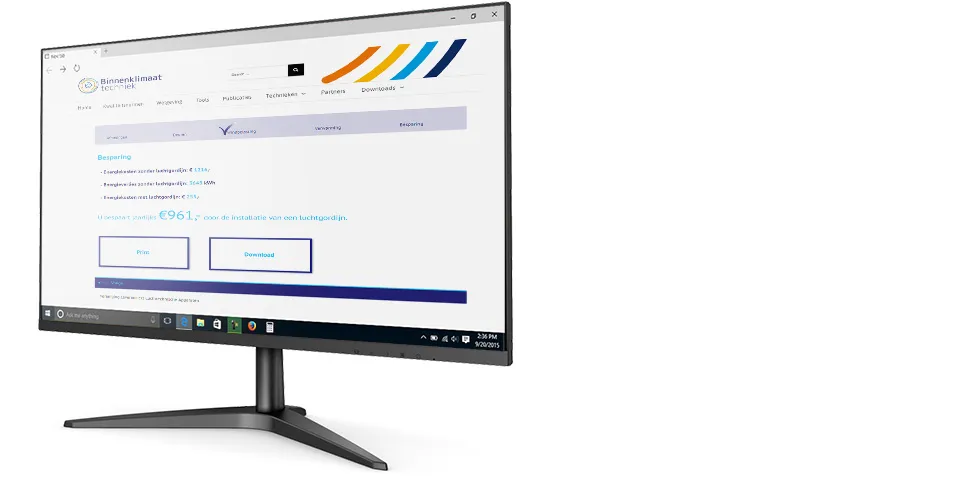
Air curtain savings calculator results.
The Dutch Building Decree requires an environmental performance calculation for every building permit application for homes or offices with a usable floor area of more than 100 m2. This calculation must determine the building’s environmental impact in €/m2 per year in a consistent and verifiable way. Together with its members, VLA has carried out a Life Cycle Assessment of the ventilation systems and components they supply. These ‘environmental performance’ figures have been included in the national environmental database as VLA product cards, available at milieudatabase.nl. This means VLA product cards can be selected for products supplied by VLA members, providing a guarantee of quality. VLA is already anticipating the expected statutory requirements, giving designers the opportunity to adopt a more sustainable, integrated approach to design.
Eurovent energy label
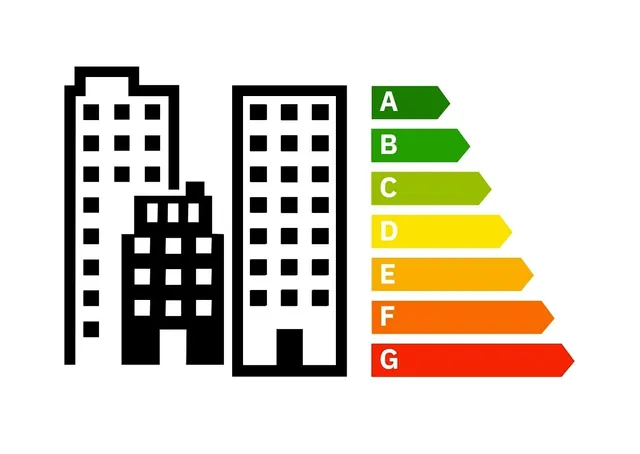
Air handling units come in a vast range of configurations and are therefore often difficult to compare. For this reason, a European energy label for air handling units has been developed, known as Eurovent. The label classifies each type of air handling unit on several criteria, including thermal bridging, structural strength, thermal insulation and acoustic insulation. Assessment is based on the European standards NEN-EN 1886 (mechanical properties) and NEN-EN 13053 (rated values and performance). To ensure that all suppliers use the same test method and maintain their quality, checks are carried out regularly by the independent certification body Eurovent.
Energy consumption of air handling units
Thanks to ever-improving technology, electricity consumption has become almost as important as heat recovery in a modern air handling unit. Total energy consumption now depends on many factors, including:
motor efficiency;
drive efficiency;
fan efficiency;
installation efficiency;
pressure losses across all components;
air velocity;
the temperature efficiency of the heat recovery system.
When a business owner makes use of the EIA, they can deduct 45% of the investment costs of the air handling unit in this case (Eurovent Label A) from their taxable profit, in addition to the usual depreciation. They also pay less income tax or corporation tax.
Read more about Eurovent at binnenklimaattechniek.nl/eurovent.
Question about this story? Ask your question
Keep following this
Get an email when a new story is published. No account needed.
- ThemeHealthy indoor air
- SubjectHVAC