











Existing homes made gas-free with ease using new high-temperature heat pump system
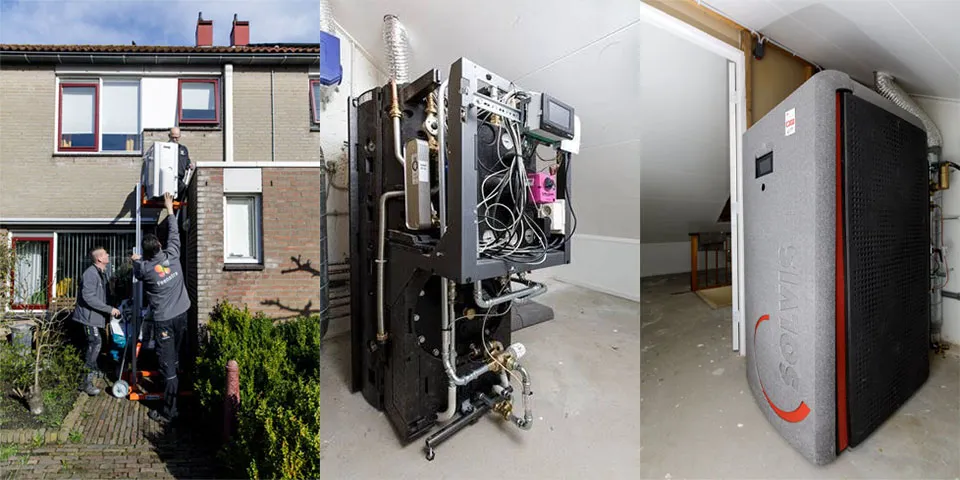
Vattenfall and Feenstra are testing a new high-temperature heat pump system that replaces the traditional central heating boiler without requiring additional measures to the heat distribution system or insulation. The heat pump system for existing homes can make a home fossil-free in one go, offering a sustainable alternative to the central heating boiler. Cindy Kroon, Vattenfall’s Director of Customers, says: “This makes it feasible and affordable to make the existing housing stock more sustainable, bringing fossil-free living a big step closer.”
The innovative all-electric heat pump system was jointly developed by Vattenfall, Feenstra, DENSO and SOLVIS. It uses a high-temperature CO2 heat pump and a stratified buffer tank with a temperature-independent inlet. All system components have been modified by the parties involved specifically for this application and integrated into a robust unit that efficiently delivers the 70 to 90-degree temperatures required by traditional radiator-based heating systems. The system is suitable for homes with a base load of up to 6kW and a peak output of up to 11kW. Around half of existing single-family homes fall into this category.
Most standard heat pumps operate most efficiently when supplying water at a low temperature of around 35 degrees. At these temperatures, existing radiators cannot heat a home, so measures such as installing underfloor heating are required. Current low- and medium-temperature heat pumps also cannot deliver a large amount of power quickly enough to bring a cooled home back up to temperature. This makes it necessary to insulate the home particularly well to prevent it cooling down quickly. The new heat pump system does not have these limitations. Its combination of a high flow temperature and high peak output makes it possible to replace central heating boilers in existing homes with ease, without the need for underfloor heating or additional insulation.
The new heat pump system can achieve high temperatures by using the natural refrigerant CO2 . With a Global Warming Potential of 1, it is also the most climate-friendly refrigerant currently available.
The buffer tank acts as a heat battery, supplying heat to the radiators as well as producing domestic hot water. As in most central heating boilers, hot water is produced instantaneously and safely with regard to Legionella via an integrated hot water station. This means no hot water cylinder is needed.
A one-year pilot will test the system in 20 different rented homes. The focus is on integrating the system into existing homes, residents’ comfort and the system’s efficiency.
If the interim results of the pilot are positive, the first production models of the system are expected to be delivered at the end of 2020. Initially, they will be available for housing association projects. The system will become available to private homeowners in the second half of 2021.
Question about this story? Ask your question
Keep following this
Get an email when a new story is published. No account needed.
- ThemeGas-free heating and cooling
- SubjectHVAC







