











Future-proof heat pumps with low-GWP refrigerants
Text Lieke BousemaImage Alklima
Manufacturer and supplier prepare for revised refrigerant regulations
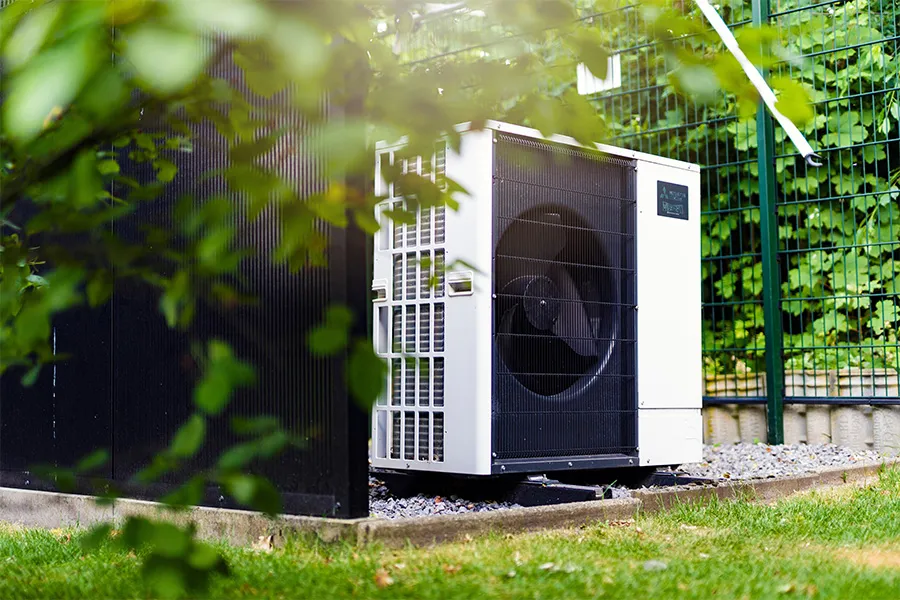
On 11 March 2024, the European Union decided to accelerate the phase-out of F-gases in heat pumps and air conditioning systems, with the aim of limiting global warming and protecting the ozone layer. Until then, synthetic refrigerants had been the go-to choice for heat pumps and air conditioning systems, for example because of their safety and excellent heat transfer properties. However, if these F-gases are released into the atmosphere, their high Global Warming Potential (GWP) has a significant environmental impact. This is why natural refrigerants such as propane (R290) will gradually become the norm from 2025. Alklima/Mitsubishi Electric is already preparing for this.
Alklima supplies Mitsubishi Electric heat pumps and air conditioning systems for both the Dutch residential and commercial markets. “Our equipment has used F-gases for years, as they offer benefits in terms of comfort, efficiency and safety,” says Erwin Tuijtel, deputy director of Alklima/Mitsubishi Electric. “The Dutch F-gas installation sector also has a high leak-tightness rate, keeping the risk of refrigerant leaks and their environmental impact to an absolute minimum. To eliminate even the smallest risk and prepare for the F-gas Regulation, Mitsubishi Electric began developing heat pumps and air conditioning systems that use progressively less refrigerant many years ago. We have also extensively explored the potential of natural refrigerants. The first systems using natural refrigerants have now been introduced, including our Ecodan QUHZ, QAHV CO2 and PUZ-WM propane heat pumps.”

In-house development and challenges
The aim of the European F-gas Regulation is to phase out the use of F-gases completely by 2050, Tuijtel explains. “To make this possible, product restrictions have been set for monobloc systems, split systems, VRF systems and chillers. The smallest systems must make the switch to lower-GWP refrigerants first.” Mitsubishi Electric anticipated this change in its product development policy. Over recent decades, the total refrigerant charge in Mitsubishi Electric equipment has been significantly reduced without compromising comfort or efficiency. The company has also made progress in adopting low-GWP refrigerants. Many systems now use R32 (GWP: 675) instead of R410a (GWP: 2088). Moving on to natural refrigerants such as propane/R290 (GWP: 3) is therefore a logical next step.”
To make this transition, Mitsubishi Electric has redesigned its own compressors, the heart of its various heat pumps and air conditioning systems. “Natural refrigerants have their own unique properties and challenges,” Tuijtel explains. “As well as technical characteristics such as higher pressures and delta Ts, and the fact that natural refrigerants are better for the environment, they also have a high flammability class. To ensure comfortable, highly efficient and safe operation, Mitsubishi Electric is redesigning all its heat pumps, with proven success to date, so that installers and users can continue to use the systems safely.”
A gradual transition
From 2027, all Alklima/Mitsubishi Electric’s smaller heat pumps will run on natural low-GWP refrigerants. “In 2025, we will introduce our first propane air conditioning range in the RAC series for residential and small commercial use,” says Tuijtel. “At the most recent VSK+E trade fair, we also introduced our first series of monobloc air-to-water heat pumps using propane for the residential market. Within a few years, our larger units (>12 kW), VRF systems and chillers for commercial buildings will switch to natural refrigerants.”
New Skills training courses
The shift to natural refrigerants requires changes not only from manufacturers and suppliers, but also from installers. “For example, different considerations apply when designing, positioning and installing a system,” Tuijtel explains. “To support installers, we will expand the courses on our Skills platform and add new training programmes. This will help installers make the transition to natural refrigerants.”
Een zakelijke vraag aan VSK? Get in touch
Companies in this story

Keep following this
Get an email when a new story is published. No account needed.
- ThemeGas-free heating and cooling
- SubjectHVAC
- CompanyVSK







