Green hydrogen: the fuel of the future
Unlike so-called grey and blue hydrogen, producing green hydrogen does not generate CO2. This makes the element a major asset in the energy transition towards a CO2-neutral world.
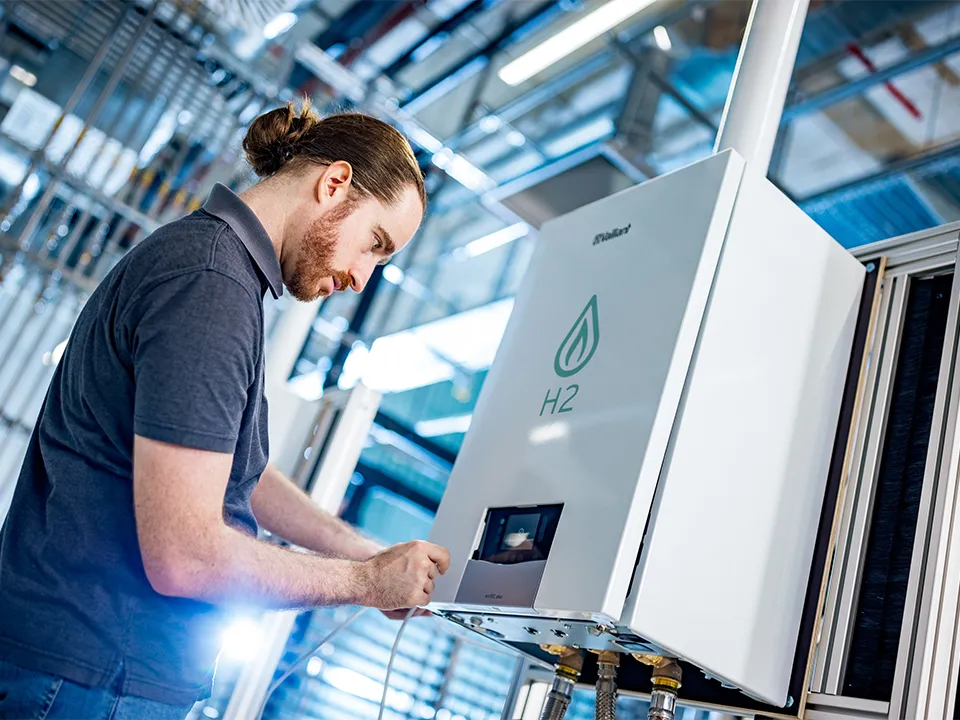
One example is the drive to make heating more sustainable in new and existing residential areas. Vaillant, an international market leader in heating and ventilation technology, closely follows these sustainability-focused developments and, as a true pioneer, is responding to market demand with a comprehensive range of H2 boilers and heat pumps.
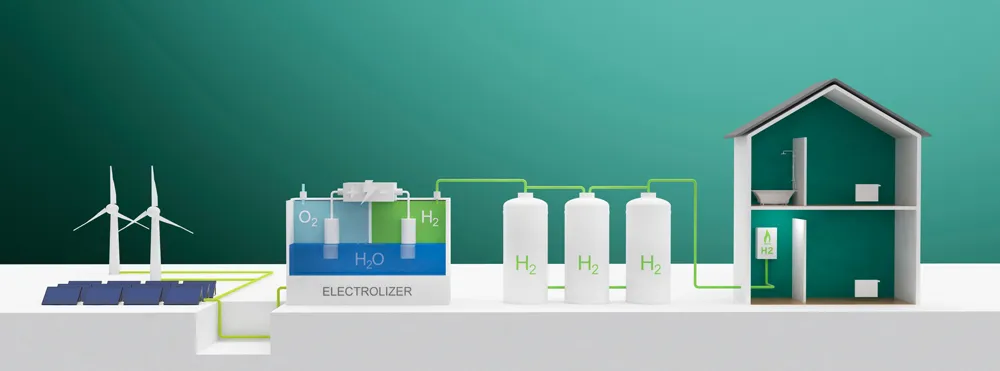
According to the IEA, the International Energy Agency, the global use of green hydrogen will lead to an annual reduction of as much as 830 million tonnes of CO2. It is hardly surprising, then, that many experts describe this variant as the fuel of the future. Ronald Mazurel, product management manager at Vaillant Group Netherlands, agrees: “Green hydrogen is produced by extracting hydrogen from water through electrolysis,” he explains. “This uses green electricity generated mainly by solar panels and wind farms. At present, the amount available does not match demand, and there is a surplus of green electricity. This surplus can be put to excellent use in producing green hydrogen, a highly efficient and 100 per cent sustainable fuel.”
Existing homes
Green hydrogen has a range of applications within the energy transition, including heating homes. This is an area in which Vaillant is well established and is taking steps to prepare for the future. “With a view to replacing conventional gas boilers, we are working flat out on developing H2 boilers in combination with the heat pumps we also manufacture,” says Mazurel. “At the same time, our current heating appliances are already prepared to burn natural gas blended with 10 per cent hydrogen. Our initiatives in this area will focus primarily on existing homes, both in the Netherlands and abroad. The reason is simple: these residential areas already have a natural gas network. It would be a waste not to use it. What’s more, replacement causes few, if any, problems. The impact on the installation, the heat distribution system and the space required inside or outside the home is virtually nil. A hydrogen boiler also performs the same functions as a gas-fired appliance and has the same efficiency.”
Pilot projects
Mazurel’s account highlights the enormous potential of green hydrogen. Vaillant has several pilot projects planned, which will be rolled out later this year. “These involve both replacing gas boilers with appliances powered by 100% hydrogen and installing boilers that use a hydrogen blend. Every appliance meets our strict quality and safety requirements,” says Mazurel, before concluding with two important caveats. “As well as the fact that hydrogen-powered appliances are not yet certified, hydrogen is currently considerably more expensive than natural gas. The expectation is that, through subsidies and taxation, the price of hydrogen will eventually be the same as, or even lower than, that of gas. But there is still a great deal to be done before that happens, by manufacturers and the government.”
Question about this story? Ask your question
Keep following this
Get an email when a new story is published. No account needed.
- ThemeGas-free heating and cooling
- SubjectHVAC