Heat pumps are not the culprit, but a solution to grid congestion

The energy transition in the Netherlands is well under way. At last, we are making progress, and with it come new challenges. Grid congestion is one example. This can sometimes give the impression that grid congestion is caused by the switch from gas boilers to heat pumps. But nothing could be further from the truth. Looking at all the measures involved in the energy transition, it becomes clear that installing a heat pump system is often an important way to reduce grid congestion.
Using the right heat pump in homes requires an electrical input of around 1.75 kW. That is far less than an electric hob, a boiling-water tap or an EV charger. More importantly, modern heat pumps are controllable and therefore have a smooth consumption profile. A heat pump system with a hot water cylinder heats domestic hot water when there is ample capacity on the electricity grid, or when prices are low or even negative. Skilled installation and the right system selection in heating mode mean that only a small amount of power is needed, even at an outdoor temperature of -10 degrees Celsius. With the right starting assumptions, much more is possible than we currently think. Several reports based on real-world heat pump data provide evidence to support this.
White paper on grid congestion in housing
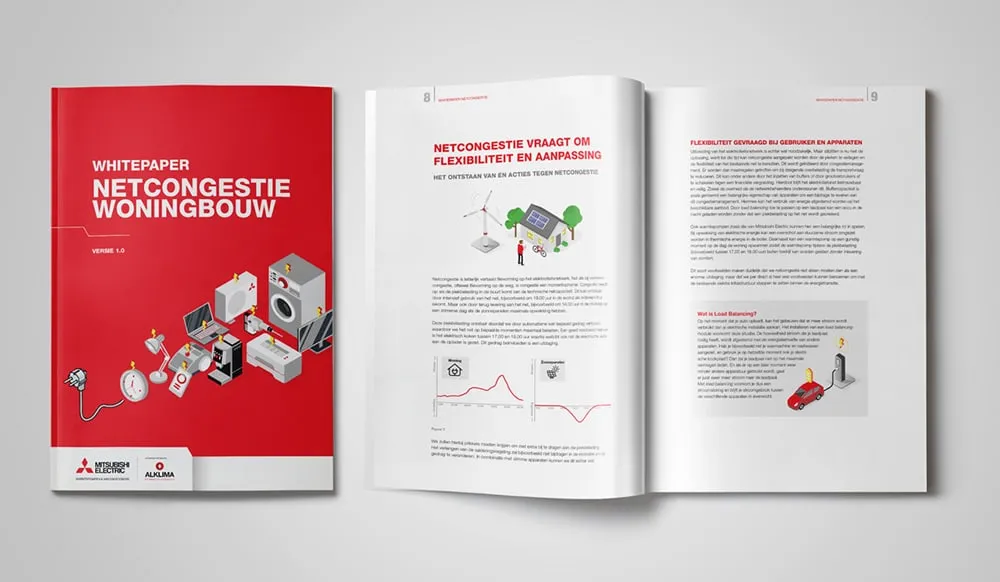
All this information can be found in the Whitepaper Netcongestie Woningbouw, launched today by Alklima Mitsubishi Electric. In the white paper, Alklima Mitsubishi Electric states that expanding the electricity grid is indeed necessary. But there is no need to stop improving the energy efficiency of buildings until grid congestion has been addressed. Homes can be made more sustainable using an all-electric heat pump system without having a major impact on the electrical infrastructure. In fact, heat pumps can often help reduce the problem. The construction and building services sectors do, however, need to observe a few conditions.
“Good coordination between the heat distribution system, controls and heat pump is an important starting point. A good heat pump should not need support from an electric heating element, even at low outdoor temperatures. Thermal storage capacity is also an important measure for preventing peak loads and makes an essential contribution to congestion management. Heat pumps play an important role here. When renewable electricity is being generated, heat pumps can convert surplus renewable power into thermal energy in the hot water cylinder. A heat pump can also warm a home at a favourable time of day, allowing it to be switched off during a peak period, for example between 17.00 and 18.00,” says Rudy Grevers, All-Electric housing lead at Alklima.
Heat pumps have a limited impact
A comparison of the power inputs of the various electrical appliances in and around the home shows that heat pumps make only a limited contribution to a home’s load. For example, research by Natuur & Milieu shows that heat pumps in homes account for just 1% of total electricity consumption. Moreover, total electricity use in the Netherlands has remained stable for years. Investment in the electrical infrastructure of existing neighbourhoods is therefore unrelated to the desire to install heat pumps. Grevers says: “The bottleneck arises because we want to make greater use of our electrical infrastructure at certain times, for example between 17.00 and 18.00. It is like traffic jams, which also occur at peak times. We should all avoid rush hour where possible. Heat pumps can play a very effective role in this.”
“Looking ahead, balancing energy supply and demand is the most important consideration. In that respect, it is good news that renewable energy generation from solar and wind is growing much faster than the number of additional heat pumps being installed. Heat pumps naturally use more electricity in colder conditions than in summer. Even so, winter production of renewable electricity is much higher than the total electricity use of all heat pumps. Heating domestic hot water can also create a peak in electricity demand, but, provided the system has a hot water cylinder, this heating will be spread throughout the day,” says Grevers.
Hybrid heat pumps have a negative impact
Alklima Mitsubishi Electric goes so far as to say that, contrary to what many people think, hybrid heat pumps are not a solution to grid congestion. In many cases, hybrid heat pumps cause sharp peaks instead. This is because many hybrid heat pumps are controlled by outdoor temperature. This means they often switch on at the same time across a neighbourhood, creating a peak load. “If you do need a hybrid system, for example because of building constraints or lack of space, an All-Electric Ready heat pump is a better choice,” says Grevers. “The major advantage of this option is that you can move on from a hybrid set-up, with a boiler and heat pump, to all-electric. For example, if net metering is phased out, this creates an incentive to use your own solar power to heat the domestic hot water cylinder, a process known as thermal storage. A conventional hybrid system does not offer this option, making it a short-term solution.”
The white paper includes a series of tips, particularly for installers and consultants, that they can use when installing a heat pump. It concludes with a list of solutions for housing that the market can implement straight away, enabling designers to work with the right starting assumptions and remove barriers. The document also outlines the wider possibilities for congestion management.
Find out more. Download the white paper from the Alklima website: www.alklima.nl/netcongestie
Question about this story? Ask your question
Keep following this
Get an email when a new story is published. No account needed.
- ThemeGas-free heating and cooling
- SubjectHVAC