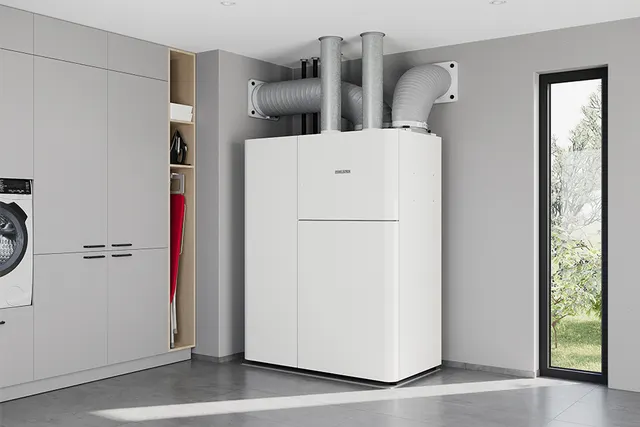
Air handling unit and heat recovery unit with or without an integrated heat pump: trouble or a blessing?
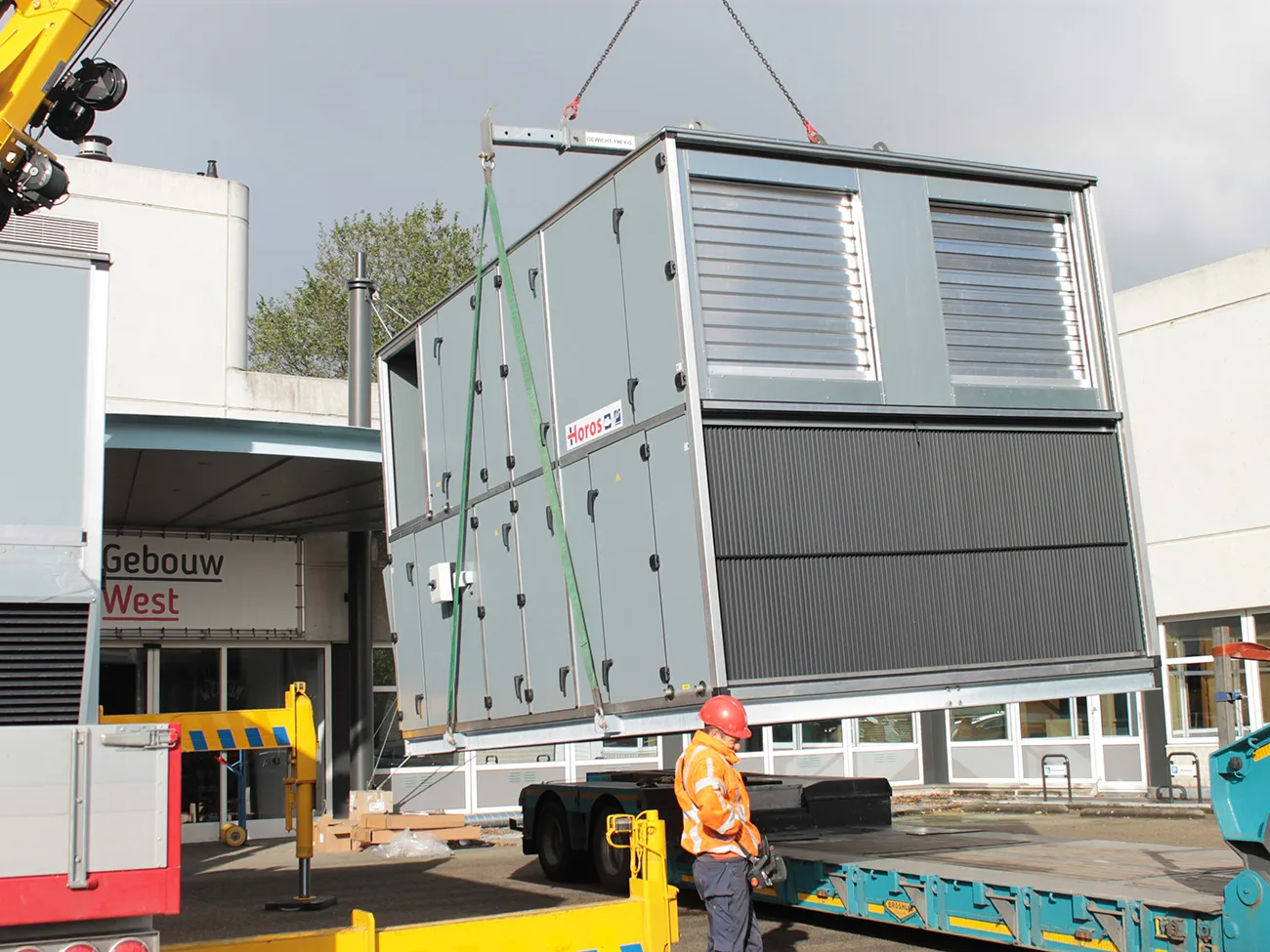
The shortage of qualified technical staff and pressure on installation costs, together with ever-rising energy prices, are driving strong demand for plug-and-play solutions. In this context, opting for air handling units fitted with an integrated reversible heat pump for heating and cooling seems an obvious choice. However, a number of design and application rules must be followed to ensure a comfortable system that works properly. Harry van Veen, director and owner of Horos Klimaattechniek in Soest, explains.
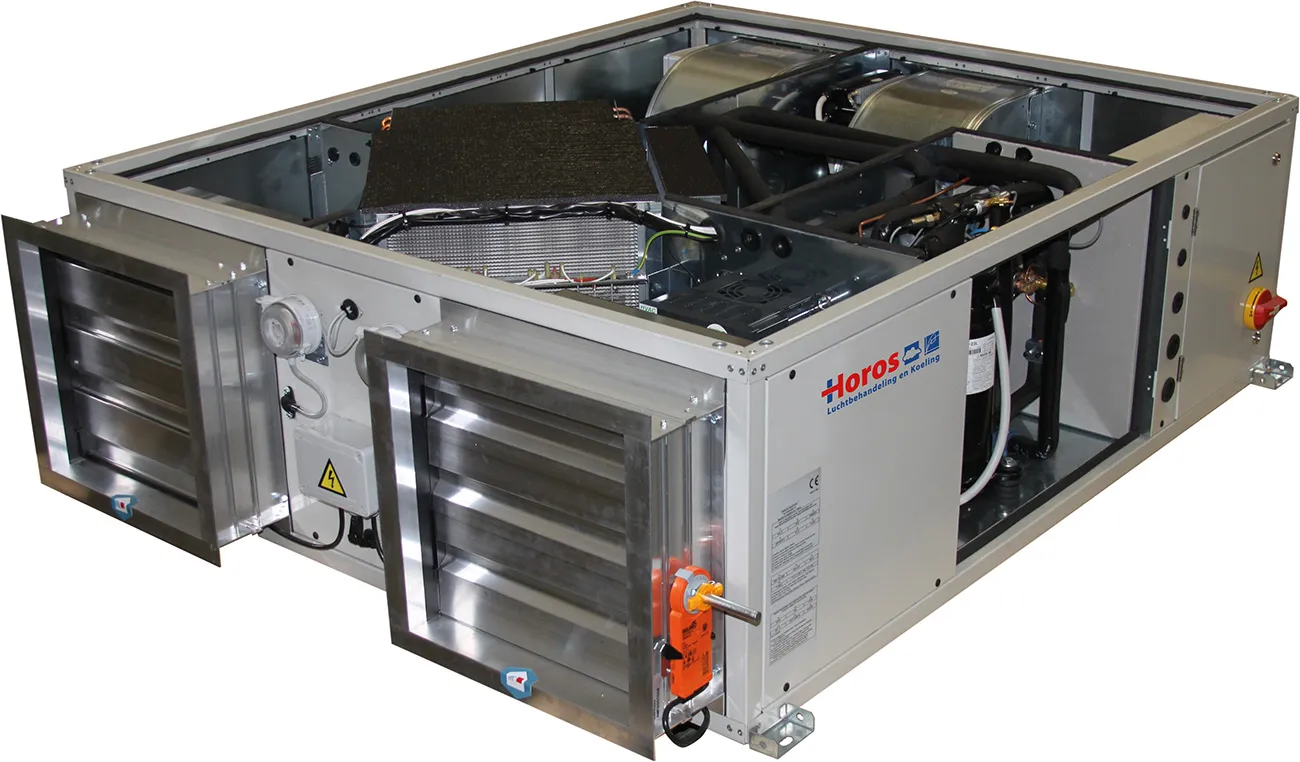
Horos Klimaattechniek is a true pioneer. In the 1990s, the company was the first supplier to focus on designing and marketing these integrated climate control systems. These welcome solutions often arose in response to demand for space savings and simpler installation work. “Providing design, sales and after-sales service requires considerable knowledge and expertise in both air handling and refrigeration”, says Van Veen. “That expertise has been available in abundance within our company for around 70 years. We have built up a wealth of technical experience over the years, learning from both our successes and our mistakes.”
The complete picture
Horos’s enthusiastic specialists draw on that experience every day in the work they carry out for a wide range of clients. Projects involving these types of systems always start with sound advice and the right questions for the client. “We check, for example, whether the return temperature is adequately safeguarded and, in the case of plenum extraction, whether the roof is properly insulated”, Van Veen explains. “We also look at the guaranteed supply air conditions, whether the maintenance company has sufficient expertise in air handling and refrigeration, and how defrosting is ensured in winter. In short, we build up a complete picture. By asking more probing questions, we can determine whether an integrated system is the best solution or whether an alternative should be considered. Unfortunately, we regularly encounter serious problems in the field. This is simply because an unsuitable application has been chosen or maintenance has been carried out incompetently or incompletely. Changing the filters alone is not enough. That is why we advise our clients to have us monitor their systems remotely for at least one year after commissioning.”
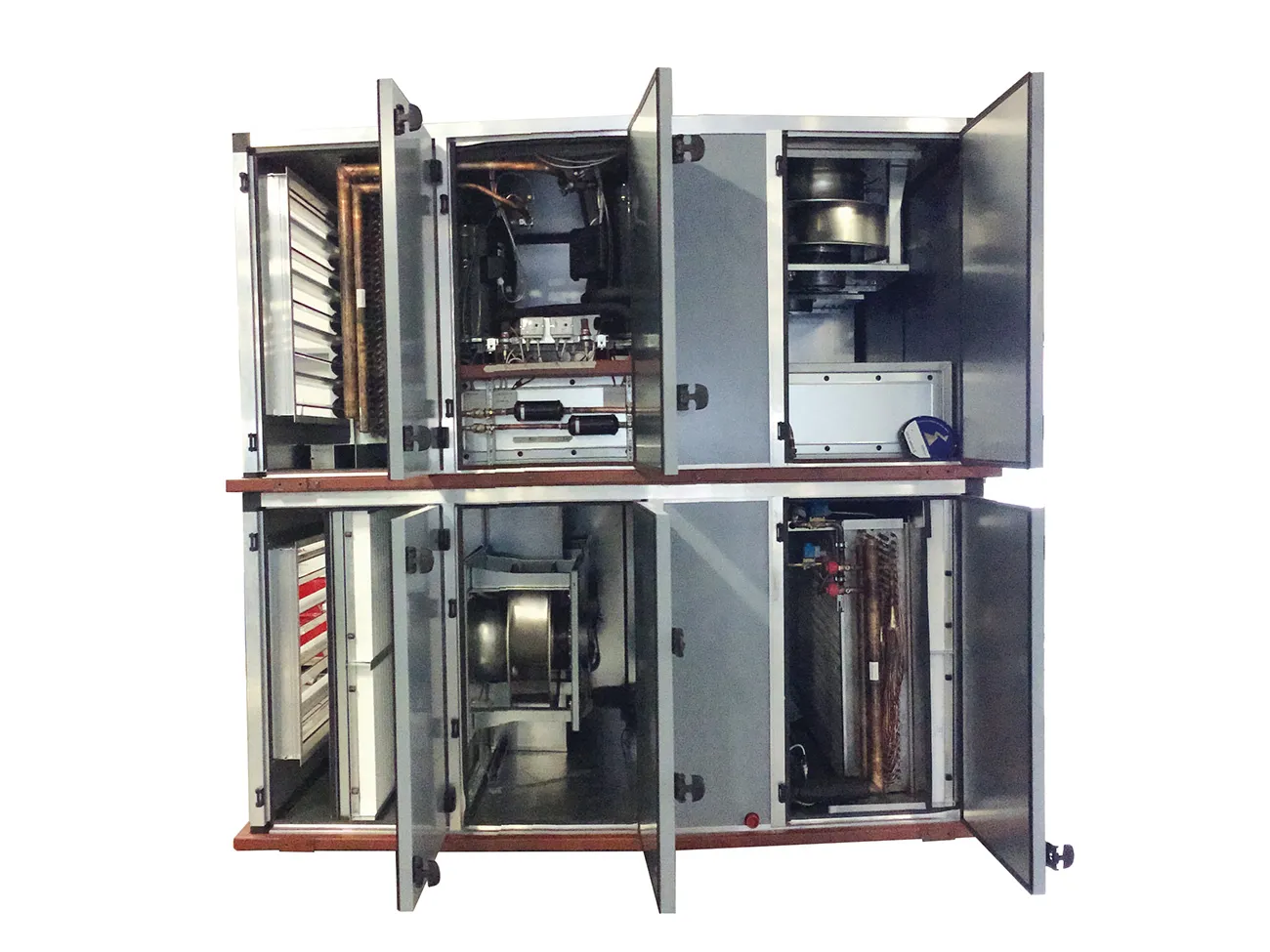
Separate DX heat pump
One problem that can be addressed through remote monitoring is the defrost cycle being underestimated when a separate DX heat pump is used. It appears that the distance between the air handling unit and the heat pump is a key factor in whether this issue occurs. “As with an integrated system, the return temperature also plays an important role when using a separate heat pump. If you want to prevent temperature fluctuations, the compressor’s control range is the critical factor”, says Van Veen, before outlining two key advantages of the two heat pump technologies that Horos offers for a range of applications and at various capacities. “In both systems, energy is transferred directly from the refrigerant to the air. So, unlike a chilled water system, there are no transfer losses. In addition, the heat recovery wheel reduces the required cooling capacity, which, together with EC fans and a variable-speed compressor, significantly reduces energy consumption.”
Claim that subsidy!
Heat pumps are covered by the EIA (Energy Investment Allowance) scheme, an initiative by the Netherlands Enterprise Agency that gives businesses investing in energy-saving equipment or components an attractive tax benefit. “For organisations liable for income or corporation tax, the EIA offers an average benefit of around 11 per cent, as well as a lower energy bill”, says Van Veen. “The heat pump must, however, be listed on the EIA Energy List.”
Question about this story? Ask your question
Keep following this
Get an email when a new story is published. No account needed.
- ThemeHealthy indoor air
- SubjectHeat pumps