Decarbonising commercial buildings requires a considered approach
Text Lieke BousemaImage Remeha
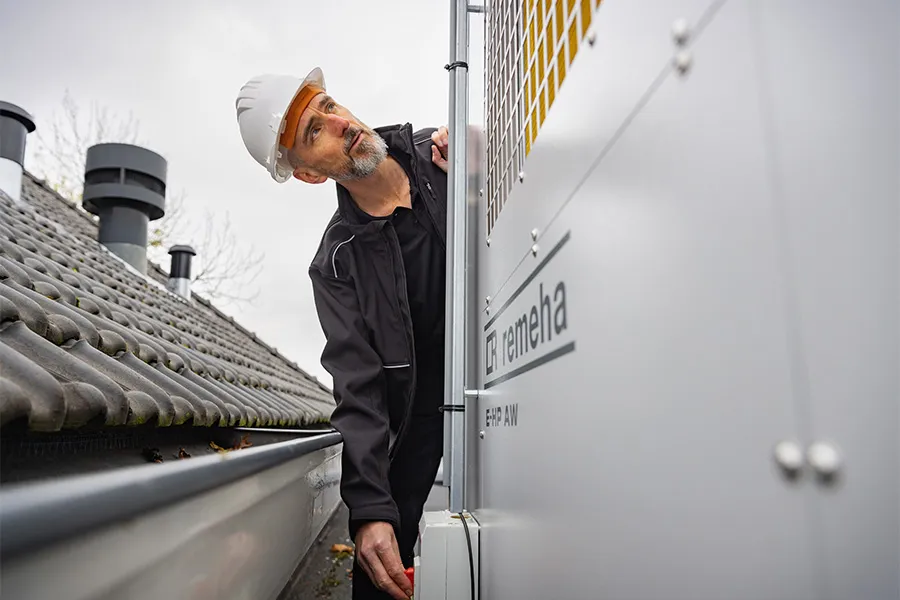
Many commercial buildings still have boiler rooms that will need to be decarbonised in the coming years. This is a major challenge, according to Evander de Vries, Segment Manager Commercial at Remeha. Although both a boiler and a heat pump produce hot water, they work in fundamentally different ways.
“Many existing commercial buildings were designed around a boiler for heat generation. The entire heat distribution system, including radiators and underfloor heating, was also designed accordingly,” he says. “This presents challenges when decarbonising a building. A boiler delivers heat immediately, whereas a heat pump takes longer to reach the same flow temperature, if it can reach it at all. In addition, specific requirements apply to the building’s insulation and heat distribution system, especially if the heat pump’s cooling function is also to be used. That is why Remeha believes decarbonisation must always be tailored to the project.”
A complete solution: from advice to maintenance
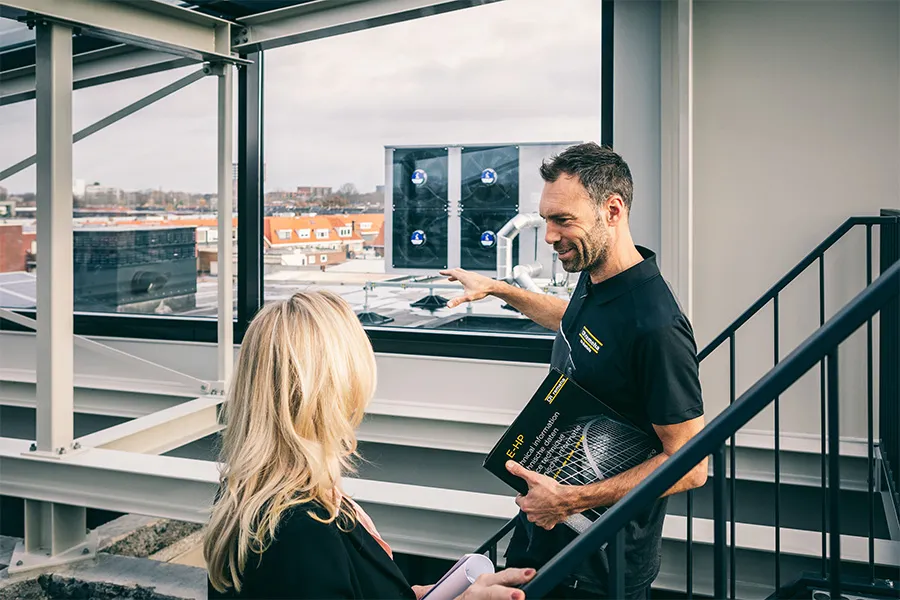
Switching to (hybrid) heat pumps brings its share of challenges. “To support installers, we look beyond our products alone,” says Axel Marijt, Product Marketeer Commercial. “As soon as a decarbonisation project gets under way, a Remeha technical adviser is happy to get involved. They work with the installer to assess the project, the building’s characteristics and the building owner’s decarbonisation ambitions: do they simply want to add a heat pump, or decarbonise their domestic hot water production too? Or perhaps they want to go completely off gas? Is a district heating network planned for the area that the installation could connect to? And how will the building be used in future? Our complete solution includes comprehensive advice at the outset, practical training and tailored service before, during and after handover, including commissioning and any maintenance arrangements.”
Three scenarios
From offices to care facilities, schools, swimming pools, sports facilities, medical practices and apartment buildings, decarbonising commercial buildings is part of Remeha’s everyday work. “We are keen to share the knowledge and experience we gain with installers,” says De Vries. “For example, to help them arrive at the right solution more quickly while also reducing risks.” To ensure a well-structured approach to decarbonisation, Remeha distinguishes three scenarios:
1. Smart replacement: simply replacing existing boiler(s) with a high-efficiency boiler, possibly in combination with a hybrid heat pump, or connecting a solar thermal system, can already enable building owners to make significant progress in decarbonisation.
2. More extensive improvements: decarbonisation is often approached more broadly, with the client also considering measures at building level. The heat distribution system, for example, may also be upgraded so that the building can be heated at lower temperatures and the hybrid or all-electric heat pump system can operate at optimum efficiency.
3. Full upgrade: the aim of this third step is to go completely off gas and switch to low-temperature heating. This is suitable, among other things, for renovation and conversion projects, as well as for somewhat ‘newer’ buildings dating from around 2000 onwards that already have good insulation and HR++ glazing.
Low GWP, high flow temperatures
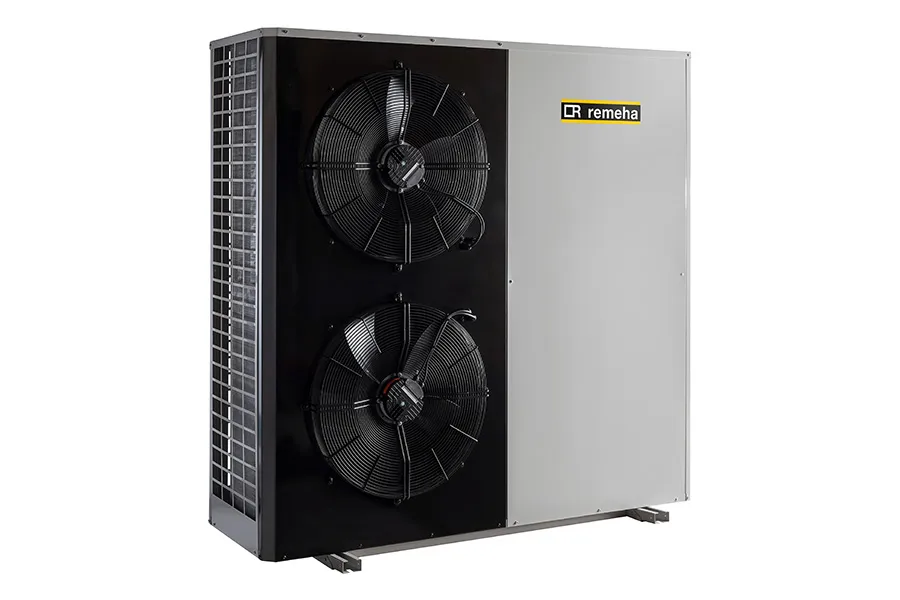
Remeha is bringing an increasing number of heat pumps to market that use natural, PFAS-free refrigerants with a low Global Warming Potential (GWP). “At the same time, more and more heat is being extracted from the source, whether outdoor air, ventilation air, boiler return water, the ground or the sun, and flow temperatures are rising,” says De Vries. “This also makes it possible to produce domestic hot water efficiently and safely with regard to Legionella, while allowing the installation to be made much more compact. Modern heat pumps can modulate to lower outputs and start up with lower power, minimising electricity consumption. Grid congestion is also less often an obstacle to switching to a (hybrid) heat pump. Combined with our smart controls, installers and building owners can be confident of optimum system management, as well as having one project partner and one warranty provider for the complete installation.”
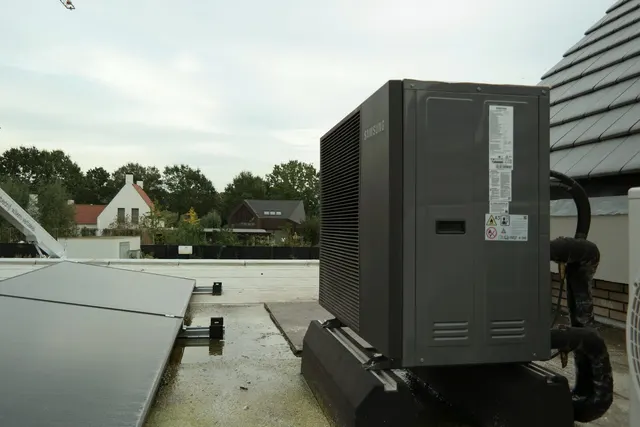
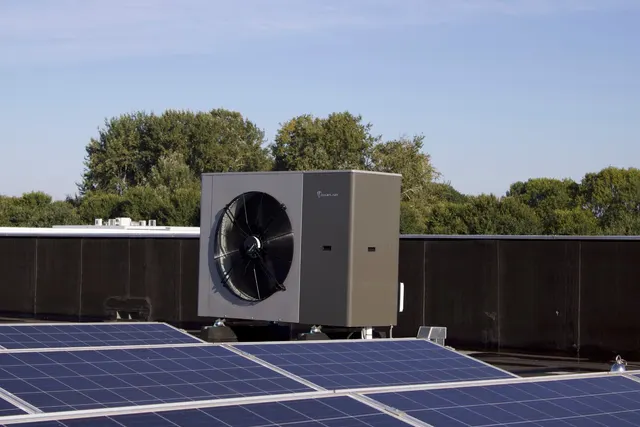
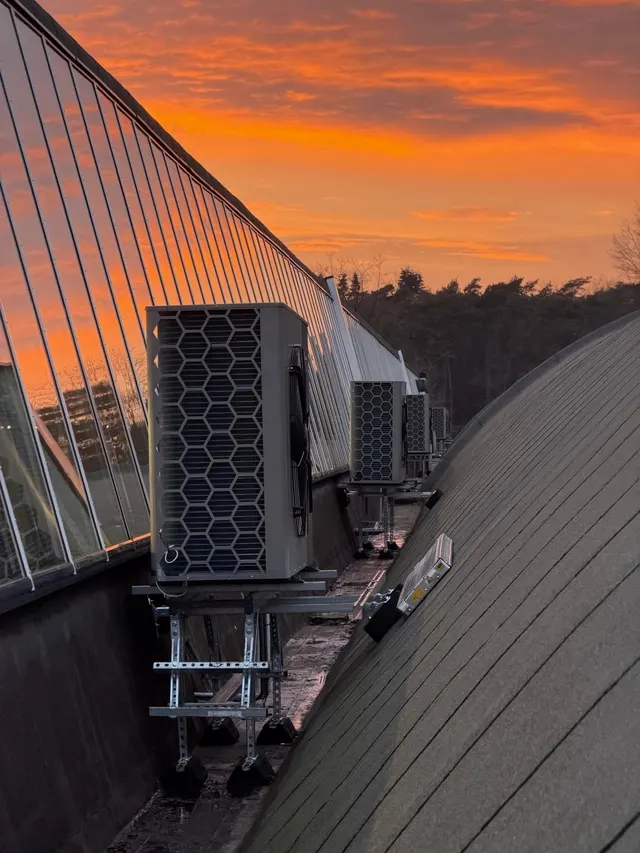
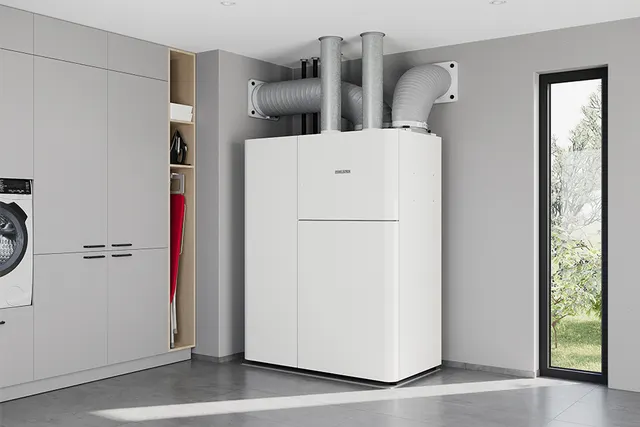
Remeha recently expanded its range with the Remeha Effenca MT, a high-capacity heat pump for heating and cooling that uses R32 refrigerant and delivers flow temperatures of up to 60°C at an outdoor temperature of -10°C. “The heat pump is available with outputs from 20 to 40 kW,” says Marijt. “We also introduced the Remeha Effenca HT at VSK. This heat pump, which uses R290 refrigerant (propane), can deliver flow temperatures of more than 70°C, making sustainable domestic hot water production possible too.” Remeha will continue to expand its heat pump range over the coming year, including models with outputs of up to 200 kW, bringing like-for-like boiler replacement within reach. “Thanks to our Remeha MiTera Plus hybrid cascade manager, Effenca heat pumps can be combined in a hybrid system with our Quinta Ace and GAS 220 Ace boilers. We can also control groups and domestic hot water production in a second stage, without the need for a separate building management system.”
Have a business enquiry for Remeha BV? Get in touch
Companies in this story


Keep following this
Get an email when a new story is published. No account needed.
- ThemeGas-free heating and cooling
- SubjectHeat pumps
- CompanyRemeha BV
- CompanyVSK