Get ready for growing demand for natural refrigerants!
Text Lieke BousemaImage Studium
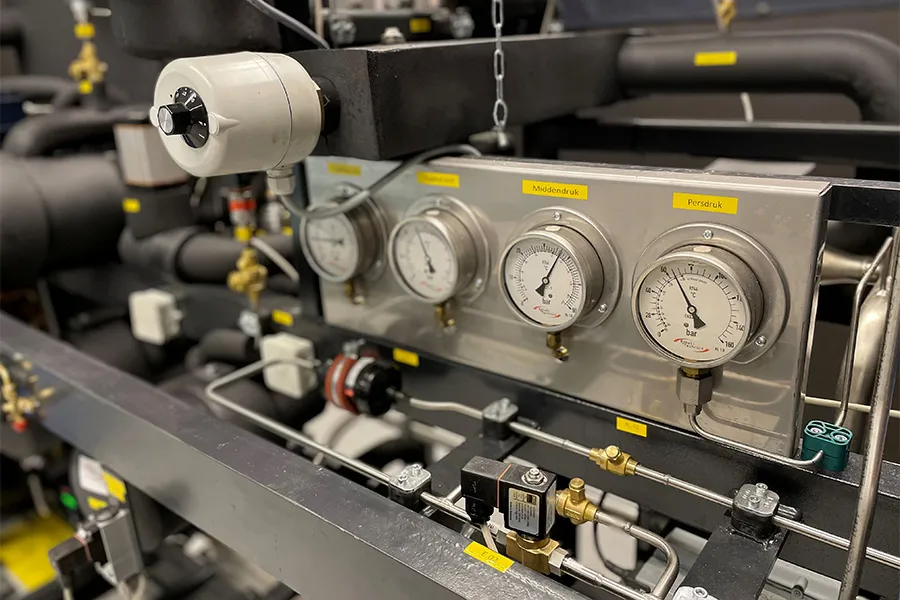
ACB CO2 training for systems containing more than 25 kg
The refrigerant market is undergoing rapid change. F-gases in air conditioning systems and heat pumps are being phased out faster than expected, in a bid to significantly reduce total greenhouse gas emissions in the EU. The European Commission’s new policy is set to boost natural refrigerants such as ammonia, propane and CO2, which have a low GWP. “One advantage of CO2 is that it is neither explosive nor toxic,” says Peter Koelewijn of Studium. “We therefore expect strong interest in this natural refrigerant. For example, in retail, where R744 is used as the refrigerant in chilled and frozen food rooms. Installers, refrigeration engineers, commissioning engineers, and service and maintenance technicians looking to get ahead of this trend can now take our ACB CO2 training course.”
Studium is an accredited technical training provider with a broad range of accessible, practical courses, from refrigeration and air conditioning to heat pump technology, as well as many in-company options. “The ACB CO2 training course was added to our offering in early September,” says Koelewijn. “ACB stands for Ammonia, CO2 and Flammable refrigerants (propane). The course replaces our Ammonia, CO2 and Hydrocarbons (ACK) CO2 course and is fully aligned with the new training and certification requirements.” Participants can choose between a two-day beginners’ course and a one-day advanced course (refresher course). A fluorinated greenhouse gas certificate or ACK Natural Refrigerants CO2 certificate is required for the one-day advanced course. “Participants must already be familiar with the basic regulations and procedures so that we can get straight to the heart of the matter.”
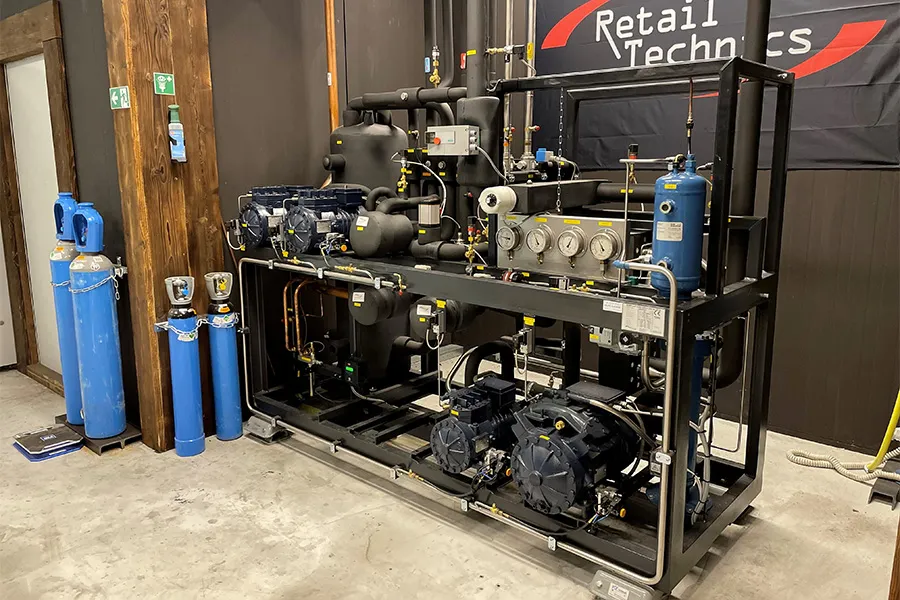
Operation, guidelines and procedures
The beginners’ course covers both theoretical and practical skills. Participants learn about the safety risks and challenges of a CO2 refrigeration system, Koelewijn explains. “Most refrigeration engineers are used to working with air conditioning systems and heat pumps that condense or evaporate refrigerant. With CO2, however, temperatures above 30°C take you into the transcritical region, where there is no phase transition between liquid and gas. This means, for example, that an intermediate cooler must be used to bring the system to the right temperature and pressure.” CO2 systems operate at high pressures, he stresses. And although this natural refrigerant is neither explosive nor toxic, it does have an intoxicating effect. At high concentrations, it can also be harmful to health. “That is why particular attention is paid to working safely. Other topics covered include the NPR 7601 guideline, detection methods, work permits, TRA, work instructions and procedures.”
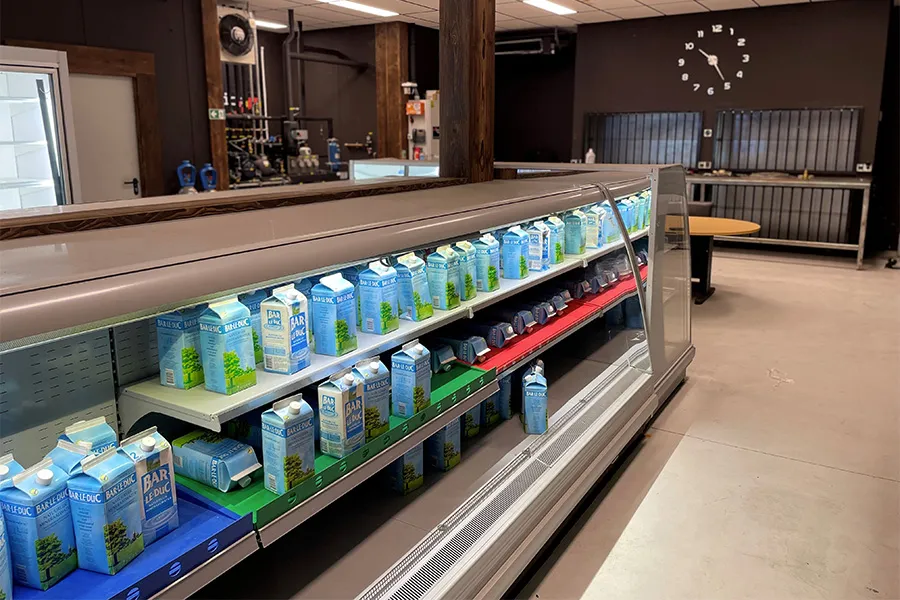
Official STEK certificate
The theory is put into practice on the CO2 system with cold rooms and a refrigerated display case at Studium’s site in Nijkerk, Koelewijn explains. “The STEK exam is also held on the same system. Participants who pass receive an official STEK certificate, valid for five years. As the course covers systems containing more than 25 kg of CO2, successful participants are permitted to work on all CO2 systems.”
Question about this story? Ask your question
Keep following this
Get an email when a new story is published. No account needed.
- ThemeGas-free heating and cooling
- SubjectHeat pumps