Going gas-free is also possible in a 1930s home!
Text Lieke BousemaImage Alklima
From floor and cavity wall insulation to underfloor heating and a heat pump:
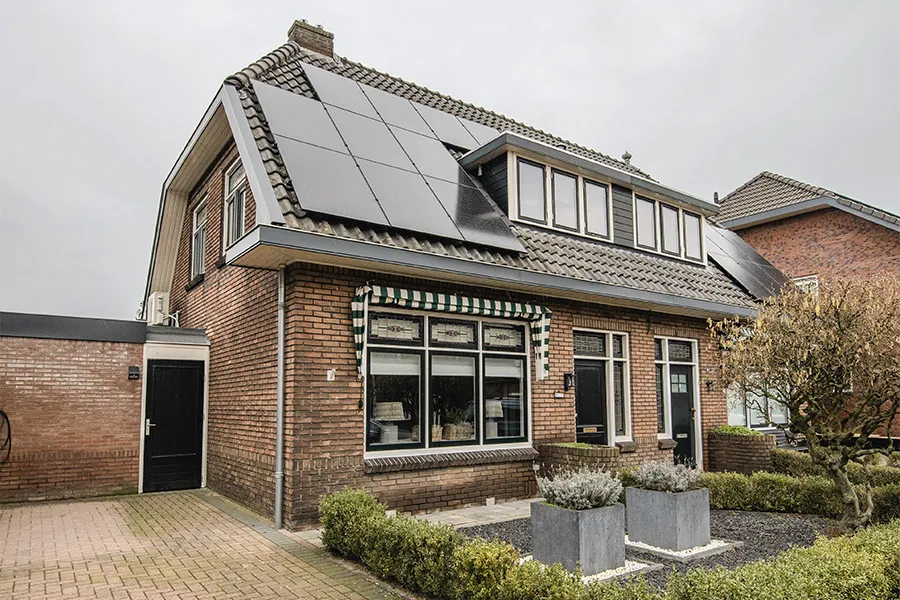
Unlike modern homes, many older properties still have a natural ventilation system. They ‘breathe’ through gaps and cracks, allowing a great deal of heat to escape from inside to outside. This initially makes them unsuitable for an all-electric heat pump. With the right measures, however, all-electric living is within reach. Even in 1930s homes. The Ensink op Kemna family in Hengelo is proof of this.
Chantal Ensink op Kemna and her husband bought their 1930s home around fourteen years ago. As the semi-detached house was dated, they immediately embarked on a major renovation, replacing all the window frames with new ones fitted with HR++ glazing. They also extended the dormer windows and upgraded the electrical and mechanical services. “In the years that followed, we also insulated the cavity walls. Two years ago, we replaced the last front window with HR++ glazing.”
Upgrade to all-electric
New renovation plans took shape in 2021. “We wanted a new kitchen with a different layout,” says Ensink op Kemna. “We also started thinking about going all-electric. Gas prices have risen sharply over the past four years or so. As a result, our fixed monthly costs for gas alone had reached €500-700. We were keen to do something about that, especially with gas prices expected to keep rising in the future. Friends of ours with extensive knowledge of mortgages and insurance advised us not to wait too long, as mortgage rates were also on an upward trend. So in July 2021, we decided to use the equity in our home, at a favourable rate, to fund further renovation and energy-efficiency improvements.” Work began in April 2023.
Fewer defrost cycles
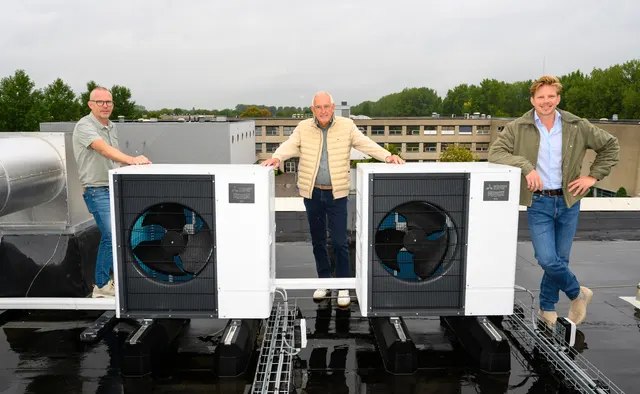
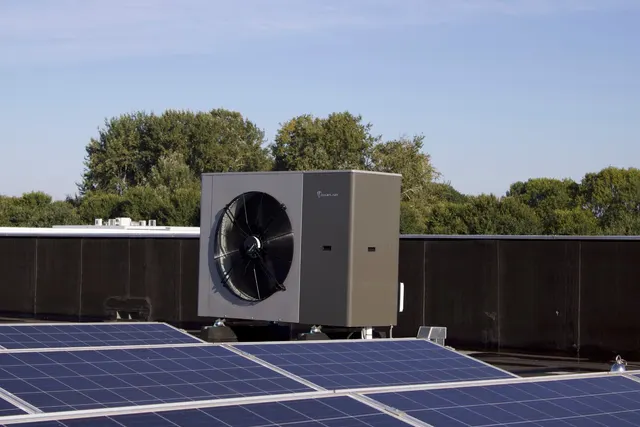
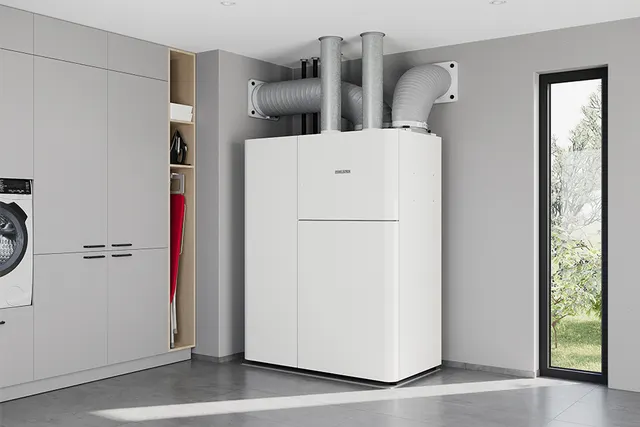
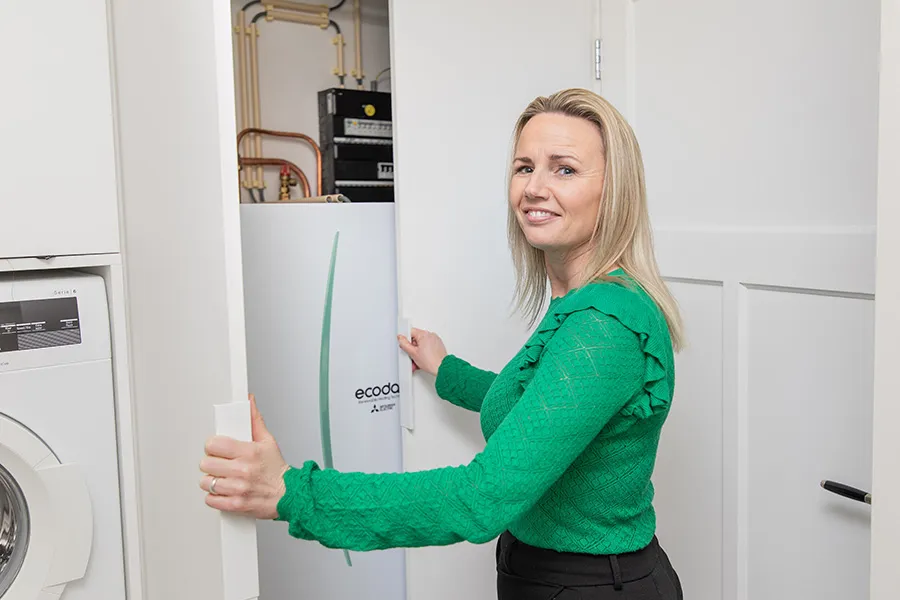
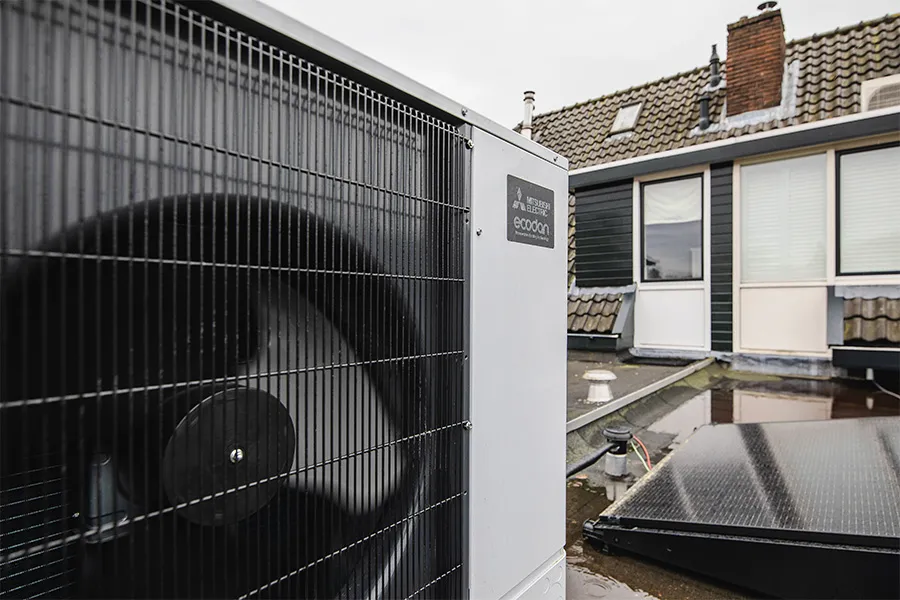
In recent months, the ground floor of the 1930s home, including the utility room, has undergone a major renovation. “The timber floors were removed and replaced with 60 cm of foam concrete, underfloor heating and a screed around 7 cm thick,” says Ensink op Kemna. “This meant we could remove the individual radiators and the convector trench heater. We installed 23 solar panels on the roof to generate electricity for the home’s systems and our electric car.” A 7.5 kW Mitsubishi Electric PUHZ-SW75 YAA heat pump was installed to provide heating, cooling and domestic hot water, together with a 200-litre hot water cylinder.
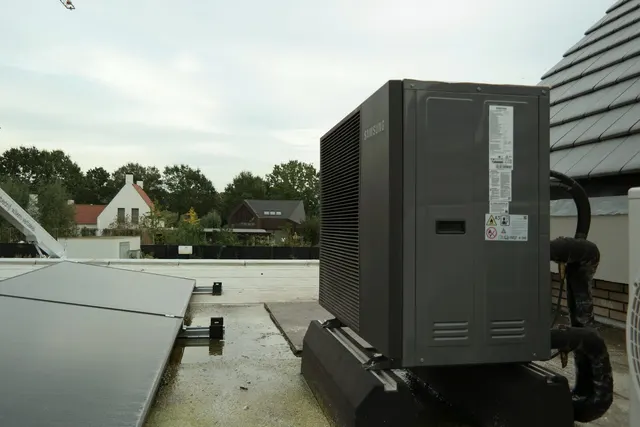
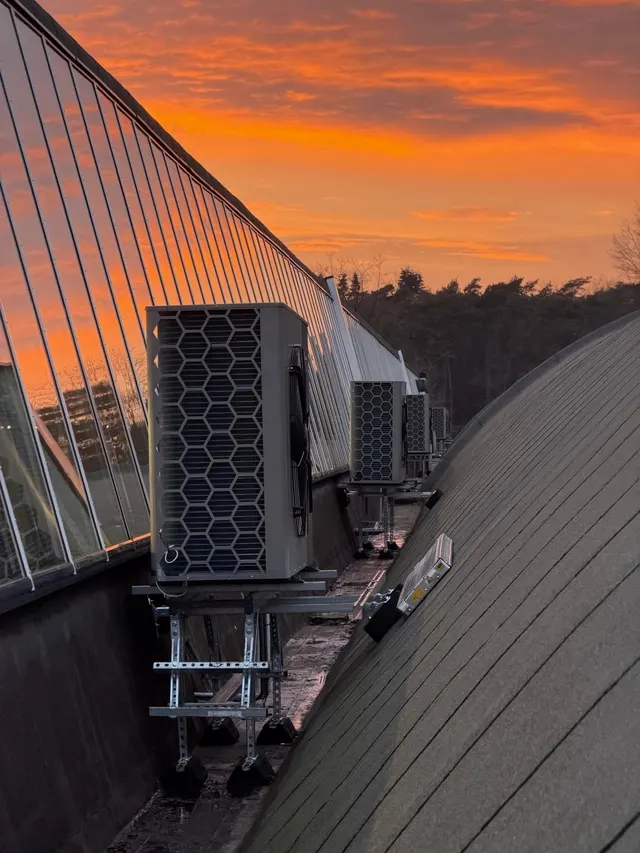
According to Ensink op Kemna, the heat pump was a logical choice because it needs fewer defrost cycles in heating mode. “This has significantly improved our comfort. Our home needs heating water at around 30-35°C. Combined with sufficient thermal mass in the floor, we find that, with the thermostat set to 19°C, we can keep the indoor temperature at a comfortable 20-20.5°C.” The heat pump is installed on a timber flat roof, but its mass and the vibration dampers mean that resonance is barely noticeable.
Air conditioning units on the upper floors
Following the work on the ground floor, the radiators in the bedrooms and a small office were also disconnected. “They were replaced with a multi-split air-conditioning system, comprising a Mitsubishi Electric MXZ-3F54 outdoor unit and three MSZ-AP20 indoor units,” says Ensink op Kemna. “This meant the gas pipe could be removed. For the past few months, we have heated and cooled the upper floor exclusively with air-conditioning units.” An air-conditioning unit was also installed on the ground floor, initially as a temporary measure to minimise gas consumption and bridge the period from 2021 to 2024. “Since the renovation, we only use the unit for cooling. The underfloor heating can also cool our home by a few degrees below the outdoor temperature. We used 20 mm underfloor heating pipes instead of 16 mm, allowing the floor to deliver more cooling capacity.”
The renovation and energy-efficiency improvements are now complete, and the Ensink op Kemna family is extremely satisfied. “It feels as though we have a completely different house. The comfort of even, underfloor heating is immense,” she says. “We no longer have to worry about high gas bills. We are also (almost) energy-neutral. Our home has increased in value, and we are prepared for the future. We would advise anyone facing the same decision to take similar steps now. The investment more than pays for itself.”
Question about this story? Ask your question
Keep following this
Get an email when a new story is published. No account needed.
- ThemeGas-free heating and cooling
- SubjectHeat pumps