How can we make the transition to heat pumps?
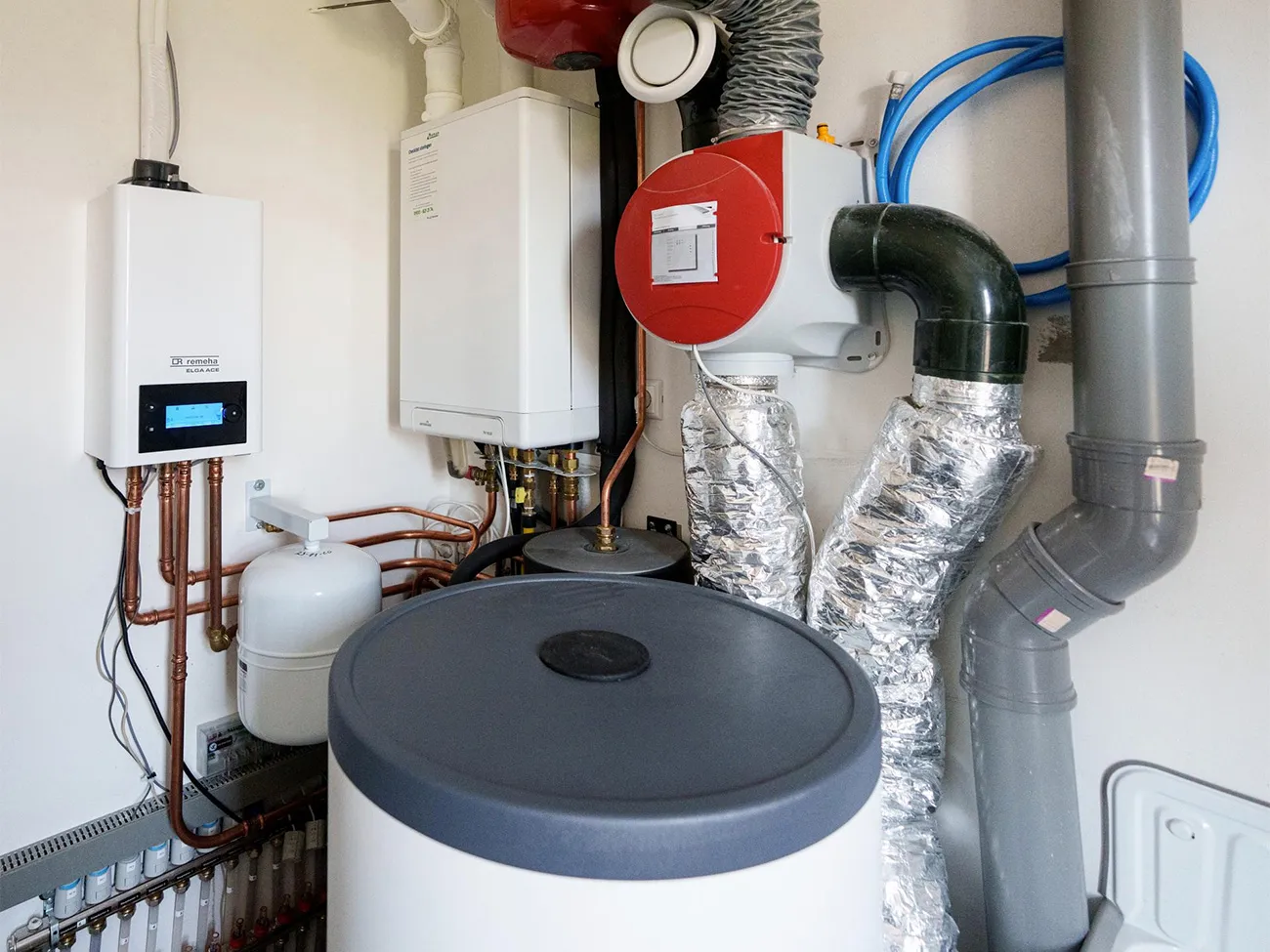
Step by step towards a natural gas-free Netherlands
The coalition agreement aims to cut CO2 emissions by 60% by 2030, and the Netherlands must be fully climate-neutral by 2050. This is one of the reasons why the government decided to make hybrid heat pumps the standard from 2026. They can deliver substantial reductions in both natural gas use and CO2 emissions. They are a good way to start taking gradual measures in all neighbourhoods where fully natural gas-free options for making buildings more sustainable will not yet be available by 2030. How can the sector tackle this, and what does it mean for consumers?

The government’s plans will require a major shift for installers. Staff will need retraining, and consumers will also need to be given new information. This raises the question: is switching to a heat pump feasible for households? In many cases, the home will need to be adapted, and heat pumps are expensive. However, according to the Netherlands Enterprise Agency (RVO), it is feasible to introduce the plans in 2026. “We have been in talks with the sector for a long time, and those discussions led to the Hybrid Heat Pump Action Plan, which climate minister Rob Jetten recently presented. A broad group of organisations is considering the ambitions we want to achieve. It is true that this will be a major change for consumers and the installation sector. That is why we are taking it step by step,” says Roelant Knauff, coordinator of the hybrid heat pump team at RVO. His colleague Lex Bosselaar, an expert in sustainable heating at RVO, believes that resistance in some quarters can be overcome: “When high-efficiency boilers were introduced, there were all kinds of objections, including concerns about the high cost. Now, you can only buy high-efficiency boilers. Heat pumps will become the standard in the future. The government is helping to make them affordable, including through subsidies and the Energy-Saving Loan from the National Heat Fund, which offers low-interest loans.” (www.warmtefonds.nl/particulieren/energiebesparende-maatregelen/warmtepomptefonds)
ISDE subsidy
Consumers can apply for the Sustainable Energy Investment Subsidy (ISDE) (www.rvo.nl/subsidies-financiering/isde) to receive a 30% rebate on the purchase of a heat pump. Consumers can apply for the subsidy themselves or authorise their installer to do so on their behalf. Several conditions must be met: the applicant must own the home, which must be their main residence. The heat pump must also be listed on the approved products list, which can be found on the RVO website (www.rvo.nl/subsidies-financiering/isde/woningeigenaren/stappenplan-woningeigenaren). The website also provides a step-by-step guide to applying for the subsidy. “The subsidy cannot be deducted from the invoice. The money is paid into the consumer’s account after they apply, so they have to pay the amount upfront,” warns Bosselaar.

Scaling up and retraining
The ultimate aim is to equip one million households with hybrid heat pumps, alongside 500,000 connections to heat networks and other energy-saving measures. This will enable the climate targets to be met. Although the number of ISDE applications is rising (41,040 in 2021, more than 37,000 up to and including June 2022, and more than 80,000 expected in 2022), there is still a long way to go. This means there is plenty of work ahead for the installation sector, even as it already faces a labour shortage and a shortage of materials. How should we deal with this?
Scaling up and retraining are the answer, Bosselaar believes. “The industry needs to know what is coming, installers need to upskill, and consumers need to know what choices are available. That is why this is a multi-year plan. We are working with the sector to find solutions.” According to the RVO experts, installers have a very important role to play. They need to know not only what types of heat pumps are available and how to install them, but also how to give consumers the right advice. “Training is available for this, for example through Techniek Nederland, and various heat pump brands also offer training. Installers looking for more information can visit the energy transition by installers platform (www.energietransitiedoorinstallateurs.nl),” says Knauff.
Question about this story? Ask your question
Companies in this story
Keep following this
Get an email when a new story is published. No account needed.
- ThemeGas-free heating and cooling
- SubjectHeat pumps
- CompanyTechniek Nederland