Hybrid systems are the route to an all-electric future
Boilers automatically adapt to gas quality
Vaillant and other major heating-system manufacturers would prefer the energy transition to take place via hybrid systems as an intermediate step. The Netherlands’ building stock does not allow everyone to switch to all-electric systems. The German manufacturer is already preparing for this with modern, smart heating systems that automatically adapt to different gas qualities. Homeowners will be able to enjoy them for many years to come, while benefiting from much lower energy bills.
“Cities and regions are already working hard on plans for future heat supply,” says Ronald Mazurel, Manager Product Management at Vaillant. “For 30 regions in the Netherlands, decisions are being made about which energy sources will be available in different neighbourhoods in the future, such as district heating, biogas, green gas or hydrogen. The broad outlines are becoming clear, but nothing has been finalised yet. These plans are often for the long term, so they won’t get the energy transition off the ground now. We need steps that can be taken more quickly and are manageable. Hybrid systems can provide that intermediate step towards an all-electric future.”
Housing stock by construction period
Mazurel says the energy transition is best explained by looking at the housing stock in terms of construction periods. “We distinguish three main groups of homes where this is possible. The newest generation, built from 2006 onwards, can in principle go all-electric, if it hasn’t already. This means replacing the central heating boiler with a heat pump and a hot water cylinder. These homes generally require little additional investment in insulation or the heat distribution system. The government offers substantial subsidies for the purchase. The second group was built between 1992 and 2005. These homes could already be moving towards all-electric. Existing central heating boilers can be retained, with a somewhat larger heat pump (10 to 12 kW) installed alongside them, which can take over from the boiler later. In the meantime, the home can be better insulated and the heat distribution system improved where necessary.”
A boiler ready for the future
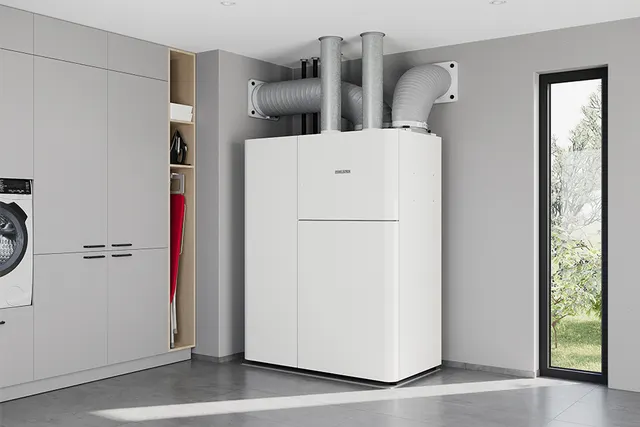
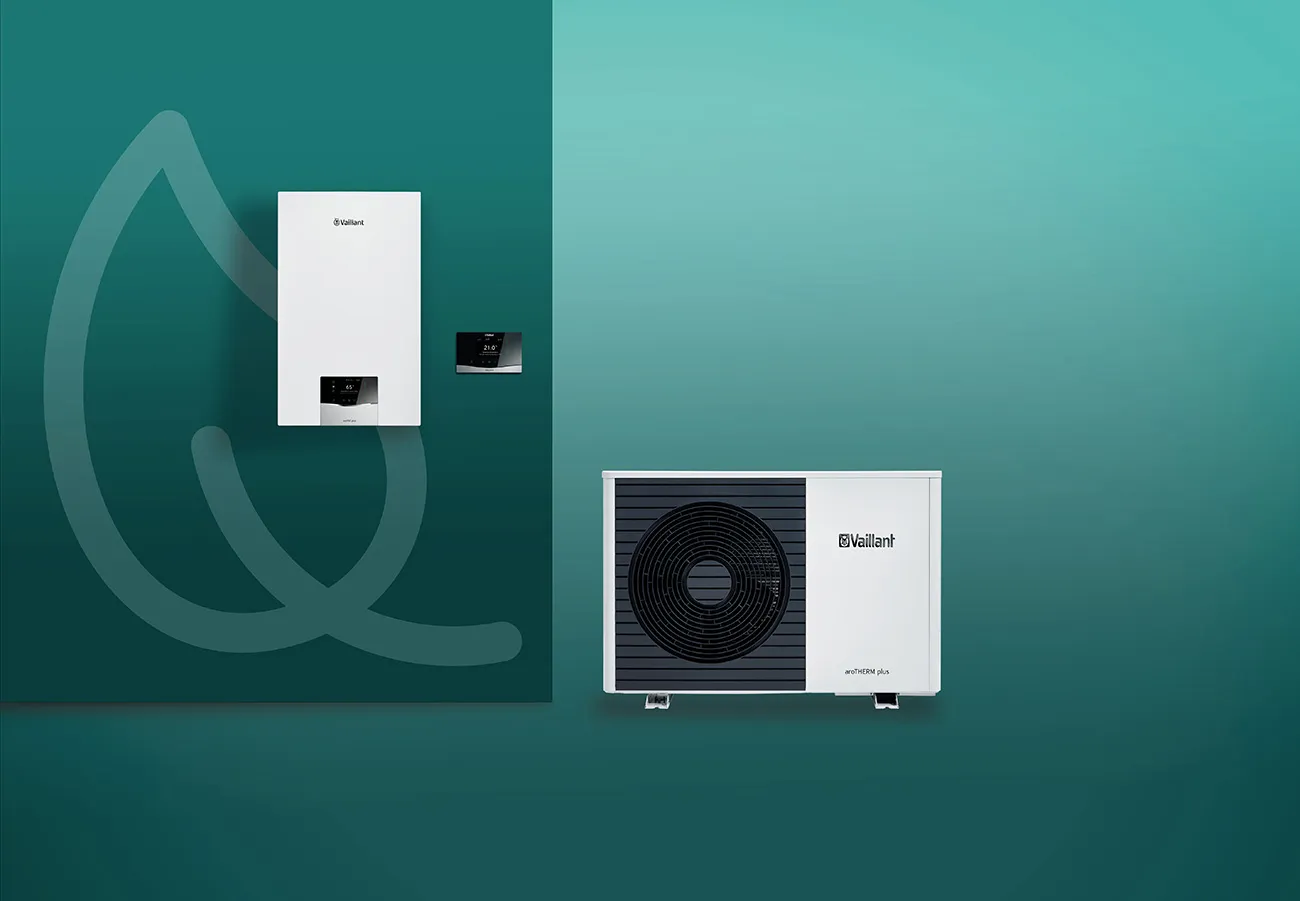
It becomes more difficult with the third group, homes built between 1965 and 1991. Mazurel: “There are around three million of these homes. Going all-electric in this category can be costly, which is why we support a strategy we call ‘green gas ready’. This involves a somewhat smaller heat pump and a smart central heating boiler that can handle different gas qualities. A good example is our ecoTEC plus boiler, which can, for instance, run on natural gas blended with 20% hydrogen. If that hydrogen is also produced sustainably, this is a highly sustainable solution. The IoniDetect system monitors gas quality and automatically adjusts combustion to match it. This makes the boiler future-proof.”
Hydrogen?
For Mazurel, a future in which hydrogen is used as a fuel for central heating boilers is still some way off. “At some point, boilers will be available that run on natural gas but can be converted to run on 100% hydrogen. That will still take a long time. The infrastructure will also need to be adapted. Gasunie is converting one of its three backbones to hydrogen, initially for supply to industry. All boiler manufacturers are already working on developing central heating boilers for hydrogen, but that too takes time. So, for now, the priority is to replace boilers with smart, efficient models and combine them with a heat pump.”
Bivalent control
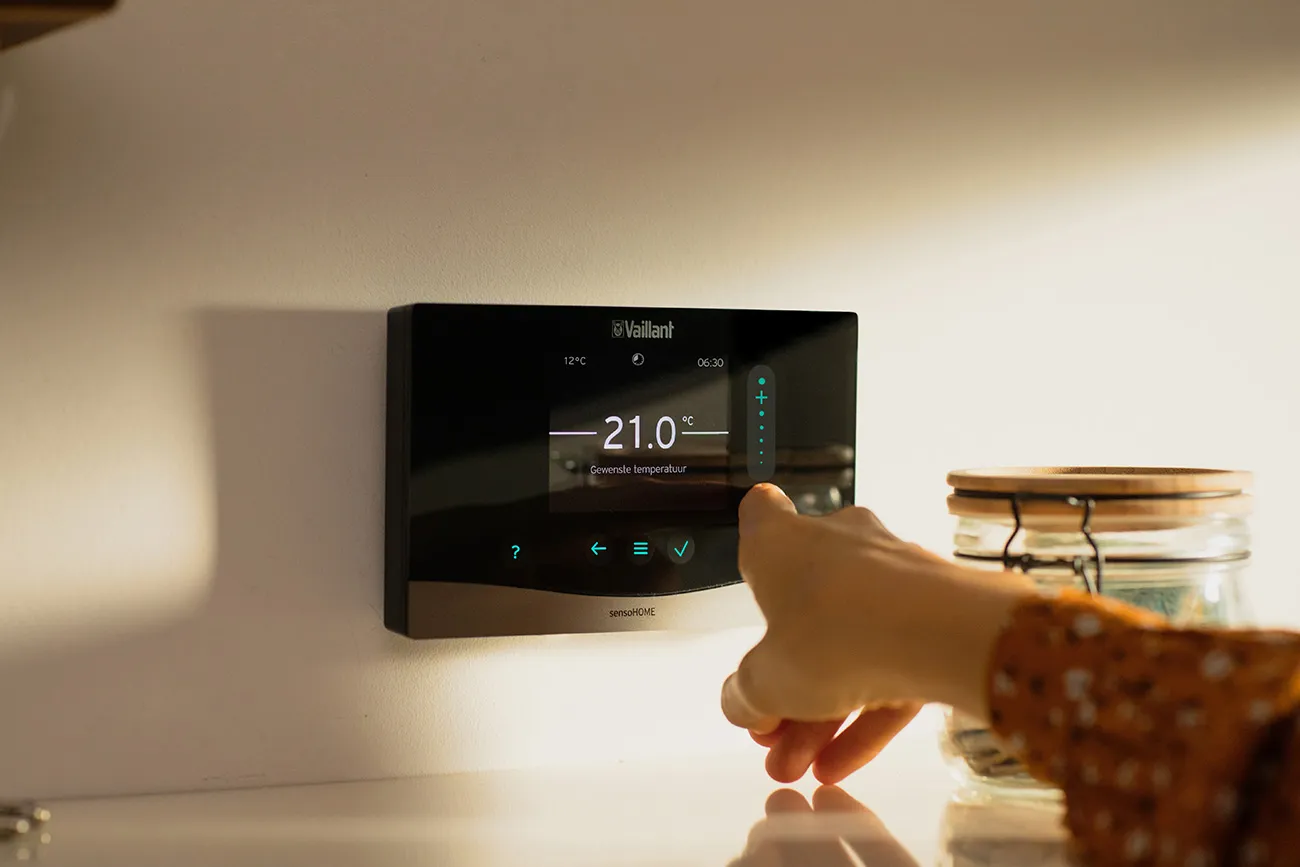
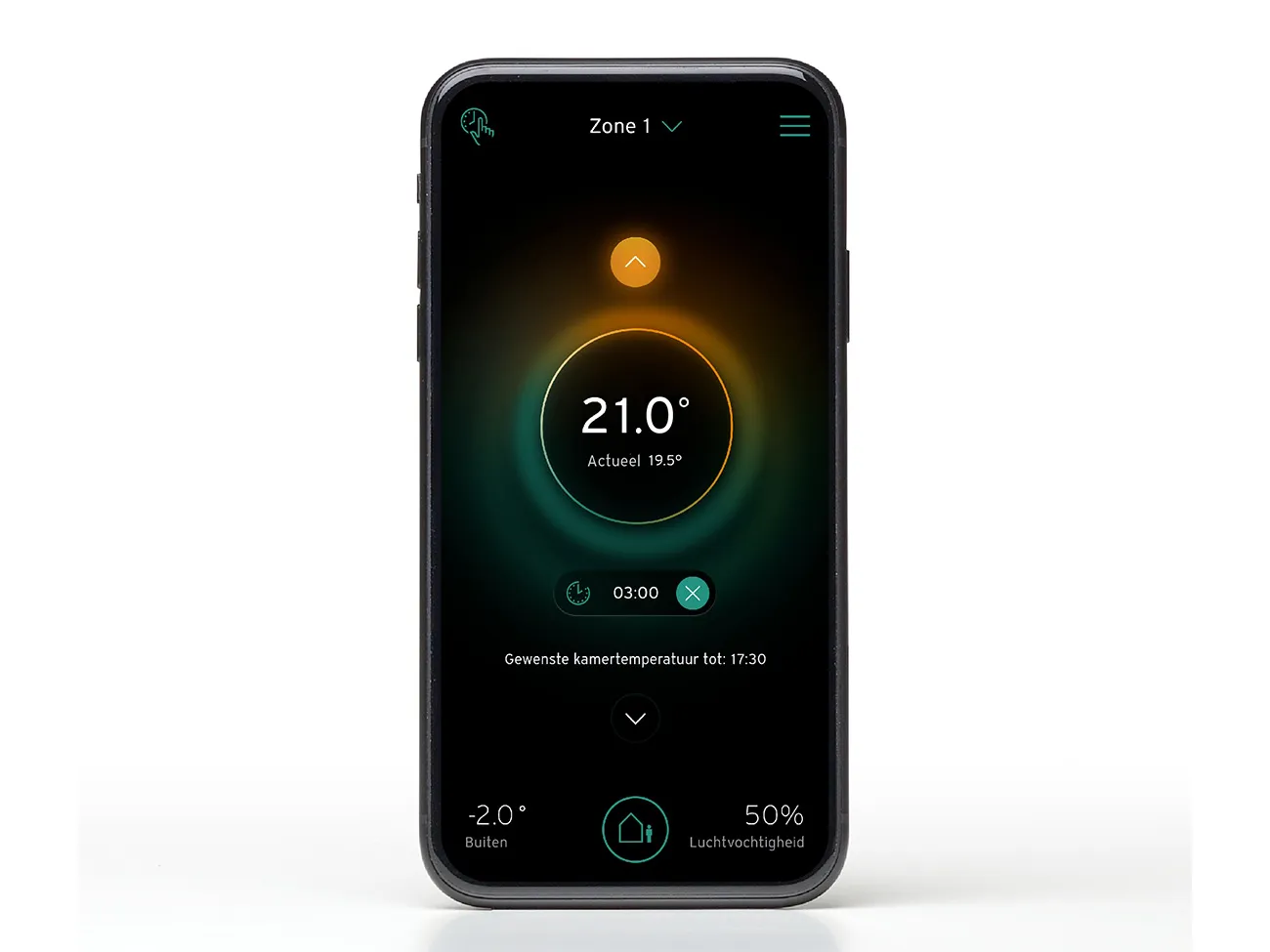
Vaillant has been manufacturing its own heat pumps since 2000. Mazurel: “They embody more than 140 years of experience in heating technology. We engineer the entire heat pump and manufacture many of its components ourselves to German quality standards. We test our products against standards and requirements that are more stringent than the industry norm. This sets Vaillant apart in the market. I would also like to highlight the flexibility built into our hybrid systems. Smart hybrid control lets users choose between an economic optimum (TriVai) and an ecological optimum (bivalent). In the first mode, the system uses the gas and electricity prices entered by the user to calculate whether it is cheaper to run the boiler or the heat pump. With the most ecological setting, the heat pump provides the heating and the central heating boiler only cuts in when the heat pump can no longer keep up. This can all be controlled easily, even remotely, using the sensoHOME room thermostat or the sensoApp.”
Question about this story? Ask your question
Keep following this
Get an email when a new story is published. No account needed.
- ThemeGas-free heating and cooling
- SubjectHeat pumps