Integrating air handling and heat pumps: far from straightforward
Text Chris ElbersImage Horos Klimaattechniek
‘It’s about finding the right balance between comfort, investment and energy consumption’
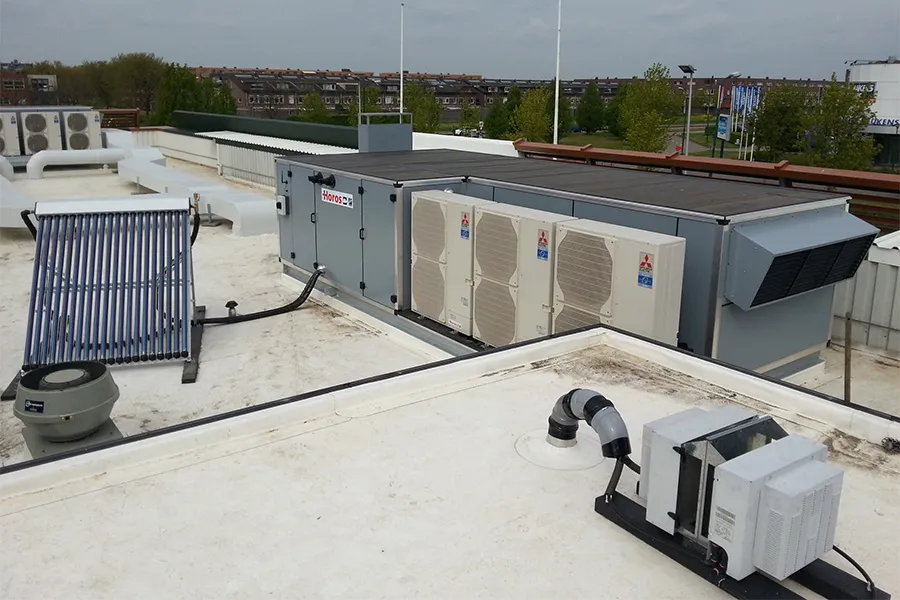
With the rise of direct expansion (DX) heat pumps, the traditional combination of an air handling unit and a boiler/water chiller is becoming a less common choice. Cost is a key factor in the growing popularity of pairing a heat recovery unit with a DX inverter heat pump. Even so, choosing this type of system is not always straightforward, and there are several factors to consider before buying one. Harry van Veen, director of Horos Klimaattechniek in Soest, outlines the main ones.
Since 1952, Horos Klimaattechniek has offered a broad range of indoor climate solutions for commercial and industrial premises. The company primarily supplies high-quality products for air handling, cooling and humidification. Horos regularly helps address indoor climate and industrial application challenges in these areas.
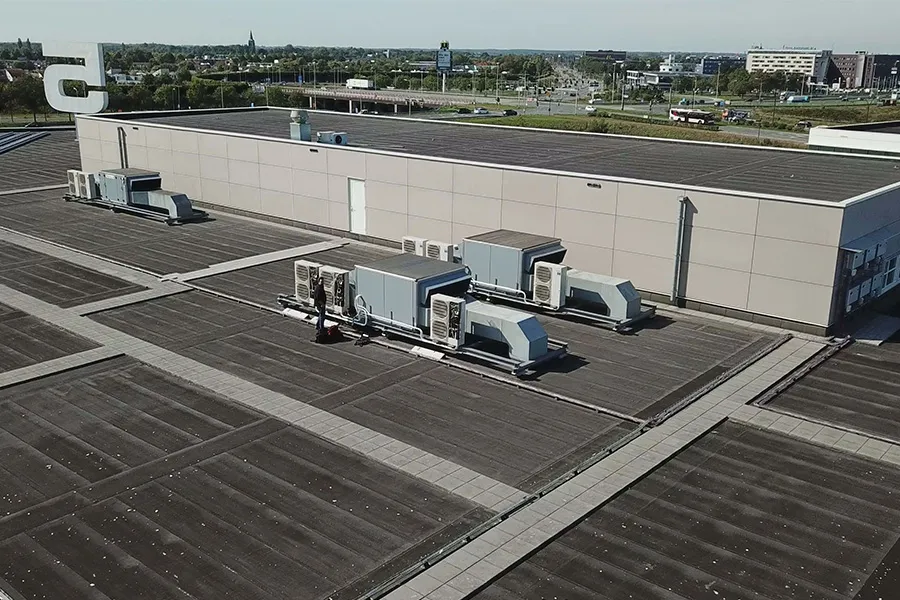
The choice
In recent years, this has often been the case when a combination of an (inverter) heat pump and air handling is proposed as the ideal solution. “Since heat pumps were introduced at the end of the last century, smaller users in particular have increasingly moved away from passive cooling using a cold source in summer, combined with a water-to-water heat pump for winter, which may or may not be connected to the same source,” says Van Veen. “It’s an excellent solution, especially when you consider the purchase and installation costs. After all, you no longer need a chilled water circuit and all its associated components, such as buffer vessels, pumps and expansion vessels. What’s more, in most cases the system is supplied on a plug-and-play basis.”
A caveat
Switching from a water chiller to an (inverter) heat pump offers a number of advantages for both installers and end users. But all that glitters is not gold. Drawing on more than 70 years of experience, Horos has observed that certain factors are often overlooked in the market. As a result, comfort and controllability, and therefore system reliability, can be compromised, says Van Veen. “The major advantage of using a water chiller as a heat pump is that its capacity can be modulated very precisely from 0 to 100 per cent using a control valve. A DX heat pump can also be modulated, but only from around 25 per cent upwards.”
Secondly, a heat pump is always sized for the cooling capacity required in the summer months. “This means you always have excess capacity in winter, simply because the required heating capacity is lower than the cooling capacity you need in summer,” Van Veen explains. “As a result, during the colder months the heat pump operates at the lower end of its control range, because less capacity is required. When demand falls below a certain level, the heat pump switches off, temporarily blowing cooler air into the building.”
Thirdly, a heat pump needs to defrost regularly in winter. As this reverses the system’s cycle, the supply air temperature can fall below 10ºC, causing draughts. Van Veen says: “This is an inconvenience that does not last long, but is certainly far from comfortable. One solution is to divide the heating capacity into multiple circuits. This improves comfort, but also adds to the cost.”
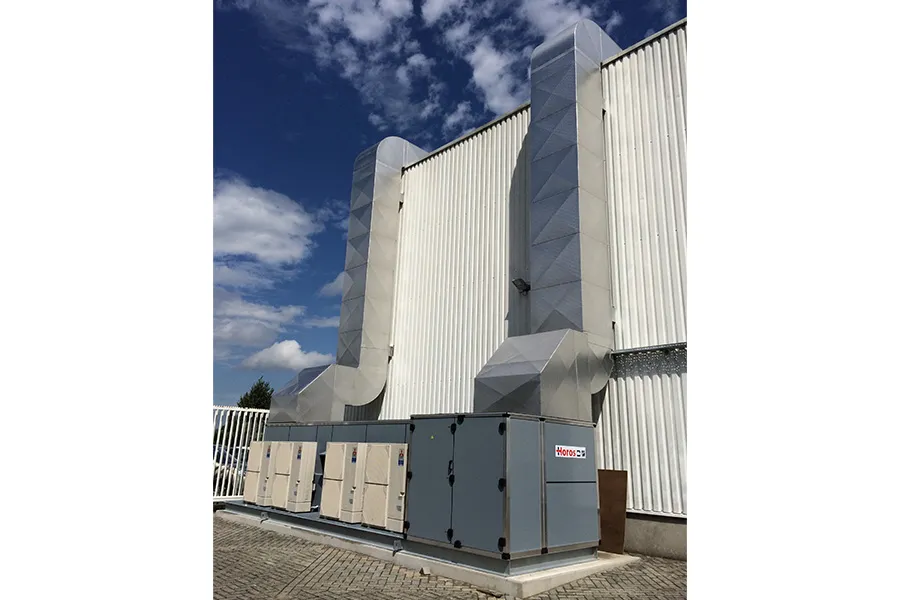
A happy end user
Van Veen’s account shows that the relatively low-cost combination of an inverter heat pump and an air handling unit is not a given. Other solutions and options are also possible, he says. “One option is an air-to-water heat pump, which is eligible for EIA tax relief. But combining an air handling unit with a reversible water chiller remains a viable option too. The aim is to strike the right balance between comfort, capital investment and energy consumption. There are several ways to achieve this. The end user needs to be happy with the result. That’s our priority.”
ISDE and EIA subsidies
Air-cooled water-source heat pumps <400 kW are eligible for ISDE subsidies of up to 34,000 euros. EIA tax relief applies to plug-and-play heat recovery units fitted with integrated and external DX heat pumps.
Question about this story? Ask your question
Keep following this
Get an email when a new story is published. No account needed.
- ThemeGas-free heating and cooling
- SubjectHeat pumps