Technical training that can be applied directly in practice
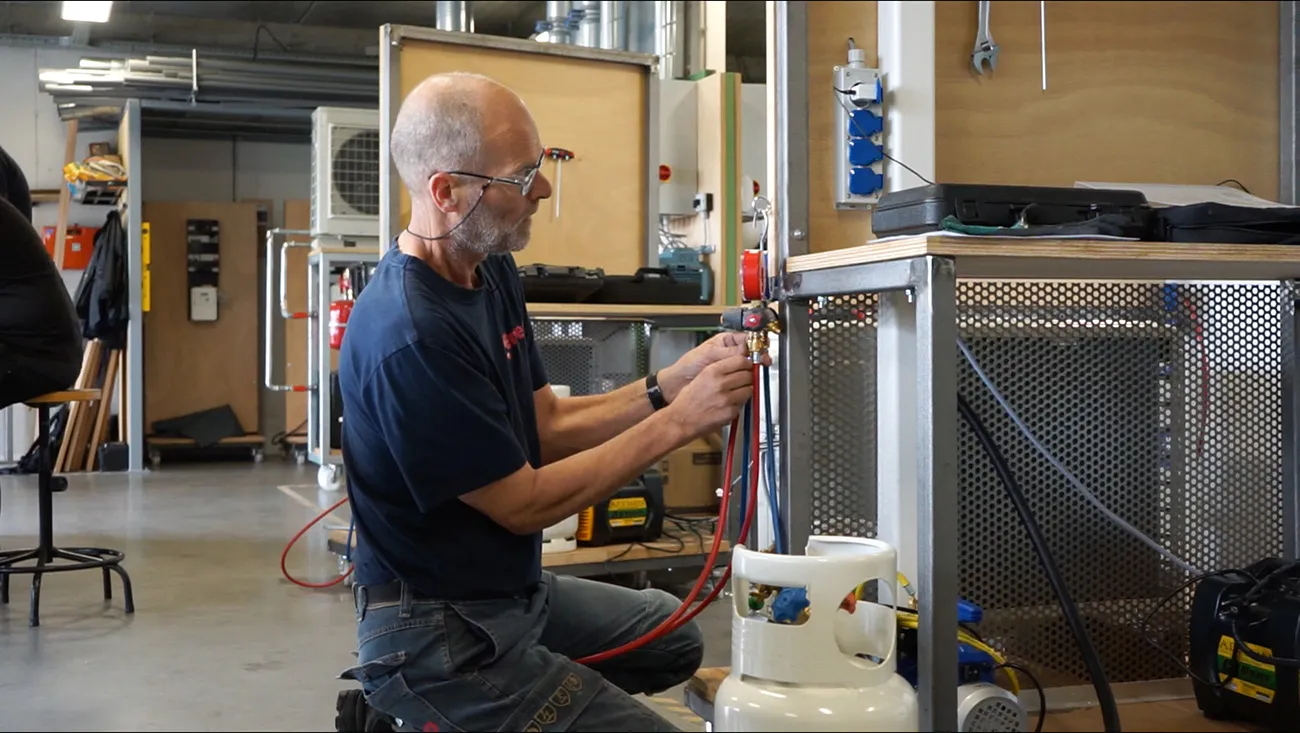
Well-trained staff are vital to every business. It is important to keep up to date with the latest developments and techniques. That is why Studium offers practical, hands-on training that lets you experience the technology for yourself. Not just theory, but training that you can put into practice.
Studium offers a range of courses in refrigeration technology, climate control, electrical engineering, logistics and safety. They are held in the practical training facility in Amersfoort, where learners can work on a variety of systems, including electrical installations, refrigeration systems and heat pumps. Peter Koelewijn of Studium believes the latter are particularly important for the future. “Many young people want to retrain to work with heat pumps, because that is where the future lies. This is especially true given the energy transition, rising gas prices and the fact that hybrid heat pumps will become mandatory from 2026.”
F-gases
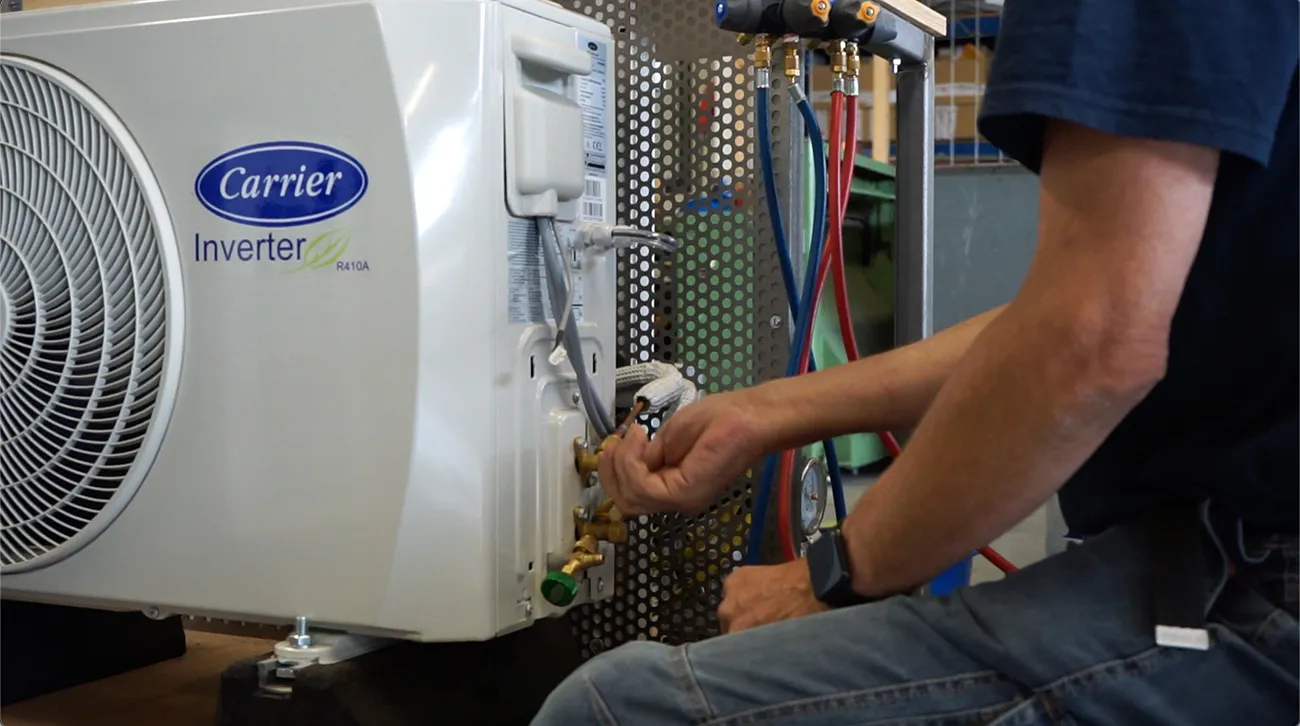
Heat pumps use refrigerants. To work with them, you need an F-gas certificate. Studium offers courses for F-gas categories 1 and 2. Koelewijn explains: “With a category 1 F-gas certificate, you can work on almost all heat pumps and refrigeration systems using synthetic refrigerants. Category 2 is intended for smaller systems with a refrigerant charge of up to 3 kg.” The training facilities in Amersfoort are specifically set up for categories 1 and 2. Refrigeration equipment and tool kits are ready for every learner. Courses run during the day or in the evening, in groups of 8. Category 2 takes 7 days or 14 evenings, while category 1 takes 10 days or 20 evenings.
Hydronic balancing
Naturally, covering the theory is important, but Studium gives equal attention to practical training. Koelewijn says: “There is much more to working on a heat pump than F-gases. Hydronic balancing, for example, needs to be much more precise than with a central heating system because you are working at low temperatures. We have a system with a heat pump and heat emitters that learners can use to practise hydronic balancing. This familiarises them with the work.”
High pass rate
People travel to Amersfoort from all over the country for training. Studium considers it important to stay fully up to date with the latest developments itself. The team keeps a close eye on them, says Koelewijn. “We are currently looking at how to offer a combined course covering F-gas category 2, hydronic balancing, and the installation of a heat pump or central heating boiler. We are committed to offering our learners the best training, which they can put to use at work straight away. Our pass rate is very high, and there is a good reason for that.”
Question about this story? Ask your question
Keep following this
Get an email when a new story is published. No account needed.
- SubjectHeat pumps