











Heating with air conditioning: the 5 most frequently asked questions
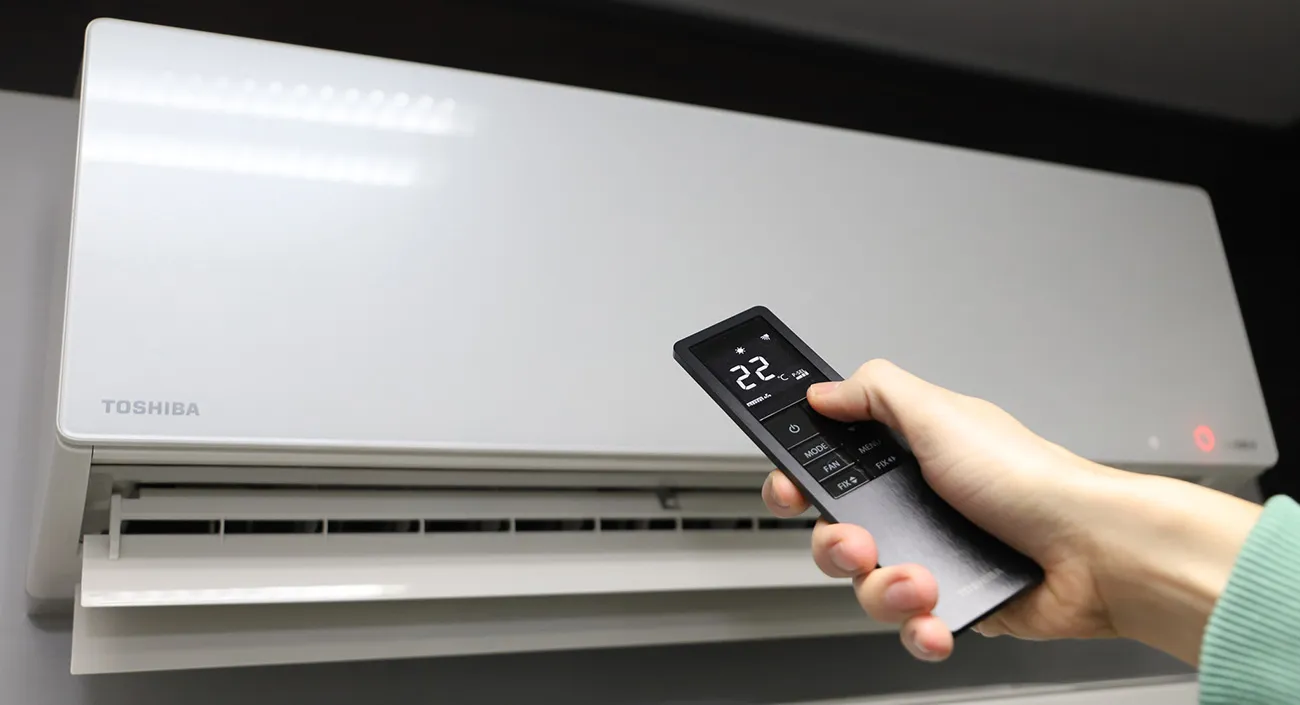
It is a familiar problem by now: energy costs spiralling out of control. Energy prices have risen so sharply recently that there is no way to cut back enough to keep up. This is making supplementary heating with an air conditioning system increasingly popular. What many people do not know is that an air conditioning system can heat very efficiently in winter. How does it work? And how efficient is it in practice? We have listed the 5 most frequently asked questions about heating with air conditioning.
1: How does heating with air conditioning work?
An air conditioning system can also operate as a heat pump. An air conditioner that can heat is therefore also known as an air-to-air heat pump. The system consists of an indoor unit and an outdoor unit. To heat a space, the outdoor unit extracts heat from the outside air. This heat is transferred to the indoor unit, which releases it into the indoor air and distributes it around the room. The system therefore makes use of the heat contained in the outside air. It uses no fossil fuels, making it a highly environmentally friendly and extremely efficient electrical appliance. In most cases, an air conditioning system is used for supplementary heating.
2: Is heating with air conditioning cost-effective?
Absolutely! The only energy consumed is the electricity needed to circulate the refrigerant and run the fans. For example: The air conditioning system uses 1,000 watts of electricity to transfer 4,000 watts of heat. This gives it an efficiency of as much as 400%. That is far more efficient than the average central heating system, which often achieves no more than around 96% efficiency.
3: Why doesn’t warm air come out of the air conditioning unit straight away?
This is because the system needs to preheat. Think of an oven: that does not heat up instantly either. In most cases, the unit reaches operating temperature after 1 to 2 minutes and starts blowing warm air into the room.
4: Why does the heat from an air conditioning system feel different from heat from, for example, a radiator?
This is due to the difference between radiant heat and warm air. A radiator can reach 80 degrees, which is known as high-temperature heating. An air conditioning system operates at around 35 degrees, so it is known as low-temperature heating. Because a radiator can become so hot, it produces radiant heat, which also warms the room more quickly. In terms of how it feels, this is not comparable to the warm air produced by an air conditioning system. This blows warm air into the room at a lower temperature. Air is obviously not the same as radiant heat, and this means it also takes a little longer to heat the room. It is therefore advisable to keep the room at temperature.
5: Why does the air conditioning system sometimes suddenly stop?
This is due to the defrost cycle. When the air conditioning system is heating, the outdoor unit extracts heat from the outside air, as mentioned earlier. This makes the outdoor unit’s heat exchanger very cold, causing moisture that collects on it to freeze. If the air conditioning system occasionally stops for a short while, the outdoor unit is defrosting. This is necessary to allow air to flow through the outdoor unit’s heat exchanger again afterwards.
A business enquiry for Schilt bedrijven? Get in touch
Companies in this story

Keep following this
Get an email when a new story is published. No account needed.
- ThemeGas-free heating and cooling
- SubjectHVAC
- CompanySchilt bedrijven







