











High-temperature heat pump for existing homes: the quiet, green solution for gas-free heating
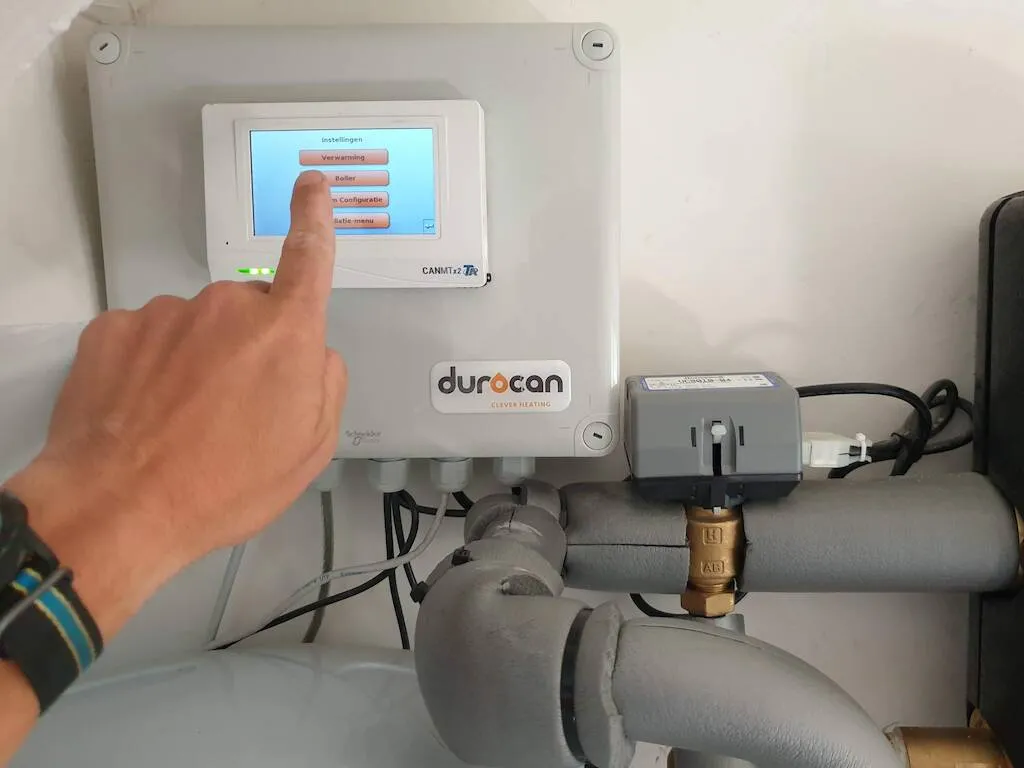
Sustainability and energy efficiency are hot topics in construction. Following the mandatory measures for new-build homes, more and more existing homes are also being upgraded. The Energiemonitor 2021 shows that no fewer than 81% of consumers have already implemented one or more energy-efficiency measures. The most popular are cavity wall insulation (38%), roof insulation (37%), HR++ glazing (35%) and solar panels (27%). More and more homeowners are also exploring the possibilities offered by heat pumps. Durocan has developed a high-temperature heat pump system specifically for this market, which can be connected without difficulty to existing central heating pipes and radiators.
A high-temperature heat pump is generally considered when an existing central heating boiler reaches the end of its technical service life, says Rik van Bavel, founder of Durocan. “Interest is also growing among homeowners who want to make more efficient use of the electricity generated by their solar panels. Our heat pump is also ideally suited to hybrid systems.”
Small footprint
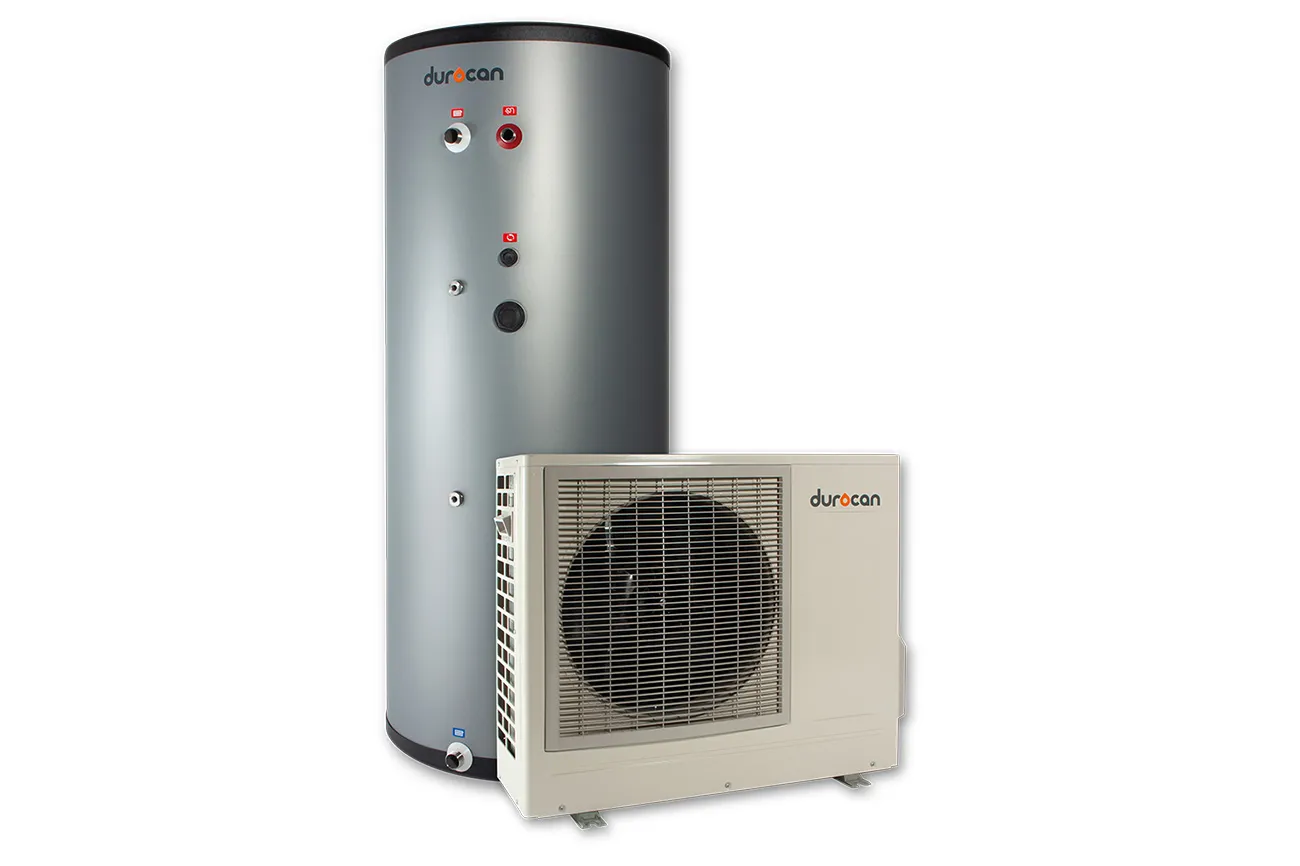
Heat pumps generally take up a lot of space, while the area available for the central heating system is often limited to a cupboard or loft space that also serves as a bedroom or study. Durocan offers a smart solution. “The advantage of our system is that the space occupied by the central heating boiler can easily be used to install a wall-mounted hot water cylinder and an open header”, says Van Bavel. “As well as ensuring good hydraulic balance, the header efficiently separates out any dirt or air. No additional installations are needed, so the system has a small footprint in the home.”
Comfortable and whisper-quiet
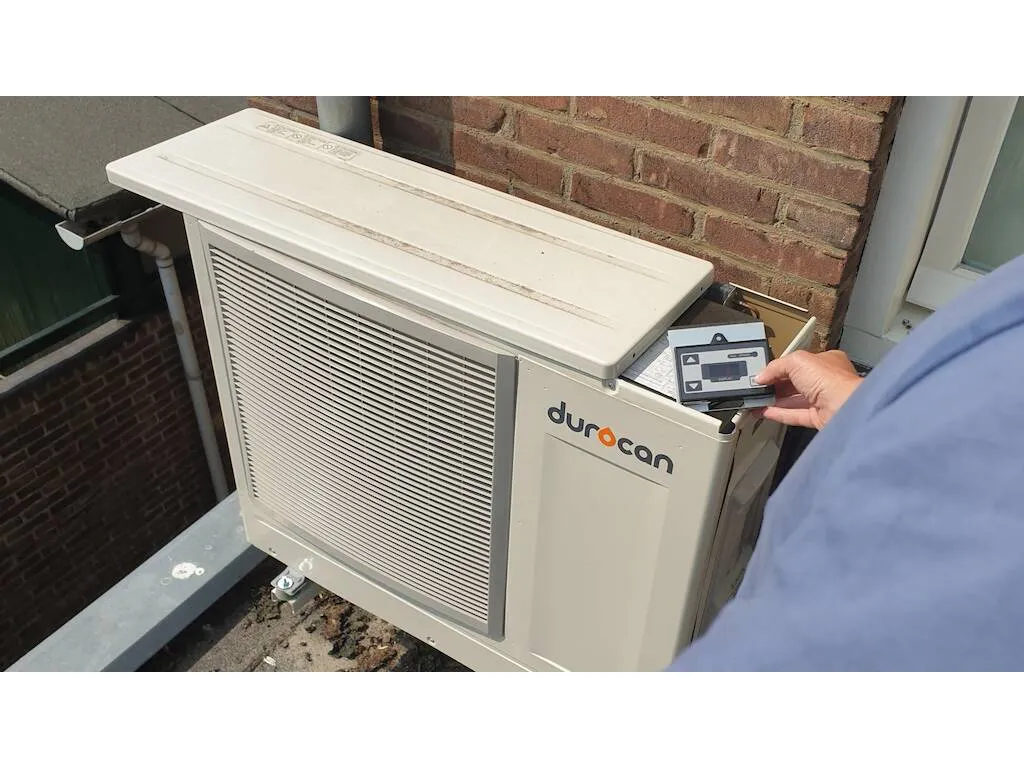
Depending on the home’s energy requirements, one or two monobloc outdoor units are installed outside. The standard outdoor unit, with a heat output of 4.5 kW, is suitable for both standalone (all-electric) and hybrid systems. “The outdoor unit can produce water at up to 78°C, even when the outside temperature is -20°C”, says Van Bavel. “This means the Durocan heat pump is ideally suited for use with existing ø22 mm central heating pipes and radiators, even where insulation is less than optimal. Homeowners do not have to compromise on comfort.” In his view, realistic temperature settings are a flow temperature of 60 or 65°C and a return temperature of 40 or 45°C (temperature difference/Delta T: 20°C), a range for which most radiators are designed. “This means that only minimal modifications to the home are needed. The outdoor unit is also low-maintenance and whisper-quiet. One outdoor unit produces a maximum of 37 dB(A) at 1 metre in night mode, while two outdoor units produce a maximum of 40 dB(A). This keeps us well within the limits.”
Components from leading brands
Durocan’s heat pump system consists solely of components from leading brands. In addition to the outdoor unit, the all-electric solution includes a 200- or 300-litre stainless steel hot water cylinder, an open header, a system centre and a circulation pump. “The system is supplied complete”, emphasises Van Bavel. “Only the pipework between the heat pump, cylinder and existing heat distribution system is not included, nor are the mounting brackets. This is a deliberate choice, because every home is different. The wiring between all the components is clearly labelled, making installation very straightforward. Installers do not need a STEK or F-gas certificate to connect the system. Durocan is pre-charged with the natural refrigerant CO2. Standard flow regulators are integrated to ensure high heat pump efficiency. The heat pump is also protected by hardware safeguards. This guarantees that the return temperature on the outside of the home remains below 43°C. While conventional heat pumps have a GWP of at least 1,430, our CO2 heat pump has a GWP of no more than 1. This makes Durocan the green alternative to gas and other heat pump systems.”
Hybrid system
The market is currently focused heavily on all-electric applications. In some cases, however, a hybrid solution is more cost-effective, says Van Bavel, for example when the existing central heating boiler is still relatively new. “The requirement for a hybrid Durocan system is that the central heating boiler has a circulation pump that can be controlled separately. Our hybrid systems operate on the principle of supplementary heating. Only the boiler’s circulation pump is used until the temperature in the boiler is measured as being too low. At that point, the burner switches on automatically.” The hybrid system is ideally suited to making more efficient use of solar power, he says. “It can also extend the service life of the central heating boiler. We believe that this, too, is sustainability.”
Innovative player
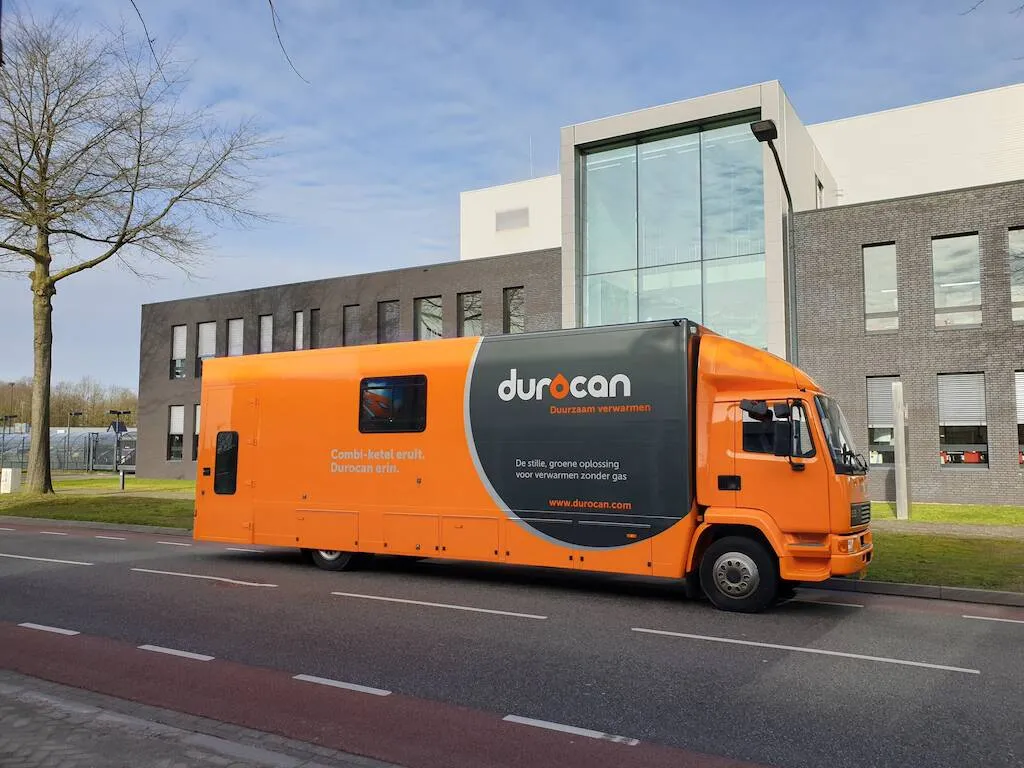
Durocan is an innovative player in the heating market. Following the CO2 heat pump, work is currently under way on smart pump control based on Delta T, which will enable even greater efficiency. Another highly innovative development is a lightweight plastic hot water cylinder, combining easy maintenance with a reduction in our waste streams.
Question about this story? Ask your question
Keep following this
Get an email when a new story is published. No account needed.
- ThemeGas-free heating and cooling
- SubjectHVAC







