











How to achieve efficient thermal destratification
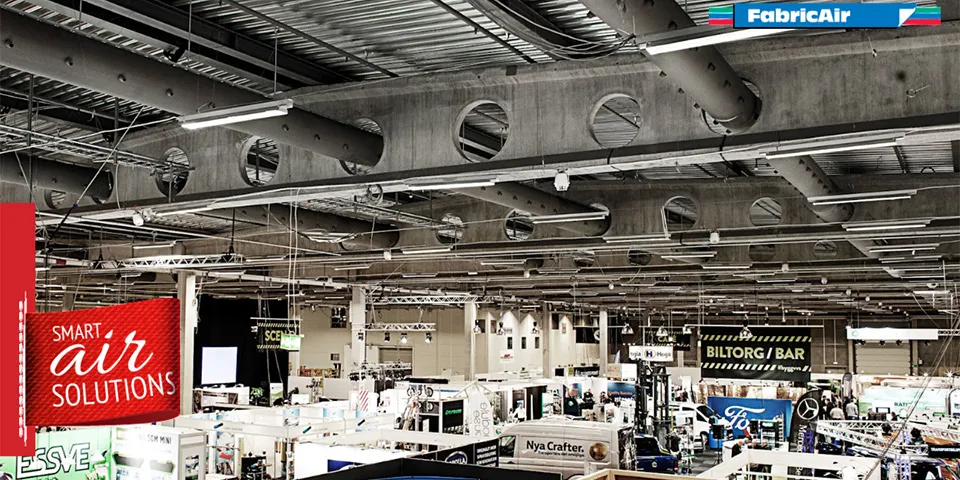
Efficient thermal destratification is essential for a comfortable indoor climate. When air is supplied through conventional metal ducts, this is difficult to achieve because their technological limitations result in stale air, along with hot or cold spots. Switching to a fabric-based air distribution technology efficiently solves this challenge.
Stratification, also known as the layering of different types of air, occurs in every space unless it is specifically addressed. Temperature rises from floor to ceiling because cold air is heavier than warm air.
Typically, the temperature difference is up to 1.5 °C per vertical foot. The higher the ceiling, the greater the temperature difference between floor and ceiling. Between the two, air remains in different layers. Destratification is the reverse of this process.
FabricAir air distribution technology delivers unmatched destratification, with a low temperature gradient throughout the conditioned space. This is achieved through a fully flexible design scheme encompassing profiles, fabric types, discharge patterns and suspension solutions.
Using artificial airflows to mix indoor air eliminates layers of warm, cold and/or stale air and equalises the temperature throughout the space, a process known as thermal destratification.
Even air distribution without unpleasant draughts creates the best indoor climate, and effective temperature compensation is an important aspect.
A large number of factors influence the optimum design for a particular project or application, such as the number of people, the processes taking place in the space, HVAC specifications, the location of supply and return air, solar gain and insulation against external weather conditions, among others. This is why choosing a flexible and versatile technology is crucial for effective thermal destratification.
By combining discharge patterns, we design the best airflow patterns for the space and the desired outcome. The ideal solution usually combines surface discharge patterns with patterns that provide a directed throw. In many cases, a high air-change rate at low velocity is preferred to achieve optimum comfort and a draught-free working environment. CFD is often used to check the effectiveness of the solution, particularly in more complex applications.
The bespoke FabricAir air distribution system is tailored to the specifications and arrives on site just two weeks after the order is released for production. It arrives ready for installation, with no need for additional damping, insulation, painting and so on. Combined with easy transport and a straightforward installation process, this results in savings of up to 70% on total installation costs.
Precise air discharge patterns and efficient thermal destratification also make FabricAir air distribution solutions a more energy-efficient alternative. Savings of up to 40% can be achieved simply by switching from metal-based ducts to FabricAir ducts.
This is why fabric-based air distribution technology is the most efficient way to achieve effective thermal destratification.
Een zakelijke vraag aan FabricAir® B.V.? Get in touch
Companies in this story
Keep following this
Get an email when a new story is published. No account needed.
- ThemeHealthy indoor air
- SubjectHVAC
- CompanyFabricAir® B.V.







