Infrared heating: the most effective route to comfortable, gas-free living
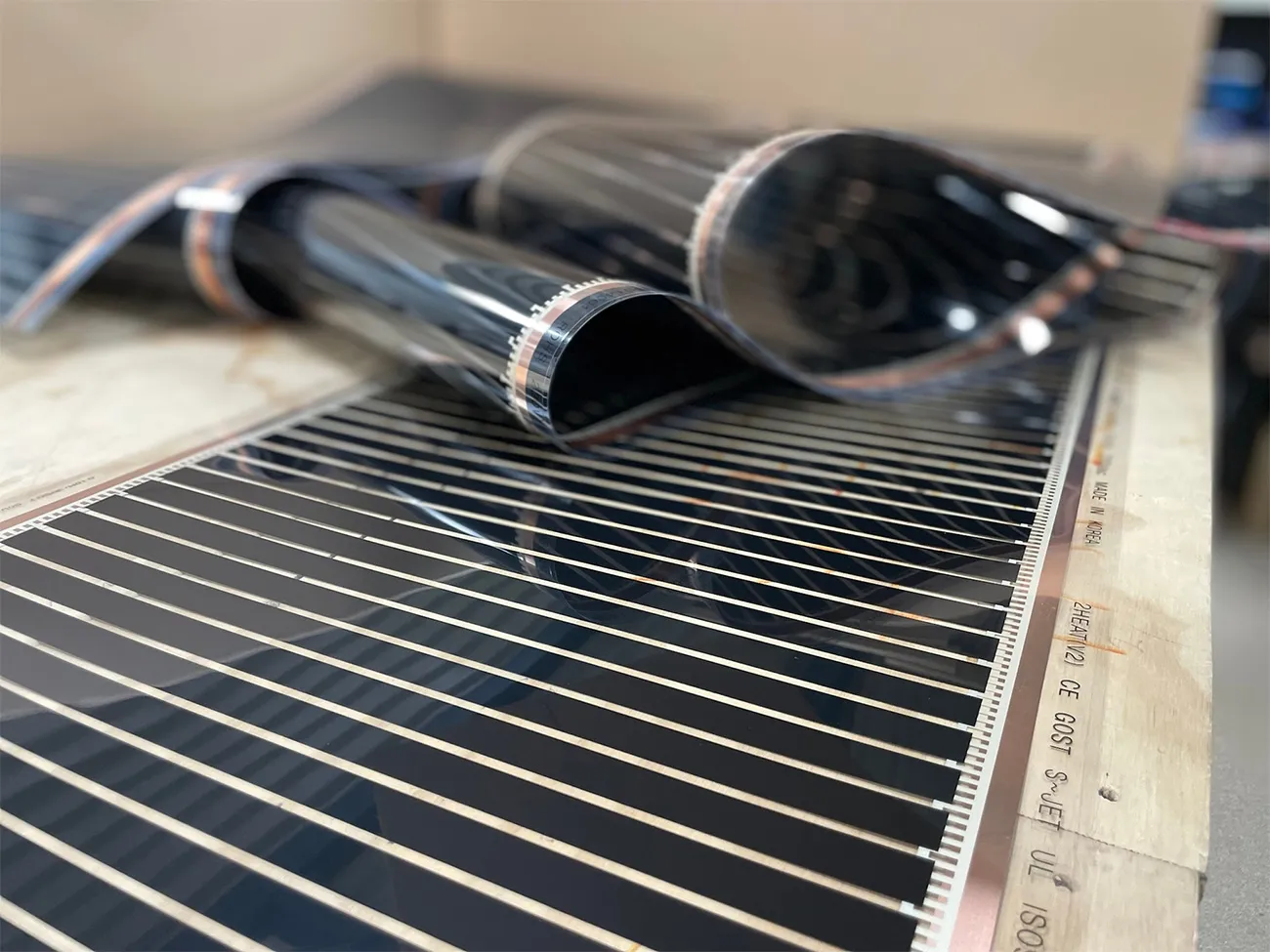
LVS Verwarming develops, manufactures, supplies and installs high-quality electric heating products, thermostats, control cabinets and control panels for new-build, renovation and conversion projects. The North Holland-based company specialises in infrared heating, which is rapidly gaining ground. “We’re seeing demand for heating film explode,” says director Jolanda Ligthart. “Not only because the film is versatile, but above all because it is ideally suited to the energy transition.”
Many homes will be moving away from gas in the coming years, she says. Infrared heating film is a well-designed solution for these homes, as it does not require major renovation work. The heating films are considerably cheaper than a heat pump, ultra-thin, lightweight and highly durable. They can also be easily concealed in the floor, wall or ceiling, providing comfortable heating throughout the home. “I’ve been with LVS Verwarming for 4.5 years now, and I haven’t found a single drawback.”
Rapid heat transfer
LVS Verwarming’s infrared heating films can, in principle, be installed beneath any floor finish, whether wood, laminate or tiles, Ligthart says. “We can even incorporate them into poured floors! In that case, the films are given an extra layer of lamination in our laminating room in Heerhugowaard. Because the films sit directly beneath the floor finish, there is no heat loss. Instead, they ensure rapid heat transfer and short warm-up times, helping to significantly reduce energy bills. Our infrared heating films are also maintenance-free. They have a service life of at least 30-40 years.”
Comfortable and healthy
Thanks to its even heat distribution, infrared heating is often considered by residents to be the most comfortable way to heat a home. As the technology creates no air movement, and therefore does not circulate dust, infrared heating is also the ideal solution for people with allergies or asthma. “The key difference between infrared and water-based systems is that infrared rays initially heat the objects in a room,” says Ligthart. “That includes furniture and curtains, for example, as well as people. Once these ‘objects’ have absorbed enough heat, they start releasing it into the rest of the room. This happens very quickly. As soon as infrared radiation hits an object, it warms up almost immediately, much like the sun’s rays.”
Low output
Infrared heating film is available with an output as low as 50 W/m2. “This low heat output is particularly suitable for new-build homes or renovated homes with a high insulation rating. For older, less well-insulated homes, we recommend 100 W/m2 heating film, possibly combined with 50 W/m2 film in circulation areas.” At just 0.38 mm thick, the underfloor heating film is ideally suited to renovation projects, she says. “It is also suitable for listed buildings, as it does not raise the floor. In addition, it places no extra load on the structure.”
Easy installation
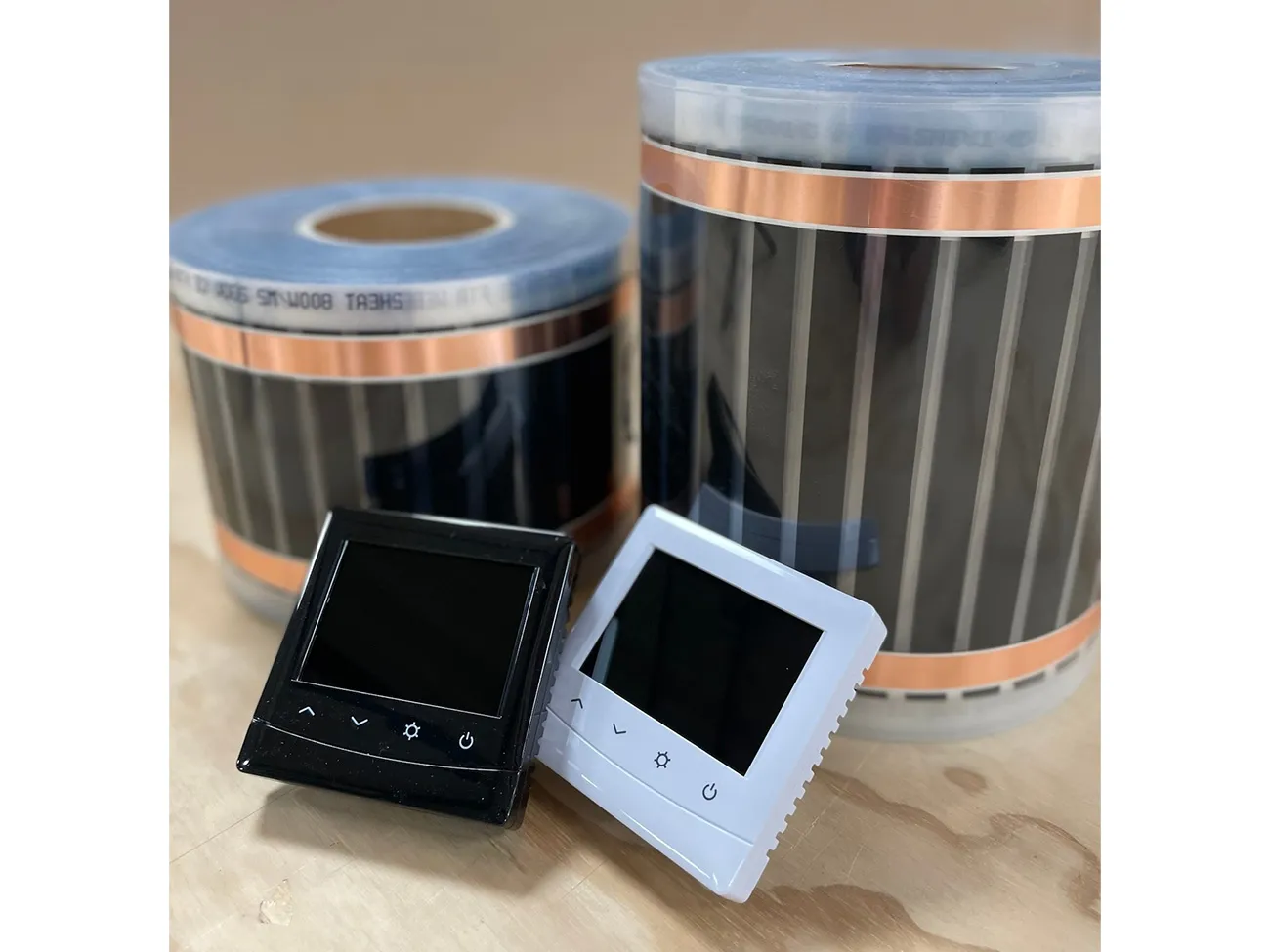
To ensure a smooth installation, LVS Verwarming or its business-to-business partners are happy to survey the rooms on site. “All the films are made to measure and supplied with clear installation plans. This means installation is simply a matter of rolling them out and gathering the connecting leads,” says Ligthart. “The floor temperature is controlled by a thermostat with an external sensor, which can be set manually or via Wi-Fi. We do, however, recommend keeping the floor at a constant temperature, including at night, to minimise energy consumption.”
Question about this story? Ask your question
Keep following this
Get an email when a new story is published. No account needed.
- ThemeGas-free heating and cooling
- SubjectHVAC