











Innovations for a better indoor climate
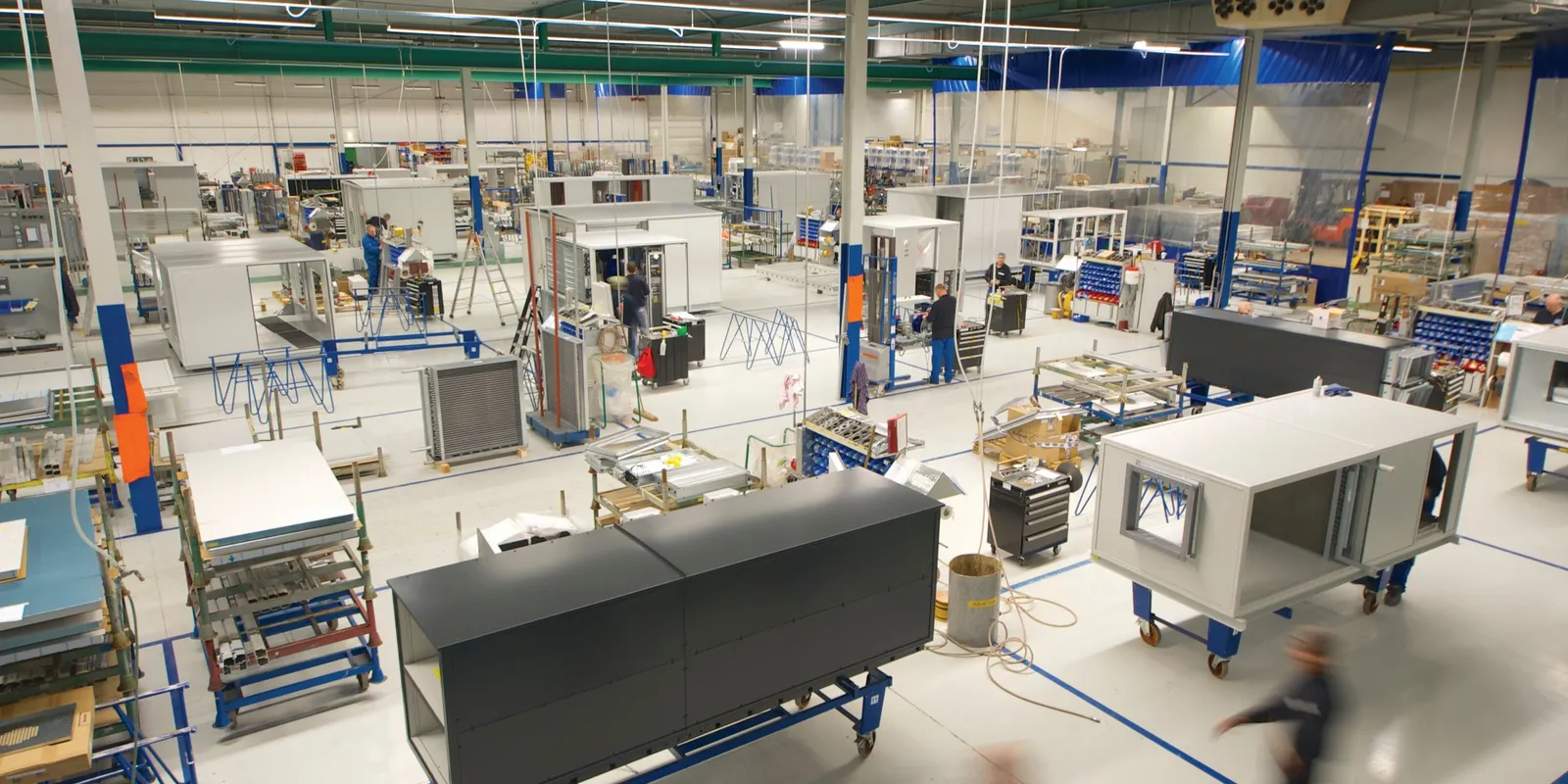
A healthy indoor climate makes an important contribution to our health, wellbeing and productivity. At the same time, it is one of the biggest challenges in building energy-neutral buildings. With 230 engineers across 23 R&D teams in 18 countries and 9 development centres on 3 continents, Systemair is among the world’s leading companies in the development of ventilation and climate control products. At the Waalwijk factory, 8 engineers work continuously to improve the HHCompact and HHFlex air handling units. Nothing is left to chance, from the casing through to every component and the control system.
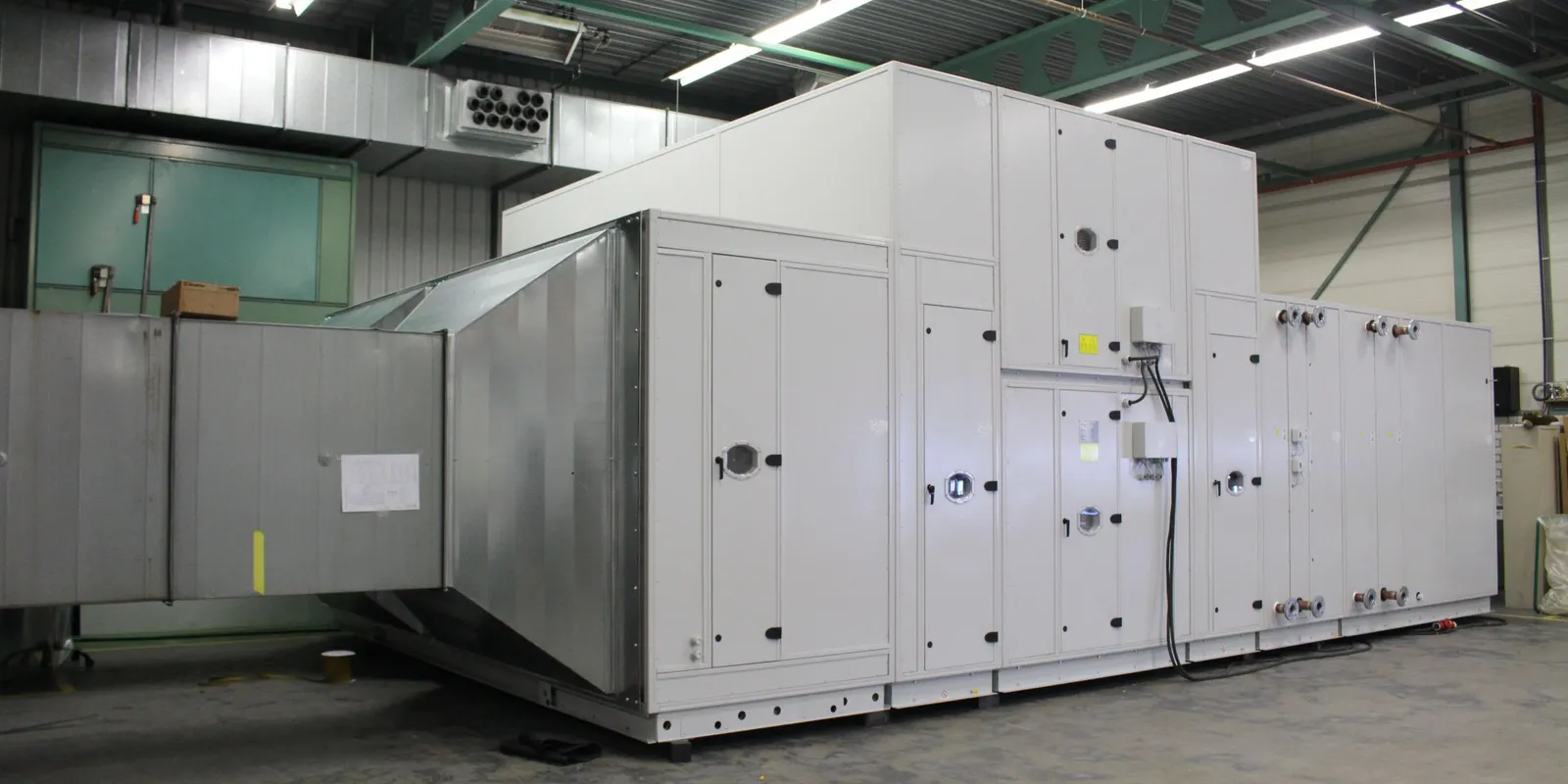
Systemair carries out Factory Acceptance Tests (FAT) with its customers in one of its test rooms.
“Our ambition is to move the right amount of air at every moment of the day, with the highest possible air quality, while keeping energy consumption and noise levels low,” says Andy Bijmans, R&D manager at Systemair. “To achieve this, not only do the casing, motors, fans, rotary heat exchangers, heaters, coolers, filters and control system all need to be brought up to the highest standard, they also need to work together perfectly. That is what we work towards every day. In recent years, for example, we have largely replaced centrifugal fans with wall-mounted fans, enabling us to make our air handling units more compact. We have also replaced AC and DC motors with EC motors, which are not only much more energy-efficient, but also easier to control. The speed is adjusted continuously to match ventilation demand.”
Advanced test facilities
“As an organisation, we design, build and supply complete air handling units,” Bijmans emphasises. “The challenge is to select the right components for each project and ensure they work together and are controlled optimally. In-depth product knowledge is essential to achieve this. That is why we test and compare our suppliers’ components, both against each other and against their specifications. This allows us to supply our customers with a reliable product at all times.”
The components are tested and compared in a purpose-built test room in Waalwijk, where a large, basic air handling unit is set up. “In a second test room, optimised for TÜV testing, we also test our own casings for factors including thermal transmittance, thermal bridge class, air leakage, deflection, filter bypass quality and sound transmission. These tests are carried out in accordance with the Eurovent requirements set out in EN 1886. We also have a third test room where we conduct Factory Acceptance Tests (FAT) with our customers.”
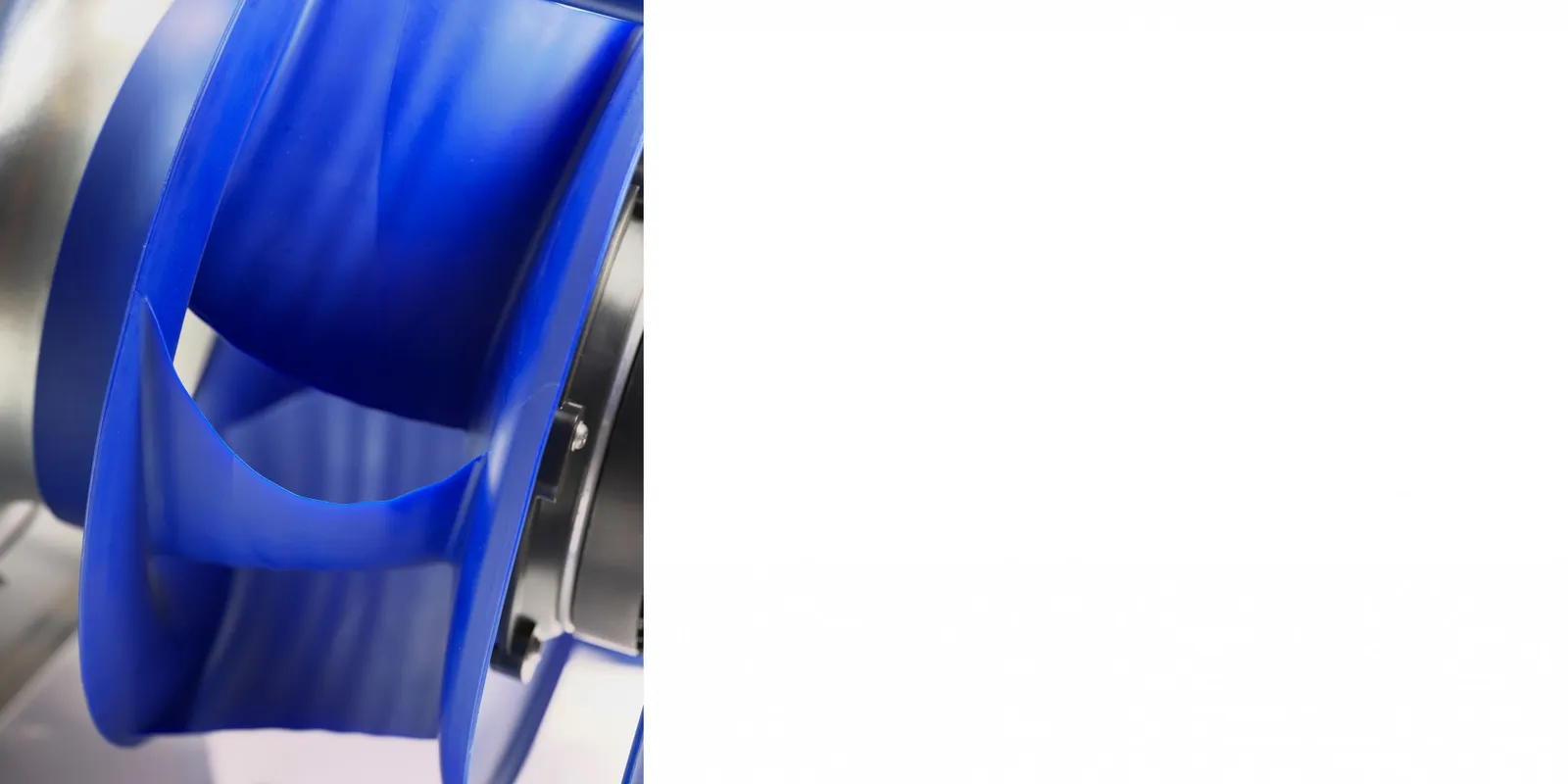
The new fans feature impeller blades with a significantly improved aerodynamic design.
New fan technology
The tests and comparisons have led, among other things, to a different choice of fans, which form the heart of the air handling unit. “Our new fans feature impeller blades with a significantly improved aerodynamic design,” says Bijmans. “Instead of being flat, the blades have a specific curvature, allowing the air to flow at a constant rate. The new design delivers an efficiency improvement of up to 7%. This can move the air handling unit up one energy label class, for example from A to A+. It also significantly reduces noise levels.”
Up to 5dB(A) less noise
As well as improving energy performance, which will result in a lower SFP value for the air handling unit, noise levels are reduced by up to 5dB(A). “This is a major improvement, as studies show that the human ear registers a 3dB(A) reduction in noise as a 50% decrease.”
As well as new blades, the fan has a new motor. “This motor is rated in the highest energy efficiency class (IE5) and also contributes to a significantly improved efficiency. This means a smaller fan can be used, allowing the air handling unit to be built more compactly.”
A business enquiry for Systemair? Get in touch
Companies in this story
Keep following this
Get an email when a new story is published. No account needed.
- ThemeHealthy indoor air
- SubjectHVAC
- CompanySystemair







