Mechanical ventilation: airtightness class of the air distribution system matters!
Sustainable building starts by reducing energy demand through improving the building fabric and changing habits. We then choose clean, preferably renewable energy to create a healthy and comfortable indoor climate… and that is where ventilation becomes important.
Air Excellent air distribution system
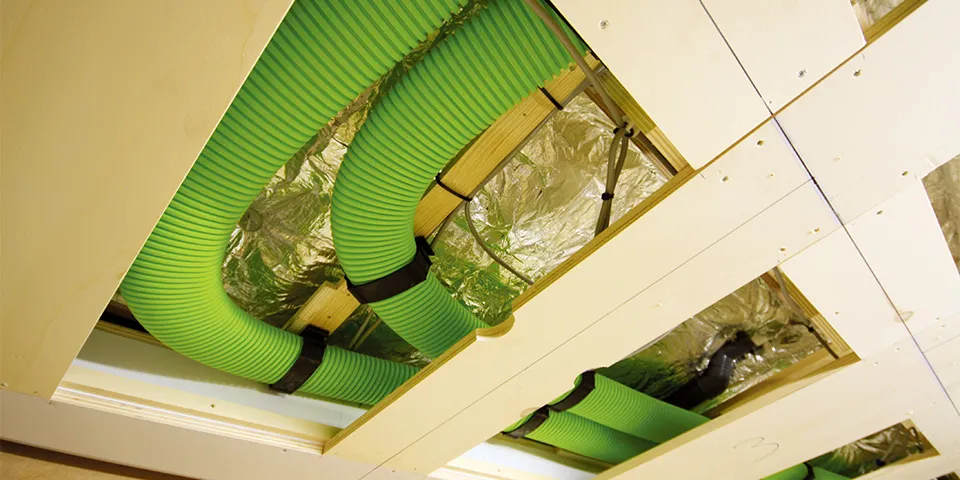
The Ubbink Air Excellent air distribution system is an innovative, flexible and modular system, suitable for all mechanical ventilation systems, with or without heat recovery.
- TÜV SÜD certified, BIM-ready, airtightness class LUKA D.
- Design flexibility and combination options thanks to round and semi-circular ducts.
- Compatible with any ventilation unit, regardless of brand (including demand-controlled CO2 systems).
- Reduced energy consumption and noise levels thanks to lower pressure losses.
- No duct branches, low-noise operation.
- Meets stringent airtightness requirements.
- Project support from design through to the implementation phase.
- Quick and easy to install.
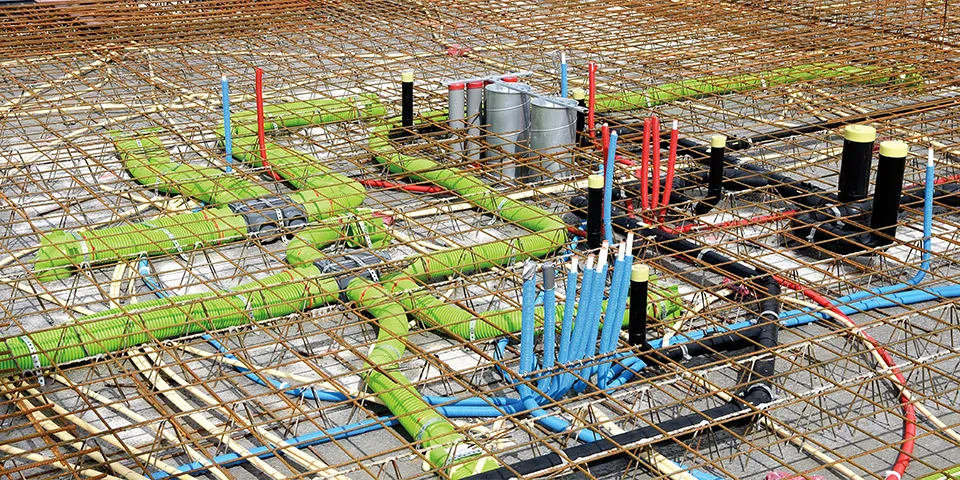
- Can be cast into concrete, walked on and retains its shape.
- Can cross over other ducts and pipes.
- Quick and easy commissioning.
Mechanical ventilation systems must be properly balanced after installation to ensure that fresh air is supplied to habitable rooms and air is extracted from wet rooms. Ventilation systems (ventilation units and air distribution systems) do not save energy, but some systems consume less (primary) energy than others.
Marcel Beune, Technical Installation Adviser at Ubbink, explains what to look for when purchasing a mechanical ventilation system: “Mechanical ventilation units have to work harder to move air through a duct system. This becomes even more demanding when there are air leaks. They increase resistance and make it harder to ventilate correctly. Another drawback is that the ventilation unit consumes more energy and produces more noise. This noise nuisance can even lead residents to switch off the system, with all the consequences that entails.”
A ductwork system is airtight on paper, but not once it has been installed. This explains the difference between the performance of an installation on paper and that of an actual, installed air distribution system.
Impact on energy consumption
But how much more energy does a mechanical ventilation unit consume, and how much more noise does it produce, if the ductwork system leaks? Beune: “We put this question to Valerie Leprince, one of Europe’s experts in this field, and Jelmer de Jong, Ventilation Knowledge Centre adviser at Brink Climate Systems and chair of EVIA’s technical committee. In her publication (Impact of ductwork leakage on the fan energy use of central mechanical ventilation units with heat recovery used in houses), Valerie writes that valves connected to leaky ductwork systems consume much more energy to ensure proper ventilation through the valves in each room. She estimates the additional consumption at hundreds of kWh per valve per year.”
Impact on noise levels
But what about noise? Beune: “Using the data from Valerie’s publication and software developed by Brink Climate Systems, Jelmer estimates that a ventilation unit connected to a leaky ductwork system produces much more noise in bedrooms and living rooms than a ventilation unit connected to an airtight ductwork system. The difference is more than 3 dB(A).”
The solution
The impact of a leaky ductwork system on the energy consumption and noise output of a mechanical ventilation unit is therefore significant. Fortunately, the solution does not require rocket science, legislation or innovation. Airtight systems are available to provide a healthy indoor climate without energy loss and/or noise nuisance. “Ubbink’s Air Excellent air distribution system is one such system,” says Beune. “It is characterised by minimal resistance and mechanically airtight, pull-resistant connections that make the ventilation unit happy. Residents will be happy too, as they will not be faced with unexpectedly high energy bills and/or noise nuisance.”
Support for correct installation
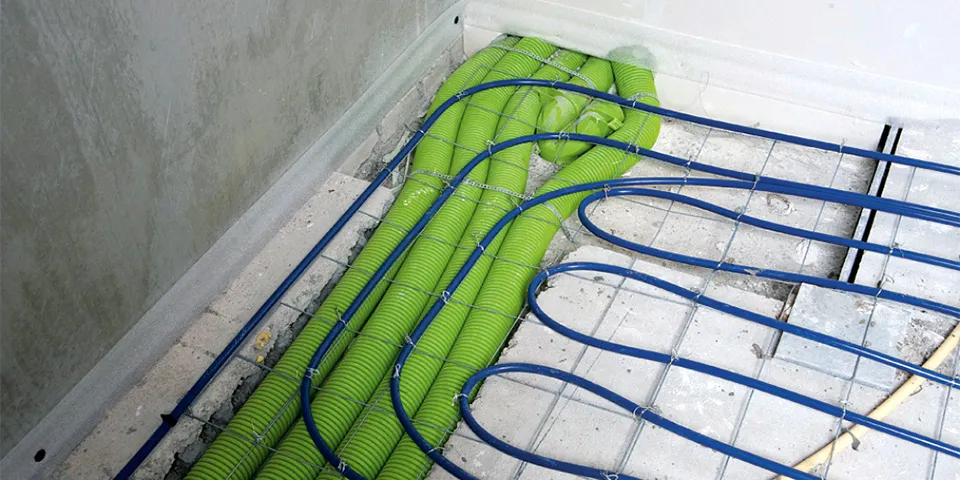
Correct installation and balancing are important for the system to work properly. “With Ubbink, you are not on your own. We can support projects from the initial planning stage through to implementation. We help with the entire installation and review the design to identify any potential improvements. This results in advice, a quotation and a complete pressure loss calculation for the system.” Ubbink also takes care of the ordering process and, where necessary, coordinating arrangements with the trade. This ensures that delivery and logistics fit the project and run as efficiently as possible. Beune: “We also provide on-site support for installing the Air Excellent system. This gives everyone peace of mind that the system is installed correctly and that the best solution for the situation has been used. After the first project, installers will have enough experience to carry out subsequent projects without support. They will not only have mastered the Air Excellent installation, they will also be hooked on Air Excellent!”
Additional energy savings
Want to save even more on your heating bills? Consider a demand-controlled ventilation system that recirculates heat. CO2 and humidity sensors can be used to measure ventilation requirements in each room. Air Excellent is suitable for demand-controlled systems.
Maintenance
Maintenance is certainly an important consideration for a mechanical ventilation system. Filters, fans and ductwork must be cleaned regularly to prevent polluted air from entering the home and/or adversely affecting the system’s performance and energy consumption. Beune: “The Air Excellent system results in virtually no contamination in the ducts, as they have a smooth inner surface and are treated to be antistatic. The ducts are also antibacterial.”
Een zakelijke vraag aan Ubbink? Get in touch
Companies in this story

Keep following this
Get an email when a new story is published. No account needed.
- ThemeHealthy indoor air
- SubjectHVAC
- CompanyUbbink
- CompanyBrink Climate Systems