











Office ventilation: essential, but far from always up to standard
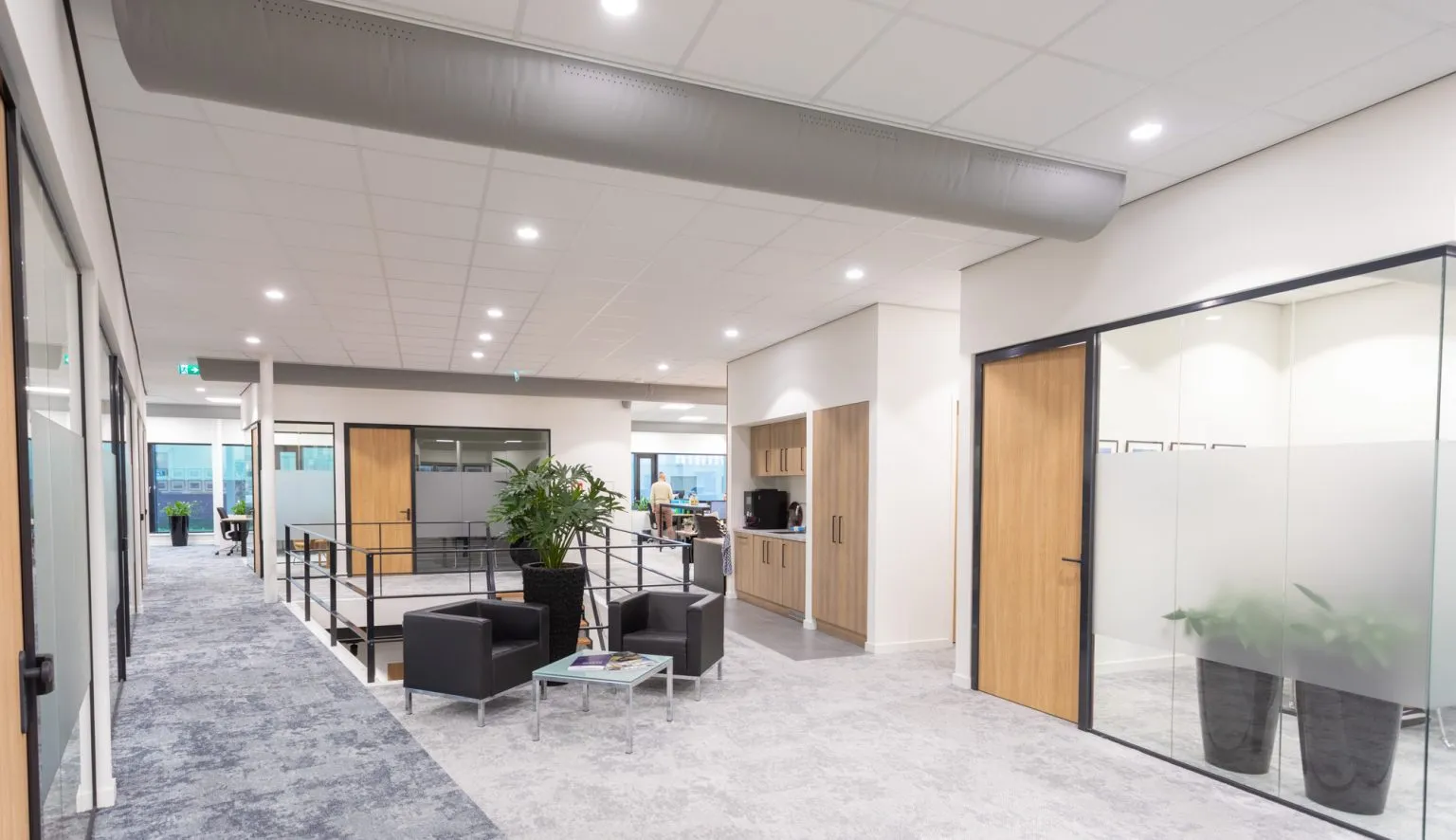
Ventilation is not up to standard in far from all buildings. Research shows that poor air quality can have a considerable impact on the health of your employees. This is a longstanding problem, but it is constantly overlooked, not given the right priority or ignored. Until the Covid-19 pandemic broke out, bringing the issue back into the spotlight.
This blog takes a closer look at the issue:
- What are the negative effects of poor ventilation on your employees?
- What exactly does good ventilation involve?
- And, more importantly, how can you ensure good ventilation in your office building?
Why is good ventilation so important?
A building should feel comfortable and safe. Ventilation is an important part of that. There is plenty of focus on the outdoor climate, but awareness of the importance of a healthy indoor climate is limited. Poor air quality has a negative impact on the health of your employees. Reduced concentration, fatigue and breathing problems can all be linked to an unhealthy indoor climate. This in turn leads to lower productivity and more employee absence, figures that business owners and managers often rely on. Yet improving the indoor climate is not high on the priority list for many building owners. Good ventilation helps improve air quality and also limits the spread of virus particles. In addition to good ventilation, which contributes to air quality, the following factors are also important for a healthy and comfortable indoor climate:
- Acoustic quality
- Thermal quality
- Visual quality
Think, for example, of light, noise and draughts. All these factors contribute to your employees’ performance, health and productivity. They are important for the sense of comfort and wellbeing of your staff. Ventilation, for instance, may be up to standard, but if the room is very dark and draughty, it will still not feel comfortable and safe.
How many m3 of air should be ventilated in an office?
Under the current Building Decree standard, office spaces must have an air exchange rate of approximately 25 m3/hour per person. The current occupational health and safety standard is slightly higher, at 30 m3/hour per person for light physical work and 50 m3/hour for more physically demanding work. The figure is considerably lower for a meeting room, at approximately 15 m3/hour per person, as people generally spend only a short time there.
But now that we know this, how many ventilation grilles should we install to achieve the specified air exchange rates? It is difficult to give a definitive answer, as every situation is different. More important is to look carefully at the position of the ventilation grilles to ensure that air circulates throughout the room. This ensures that the fresh air coming in actually reaches the people in the space. Schilt bedrijven advises: more is always better, more fresh air!
The Schilt bedrijven Ventilation Guide
Under the Building Decree 2012, ventilation capacity is calculated per person in the room. The standard is therefore approximately 25 m3/hour of fresh air per person. This is the minimum requirement that must be met. The Building Decree also sets out other requirements, as well as specific requirements for each type of building.
Read more in our Schilt bedrijven Ventilation Guide.
Tailored solutions
Every room and situation calls for a different solution, so there is no standard formula. Key questions include: how large is the space? What is it used for? And how many people need to use it? Once we have mapped this out, we look at how to achieve the desired result. Where can we install equipment? What provisions are needed? From new-build homes to offices and commercial premises, schools, retail and everything in between, Schilt bedrijven has broad expertise and can provide solutions for all of them. Working closely with customers and taking a highly targeted approach is what sets Schilt bedrijven apart.
Energy-efficient ventilation
Ventilation uses energy: motors and fans run to get the air moving. That is why energy-efficient DC motors are now used. The warm air you extract must also be replaced with heated air, which means we need to provide additional heating. Fortunately, modern systems use balanced ventilation with heat recovery, achieving an efficiency of no less than 80 to 90 %. The warm extracted air passes the fresh incoming air from outside, so it needs less additional heating.

Another way to ventilate efficiently is demand-controlled ventilation. With this approach, the system adjusts fully automatically to ventilation requirements based on sensor readings. The sensors measure the CO2 concentration in the room. CO2 concentration is a good indicator of air quality. Your staff exhale CO2. The more people in the room, the higher the CO2 concentration. Demand-controlled ventilation adjusts the ventilation to how the space is being used. That is good for your wallet and for the environment.
Tailored advice
Schilt bedrijven has all the knowledge and experience needed to deliver ventilation solutions. We can provide advice and tailored solutions. Once you have accepted our quote, we take care of delivering the entire project. In some cases, this is done in consultation with the contractor, for example when structural modifications to the building are required.
Curious about the ventilation options for office spaces? We recently installed the complete climate control system at the new premises of KE Fibertec. Find out more here.
Do you have questions about office ventilation, or would you like to know what we can do for you?
Get in touch with our specialists, with no obligation.
A business enquiry for Schilt bedrijven? Get in touch
Companies in this story

Keep following this
Get an email when a new story is published. No account needed.
- ThemeHealthy indoor air
- SubjectHVAC
- CompanySchilt bedrijven







