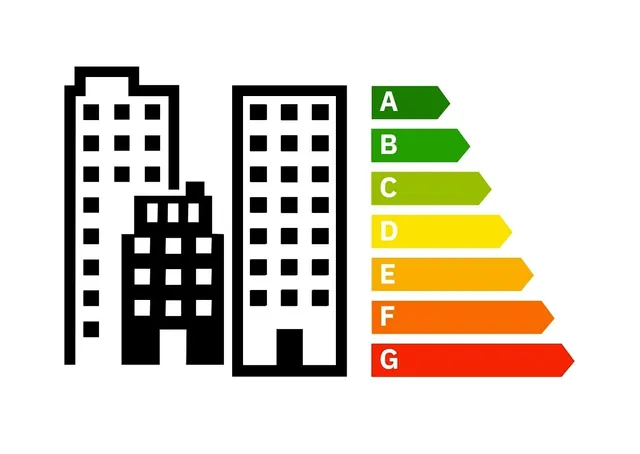
On the way to energy label C
In December 2015, 195 countries agreed a new climate treaty in Paris, aimed at reducing greenhouse gas emissions and global warming. The Netherlands is also committed to limiting warming to less than 2°C. Our Climate Act stipulates that CO2 emissions must be reduced by 49% by 2030 compared with 1990, and by as much as 95% by 2050. A package of 600 measures has been drawn up to achieve this goal.
One of these measures is that, from 1 January 2023, every office building larger than 100 m2 must have an energy label of at least C (an Energy Index of 1.3 or better). The labelling requirement applies both to offices in mixed-use buildings and to standalone offices. According to figures from RVO, the Netherlands has around 62,000 offices that must meet the requirement. At present, approximately 21,000 of these offices have energy label A, B or C. Around 7,000 offices have label D, E or G, while more than half (around 34,000 offices) have no label registered at all. In the worst-case scenario, offices that do not meet the minimum energy label C requirement may no longer be used or rented out after 2023.
Low-hanging fruit
In many cases, buildings with a label from D to G can achieve energy label C without major structural work. Significant improvements can be made, for example, by insulating central-heating pipes, sealing gaps and joints, and installing LED lighting, heat pumps and/or solar panels. Revitalising the existing air handling unit(s) can also improve energy performance. Conpro Condensor Bescherming is ideally placed to help with this.
Retrofit
Conpro Condensor Bescherming has been the go-to company for reconditioning air handling units for 25 years, chemically and technically cleaning the units and coating them without solvents. New stainless steel 316 filter frames can also be fitted if required, significantly extending the units’ technical service life, says Account Manager Jens Groenendijk. “For several years now, we have also specialised in retrofitting and revitalising air handling units. In most office buildings, the units are installed on the roof or in an internal plant room. Replacing them with the latest generation of units is often not straightforward. New standards mean that units are becoming larger and wider. Replacement can also be a substantial investment. In such cases, revitalising the air handling units offers a solution.”
Significant energy savings
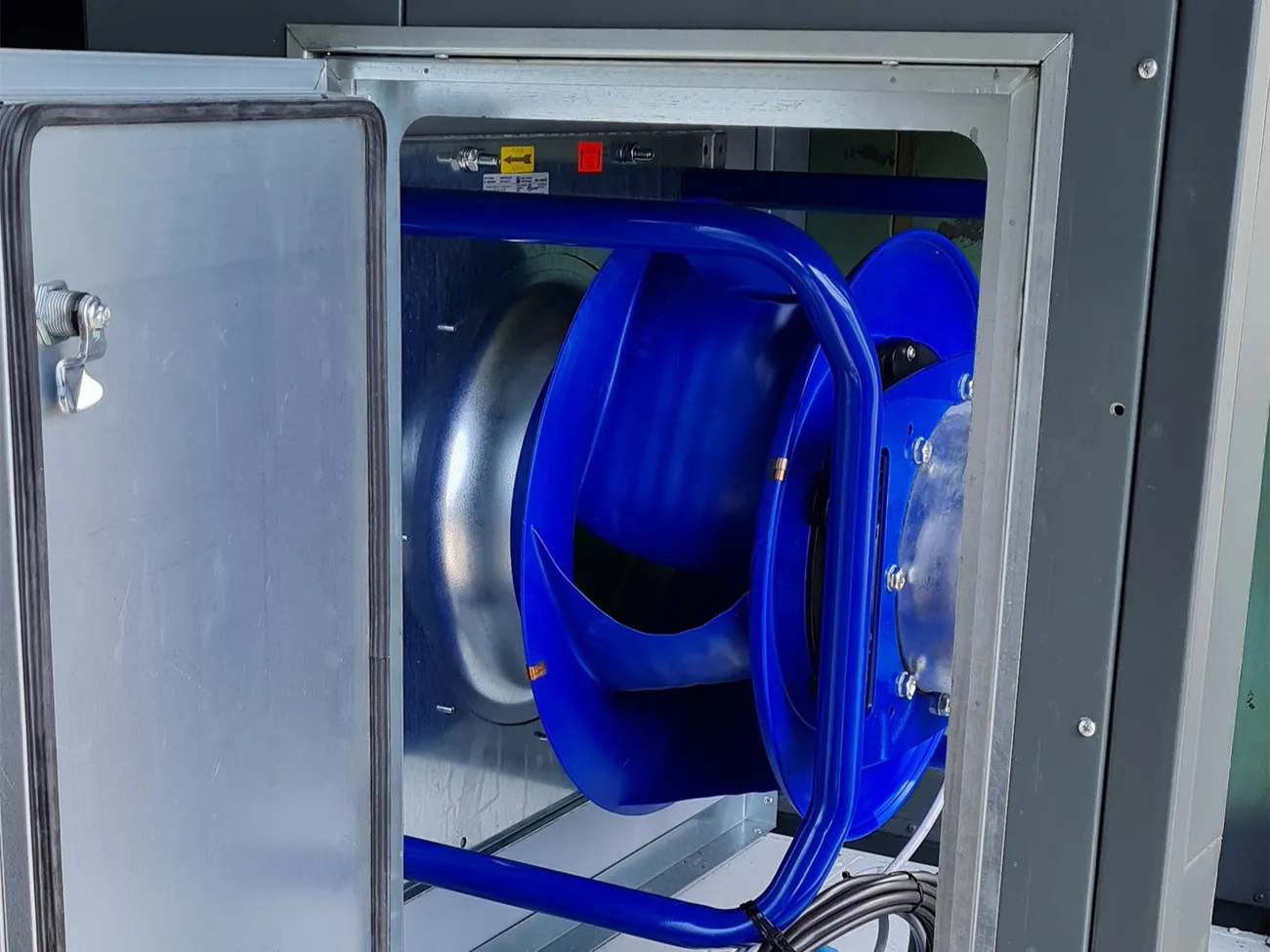
As part of the revitalisation or retrofit, the existing motors with carbon brushes are replaced by direct-drive, DC-powered EC fans. EC fans stand out for their energy-efficient motors, low noise levels and long service life. “Compared with traditional belt-driven fans, axial (direct-drive) EC fans can move large volumes of air with little electrical power. They are also relatively easy to balance, and there is no starting current peak when the fans start up. This results not only in significant energy savings (>15%), but also in short payback periods (>2.5 years).”
Complete solution
At the start of the revitalisation, the existing scroll housings, motors and fans are removed, Groenendijk explains. “The holes in the floor are sealed, and the floor is treated with a poured coating to ensure a smooth, hygienic surface. A panel wall is also installed inside the unit to which the new EC fans are attached.” Because EC fans are more sensitive to back pressure from the ductwork, a like-for-like replacement is often not possible in larger air handling units. “Instead, we calculate precisely how many EC fans need to be installed to ensure the required airflow, in line with the design specifications and taking noise into account. We also pay close attention to airflow downstream of the EC fans, ensuring optimum air supply to every room. This means we offer a complete solution in this area too.”
Question about this story? Ask your question
Keep following this
Get an email when a new story is published. No account needed.
- SubjectHVAC