Prevent efficiency losses in heat pumps
The Netherlands aims to meet the energy needs of all people and businesses in a fully sustainable way from 2050 onwards.
A far-reaching transition, even greater in scale than the construction of the gas infrastructure in the 1960s. Exactly how this sustainable energy supply will be achieved remains dependent on technological innovation and cost developments.
In the coming decades, heat pumps will already help deliver part of this sustainable ambition, thanks to their proven technology and potentially attractive efficiency. Potentially, because poor advice, incorrect installation, and air and dirt can all cause efficiency losses, just as they can in central heating and cooling systems. As a result, some projects have not delivered the expected results. This article first looks at how heat pumps work and how the market is developing. It then examines the effects of air and dirt on potential efficiency, as well as a solution to prevent these problems. Finally, it offers some advice from installation professionals.
How heat pumps work and market developments
‘Heat pump’ is a catch-all term for any device that moves or pumps heat, which means that a number of household appliances also fall into this category (refrigerators, air conditioning, etc.). Technically, all heat pumps operate according to the same thermodynamic cycle of absorbing and releasing heat. This heat transfer requires a small amount of electricity to power the heat pump’s compressor, which absorbs heat from a source and transfers it to the heat user. One example is the water in the central heating system used to heat a home. The heat source can be the outside air, a ground source or surface water. These are known as air-to-water or water-to-water heat pumps.
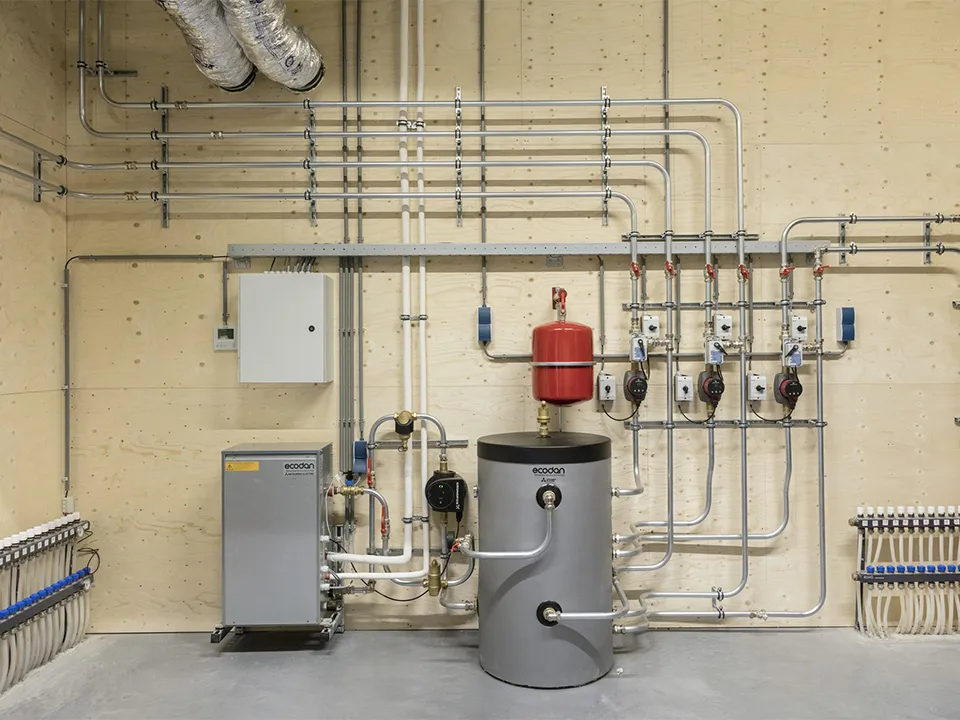
Heat pumps have been used for decades in homes, commercial buildings and industry. Today, many people use the term to mean a sustainable solution for heating (or cooling) buildings and homes. According to Statistics Netherlands (CBS), this market grew by around 27% in 2018 to almost 110,000 units. This figure does not include ‘hybrid’ ventilation heat pumps that provide support to high-efficiency boilers. Across Europe, a total of 12.3 million were sold in 2018, according to EHPA. Given the wide variety of heat pump types, it is important to seek expert advice when purchasing and installing one. It is also important to ensure that efficiency does not decline over its long service life.
Efficiency differences between heating solutions
Almost half (44%) of the energy we use in the Netherlands goes towards generating heat. It is therefore worth looking carefully at the efficiency differences between heating solutions, both when purchasing them and during operation. Systems heated directly by gas or electricity, such as a stove and most central heating systems, deliver the same amount of heat they receive under ideal conditions. Their efficiency is therefore no more than 100%. Heat pumps can achieve efficiencies of 400% or even 500%. This high efficiency is possible because a great deal of heat is taken ‘free’ from the environment, so your home receives 4 to 5 times as much heat as the electrical energy used by the heat pump’s compressor. As heat pumps operate with smaller temperature differences than gas-fired central heating boilers, they require both a larger heat-emitting surface and a higher water flow rate.
For example, through underfloor heating rather than conventional radiators. Lower-than-expected heat pump efficiency is usually the result of poor advice or a lack of knowledge and experience in their application. As with conventional central heating and cooling systems, air and dirt in the system can also significantly reduce efficiency over time. Fortunately, proven effective solutions are available to prevent these kinds of losses.
Preventing efficiency losses caused by air and dirt
Air and dirt are inconspicuous but frequent causes of efficiency losses in heating and cooling systems. Their impact is greater in systems that operate at lower temperatures to save energy, such as heat pumps. Underfloor heating systems are also more susceptible to the build-up of air and dirt than radiators. Without realising it, people and businesses make up for these efficiency losses through higher energy bills. The negative effects of air and dirt build-up on system efficiency have been extensively tested and recorded visually using infrared cameras, including by Kiwa Gastec. The impact of potential solutions for preventing efficiency losses caused by air and water has also been tested.
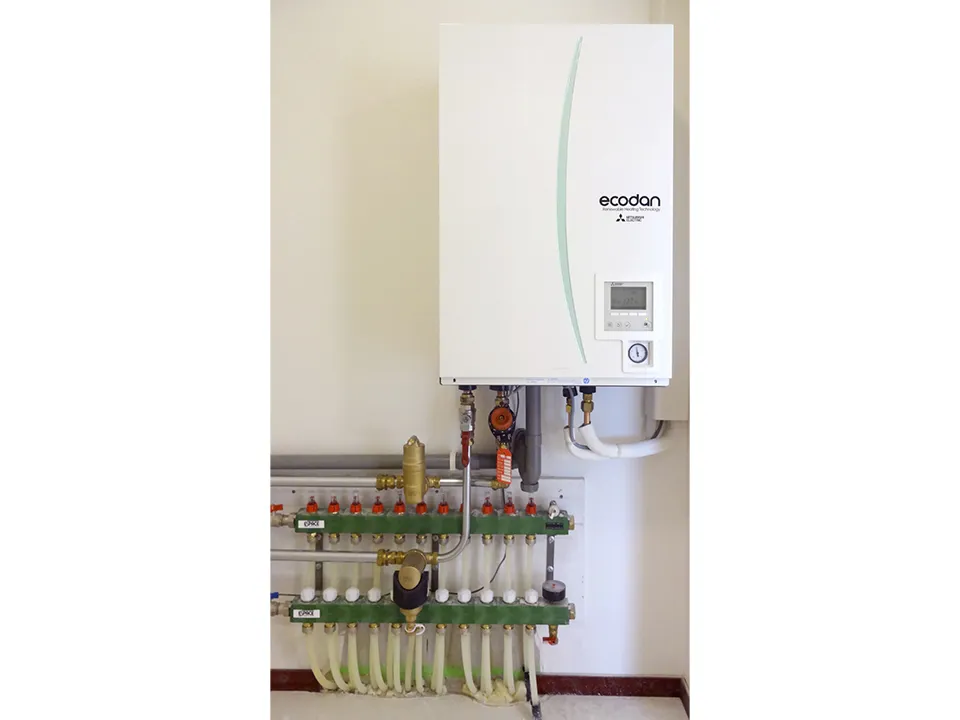
Air can be present in systems as microbubbles, dissolved in the water or in free form. This reduces both flow and heat transfer. Research at Brunel University shows that air bubbles at the outlet of heat pumps are very small (around 0.1 mm) and can only be captured with an effective microbubble separator. Dirt builds up as a result of corrosion in pipes and system components, bacterial growth or limescale. Both air and dirt reduce the efficiency and service life of heat pumps and heat exchangers, increasing their ‘Total Cost of Ownership’. Fortunately, both can be easily removed from a system using an automatic air vent and a dirt separator, or a combination of the two. Some forms of contamination can be controlled with additives. These are substances added to maintain system water quality and, in turn, system efficiency. As well as preventing losses, these solutions reduce the risk of faults.
Practical advice
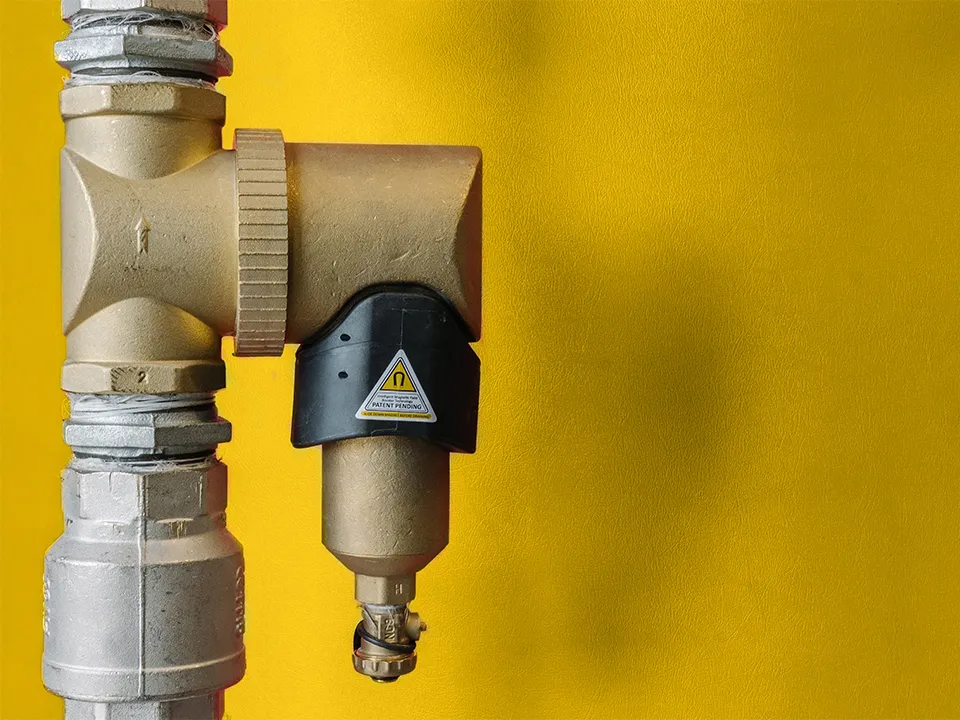
The negative effects of air and dirt on system efficiency are so significant that Alklima routinely specifies automatic air and dirt separators when selling heat pumps. “We see a direct link between all the reports we receive through our service channels and the presence of air and dirt in the system water,” says Rudy Grevers, the company’s manager of residential construction. “In low-temperature systems, air is more common in the form of microbubbles, and dirt particles build up more quickly than in high-temperature systems, reducing energy performance. When customers contact us about a code 9 alert, it is often caused by air or dirt, even though it can easily be prevented with an automatic air and dirt separator.”
Another heat pump specialist, Menno van der Hoff of Triple Aqua Consulting, also recommends adding automatic air and dirt separators to heat pumps using system water or a refrigerant. “The slightly higher purchase price of adding this component is quickly repaid many times over through better energy performance throughout the system’s service life. As well as automatically removing air in the system water and metal particles caused by corrosion, it also reduces the risk of faults. Finally, special additives that maintain system water quality also help prevent dirt build-up and optimise heat pump efficiency.”
Question about this story? Ask your question
Keep following this
Get an email when a new story is published. No account needed.
- ThemeGas-free heating and cooling
- SubjectHVAC