











REFITTING PAYS OFF!
Text Lieke BousemaImage Ned Air
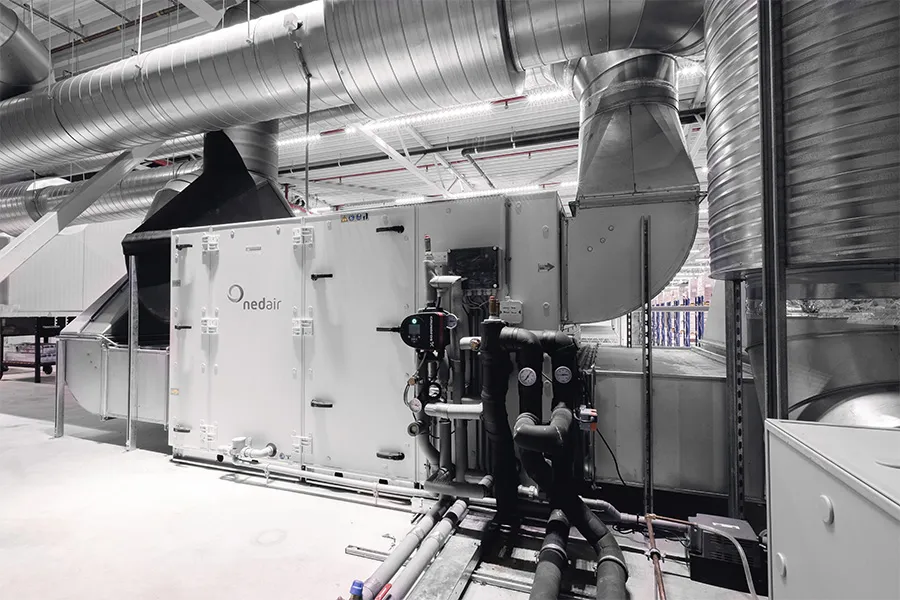
Revitalising existing air handling units
High energy prices and an uncertain global economy. In the second half of 2022, the energy market suddenly came under severe pressure. Suppliers raised their rates en masse, leaving building owners faced with rapidly rising energy bills. Although prices have since fallen considerably, the energy crisis has prompted a new awareness. Sustainability is even higher on the agenda. Yet we are still missing out on some valuable opportunities, says Marco Scholten, Area Manager at Ned Air. “One thing many building owners overlook, for example, is the revitalisation of existing air handling units. Technology in these units has advanced considerably in recent years, making it possible to achieve major improvements in energy consumption, indoor air quality and comfort. Combined with other energy measures, it can also deliver a significant improvement in the building’s energy rating. Revitalisation is therefore a welcome addition to the mandatory route to energy label C.”
In most office buildings in the Netherlands, air handling units are located on the roof or in an internal plant room. Replacing them with the latest-generation models is often not straightforward, Scholten explains. “As a result of new standards and guidelines such as ErP, air handling units are getting bigger and wider. Replacement can also be a substantial investment. In that case, revitalising (or refitting) the units offers a solution, as it considerably extends the life of the existing unit.”
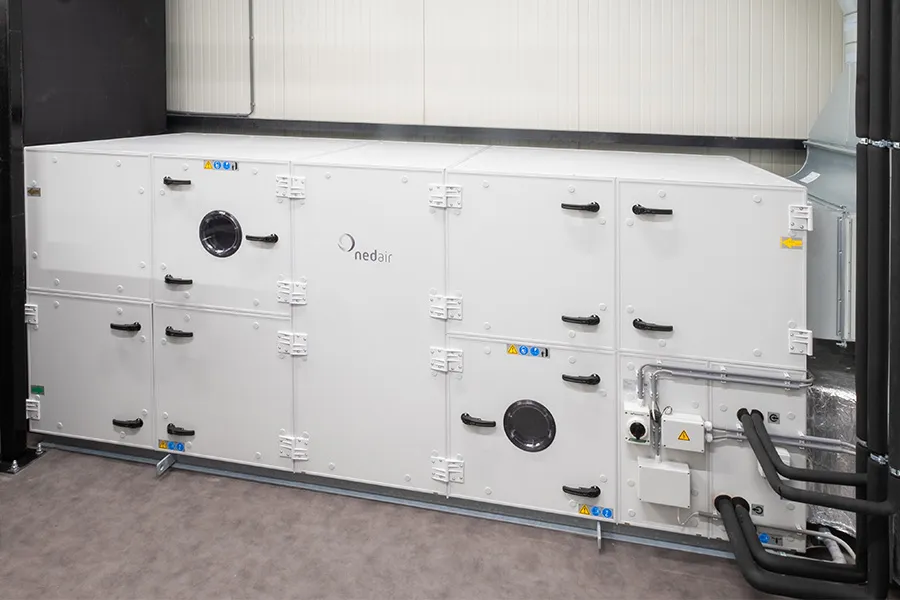
Significant energy and cost savings
If a like-for-like replacement of the existing air handling unit is not possible, revitalisation can still deliver excellent results, Scholten stresses. “For example, by upgrading the unit to meet current requirements and use current technology.” Technical installations such as air handling units are depreciated over 15 years. “And although an air handling unit has an average service life of 15 to 20 years, that doesn’t mean you can ignore it during this period. Both minor and major interventions can have a significant impact.” One example he gives is choosing modern EC fans, which can save a huge amount of energy. “Upgrading filters and installing heat recovery can also deliver substantial energy and cost savings. For example, converting a supply/extract unit with a changeover or twin-coil system into a heat recovery unit with a thermal wheel is a major step forward in terms of efficiency. A twin-coil system has an efficiency of 50-55%, whereas a modern thermal wheel achieves an efficiency of >80%. Most importantly, however, a clean, well-functioning air handling unit contributes to the health and wellbeing of building occupants.”
Life Cycle Costs calculation
To bring energy consumption, indoor air quality and comfort up to the highest level, Ned Air always starts with a thorough inspection. How old is the air handling unit? What is its current energy consumption? Which components does it contain? How are they controlled? And how much air passes through the unit? What is the pressure drop? What happens if you install a different coil? Is there any ageing, contamination, corrosion or overdue maintenance? Above all, what are the building owner’s and installer’s ambitions when it comes to energy consumption, indoor air quality and comfort? “That gives us a basis for doing the calculations.” A Life Cycle Costs (LCC) calculation gives the customer an at-a-glance view of the payback period for revitalisation and whether an investment in, for example, EC fans, new filters, new hot-water coils and heat recovery is cost-effective.
From components to controls
Once the customer has approved the proposal, as many components as possible are removed from the unit. “The inside of the air handling unit and the components that are going back in are then thoroughly cleaned,” Scholten explains. “In most cases, we apply a new cast coating to the base so that the unit is once again airtight and watertight. This is particularly important beneath the filter sections, which are subject to the most wear. Any damaged sheet metal is also replaced, after which the air handling unit is refitted and commissioned.” As the control system is often outdated too, a replacement proposal is prepared for that as well. “In most cases, the air handling unit is set up as a standalone system with Ned Air controls, which can be controlled easily via Modbus or BACnet. Since most building management systems support a Modbus or BACnet connection, integrating the upgraded unit is no problem at all.”
Don’t forget the ductwork
Alongside the air handling unit, Scholten recommends taking a critical look at the ductwork too. “For example, enlarging the connection spigot can significantly reduce the current duct pressure,” he says. “This can save around 50-60 Pa. Given that 100 Pa at 1,000 m3/h costs around 4 kWh per year, it’s easy to see the potential savings.” By providing support in this area too, Ned Air helps improve the performance of existing installations even further, with minimal investment and no need for additional space.
A business enquiry for Ned Air? Get in touch
Companies in this story
Keep following this
Get an email when a new story is published. No account needed.
- ThemeHealthy indoor air
- SubjectHVAC
- CompanyNed Air







