











Save drinking water, prevent water damage and hidden water use
Text Lieke BousemaImage HVAC Nederland
Around the world, access to clean water is under pressure. One in four people worldwide has no access to safe drinking water, and an adequate supply of clean water can no longer be taken for granted in the Netherlands either, the RIVM warned back in 2023. Demand for drinking water is set to rise sharply until at least 2030, while supply is under pressure. Regional shortages are no longer unusual and call for sustainable, intelligent water management. Preventing waste caused by water damage and hidden water use is an important and straightforward first step. HVAC Nederland helps address this with Andel’s water-saving WaterSave, FlowStop and FlowGuardian systems, which combine efficiency, cost savings and sustainability. It is no coincidence that using these systems in new-build and renovation projects earns valuable BREEAM credits.
Water only when the room is occupied
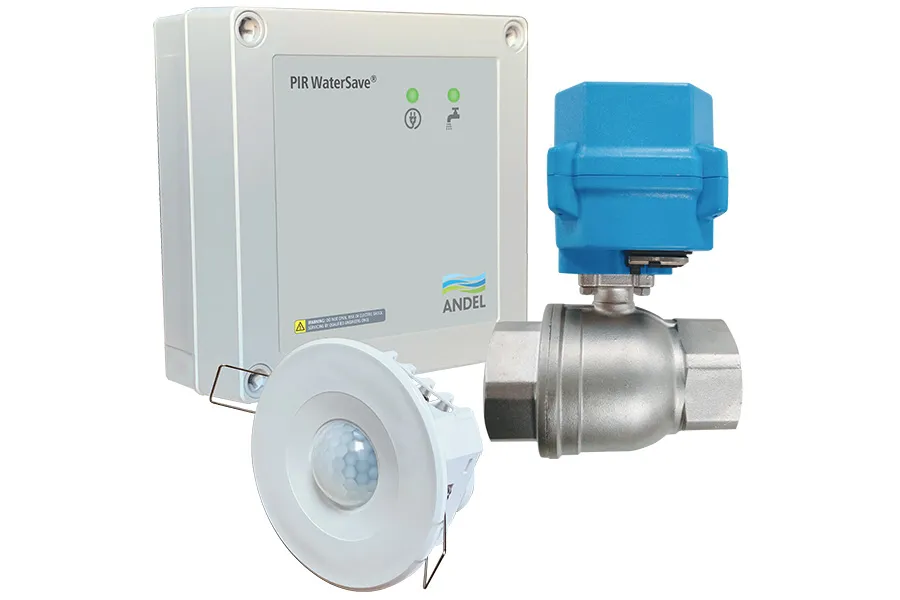
“WaterSave automatically shuts off the water supply when toilet and sanitary areas are unoccupied, preventing unnecessary water use. It also eliminates unexpected hidden water use,” explains Frank Joosten of HVAC Nederland. “Working as a water-saving flow control device, WaterSave, combined with a passive infrared (PIR) motion sensor, ensures that water is supplied only to rooms in use and only when someone is actually present. This makes the system particularly suitable for commercial buildings such as hotels, offices, holiday homes and changing rooms in sports halls. When the user leaves the room, the water supply is automatically shut off completely after a user-configurable delay. This prevents unnecessary water use and undetected hidden consumption, saving end users many litres and euros each year.”
WaterSave is based on a control panel to which up to three solenoid valves and three PIR sensors can be connected.
24/7 leak prevention
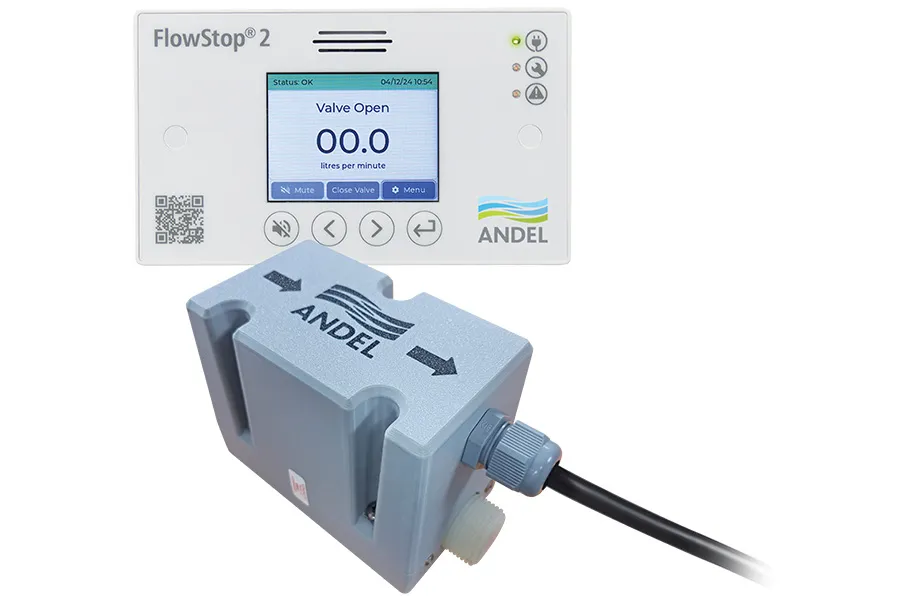
FlowStop is another interesting system for sustainable, intelligent water management. “This multifunctional monitoring and alarm system for domestic use monitors the water supply 24/7 and shuts it off when necessary,” says Joosten. “Using smart sensors, the system monitors the water pipe in four ways. First, FlowStop measures continuous water consumption in litres per minute. If this user-configurable threshold is exceeded, the system automatically shuts off the main water supply. This prevents water waste and water damage, for example if someone forgets to turn off a tap.”
FlowStop also detects unusual water consumption. “If the amount of water used differs from the configured value, the valve closes automatically,” says Joosten. “This is useful, for example, in the event of leaks caused by freezing, excess pressure or faults. This is particularly important in hard-to-see places, such as beneath the floor, where leaks can cause wood rot, unsightly damp patches and/or mould growth in the home.”
The battery-powered (9V) or mains-powered (230V) FlowStop also shuts off the water supply if no water has been used for more than 24 hours. “A welcome smart feature for homes and holiday properties,” says Joosten. “On their return, residents or users can restore the water supply with a single press of a button on the clear control panel.” Last but not least, FlowStop measures the incoming water temperature. “It can be set from -1 to +5°C. If the water temperature falls below the set value, the system shuts off the water supply again. This also prevents damage caused by frozen pipes.”
Leak detection on the main water supply
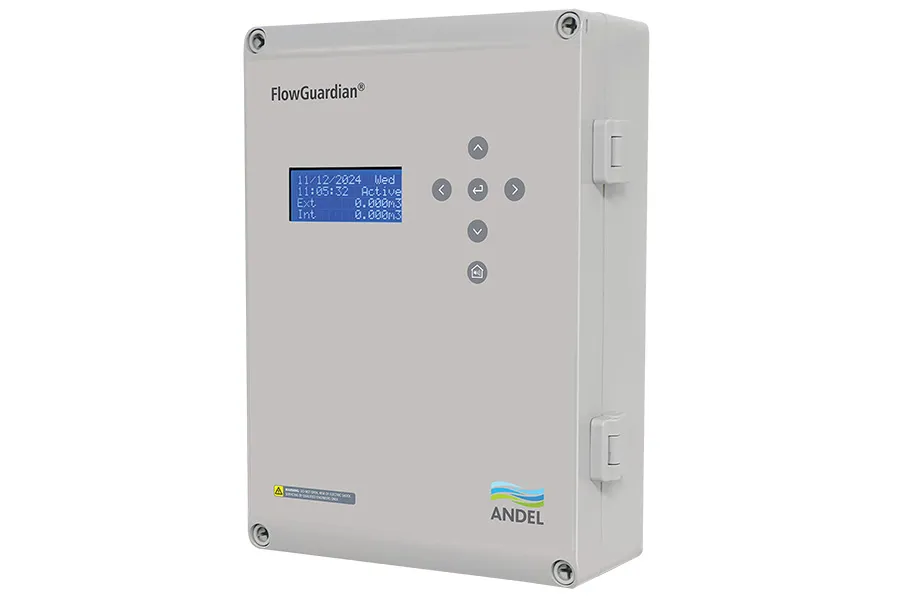
Finally, FlowGuardian uses two flow meters to actively monitor the mains water supply to, for example, an office building. “One flow meter is located at the site boundary and the other inside the site, downstream of the stop valve,” says Joosten. “The system then checks the pipework between the external and internal flow meters for leaks, and uses the flow rates and volumes recorded by the internal flow meter to identify abnormal and/or excessive water consumption. The user sets the alarm thresholds during commissioning.”
Smart water detector
Using WaterSave, FlowStop and FlowGuardian meets BREEAM WAT criteria. Joosten likens the systems’ shut-off and alarm functions to a smoke detector or carbon monoxide detector, which gives a warning at the first sign of danger. This makes it possible to take the right action immediately and prevent unpleasant damage and high costs. He therefore expects more and more insurers to require the presence of ‘smart water detectors’ in the future.
Question about this story? Ask your question
Keep following this
Get an email when a new story is published. No account needed.
- ThemeFuture-proof water and sanitary systems
- SubjectHVAC







