Textile ducting, simple and efficient
RIPRO Luchttechniek is the exclusive supplier of perforated metal ducts in the Netherlands. Find out more about these so-called ‘perfo ducts’ here.
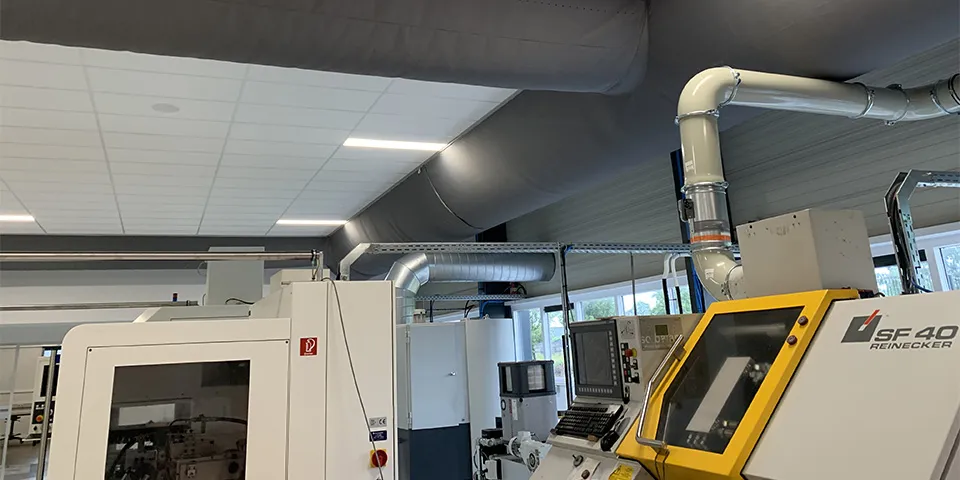
This month, the company completed a project using textile ducting. Like perforated metal ducts, textile ducts offer advantages over conventional metal ducts.
Textile ducting can be used for ventilation or to supply cooled or heated air. It is made from lightweight material, making installation straightforward and transport and storage exceptionally compact.
Optimum indoor climate, without draughts
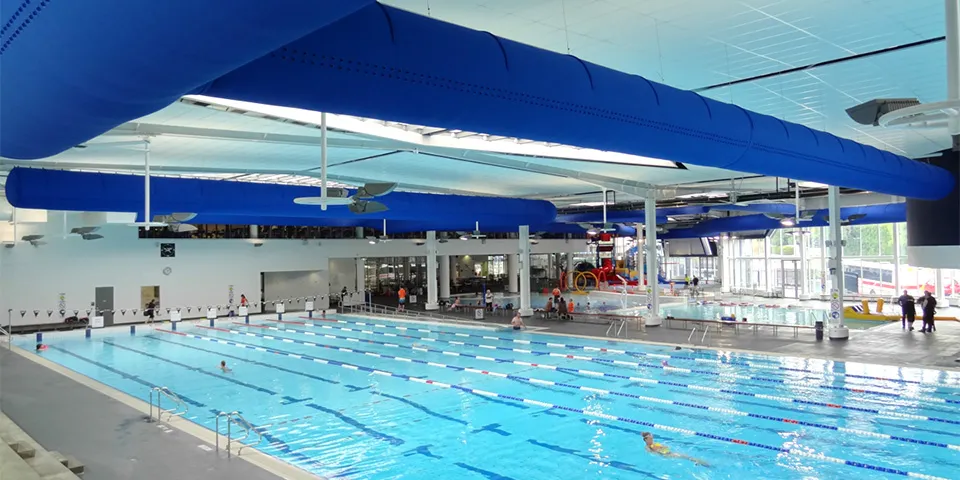
Textile ducts distribute air evenly along their entire length. No grilles are used, preventing draughts and ensuring optimum air distribution throughout the indoor space. Textile ducts are exceptionally hygienic. Their permeable surface prevents condensation and bacterial growth inside the duct. They are also corrosion-resistant. This makes them particularly suitable for swimming pools and workshops. More and more schools, offices, shops, showrooms, production areas and industrial spaces are also using textile ducts to create an optimum indoor climate. A wide range of colours and colour combinations is available. Text or logos can also be printed on the fabric if required. The design possibilities are endless, with bends, reducers and T-pieces. Textile ducts are suitable for any design.
Low installation costs
Textile ducts are easy to install, store and transport, keeping installation costs low. They are lightweight and easy to install at any height. They place no load on ceilings or roof structures, making them suitable for any situation. The ducts are supplied in the required colour, so there is no need to spray or paint them. They are suspended using a cable or rail system.
Easy to connect
The textile duct is connected to the air handling unit or fan using a durable hose clamp. The fabrics are highly durable and easy to maintain.
Thanks to the intelligent system design, no grilles, dampers or diffusers are required. Only the required airflow at the ventilation system’s supply outlet needs to be considered. Setting the system to achieve the right indoor climate is straightforward.
Want to know more about textile ducting? Visit www.riproluchttechniek.nl.
Question about this story? Ask your question
Keep following this
Get an email when a new story is published. No account needed.
- ThemeHealthy indoor air
- SubjectHVAC