











‘The market is ready; now all we need is the installers’
Text Lieke BousemaImage Belimo
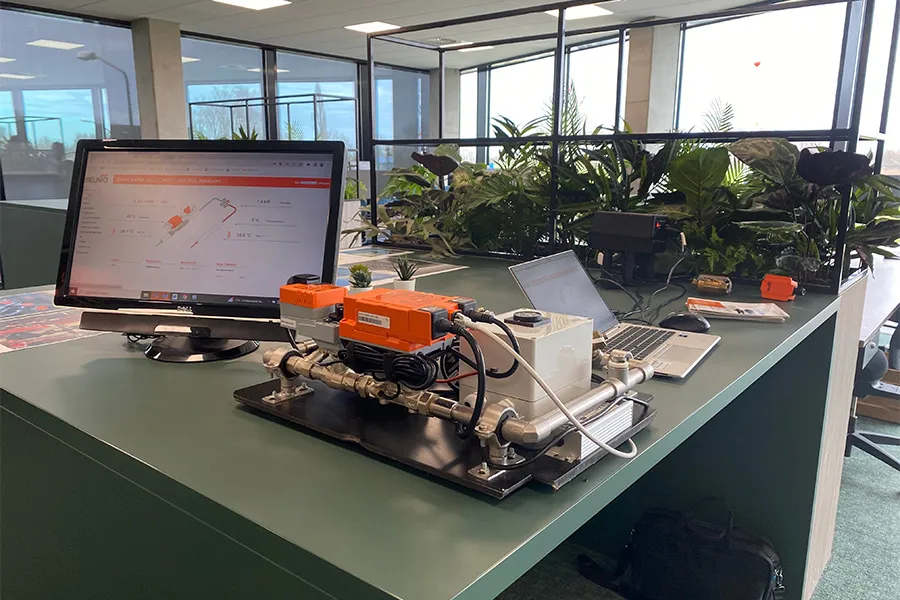
Electronic pressure-independent control
The dynamic balancing of building services installations has grown significantly in recent years, particularly in the field of climate control systems. This calls not only for advanced products, but also for specific expertise among installers, technical consultants and system integrators. To bring this knowledge up to date and keep it that way, Belimo provides specialist training. Both at its own knowledge centre in Vaassen and on site at the installer’s premises. Its aim is to make it as easy as possible for installers to get started with dynamic balancing.
While the Netherlands is working hard to meet its climate targets, too few young people are still choosing to study building services engineering. “What’s more, only a small proportion of the young people who do choose a technical course go on to work in measurement and control engineering,” says Richard Daamen, Managing Director at Belimo. “This poses major challenges for the market, particularly now that the technologies used to measure and control building services installations are becoming increasingly innovative and dynamic.”
From static to dynamic
“Until a few years ago, pressure-compensated valves were used predominantly, whereas today flow components are the norm,” says Daamen. “Pressure and flow are of course related, but specialist knowledge is still required, and not everyone has it yet. Technicians from the established generation in particular are used to traditional balancing methods. They sometimes find it difficult to switch from static to dynamic systems, partly because they often lack the time to learn about them. By also offering our specialist training on site, we are filling this gap and bridging the divide between further training and practical application.”
Key topics
“The training starts with a short introduction to Belimo,” says Daamen. “We then quickly move on to pressure-dependent control, which most participants recognise. This immediately grabs their attention. Next on the agenda are mechanical pressure-independent control and electronic pressure-independent control, before we get to our flagship product: the Belimo Energy Valve™ 4.2 with dynamic differential pressure control, which is currently making a strong impression in so-called RetroFIT+ projects. We explain low Delta-T syndrome and finish with a brief summary, taking participants from a statically balanced system to a dynamically balanced one and explaining the key benefits.”
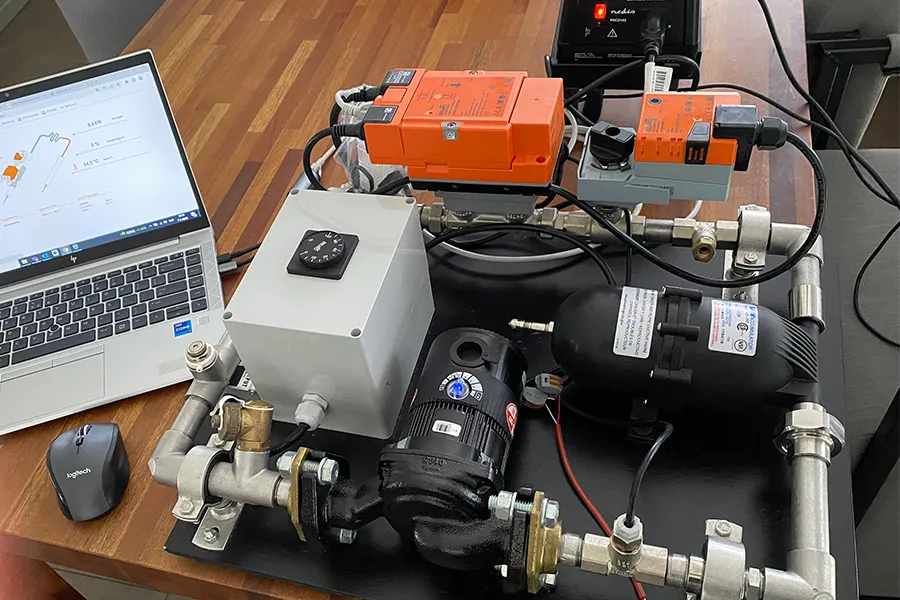
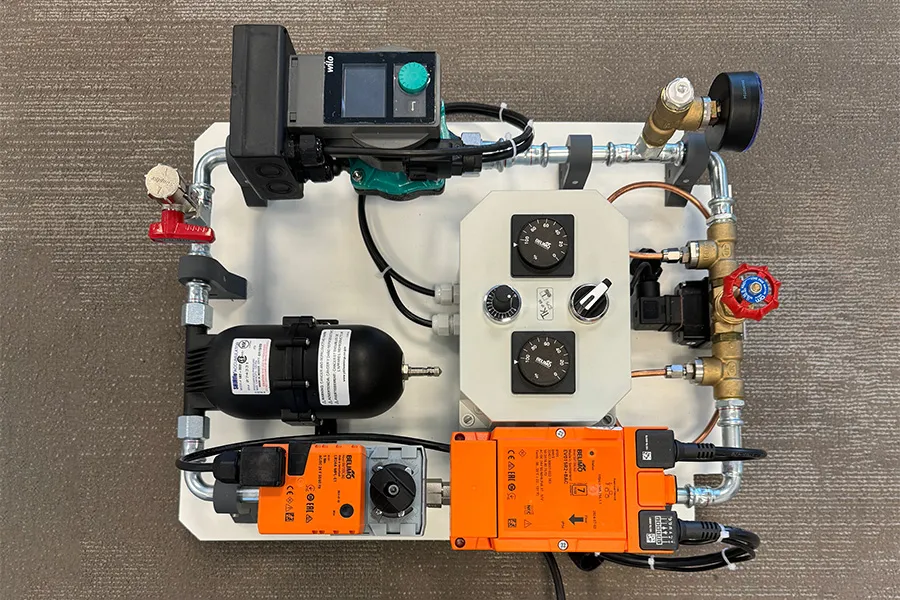
To ensure installers really get to grips with electronic pressure-independent control, most of the training is hands-on. “We have extensive demo kits,” says Daamen. “Some sites also have water rigs set up with various real-world scenarios, where installers can practise freely. This allows them to see, feel and experience the benefits of electronic pressure-independent control in detail. The feedback has been entirely positive. We regularly receive requests for refresher training, which other colleagues can also attend.”
Now is the time to take action!
“The market can now hardly afford to ignore electronic pressure-independent control,” he stresses. “From 2026, buildings with a nominal capacity of more than 290 kW must be equipped with building automation and control systems (GACS) that meet a number of requirements for monitoring, recording, analysis and adjustability, benchmarking and feedback, communication and interoperability. Electronic measurement is essential in this case. We are keen to prepare the market for this, both with our training and with our products, of which the Belimo Energy Valve™ 4.2 is an excellent example.”
Belimo Energy Valve™ 4.2
The Belimo Energy Valve™ 4.2 combines numerous useful functions in a single unit, including certified energy metering (MID), electronic pressure-independent control, a Delta-T manager and IoT-based billing. “Thanks to the intelligence of the control valve, data such as flow and return temperatures, flow rate, glycol content, capacity, energy consumption and differential pressure can be read into the building management system via standard bus protocols or the Cloud,” says Daamen. “For example, this enables remote monitoring and control, allowing climate control to be optimised further and made more energy efficient.” Its dynamic differential pressure control is another unique feature. “The unit can measure and balance, maintain a constant dynamic differential pressure and monitor energy consumption. The valve also provides 100% shut-off. This makes the Belimo Energy Valve™ 4.2 particularly suitable for existing buildings with ageing HVAC systems.”
A quick and easy route to energy label C
Following its installer training, Belimo is also keen to advise owners and facility managers with ageing HVAC systems on how to optimise their installations. For example, in light of the energy label C requirement. “Our technical advice manager analyses the installation and provides tips for improvement,” says Daamen. “In many cases, a Belimo Energy Valve™ 4.2 is installed to provide insight into energy flows. In 9 out of 10 cases, we can then achieve huge energy savings with simple adjustments.” One example he gives is replacing faulty or poorly closing valves, which can deliver savings of 30 to as much as 65%.
A business enquiry for BELIMO? Get in touch
Companies in this story

Keep following this
Get an email when a new story is published. No account needed.
- SubjectHVAC
- CompanyBELIMO







