











Ventilation completes the residential building quartet
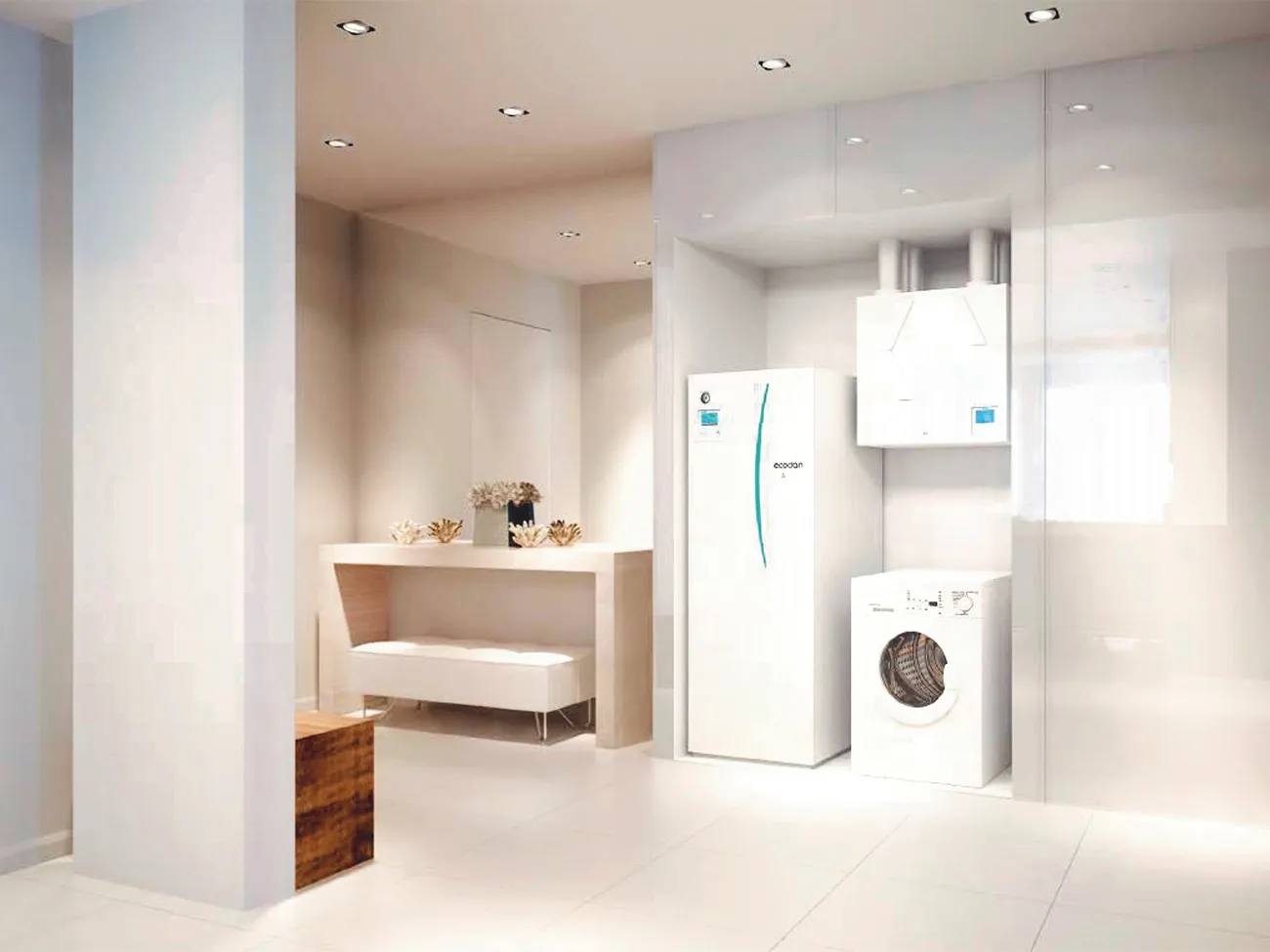
In addition to the heat pump, which provides residents with heating, domestic hot water and cooling, Mitsubishi Electric now also offers ventilation. With this fourth card, Alklima completes its residential building quartet. Thanks to the new Lossnay ventilation and heat recovery unit, from 2022 the distributor will offer the residential market a fully integrated, complete solution on one and the same digital platform.
Ventilation has become a hot topic since the start of the coronavirus pandemic, but Mitsubishi Electric had already begun developing a heat recovery ventilation unit (HRV unit) for the residential market. Mitsubishi Electric has been working with its successful Lossnay ventilation unit in the commercial sector for much longer, and has developed it further to ensure it also performs optimally in residential applications. For many years, Alklima has been giving the Netherlands’ transition to sustainable energy a boost with its range of heat pumps for both commercial and residential buildings. The latter sector, driven by climate targets to save energy and reduce CO2 emissions, has increasingly come to rely on the performance of Mitsubishi Electric’s Ecodan all-electric air-to-water heat pump. The heat pump has become the proven standard for all-electric projects, providing not only highly efficient heating but also domestic hot water and cooling. However, as Alklima explains, Mitsubishi Electric’s offering was still missing a fourth card: “There has naturally been demand for ventilation in residential buildings for many years. We were previously unable to meet that demand, so we expressed an internal ambition to complete the package.”
Heat recovery for residential buildings
Mitsubishi Electric’s first heat recovery concept dates back to 1970. On a cold morning, the two-year-old daughter of a Mitsubishi Electric engineer blew through a roll of paper and said her hands were getting warm. At that moment, the engineer realised that paper conducts heat, and the first idea for the Lossnay heat recovery ventilation unit was born. Fifty years on, energy recovery from exhaust ventilation air has been developed further in every respect. Different heat exchanger materials, more efficient fan motors, filters and advanced control technology have resulted in Mitsubishi Electric now also offering a ventilation unit for residential buildings. Alklima says: “Choosing heat recovery for the ventilation system naturally means the heat pump has to generate less energy, so it uses even less energy. By reducing energy consumption while maintaining the same comfort for the end user, this helps further advance the Netherlands’ transition to sustainable energy.”
Integration
Alklima says: “We chose not to integrate the heat pump and ventilation unit mechanically. This allows us to build the system on a modular basis, giving installers and contractors plenty of flexibility. This modular configuration enables both appliances to achieve their full potential in terms of performance and service life. We have, however, integrated the heat pump and ventilation unit in terms of controls and monitoring, although they can also operate independently.”
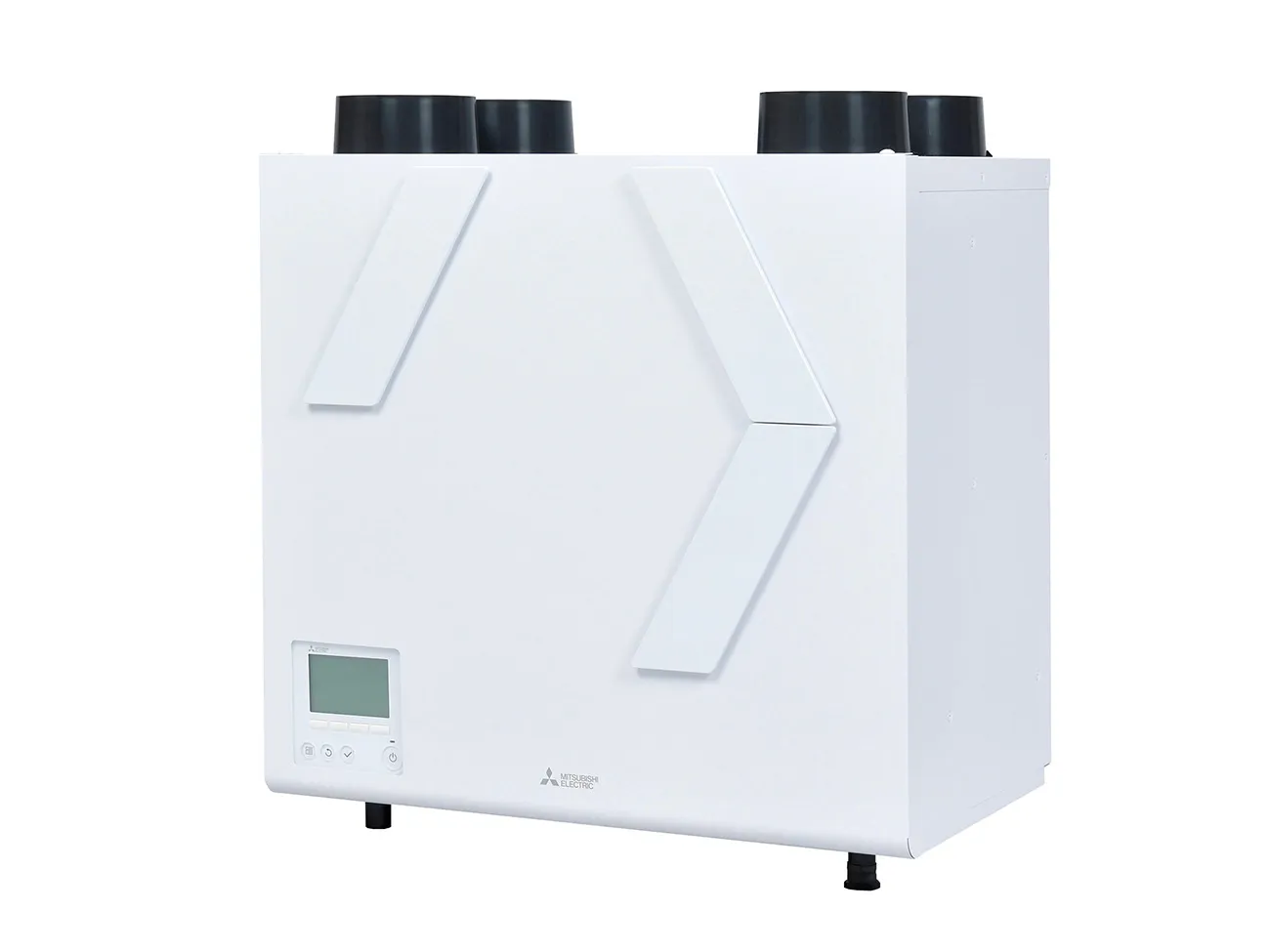
Mitsubishi Electric’s new HRV unit is derived from the Lossnay range for commercial buildings, with a series of essential modifications to its proven technology. The new unit in the Lossnay Residential range was developed in-house by Mitsubishi Electric and is manufactured at its own factory. No rebadged products from other companies are involved. Naturally, the unit’s dimensions have been tailored to a typical home. Developers, builders and architects ask for this, so the unit has been designed to be extremely compact, especially compared with products available in this market segment. “We have also made a serious effort to reduce noise. You have to bear in mind that a smaller unit also produces more noise. Think of whistling: the smaller the opening, the louder the sound. In general, a unit gets quieter as it gets larger, whereas builders want a smaller unit. That is why we focused particularly on the airflow inside the unit and made it as efficient as possible.”
Controls and monitoring
As well as the technical refinements, perhaps the biggest step forward has been the full integration of controls and monitoring. This makes Mitsubishi Electric’s range of solutions highly attractive to the market. The main aim was to provide one partner and point of contact for the complete integration of building systems in the home, covering heating, domestic hot water, cooling and ventilation. There is strong demand for this, says Alklima. “The key advantage is having one company responsible for the home’s entire indoor climate, along with the associated monitoring. Since its launch, the Ecodan air-to-water heat pump has been easy to connect to the various control and monitoring systems available on the market. This is done via a simple converter, the Modbus, in the heat pump. The same technology can also be used with the Lossnay HRV unit.” In addition to external monitoring platforms, customers can also use Mitsubishi Electric’s own MelCloud platform. Further improvements to the platform are planned in the coming period, with benefits for end users, installers and contractors.
Technology
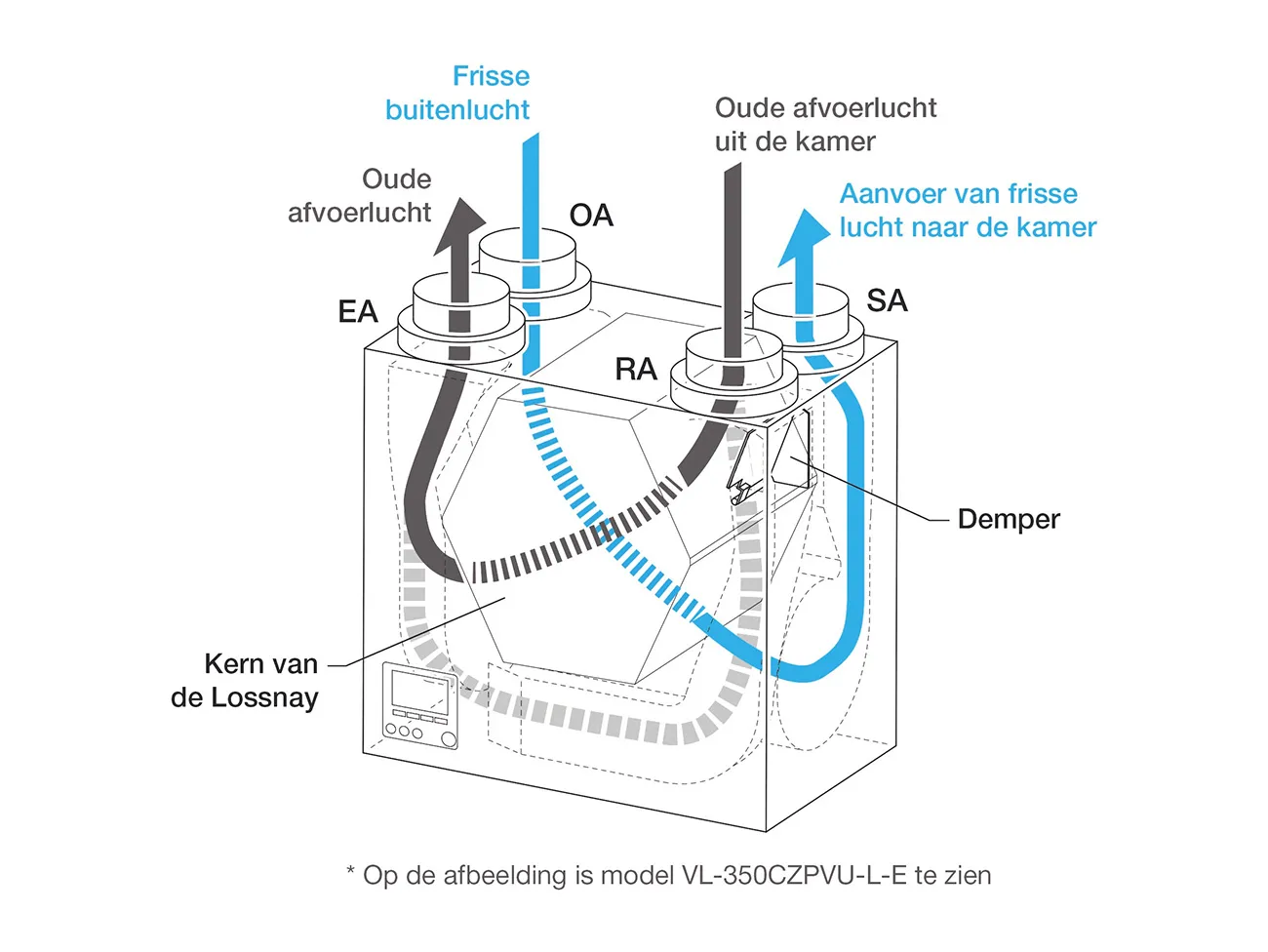
Mitsubishi Electric’s Lossnay unit recovers energy from exhaust air and transfers it to the fresh supply air via a cross-flow heat exchanger. The temperature of the air discharged by the ventilation unit ultimately depends on the different conditions indoors and outdoors. If necessary, Lossnay can further heat the air using an external electric element. Six Lossnay models will be launched, with capacities ranging from 250 to 500 m3/hour, in left-hand and right-hand versions. The declarations required for NTA8800 calculations are expected later this year.
Compared with other units on the market, Lossnay is very compact, making it easier to install in the home. The right version and capacity are selected from the six available Lossnay units based on the ventilation requirements for each habitable room set out in the Bouwbesluit. With these additions, Mitsubishi Electric now has a complete range for residential buildings, providing heating, cooling, domestic hot water and ventilation, all of which can communicate via a single control platform.
Question about this story? Ask your question
Keep following this
Get an email when a new story is published. No account needed.
- ThemeGas-free heating and cooling
- SubjectHVAC







