De Caai: living and working in and around industrial heritage
Text Desiree PenningsImage Dubotechniek
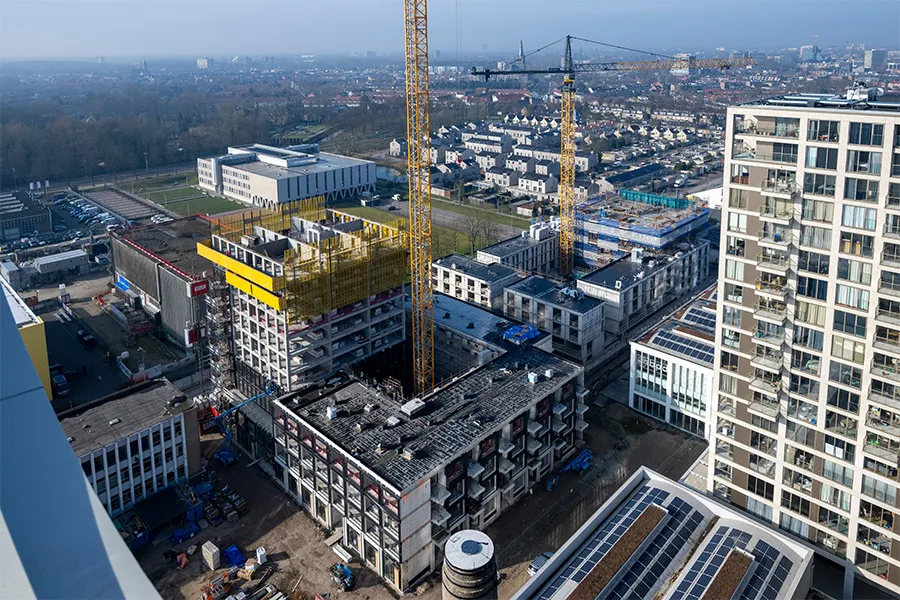
Where ice creams and dairy products were once made, people will soon be able to live and work. Close to Eindhoven city centre, the former Campina site is being transformed into a modern urban district that will be full of activity, while also offering places to unwind. Five residential towers are being built, with both homes for sale and for rent. The listed dairy and ice cream factory and Campina’s halls will be preserved. They will house companies focused on the health of people and the planet.
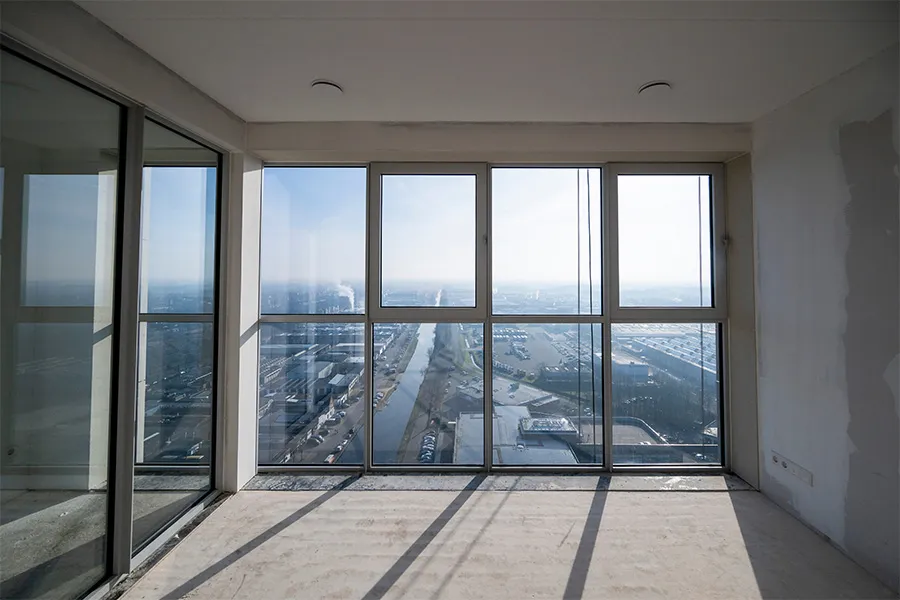
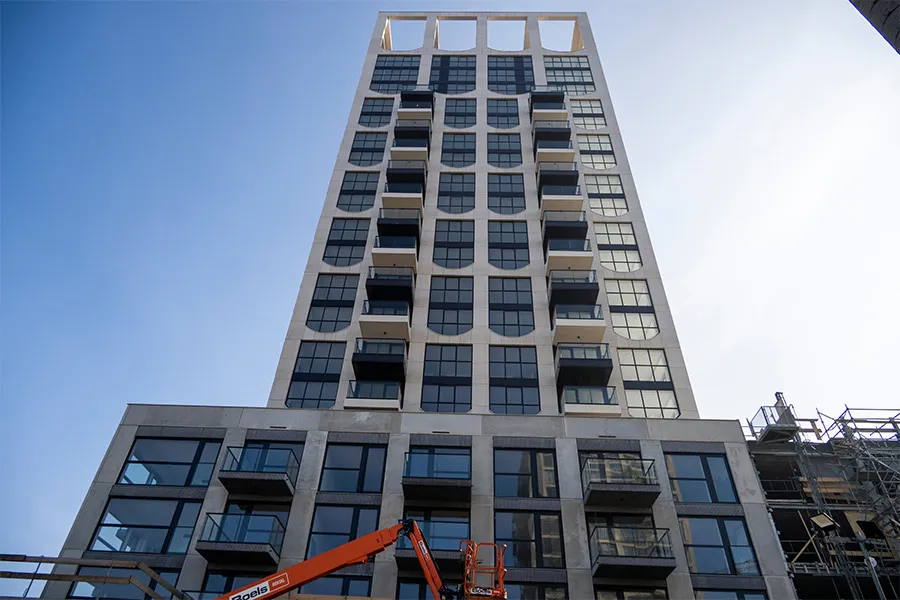
The five residential buildings will contain 700 homes, ranging from maisonettes and studios to urban homes and care homes. The mix includes social and other rental housing, as well as homes for sale. Residents will live beside the canal and close to the city centre. The design balances public and private space. In addition to public green spaces, every home will have its own outdoor space. The first two residential towers have now been completed. Construction is under way on the next two, while the last is at the design stage.
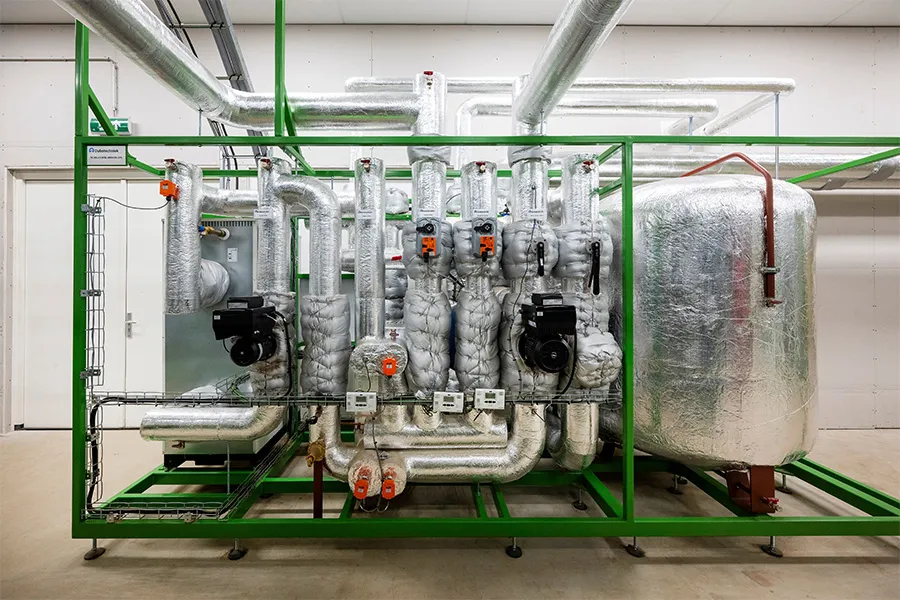
Dubotechniek, part of Hanab Installation Technology, delivered the sustainable energy supply for all the homes. It is based on the MEGA ONE aquifer thermal energy storage (ATES) system. This distributes heating and cooling to the residential towers and the homes’ own systems. The contract was awarded by Eteck.
Prefabricated ATES solution
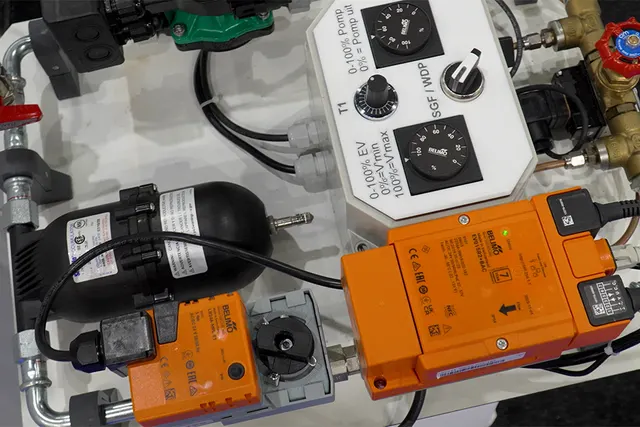
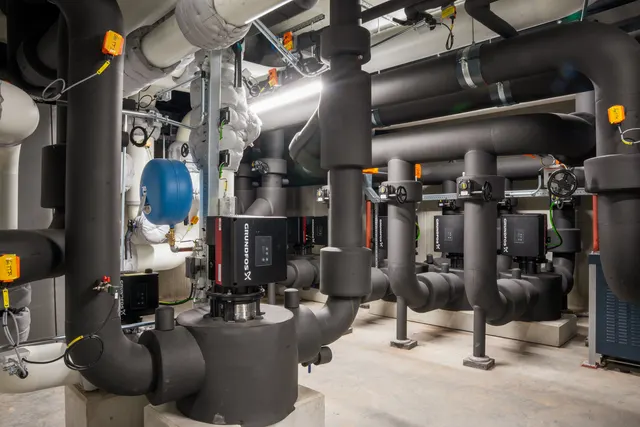
The central energy generation plant, including the MEGA ONE, is located in one of the old halls. Developed by Dubotechniek, this modular, prefabricated ATES solution has a capacity of 1,850 kW for heating and 1,200 kW for cooling. Once the system has been handed over and commissioned, Dubotechniek’s control centre will handle its operation, analysis and optimisation. Martin van den Bos, project manager at Dubotechniek, says: “Everything is delivered prefabricated, which makes the on-site construction period much shorter. We brought the system in over two days, then connected it to the building systems and commissioned it in two weeks.” The ground storage system uses two well pairs, each with a warm and a cold well delivering 140 m3/h. The wells were drilled to a depth of eighty metres.
Thermal energy
The system is now operational for the first two towers. The project is due to run until 2028, however. Van den Bos says: “We started in 2022. It is one of the largest projects we have undertaken. Everything is still going entirely to plan. We are keeping neatly in step with the building contractor’s schedule.”
The first residents have already moved into De Caai. The old dairy factory is also home to its first businesses, including BPD | Bouwfonds Gebiedsontwikkeling, which is also the client for the project. More innovation is expected here in the future, which is a perfect fit for the city of Eindhoven. “We are in talks with the municipality and the water board about thermal energy from surface water (TEO),” concludes Van den Bos. “We need this energy to keep the wells in balance. In summer, we extract heat from the canal and use it to charge the warm well. The aim is to make the homes as sustainable as possible.”
Question about this story? Ask your question
Wie aan De Caai werkte
- sustainable energy supplyDubotechniekIn this story
- clientBPD | Bouwfonds GebiedsontwikkelingIn this story
Keep following this
Get an email when a new story is published. No account needed.
- ProjectDe Caai
- SubjectBuilding services engineering
- CompanyDubotechniek
- CompanyBPD | Bouwfonds Gebiedsontwikkeling