DWT Installatiegroep embraces hybrid VRF
Text Lieke BousemaImage Sander Nagel, Alklima
The Mitsubishi Electric City Multi hybrid (H)VRF system combines the best of VRF with the unique properties of water. VRF technology enables efficient energy transfer, while using water as the energy carrier delivers even greater comfort. This is achieved, among other things, through more stable supply air temperatures and better temperature control. The refrigerant gas and liquid are distributed not at the outdoor unit but at the hybrid BC controller, which also reduces the amount of pipework required.
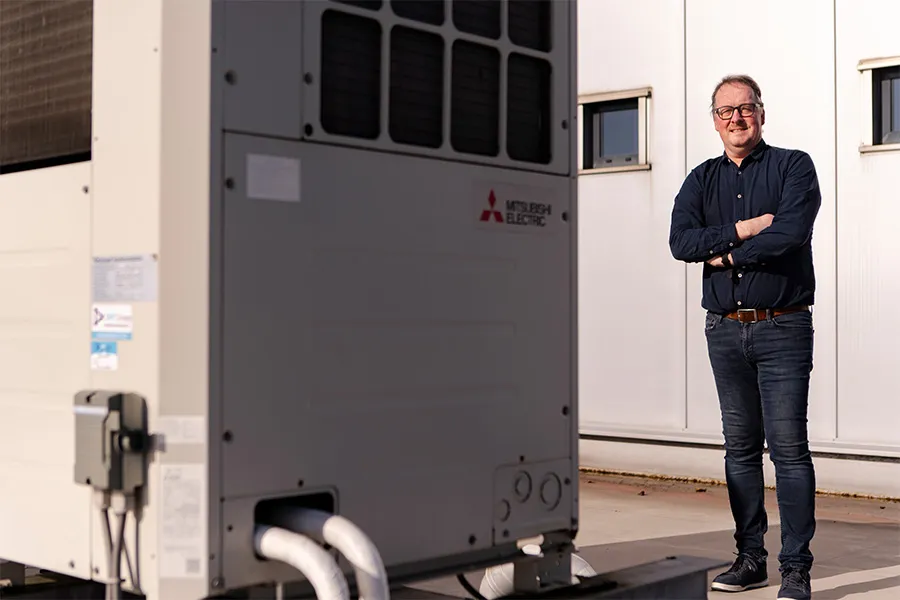
The Mitsubishi Electric City Multi HVRF system has now been installed in a large number of projects. One of its early adopters was DWT Installatiegroep, which first installed the system at its own office in Goes. “We bought our premises on Amundsenweg about five years ago and transformed them into a sustainable new office,” says Peter Saarloos, Manager Techniek & Advies at DWT. “Part of the building was fitted with an HVRF system for heating and cooling. The heat recovery ventilation system is also connected to it. At the time, HVRF was still a relatively new field, but one we saw a lot of potential in. Particularly in view of the debate around refrigerants. Installing the system in our own building gave us a unique opportunity to get to know it inside out and gain hands-on experience.”
Preparing for the F-gas Regulation
In March 2024, the European Union decided that F-gases in heat pumps and air conditioning systems must be phased down more quickly, with the aim of limiting global warming and eliminating emissions from refrigerants by 2050. To achieve this, restrictions have been laid down for monobloc systems, split systems, VRF systems and chillers. Small monobloc systems will be the first to switch to refrigerants with a lower GWP. “As an installation group, we have been preparing for this for several years by exploring systems that use low-GWP refrigerants,” says Saarloos. “The Mitsubishi Electric City Multi HVRF system is a good example. It operates largely with water, without compromising on comfort. The refrigerant that remains, R32, also has a considerably lower GWP than the familiar R410a used in ‘traditional’ VRF systems.” Because the refrigerant is confined to the circuit between the outdoor unit and the hybrid BC controller (distributor), the system is also safer. Only water pipes run from the distributor to the indoor units.
Excellent controllability
“Alongside developments in refrigerants, we were also drawn to the flexibility and controllability of the HVRF system,” says Saarloos. “After all, water temperatures are easier to control than refrigerant gases. Having carried out extensive trials with the system, we are now able to give customers excellent advice and service.” He says HVRF offers the same benefits as a standard VRF system. “For example, users can cool or heat individual rooms independently, while energy transfer ensures very high efficiency.”
Services left exposed
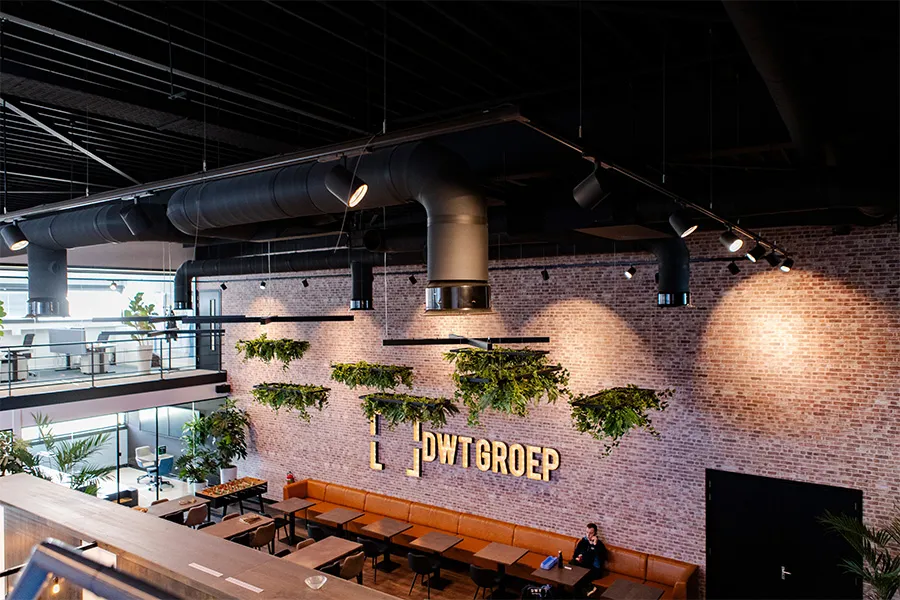
The installation in Goes consists of one outdoor unit and one hybrid BC controller with a heat exchanger, which transfers heat from the refrigerant to the water. Ten indoor units provide heating and cooling in the offices, says Saarloos. “We chose ducted units for this project. Conditioned air is supplied to the rooms without draughts via air grilles.” The electrical installation in the office was also modified as part of the climate control upgrades. “We also revamped the entire interior and fitted it out in the DWT style. This means, for example, that many of the services have been left exposed, including part of the HVRF system.”
Next project
DWT has now been using the HVRF system for several years, and is very pleased with it. “It has more than lived up to our initial expectations,” says Saarloos. “That is why we will also install the HVRF system in our new premises in Alblasserdam, which will soon be renovated in line with the DWT style.”
Question about this story? Ask your question
Keep following this
Get an email when a new story is published. No account needed.
- SubjectBuilding services engineering